Condensing Technology: How We Recover Heat from Flue Gases and Gain 15% Efficiency

If you've ever noticed the chimney of an old boiler room on a cold winter day, you'll have seen thick, hot smoke billowing skyward. What you may not have realised is that, along with the smoke, you were literally throwing your money into the air.

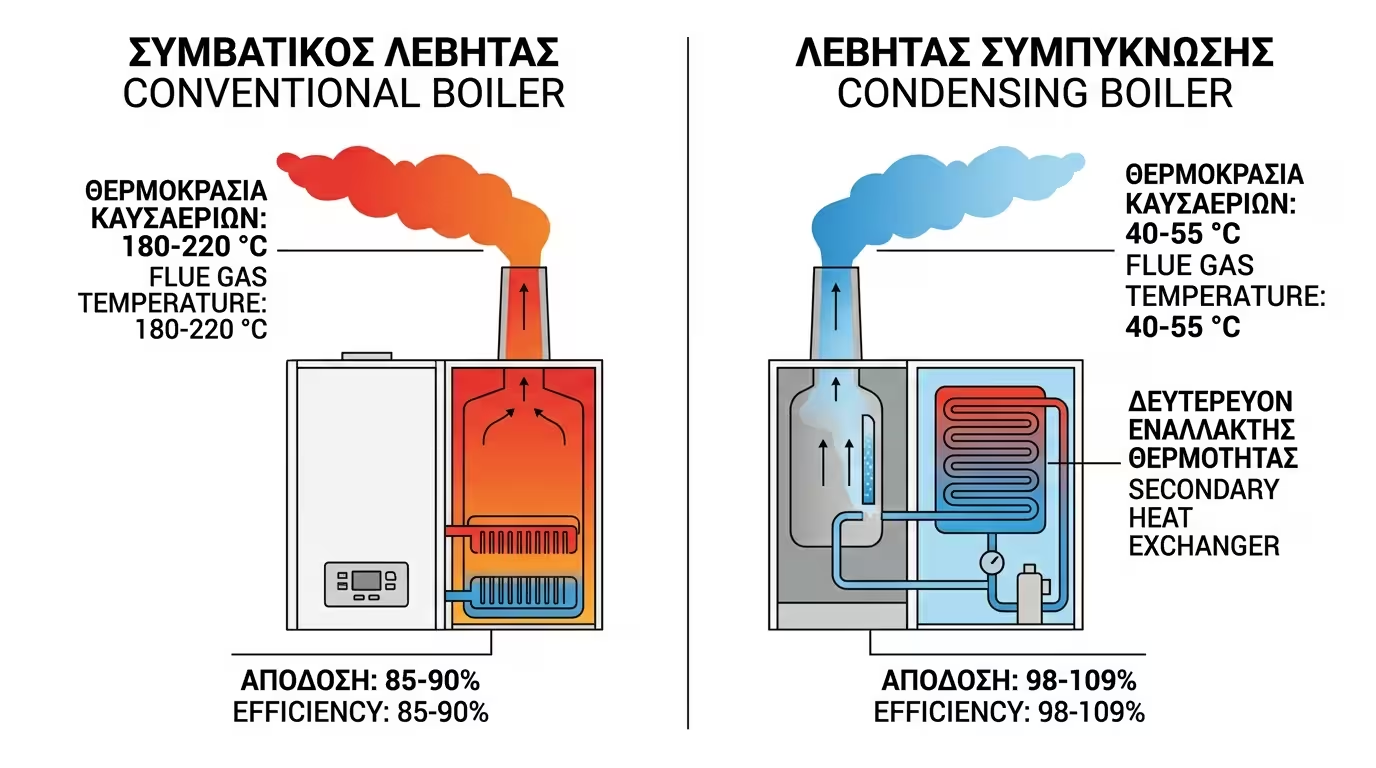
In traditional heating systems, flue gases leave the boiler at temperatures exceeding 150°C or even 200°C. All that enormous thermal energy is lost to the atmosphere. This is precisely where Condensing Technology enters the picture. Let's see how this engineering innovation became mandatory under European legislation and how it saves money for anyone using natural gas or oil.

1. The "Hidden" Secret of Flue Gases: Water Vapour

When we burn a fossil fuel (natural gas or oil), the chemical reaction of combustion produces water in the form of vapour. In old conventional boilers, this vapour had to escape quickly because if it condensed inside the cast-iron heat exchanger, it created acids that destroyed the boiler.

Old boiler vs condensing boiler - flue gas difference

🔬 New Materials, New Era

In modern condensing boilers, the heat exchangers are made from special materials (stainless steel Inox or aluminium-silicon alloy) that resist acids. The boiler deliberately cools the flue gases inside itself, recovering their energy.
⚖️ European Mandate

Condensing technology is not a luxury - it is the only acceptable standard for new gas and oil systems under European regulations (ErP Directive).

2. How Condensation Works in 3 Steps

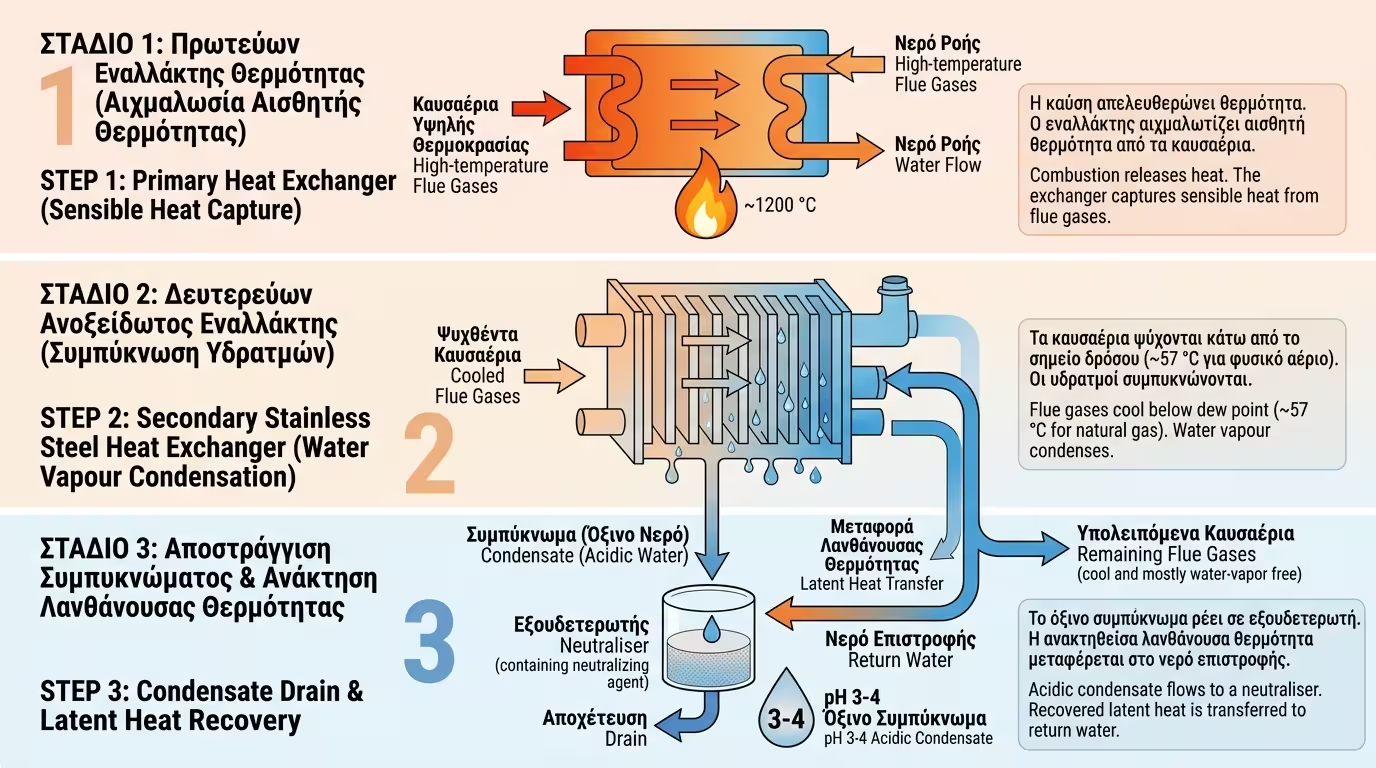
The energy recovery process happens naturally through the phenomenon of phase change (from gas to liquid).

Condensation process in 3 steps - heat exchanger

1️⃣ The Cold Return

The water that has completed its circuit through your radiators returns cold to the boiler (e.g. at 45°C). Instead of going straight to the burner, it is first directed to the special condensing heat exchanger.

2️⃣ Meeting the Flue Gases

Before this cold water enters the furnace to be heated by the flame, it passes through a special exchanger where it meets the hot flue gases that are about to exit.

3️⃣ The Condensation Phenomenon

The cold return water "steals" the heat from the flue gases. The gases cool so much that their water vapour turns back into droplets of water (condensation). During this phase change from gas to liquid, a huge amount of energy called Latent Heat is released. This energy is transferred directly to your radiator water, pre-heating it before it even reaches the burner.

💡 The result: The boiler consumes significantly less fuel and the flue gases exit lukewarm (around 50°C), producing a characteristic harmless white steam.

3. The Puzzle: How Does Efficiency Reach 109%?

109% efficiency - lower vs higher calorific value

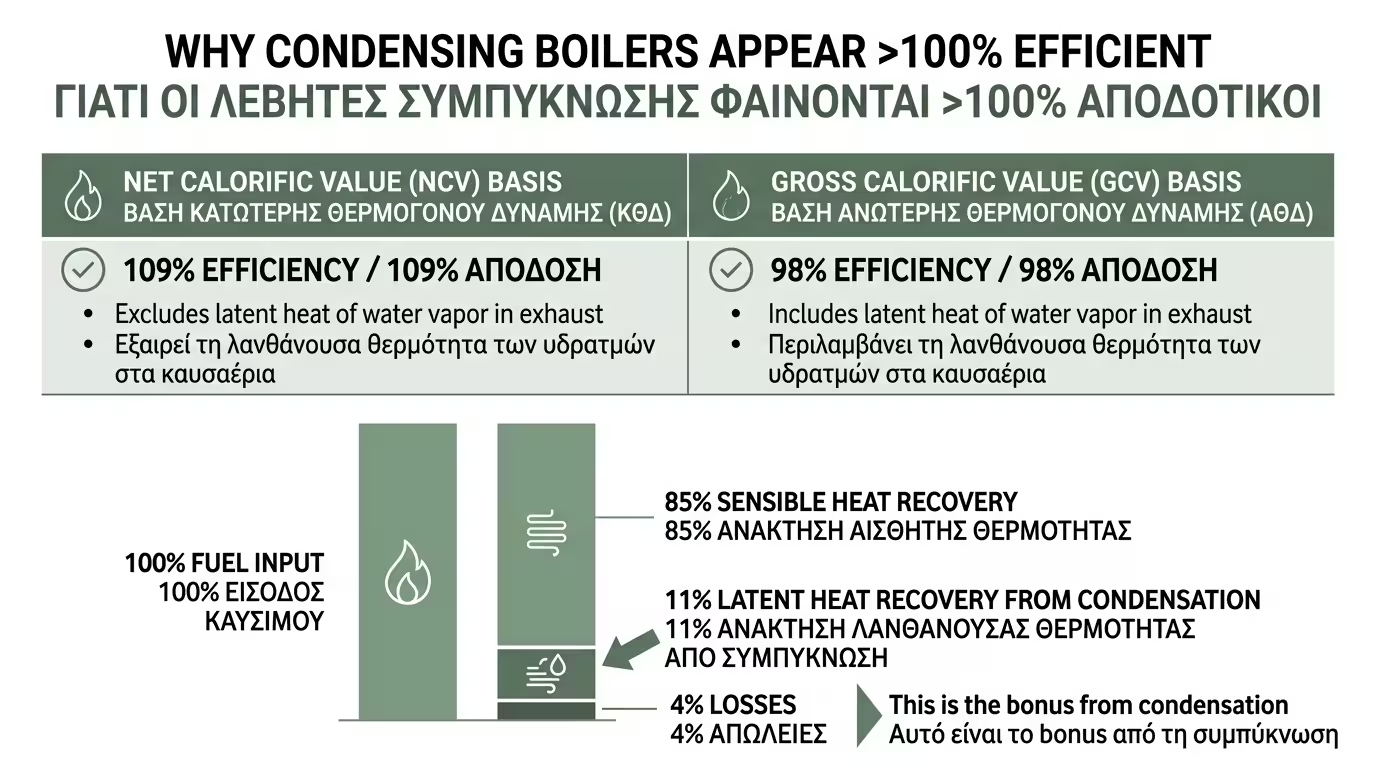
If you look at technical datasheets, you'll see efficiencies like "105%" or "109%". Nothing exceeds 100% in nature - but these numbers arise from a historical convention.

📐 Lower vs Higher Calorific Value

Historically, efficiency was measured against the Lower Calorific Value (Hi), which ignored the energy in water vapour. Condensing technology recovers this "extra", surpassing the theoretical 100%.

📊 The Reality

Based on the Higher Calorific Value (Hs), condensing boilers achieve 95%-98% real efficiency, while old boilers sat at 80%. This translates to 15% to 25% net savings on your bill!

4. The Golden Rule: Dew Point

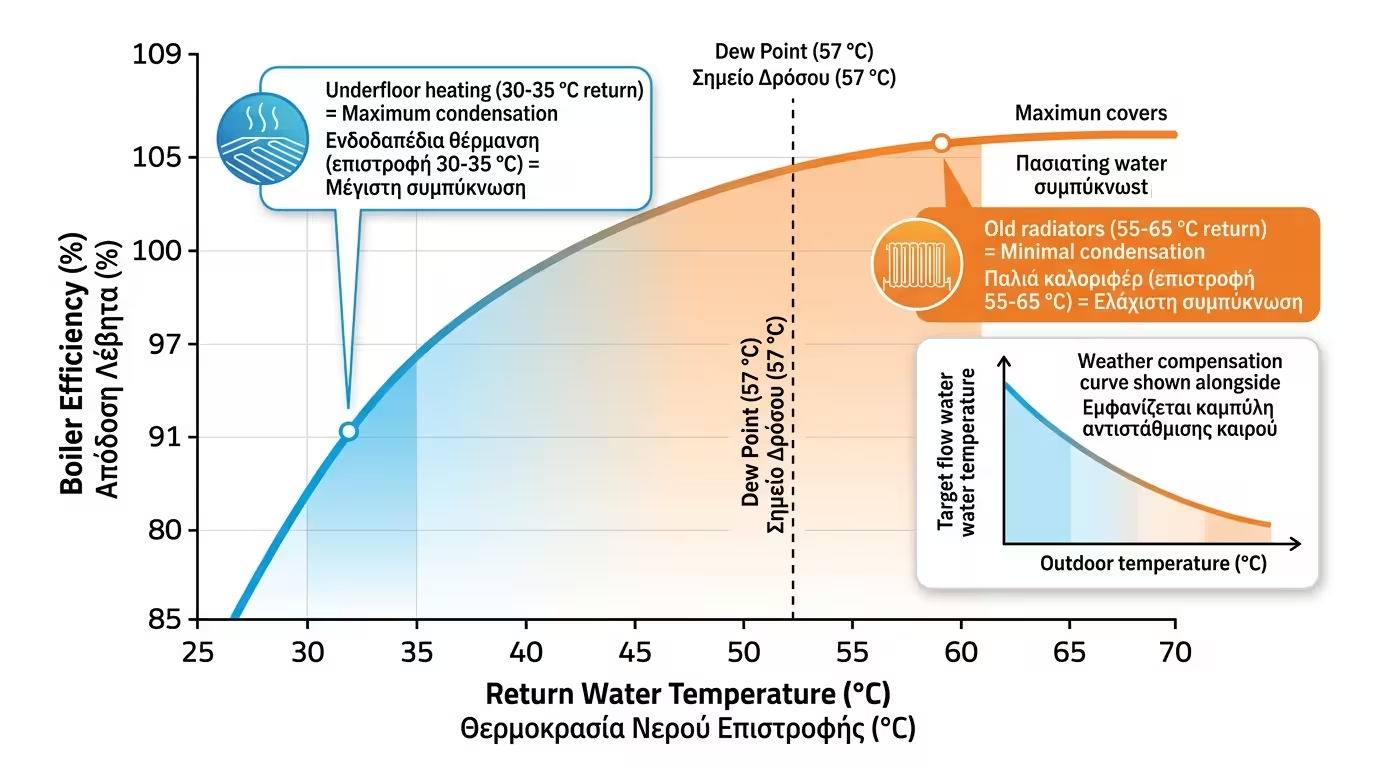
Buying a condensing boiler does not automatically mean you'll achieve condensation. For the flue gases to liquefy, the return water must be cooler than a critical threshold.

Dew point - weather compensation and underfloor heating

🌡️ The Critical Thresholds

For natural gas, condensation occurs when the return is below 54°C. For oil, below 47°C. If the boiler sends 80°C to the radiators (as was done traditionally), the return will be around 65°C - too hot! Condensation will never occur.

🏠 The Solution

To get 100% of the savings, the condensing boiler must be combined with Weather Compensation (lower water temperatures when it's mild outside) or, ideally, with Underfloor Heating which operates at 35°C by default.

5. Summary & Next Step

📖 The Takeaway

Condensing technology is not just a luxury but the only acceptable way of operating gas and oil systems today. It recovers energy that was previously lost to the air, delivering 15-25% savings compared to conventional boilers.

➡️ Next Step

Now that we know how the technology works, the big question is choosing the source. In the next article we make the great comparison: Natural Gas vs Oil - a complete guide to installation, costs and maintenance.

Related Articles

Preview