Hybrid (Bivalent) Systems: How to Combine a Heat Pump with Your Existing Boiler

Let's say you're facing this exact dilemma: You've decided to escape the crushing heating bills and want to install a heat pump. However, just 4 years ago, you spent several thousand euros to install a state-of-the-art gas boiler (or an excellent oil condensing boiler).

Ripping out and throwing away a brand-new machine seems absurd. On the other hand, your house has old radiators and your engineer warns that on the 10-15 coldest days of winter, a standard heat pump may struggle to keep you warm enough.

The solution to this impasse is called a Hybrid (Bivalent) Heating System. It's the smart "marriage" of two different technologies, allowing you to keep the advantages of both while eliminating their drawbacks.

1. What Is a Hybrid Heating System?

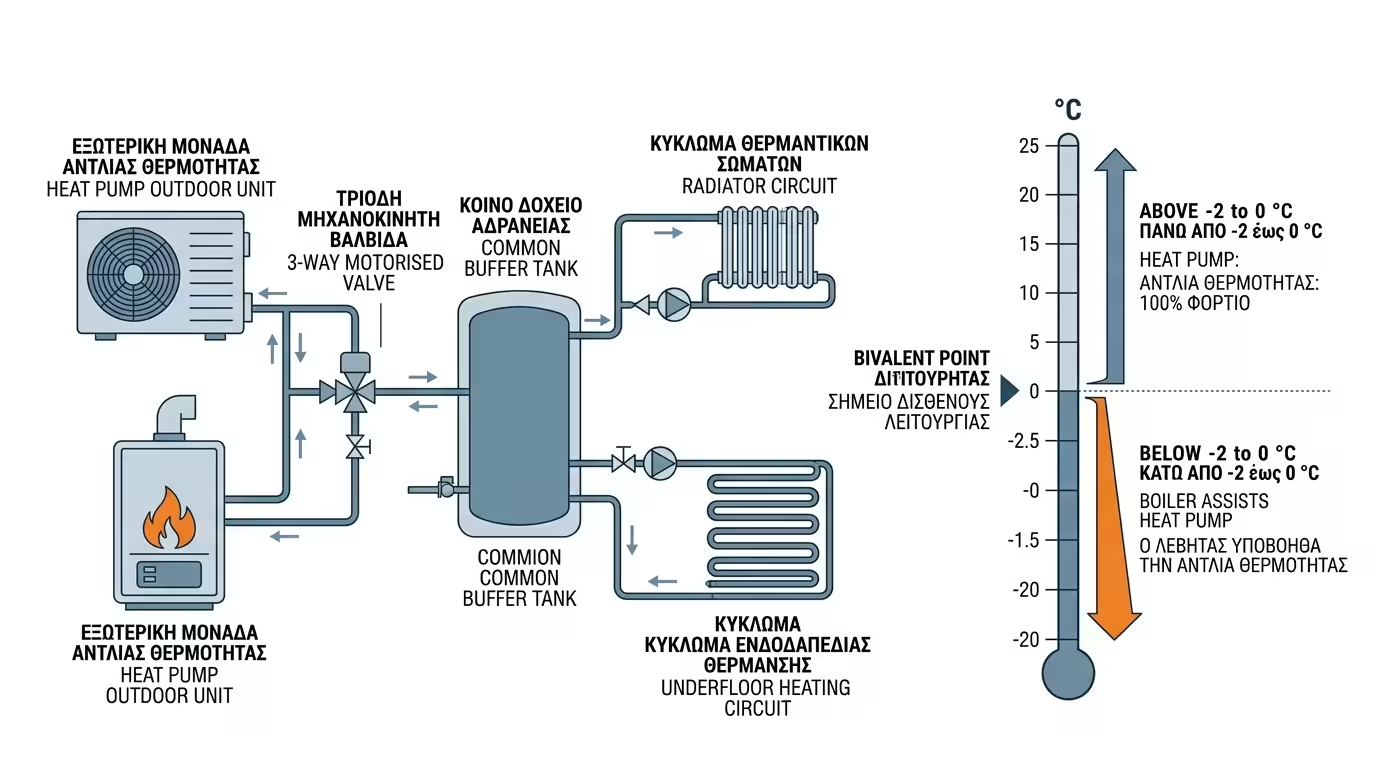
In simple terms, it's an installation where the heat pump and the boiler (gas or oil) are connected to the same piping and work harmoniously together to heat your home.

Hybrid bivalent system - heat pump and boiler connected in parallel

🧠 The Smart Controller

The two machines don't work randomly. A central "smart" thermostat (Hybrid Controller) continuously reads the outdoor temperature and, depending on how cold it is, decides which of the two machines is cheaper to run at that moment. The decision is automatic, with no input required from you.
🔗 Hydraulic Connection

Typically, the two machines are connected via a Buffer Tank for proper hydraulic integration. This ensures smooth switching between heat sources without thermal "shocks" to the system.

2. How It Works in Practice: The Bivalent Point

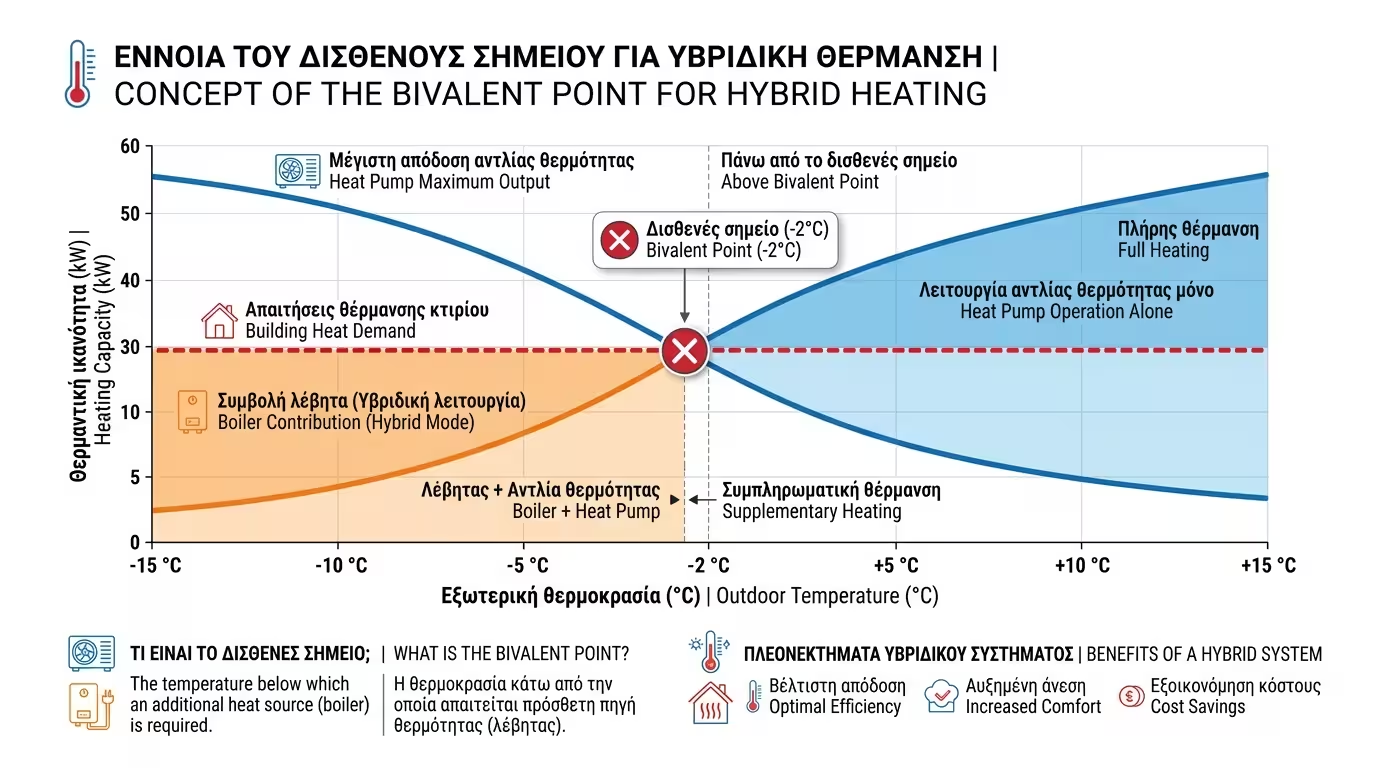
To understand the magic of the hybrid system, you need to know the term Bivalent Point. This is the temperature (e.g., +2°C) below which the heat pump begins to lose its tremendous efficiency and the controller hands the job over to the boiler.

Bivalent Point - equilibrium temperature between heat pump and boiler

☀️ Phase 1: Mild Winter (+15°C to +5°C)

The heat pump works alone. The boiler is completely off. Because the weather is mild (as it is most days in Greece), the pump achieves a superb COP (4.0+) and heats your home practically for free. This phase covers approximately 300 days per year.

🌡️ Phase 2: Moderate Cold (Around the Bivalent Point)

The heat pump continues working, but the controller "wakes up" the boiler to provide supplementary heat. The water heats up quickly thanks to the combined output of both machines. This transitional zone lasts only a few days each winter.

❄️ Phase 3: Severe Winter / Frost (Below 0°C)

The heat pump shuts off completely! At these temperatures, the electricity the pump would consume to reach 65°C at the radiators would be prohibitively expensive. The boiler takes over exclusively, delivering hot water (75°C) through the pipes with speed and reliability.

3. What Are the Benefits of a Hybrid Installation?

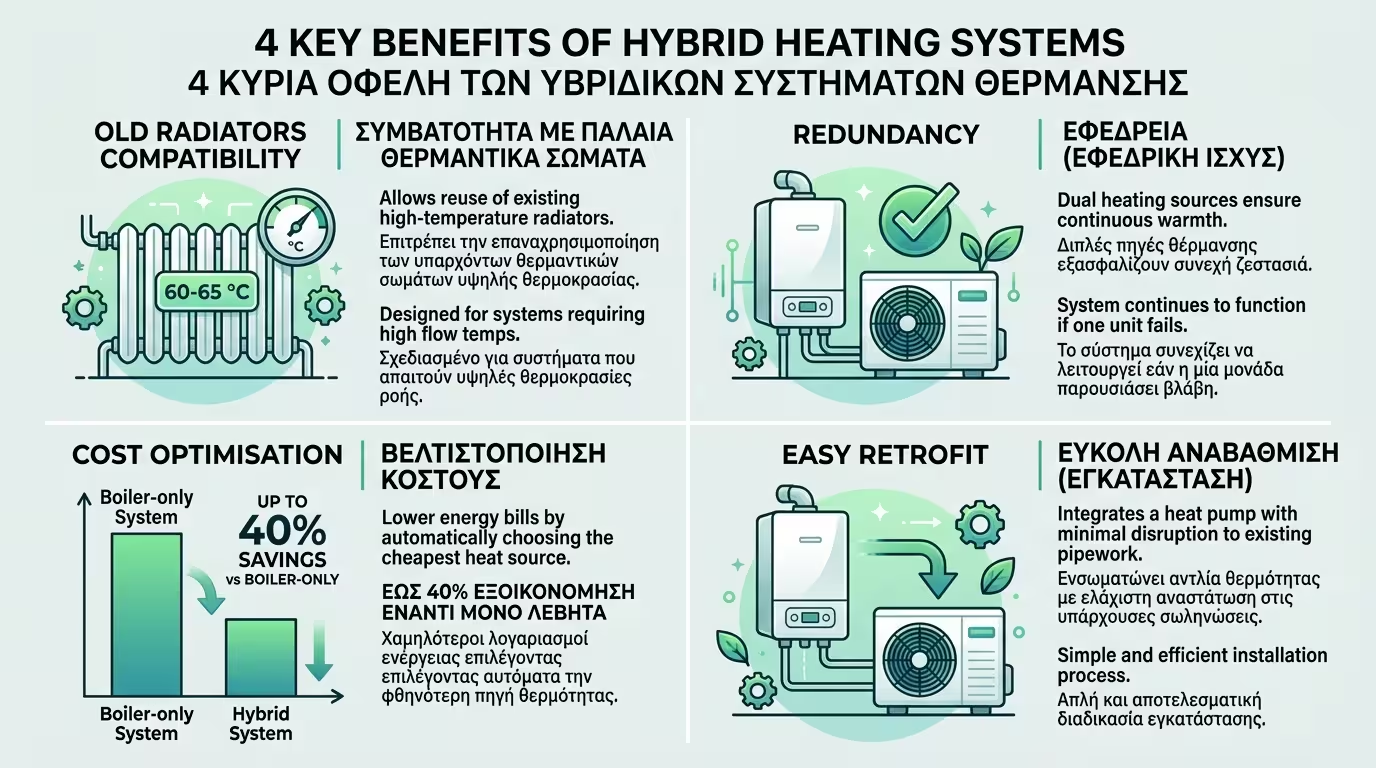
Benefits of hybrid installation - redundancy, economy, radiator compatibility

Instead of buying an enormous, expensive high-temperature heat pump to cover the 10 coldest days of the year, you keep your boiler and purchase a smaller, much cheaper mid-temperature pump.

🔧 Perfect Compatibility with Old Radiators

In November and March, the house heats perfectly with the pump's warm water. In January during snowfall, the boiler sends hot water to your old (small) radiators, ensuring you're never cold.

🛡️ Total Security (Redundancy)

You always have a Plan B. If the pump breaks down, fire up the boiler. If you run out of oil or gas, switch to the pump. You're never left in the cold.

💰 Lower Purchase Cost

You avoid the "oversizing" problem we discussed in the previous article. A smaller pump costs less, lasts longer and works ideally for 90% of winter. The savings on the initial purchase can reach €2,000–3,000 compared to a high-temperature unit.

4. Drawbacks & When Is It Really Worth It?

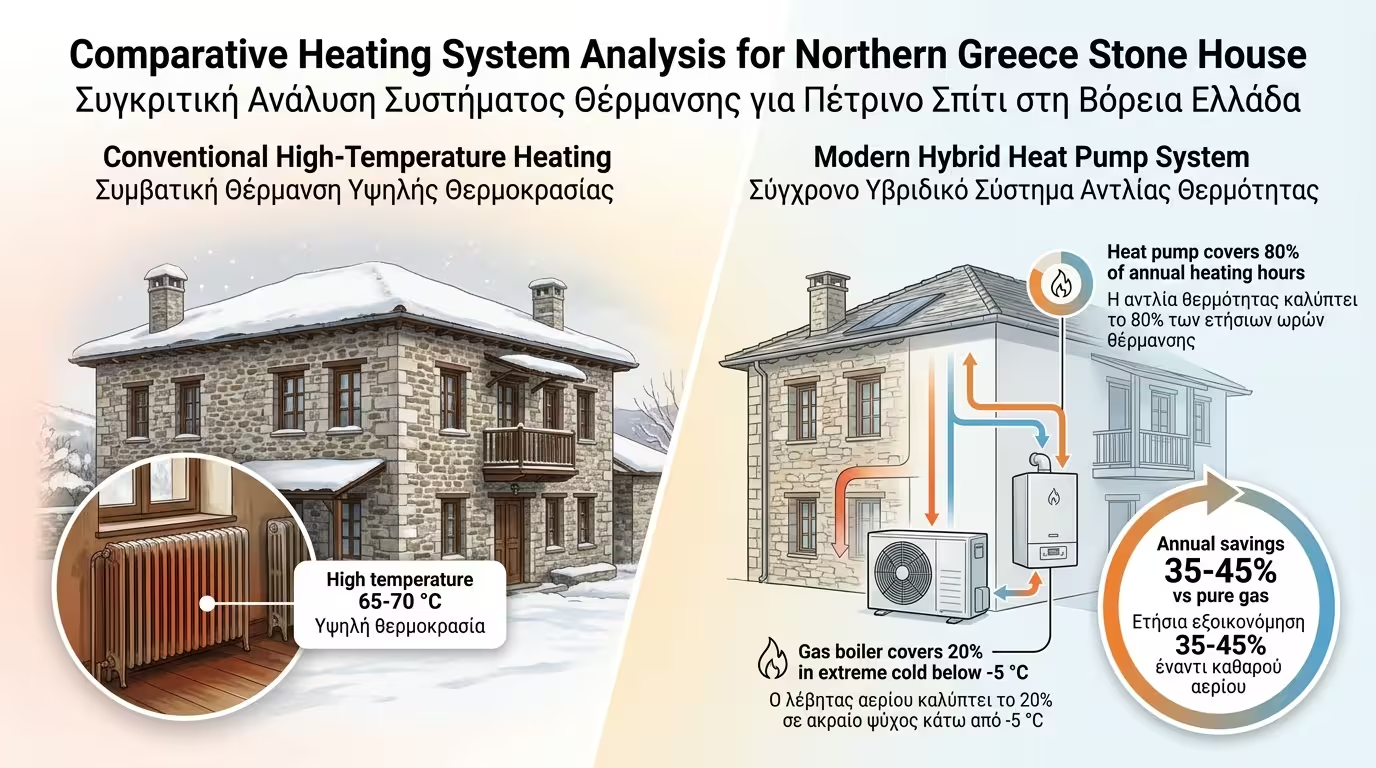
The hybrid system is the ultimate solution for Northern Greece (e.g. Kozani, Florina, Ioannina) or for large, old, stone houses with "heavy" classic radiators that cannot heat up with low water temperatures.

Hybrid system - ideal for Northern Greece and old houses with heavy radiators

📐 Requires Space

Both machines must coexist in your home (or on the balcony / boiler room), usually alongside a Buffer Tank for proper hydraulic connection. This can be problematic in small apartments.

🔩 Double Maintenance

You'll need to pay for annual servicing of both the boiler (cleaning, flue gas analysis) and the heat pump (refrigerant, filters). Additionally, if you keep the gas boiler, you'll continue paying the monthly standing charges from the gas company, even if you only fire it up 15 days a year.

✅ Smooth Transition

It allows you to enter the new era of energy savings, making a smooth transition without destroying your existing investment. You keep the boiler as a safety net, reap the enormous benefits of the heat pump for 300+ mild days, and achieve 50-60% savings with zero risk.

5. Summary & Next Step

📖 The Takeaway

The Hybrid (Bivalent) System combines the benefits of two technologies: the economy of the heat pump and the reliability of the boiler. It's ideal for cold climates, older installations, or households wanting a gradual transition with zero risk.

➡️ Next Step

What if your goal isn't simply to reduce your bill, but to eliminate it entirely? In the next article, we explore the combination of a Heat Pump with Photovoltaics (Net Billing) - how to turn the Greek sun into completely free heating and cooling.

Related Articles

Preview