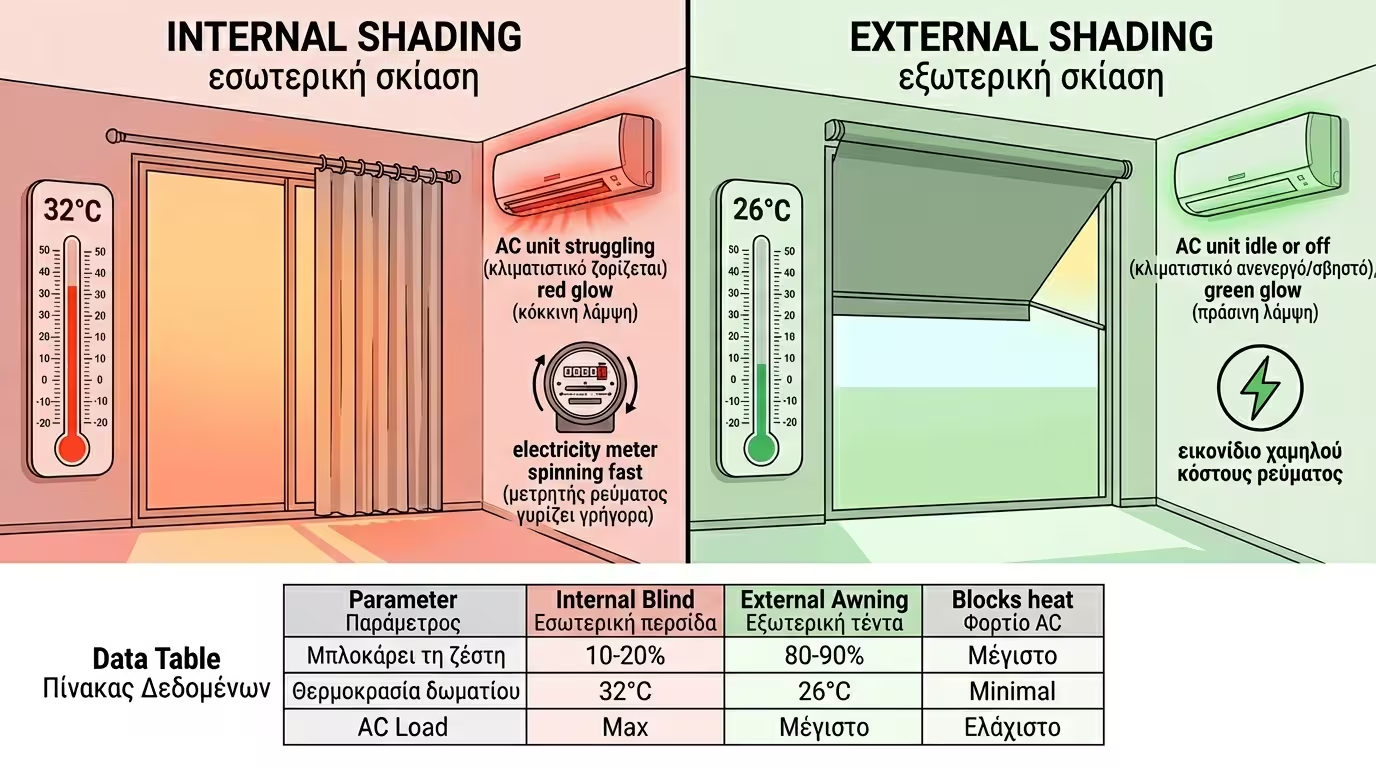
External vs Internal Shading: Why Interior Curtains Don't Protect You from the Heat

It's midday in August. The sun is "hammering" the west-facing window of your living room. Your first, instinctive reaction is to pull the heavy, dark curtains or lower the internal roller blinds. The room darkens, the glare stops, and you feel momentary relief.

But a short while later, the temperature starts climbing uncontrollably and the air conditioner struggles to keep up. What went wrong? Why didn't the curtain keep the heat out? The answer lies in how glass behaves with solar radiation. We debunk the myth of internal shading and explain why external shading is the ultimate ally of your air conditioner.

The Physics of Glass: The "Greenhouse Effect" in Your Living Room

To understand the problem, we need to see how heat travels. Solar radiation arrives at your home as short-wave energy (visible light). Your window glass is "transparent" to these short waves - it lets them pass through without resistance. This is the root of the entire problem: the energy enters the home through the glass but cannot easily escape back out.

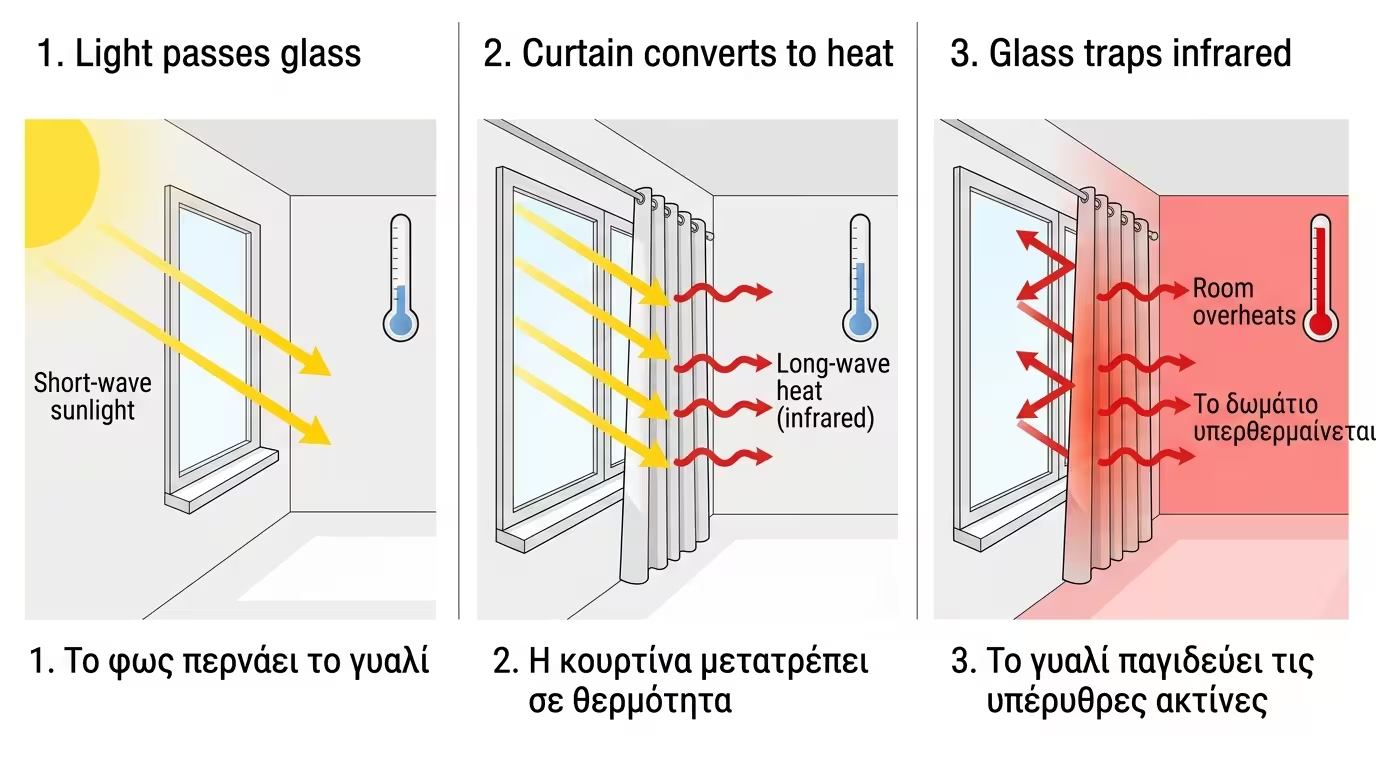
Greenhouse effect indoors – glass lets light pass, curtain converts to heat, infrared trapped inside

1️⃣ Light passes through glass

Sunlight passes through the glass and hits the internal curtain (or the floor, or the sofa). At this point, the radiation has already entered the home - whatever you do afterwards, the energy is already inside your space.
2️⃣ Conversion to heat

The curtain absorbs the light and converts it into heat. This heat is then re-emitted back into the room as long-wave radiation (infrared). In effect, the curtain acts as a massive, unwanted radiator inside your room.

3️⃣ The trap

The glass, which was previously "transparent" to light, now acts as an impenetrable wall against heat (long-wave radiation). The heat cannot escape and is trapped inside the room. This is exactly the greenhouse effect - a reservoir of heat that keeps growing inside your living space.

Internal Shading: Curtains, Blinds & Roller Blinds

If you have relied exclusively on internal shading systems for your home's coolness, you have practically lost the game before it even started. The solar radiation has already penetrated the glass and the thermal energy is inside your home. The curtain simply diffuses the heat; it does not stop it.

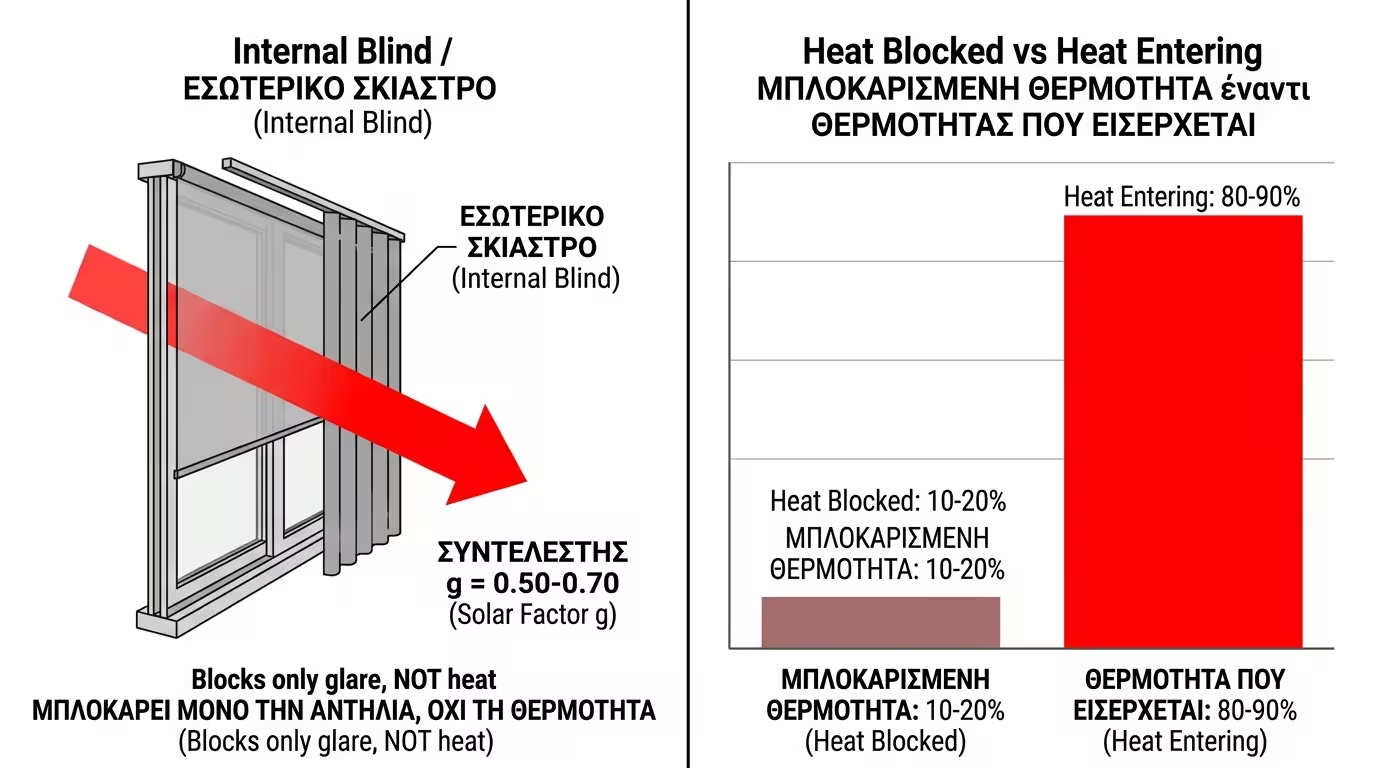
Internal shading – curtain and blind block only 10-20% of heat, energy is already inside

✅ What they offer

Glare control (so the sun doesn't blind you while watching TV), privacy (so the neighbours can't see in) and interior decoration. For these purposes they are irreplaceable - no external system covers these needs.

❌ What they DON'T offer

Coolness. An internal blind blocks a mere 10% to 20% of thermal energy. The remaining 80% stays in your space, overheating the building and forcing the air conditioner to work overtime.

📐 The number that matters

The solar factor (g-value) of an internal blind typically ranges between 0.50 and 0.70. This means it allows 50–70% of solar energy through. Under summer conditions, this translates to virtually non-existent thermal protection.

External Shading: The Golden Rule - "Block BEFORE the Glass"

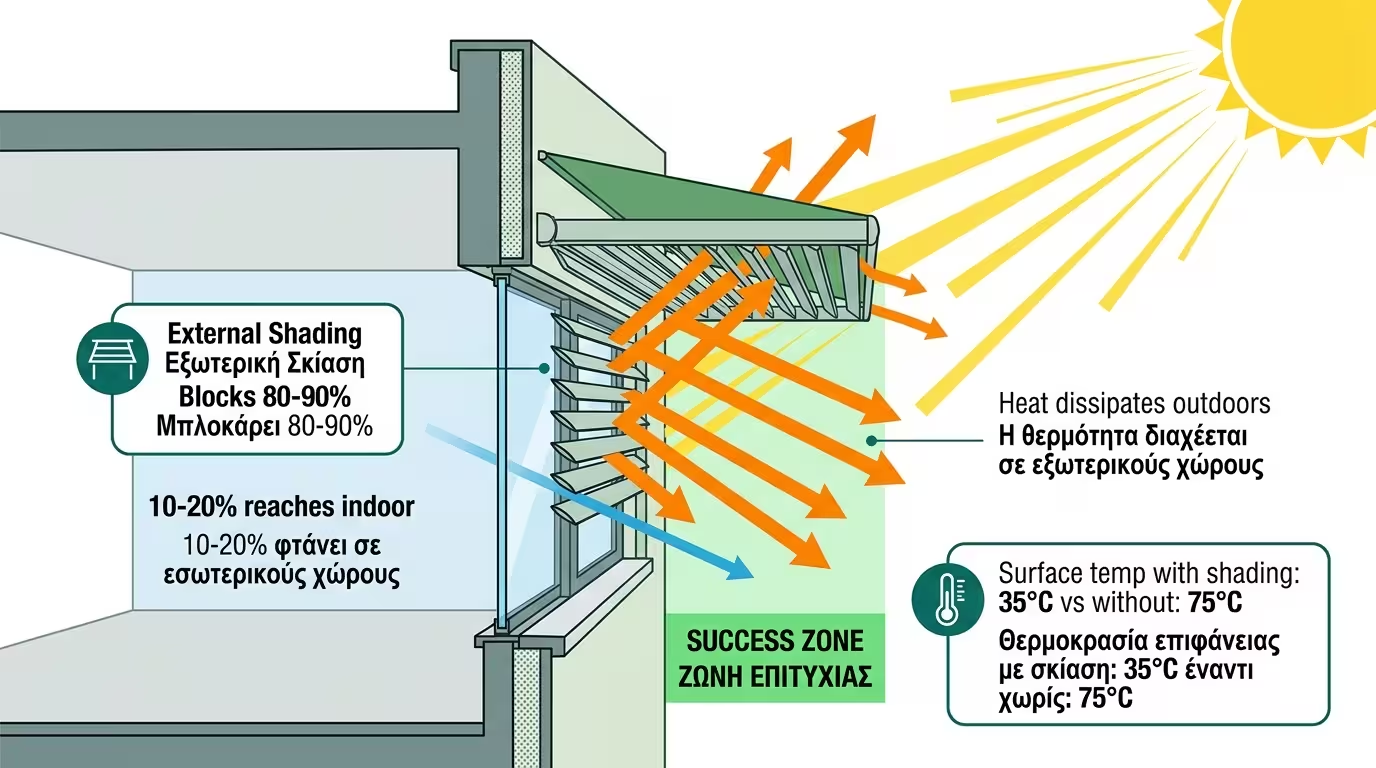
The golden and inviolable rule of Bioclimatic Design: Stop the sun BEFORE it touches the glass! If you place the barrier externally, sunlight hits it, is converted to heat outside the building, and that heat dissipates freely into the ambient air. The glass stays cool.

External shading – awning and louvre blocking 80-90% of solar heat before it reaches the glass

📊 The efficiency

A proper external shading system (such as an aluminium external louvre or a quality awning) can block up to 80% to 90% of solar thermal energy. This means the indoor temperature stays low naturally, without the need for energy-hungry air conditioning.

💰 The result

The need for air conditioning drops dramatically, the electricity bill "deflates" and the lifespan of the air conditioner increases because it works far less. The investment in external shading typically pays for itself within 2 to 4 years.

🔧 Types of external shading

Awnings (retractable or fixed), external aluminium louvres, external roller shutters, architectural Brise-Soleil, bioclimatic pergolas and green curtains (climbing plants). Each solution has advantages depending on the orientation and intended use.

Summary: Internal vs External - The Decisive Comparison

Comparison of internal vs external shading – room temperature with curtain vs awning

The internal curtain is a decorative element, not an energy-saving tool. If you want a genuinely cool home in summer, the investment must be made on the external side of your windows. The difference in comfort and in your wallet is immediately noticeable from the very first day of the heatwave.

🏠 Practical advice

Now that we have established that the battle against the sun is fought externally, what "weapons" do we have at our disposal? Is a simple fabric awning enough, or does modern architecture offer smarter and more durable solutions? The answer depends on the orientation of each façade and the climatic conditions of your region.

🔗 Next step

In the next article we analyse External Shading Systems: external aluminium louvres, bioclimatic pergolas, striking architectural Brise-Soleil and perforated fabrics. The complete comparative guide for every building type.

Related Articles

Cooling Energy Production & Air Conditioning

Return to category.

Go to category

Preview