🔴 At midday
All employees are at their desks, the Fan Coil units are running, so the 100 cubic metres of water are absolutely necessary. The pump is working at its full design capacity, exactly as intended.
If we compare the air conditioning of a massive building (like a hospital or a hotel) to the human body, then the Chiller is the lungs that cool the blood. The pipe network is the veins. But what makes the "blood" (the chilled water) circulate non-stop to every floor is the heart: The AC Pump Station.
In a great many older (or poorly designed) buildings, these massive water pumps are a "hidden energy vampire". They can be responsible for as much as 20% to 30% of the total electricity bill of the entire installation.
Imagine a 10-storey office building. In the basement there is a chiller and a massive 15-horsepower pump. In old systems, this pump had only one speed: Full blast (100%). The moment the building opened in the morning, the pump started pushing 100 cubic metres of water per hour, at full force, to every floor.
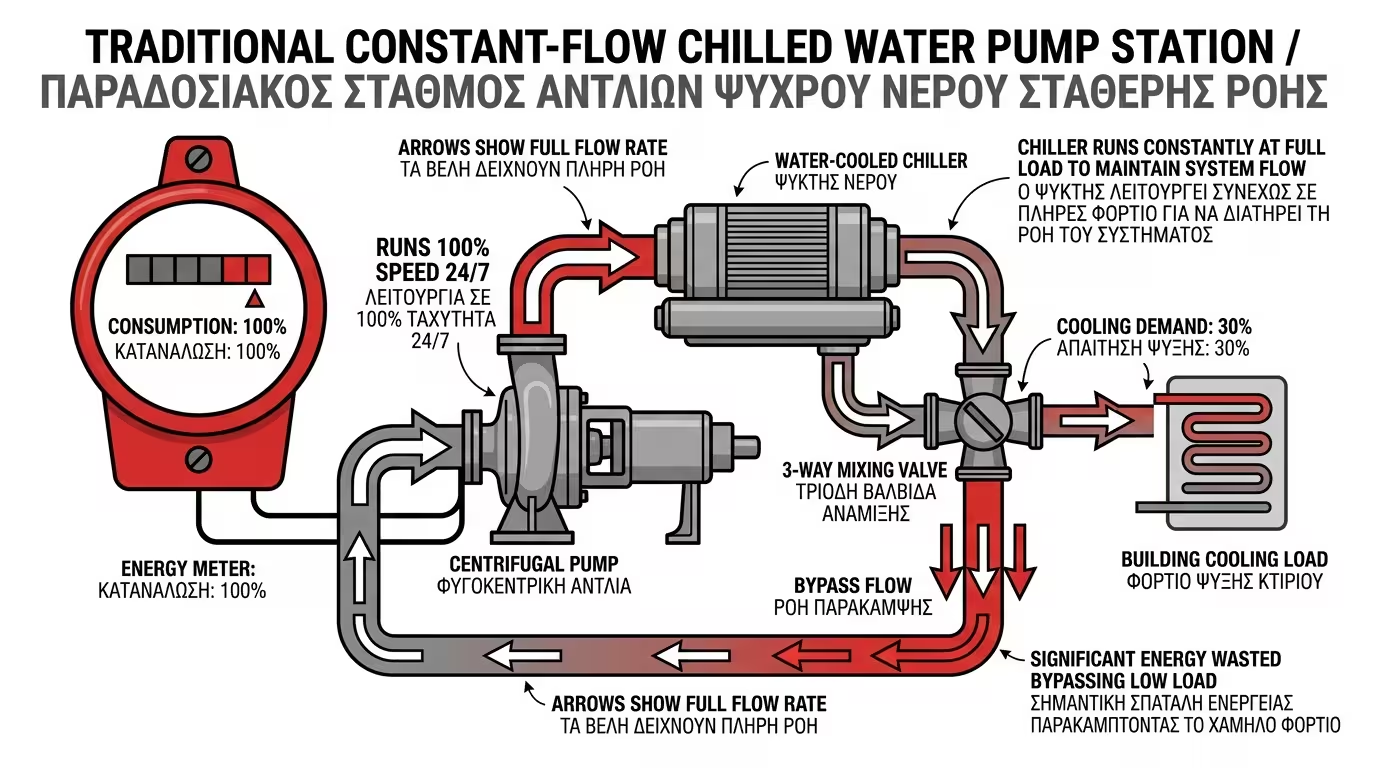
All employees are at their desks, the Fan Coil units are running, so the 100 cubic metres of water are absolutely necessary. The pump is working at its full design capacity, exactly as intended.
Half the employees leave. They switch off the Fan Coils in their offices (closing the water valves). The building now needs only 40 cubic metres. The old pump doesn't know this - it continues to "scream" at 100%, trying to push 100 cubic metres into a network that has closed half its "doors".
This not only burns enormous amounts of electricity for no reason, but also creates terrifying pressure in the pipes, making the Fan Coils "whistle" under the strain of the water. This is the single biggest hidden energy vampire in large buildings.
The first and most fundamental energy upgrade step is adding Variable Speed Drives (Inverter/VFD) to the pump motors. The Inverter is an electronic "brain" that reads the differential pressure in the piping and automatically adjusts the pump speed.
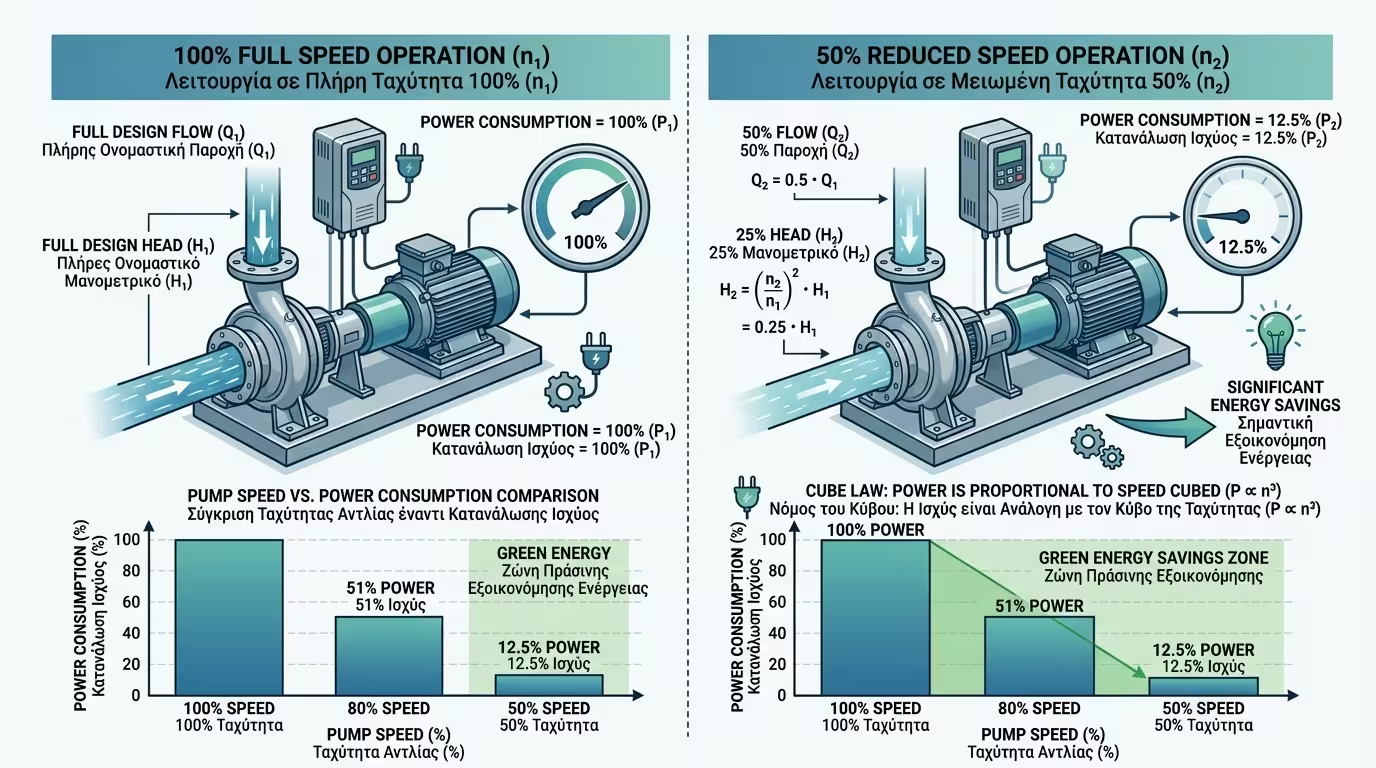
When employees switch off their Fan Coils in the afternoon, the pipe pressure rises (because water finds closed doors). The Inverter detects this immediately and instructs the pump: "Reduce your speed, we don't need that much water". The pump "drops speed" and operates at just 40%.
If you reduce a pump's speed by 50%, the power consumption doesn't drop by 50% - it drops by 87%! Power is proportional to the cube of the speed (P ∝ N³). A small reduction in speed delivers a gigantic reduction in electricity costs.
A 15 kW pump running at 50% speed consumes only approximately 1.9 kW instead of 15 kW. The annual savings can exceed €8,000–12,000 per pump in a large building.
We installed Inverters on the pumps to cut speed and save energy. However, the massive Chiller in the basement detests variable water flow. If you reduce its water flow suddenly, the refrigerant can freeze, the heat exchanger will crack open, and the €100,000 machine will be destroyed.
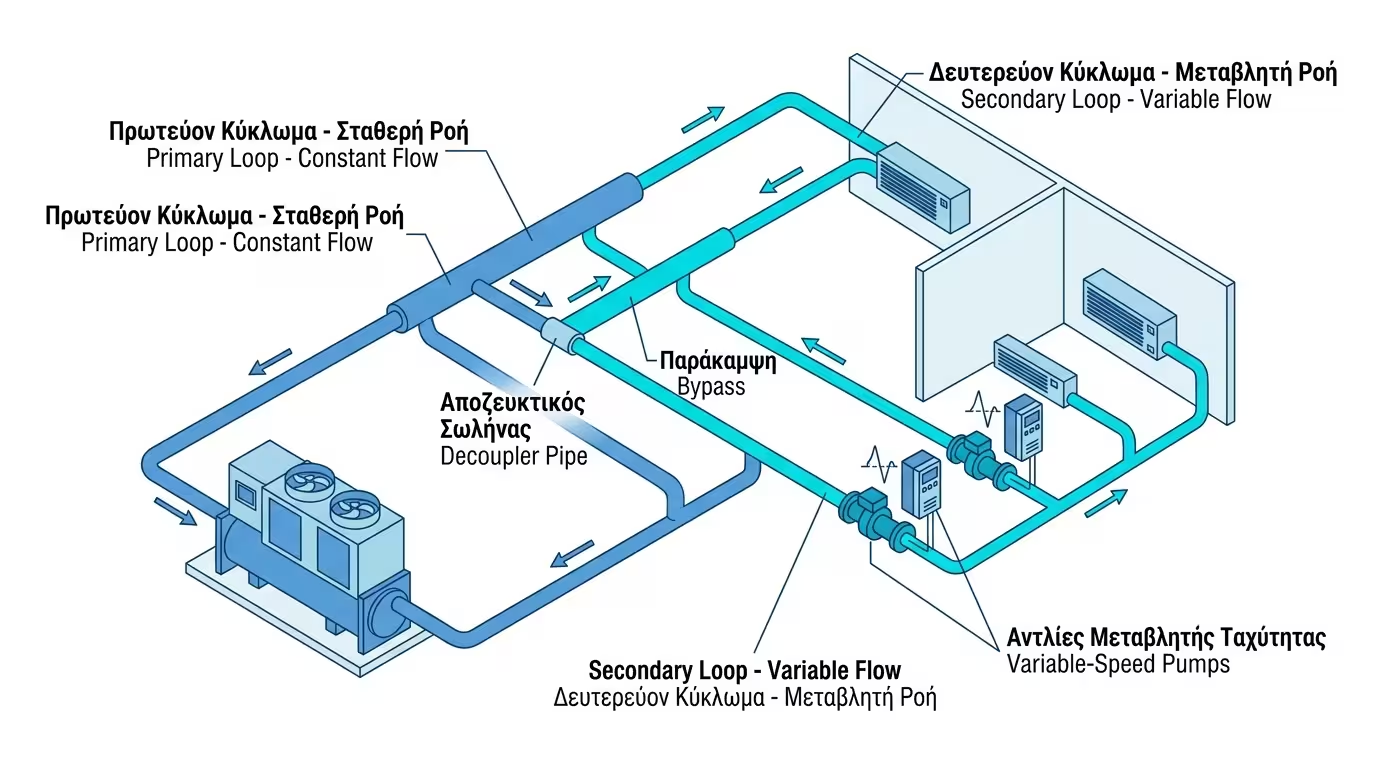
Consists of small constant-speed pumps that circulate water in a short loop: Chiller → Header → Chiller. They ensure the chiller always receives a steady, full flow so it never runs the risk of freezing.
Starts after the header and goes to the building floors. This is where we install the large Inverter pumps. They "pull" from the header only as much chilled water as the building actually needs at that moment. If the building needs little water, the Inverter pumps idle. The surplus simply recirculates in the primary loop.
The common pipe connecting both loops. It functions as a "shock absorber": it absorbs the flow differences between the chiller and the building. If the Inverter pumps draw less water, the surplus returns calmly to the chiller via the bypass.
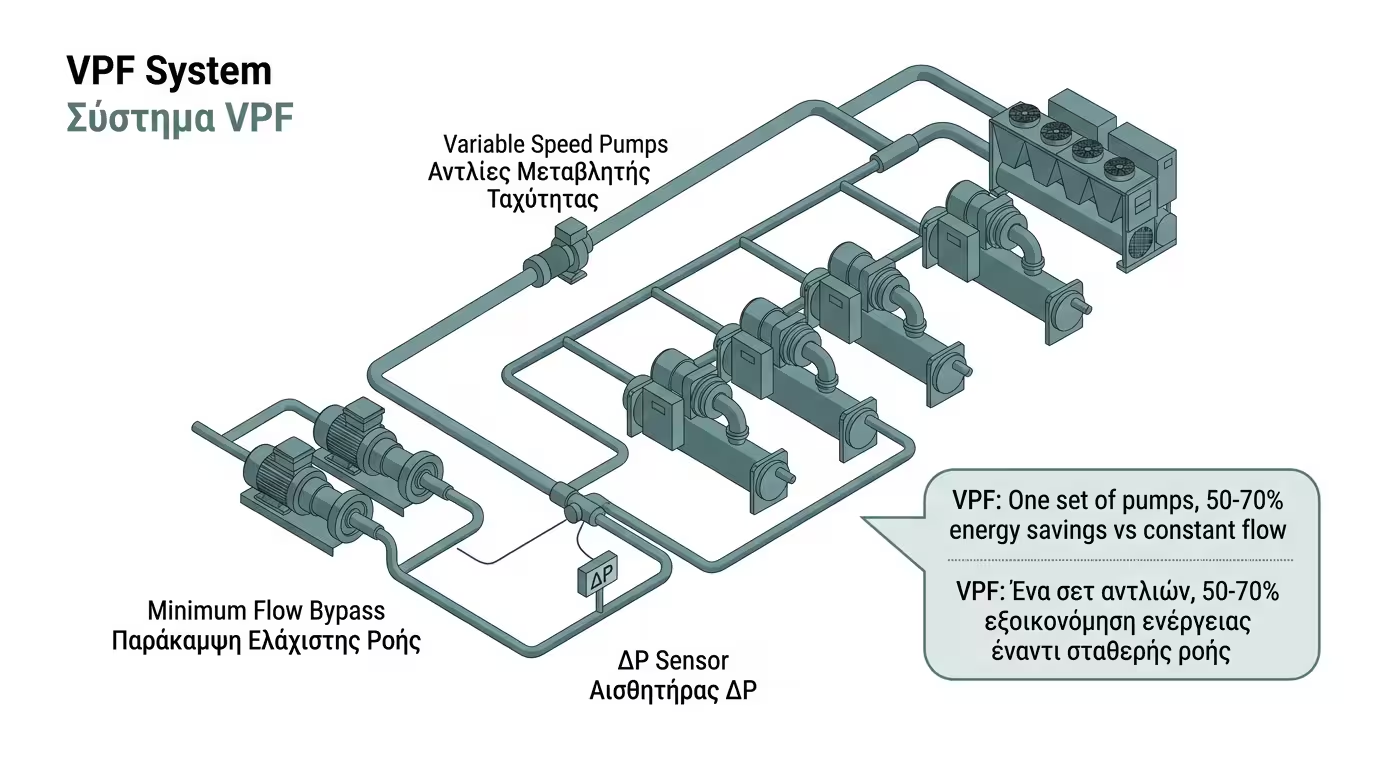
Thanks to state-of-the-art building automation (BMS) and advanced chiller control software, the industry has moved to the age of Variable Primary Flow (VPF) - a radical simplification that completely eliminates the primary loop pumps.
A single set of large Inverter pumps varies the water flow through the entire system (including through the chiller itself). Smart software controls everything in fractions of a second and opens a bypass valve at the end of the network so the chiller never "runs dry" of its minimum required flow.
Eliminates half the basement pumps, dramatically reducing installation cost, floor space and energy. At the same time, efficiency increases because every litre of water circulating does real work with no wasteful standby loops.
VPF demands "surgical" precision in design and programming by experienced engineers. The minimum flow through the chiller must be guaranteed at all times (typically via a modulating bypass valve at the end of the network), otherwise the machine freezes internally.
Upgrading an old pump station with Inverter circulators and smart differential-pressure sensors is perhaps the investment with the fastest payback period in a large building: typically 1.5 to 3 years.
If your building still has pumps running permanently at 100%, you are literally throwing money away every single day. Request a specialist energy assessment from a qualified engineer - the savings will surprise you.
Return to category.
Go to categoryReturn to the central guide.
Go to guide