Earth-to-Air Heat Exchangers: How the Subsoil Pre-Cools Your Air for Free

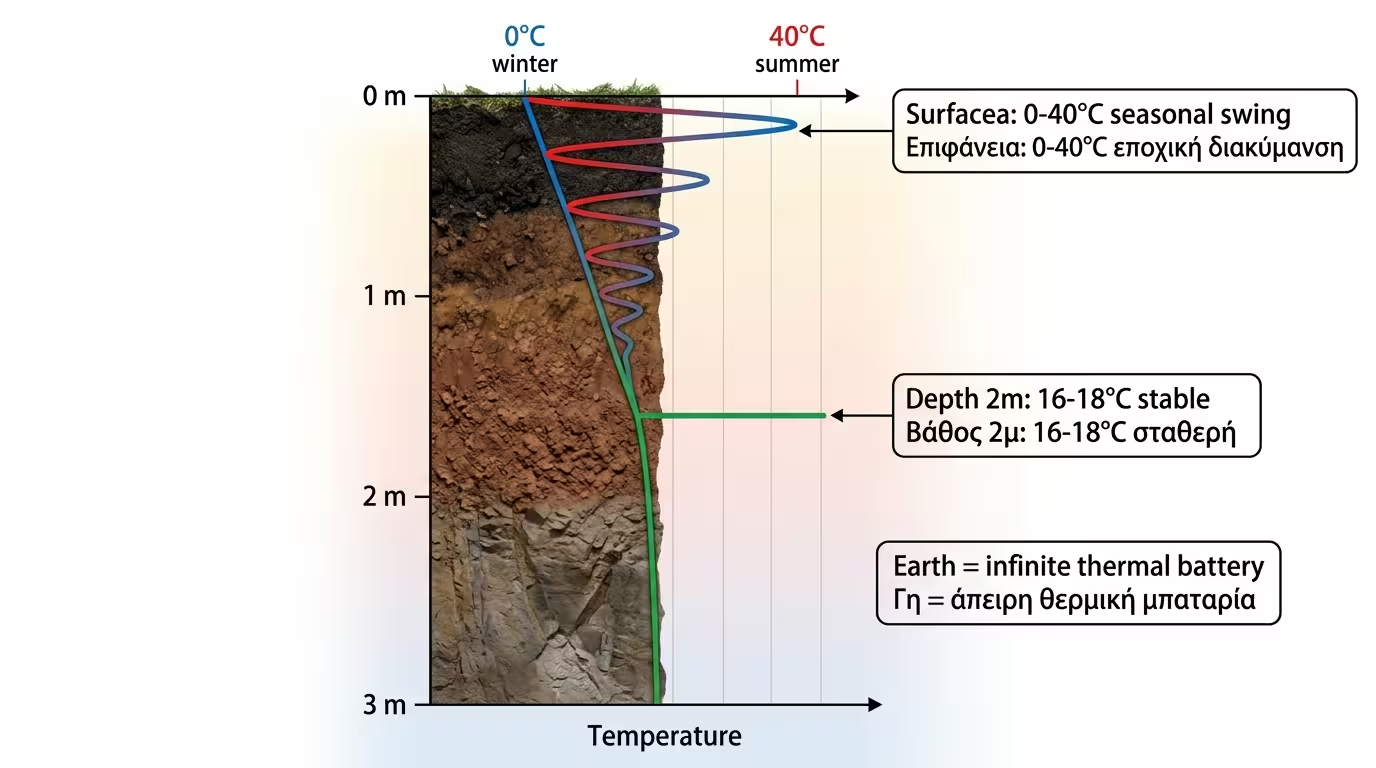
If you have ever descended into a deep underground cellar or a cave in the middle of summer, you will have felt an eerie coolness. Even while the cicadas are "bursting" at 40°C outside, the cave temperature remains steadily cold. This is due to the enormous thermal inertia of the planet.

The soil, at a depth of more than 1.5 to 2 metres, is unaffected by daily weather changes. In Greece, the subsoil at this depth maintains a nearly constant temperature of 16°C to 18°C all year round. Bioclimatic design "stole" this secret from nature and created the Earth-to-Air Heat Exchanger.

How It Works: The Underground "Journey"

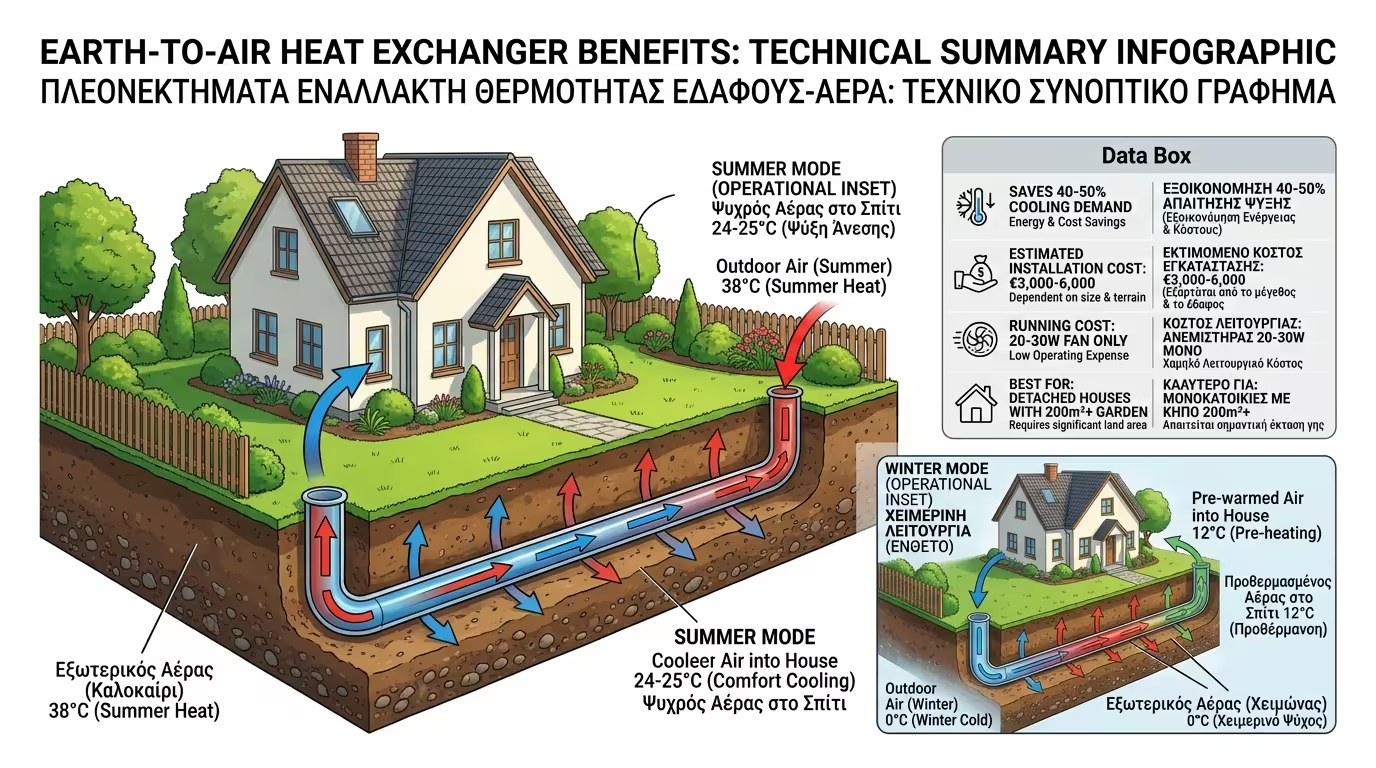
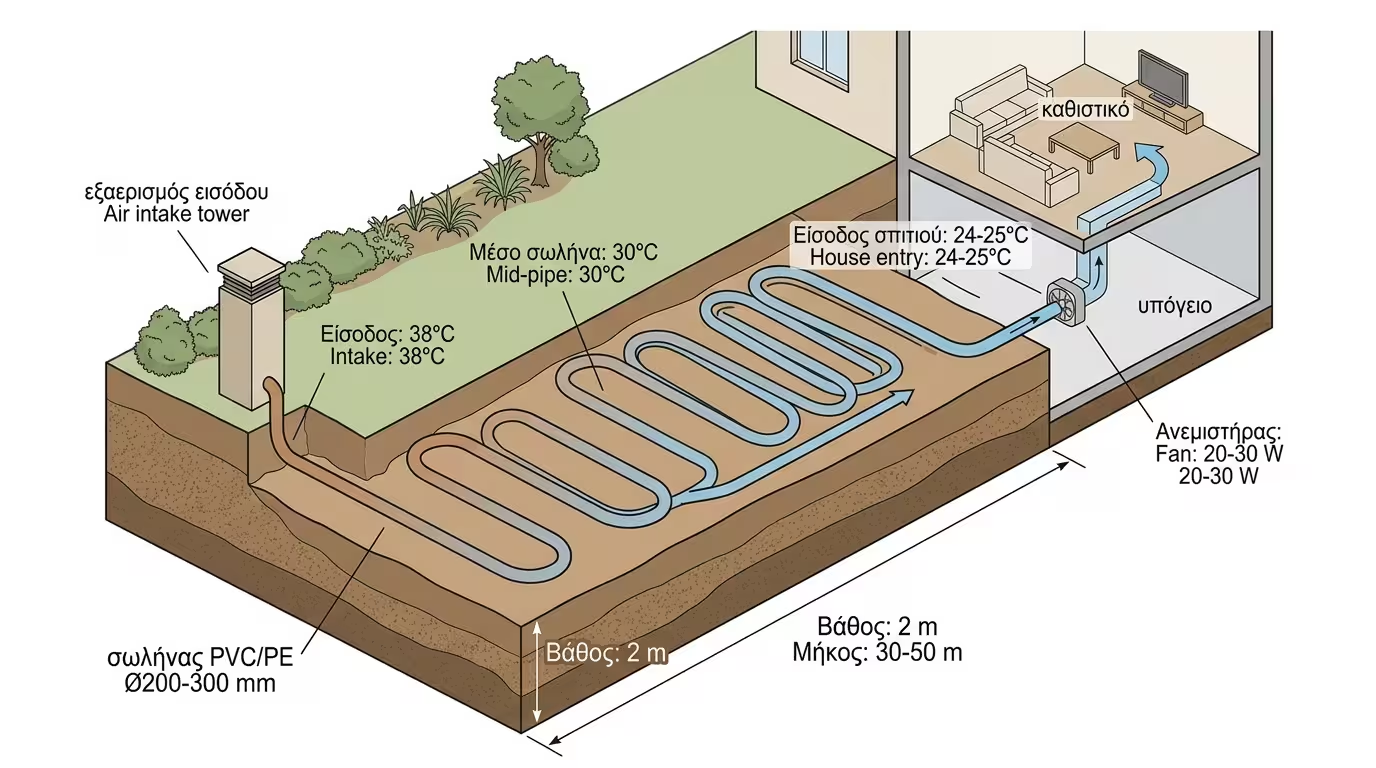
Instead of drawing fresh air directly from outside (which in August burns at 38°C), we use a clever trick: we place an "intake tower" in the garden and bury a large plastic pipe at ~2 metres depth, running 30 to 50 metres through the soil. A small fan forces the hot air to travel through the buried pipe, rubbing against its cool walls.

Earth-to-air heat exchanger principle – underground soil temperature 16-18°C stable, cools hot air

🌡️ The result

When the air finally reaches your living room, its temperature has dropped to 24°C to 25°C! You have introduced 100% clean, fresh and cool oxygen into your home without switching on a single air conditioner. The only running cost is the 20–30 Watts consumed by the small fan.
❄️ Works in winter too

The same system works in reverse during winter: it sucks in freezing 0°C air, passes it through the 17°C soil, and delivers "pre-heated" air at 12°C. This saves an enormous heating load and noticeably reduces the demand on your radiators.

Installation: Pipes, Depth & Planning

The pipe (typically PVC or PE, 200–300 mm diameter) is buried 1.5–2 metres below the garden in a serpentine path. Installation occurs exclusively during the excavation phase, before the garden is landscaped. For this reason, it requires early planning before construction even begins.

Earth-to-air pipes buried 2 metres deep in a serpentine path through the garden, 30-50 metres long

📐 A large plot is required

For the air to cool sufficiently, it must travel many metres underground. You need a sizeable garden or yard - not applicable to a city-centre apartment building. The technique suits detached houses, rural buildings and new bioclimatic projects.

💰 Installation cost

The cost of excavation at 2 metres depth with a digger, along with the pipes and fittings, ranges between €3,000 and €6,000. The investment pays for itself within 5–8 years through reduced cooling and heating bills.

The Hard Truth: The "Thorns"

It sounds like the ultimate energy "hack" - so why doesn't every house have a buried pipe in its yard? As engineers, we must explain the limitations of this specialised technology so there are no unpleasant surprises.

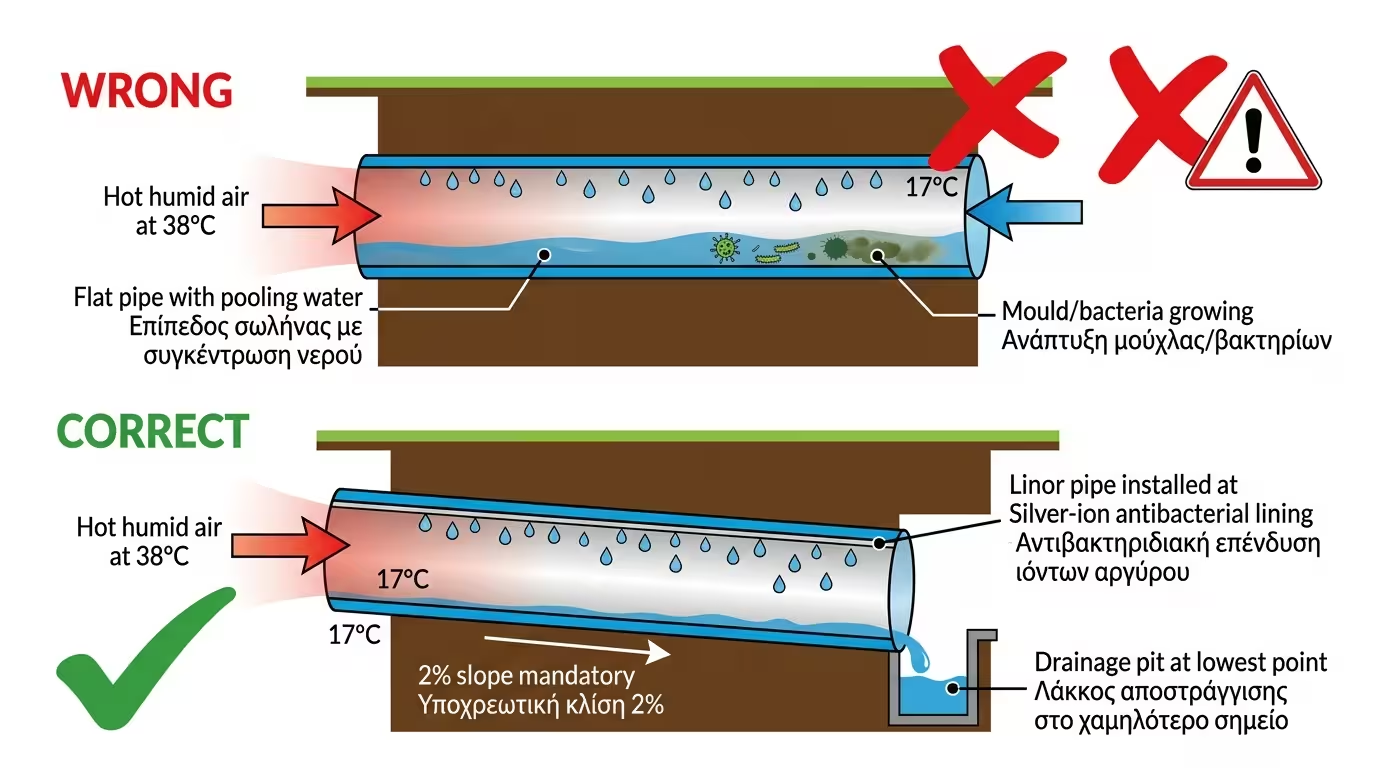
Condensation mould risk – pipe slope 2% drainage, antibacterial silver-ion pipe lining

💧 Condensation & mould

When hot, humid summer air meets the cold pipe walls, the moisture condenses (like a cold water bottle "sweating"). If the pipe is buried flat, the water pools, creating mould and bacteria. A ~2% slope, a drainage pit and antibacterial pipes with silver-ion lining are essential.

⚡ Does not replace air conditioning

The earth-to-air exchanger is a pre-conditioning system. It saves 40–50% of the cooling demand, but in a crowded living room or with a west-facing glass wall, the 25°C air won't suffice. It is the ideal "partner" for your AC, halving its running hours.

Summary: The "Formula 1" of Bioclimatic Cooling

Earth-to-air heat exchanger summary – detached house with cool air entering, warm air exiting, no AC

Earth-to-Air Heat Exchangers are the "Formula 1" of bioclimatic design. If you are building a detached house outside the town plan and include the system from the very start in the architectural drawings, you will enjoy pristine, naturally tempered air for a lifetime - with a running cost of just 20–30 Watts for the small fan.

✅ Ideal scenario

New detached house, garden of at least 200 m², with the earth-to-air exchanger designed alongside the foundations. Construction cost €3,000–6,000, running cost near zero. Best combined with a mechanical ventilation system (MVHR) with heat recovery.

🏙️ Urban alternative

For urban buildings without a garden, the alternative is ground-source heat pumps (boreholes). They exploit the same principle (stable ground temperature) but via water instead of air, requiring much less space.

Related Articles

Cooling Energy Production & Air Conditioning

Return to category.

Go to category

Preview