Ideal Air Conditioner Placement: Where to Install the Indoor and Outdoor Units

Installation day for your new air conditioner has arrived. The HVAC technician walks in with his tools, looks at the space and asks: "Where do you want it?".

Most of us answer based on aesthetics: "Put it in that corner where it's less visible" or "Hang it right above the sofa because the socket is there". Unfortunately, this is the recipe for a daily nightmare. An air conditioner in the wrong position means frozen necks, noise, reduced efficiency and a thermostat that "gets confused" and shuts off the machine before the house is cool.

Correct placement follows the strict rules of fluid mechanics. Let us see in simple terms where it is permitted and where it is forbidden to place each unit.

1. Rules for the Indoor Unit (Inside the Home)

The indoor unit has two jobs: to draw in the room's warm air (from its top) and to blow out cold air (from its louvres). Its position determines whether you will enjoy or suffer.

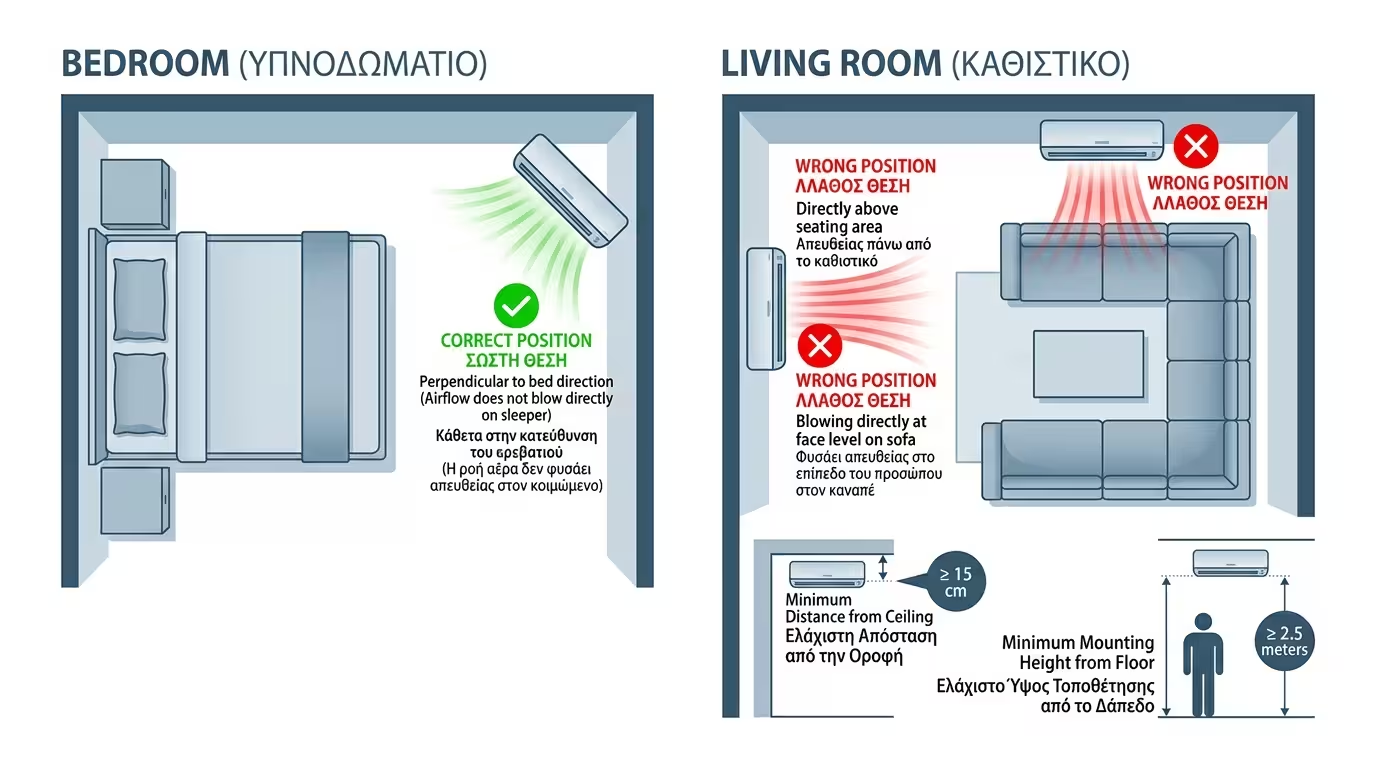
Indoor unit placement rules - above headboard, not facing the bed

🚫 1. The Golden Rule: Never "Above" Us!

Cold air must never blow directly at the spots where we sit for many hours. In the Bedroom: It is forbidden to place it directly opposite the bed. The ideal position is above the headboard (or on the side wall), adjusting the louvres to blow high so the air creates an "umbrella" and falls gently. In the Living Room: Don't place it opposite the sofa or above the dining table. Position it facing the open, free space.
💨 2. Let It "Breathe" (Clearance from the Ceiling)

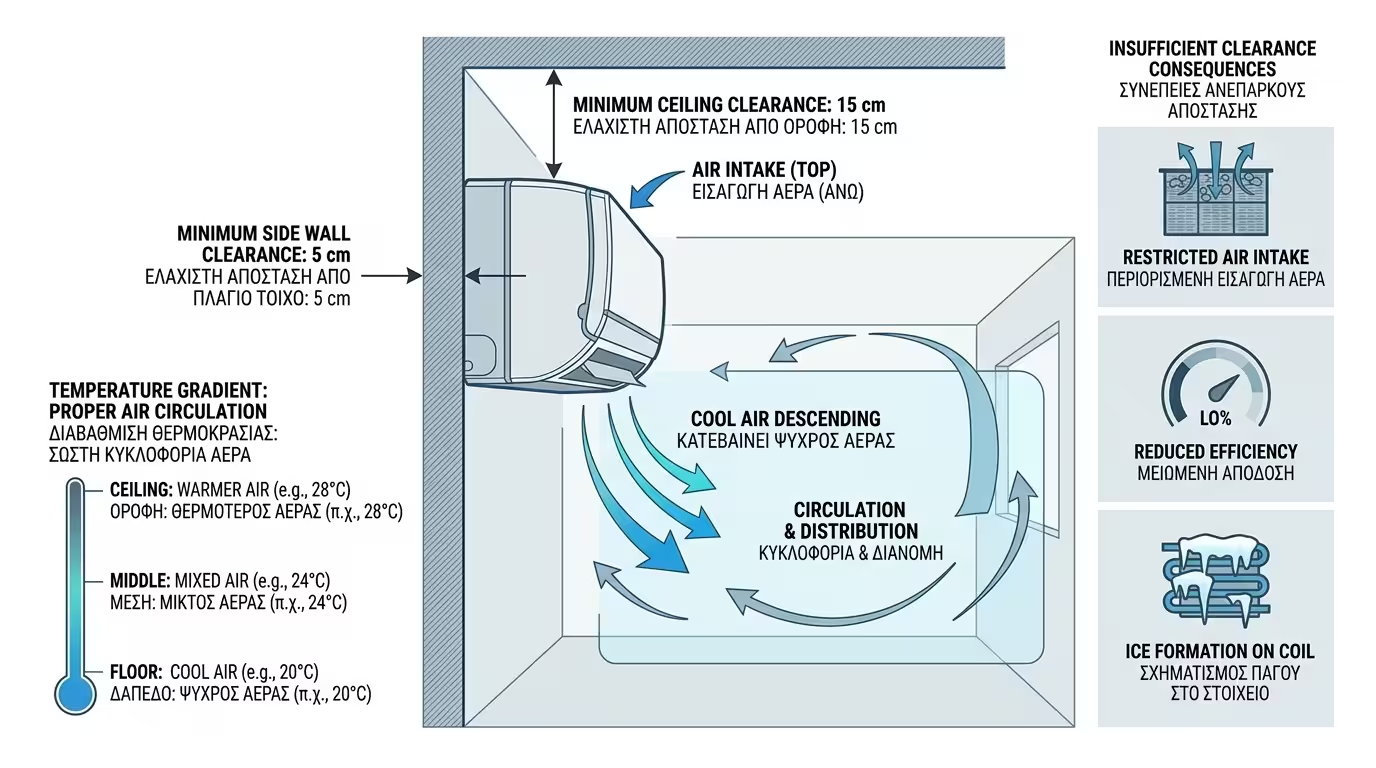
If the installer sticks the unit flush to the ceiling, it will "suffocate". It won't be able to draw in air, the fan will strain, create noise and performance will drop by half. Correct clearance: At least 15-20 cm from the ceiling and at least 10 cm from side walls.

Air conditioners draw air from above. Without sufficient clearance, the fan strains as if you were trying to breathe with your nose pinched.

Air conditioner clearance from ceiling and walls - 15-20 cm minimum gap

📏 3. Exploit the "Throw"

Air needs space to travel. If you place the unit in a narrow corridor blowing at the opposite wall just 2 metres away, the air will "hit" the wall, bounce back, the sensor will read that the room is cold (when it isn't) and the compressor will shut off prematurely (Short-cycling). Place it on the "narrow" wall of an elongated room so it "fires" along the longest dimension.

🔥 4. Away from Heat Sources

Never place the indoor unit directly above or next to the oven, above a radiator or fireplace. The local heat will "blind" the thermostat, forcing the machine to run non-stop at full power, wasting electricity.

2. Rules for the Outdoor Unit (On the Balcony)

The large outdoor compressor is the "heart" of the system. Its summer job is to expel the home's heat into the environment. It needs enormous quantities of fresh air to function correctly.

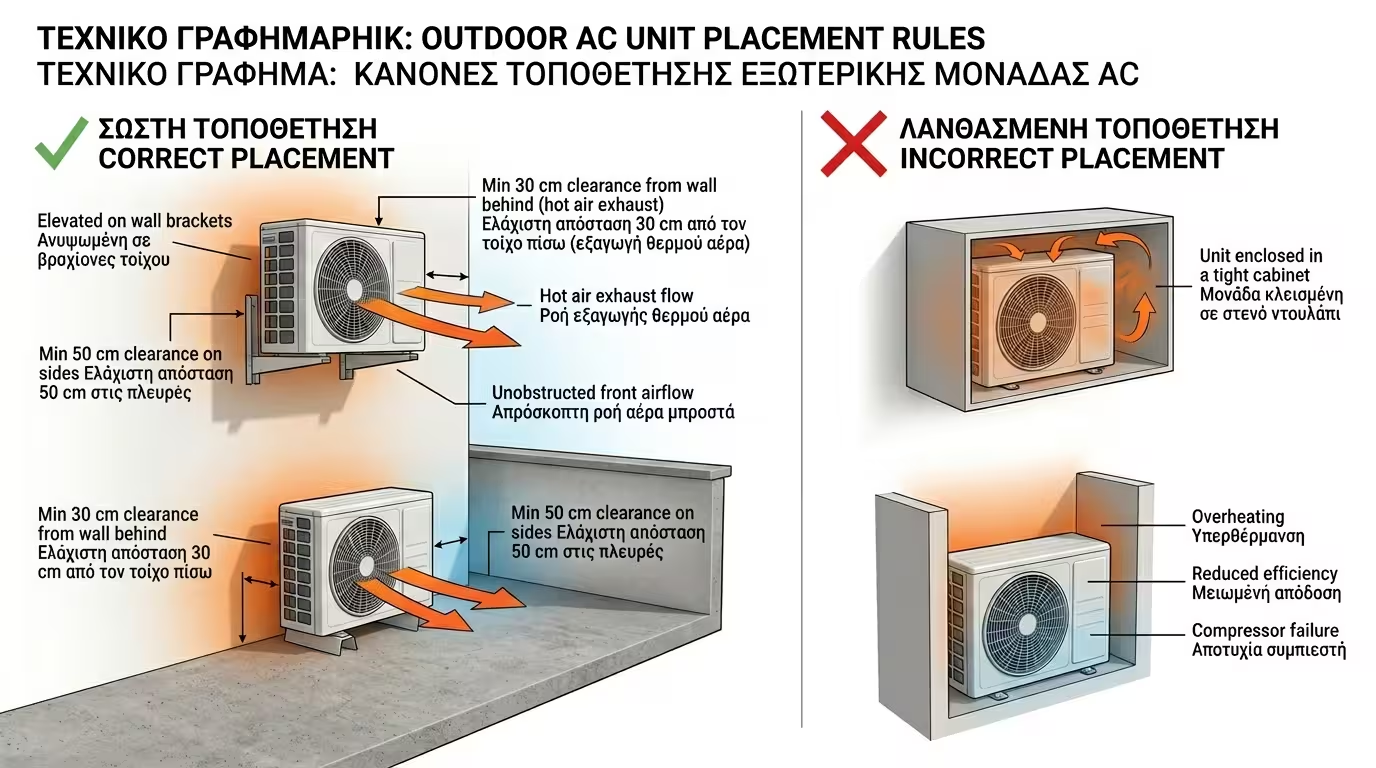
Outdoor air conditioner unit - ventilation, space, maintenance access

🌬️ 1. Adequate Ventilation - Don't Enclose It in "Boxes"

Don't put it inside narrow, enclosed balconies with solid railings and no airflow. Don't hide it behind decorative wooden panels or dense plant pots. If the hot air gets trapped and the unit starts re-inhaling it, it will overheat, lose its efficiency (consuming electricity without cooling) and ultimately the compressor will burn out.

📐 2. Distance Between Units (Piping Length)

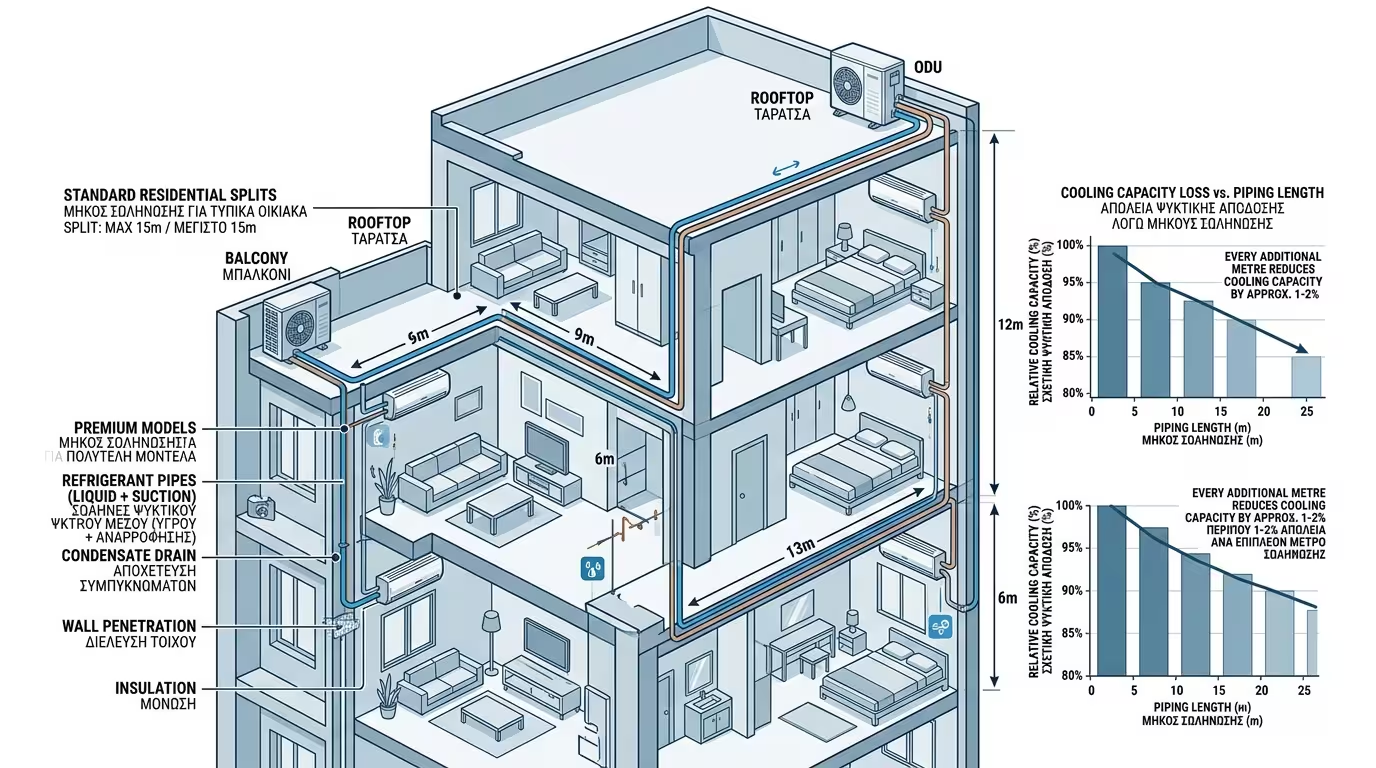
The indoor and outdoor units should be "close, but not too close". Minimum: Copper pipes should not be shorter than 2-3 metres - with just 50 cm, the refrigerant won't cycle properly, you'll hear whistling and vibrations. Maximum: Beyond 10-15 metres, performance drops and extra refrigerant is needed.

The rule says "close, but not too close". The ideal distance falls between 3 and 10 metres.

Piping distance 2-15 metres between indoor and outdoor units

🔧 3. Maintenance Access (Service)

Don't hang the outdoor unit in the light well, 10 metres above ground with no balcony below! The air conditioner needs annual servicing. The technician must be able to reach it safely to clean the coil, check the fluids and measure the refrigerant pressure. An air conditioner without annual maintenance gradually loses up to 15% of its cooling capacity per season. If it's inaccessible, it will never be serviced.

💡 Practical tip: Always ask the installer to show you a photograph of exactly where each unit will be placed before drilling any holes in the walls. A small change of just 30 centimetres can make an enormous difference to both comfort and performance.

3. Summary

🎯 50% Machine, 50% Installation

Installing an air conditioner is 50% the machine and 50% the technician's work. A top-of-the-range unit placed in the wrong spot will perform worse than an average machine in the correct position. Insist on finding the golden mean between your own aesthetic preferences and the manufacturer's strict guidelines so you can enjoy silent, healthy coolness for years to come.

➡️ Next Step

Now that we have ensured the airflow won't hit us, let's look at what kind of air we are breathing. In recent years, following the pandemic, air conditioners advertise Ionisers, UV-C lamps and "magic" filters that kill everything. Do they really work?

Related Articles

Cooling Energy Production & Air Conditioning

Return to category.

Go to category

Preview