Ducted Air Conditioning: A Design Guide for Completely Concealed and
Silent Cooling
You have spent thousands of euros on the interior design of your new
home or commercial space. You have carefully selected the lighting,
colours and furniture. And suddenly, you realise you need to hang a
huge, plastic air conditioner on the most prominent wall - one that
screams its presence.
The solution to this aesthetic nightmare is Ducted Air Conditioning. It represents the pinnacle of luxury cooling, where the unit
disappears entirely inside the ceiling, and cool or warm air diffuses
into the space through elegant, thin slots (linear diffusers).
However, "hiding" an air conditioner is not a simple affair. It requires
serious mechanical engineering design, correct ductwork calculation and
close collaboration with the architect. Let us see how ducted systems
work and what the 3 golden rules are so you don't regret your choice.
What Is a Ducted System and How Does It Work?
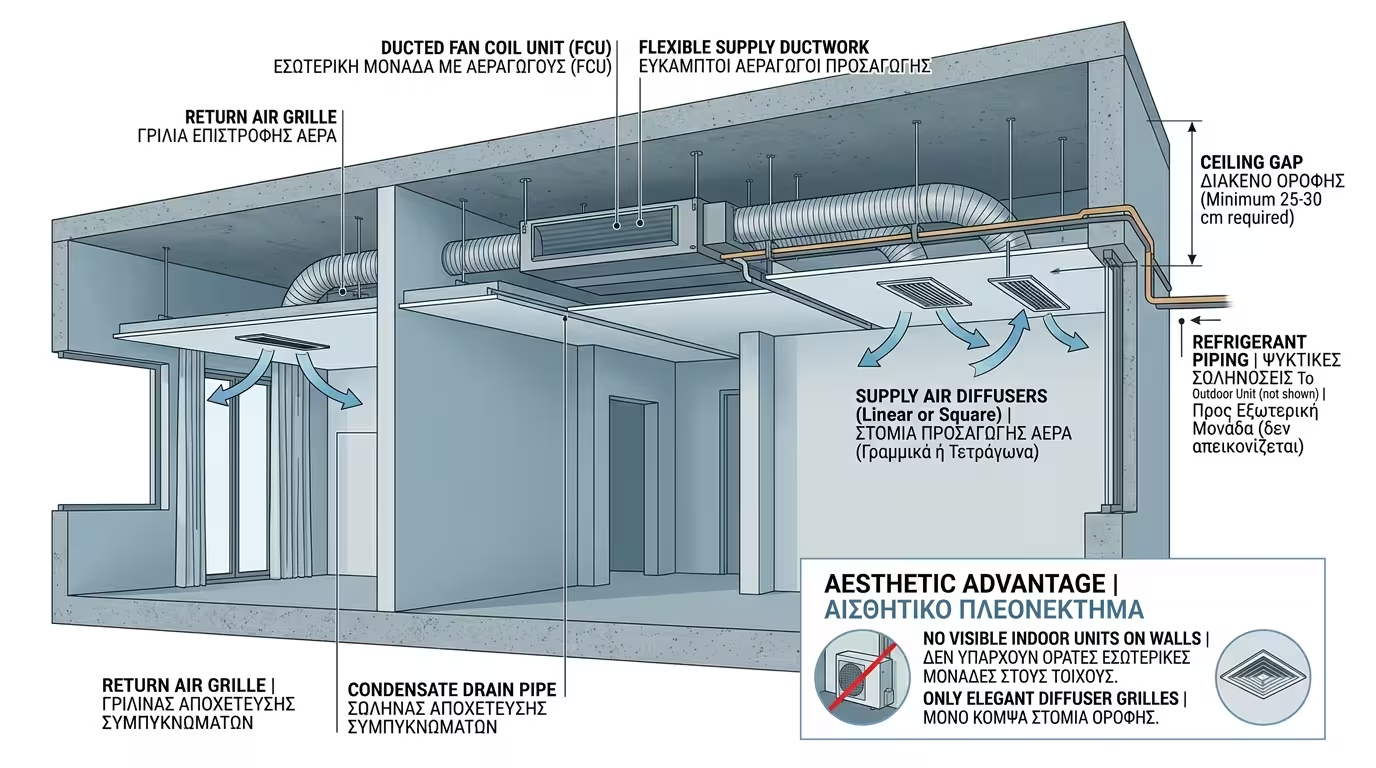
Unlike a standard wall-mounted air conditioner (which draws in and
blows air directly from its body), a ducted unit is a large, metal box
that is permanently hidden inside a false ceiling (usually
plasterboard) in the hallway, bathroom or entrance area of the home.
🔧 Ducts & Diffusers
From this "invisible" unit, special tubes (ducts or "channels")
travel hidden inside the ceiling and terminate at the various rooms. At
the end of each duct, a grille or diffuser sits flush
with the plasterboard, through which air exits silently into the room.
🏠 One unit, multiple rooms
A single ducted unit can supply multiple rooms simultaneously
via the ductwork. You can have one diffuser above the sofa, another above
the dining table and a third in the kitchen - all controlled by a single concealed unit.
The 3 Major Advantages of Ducted Air Conditioning
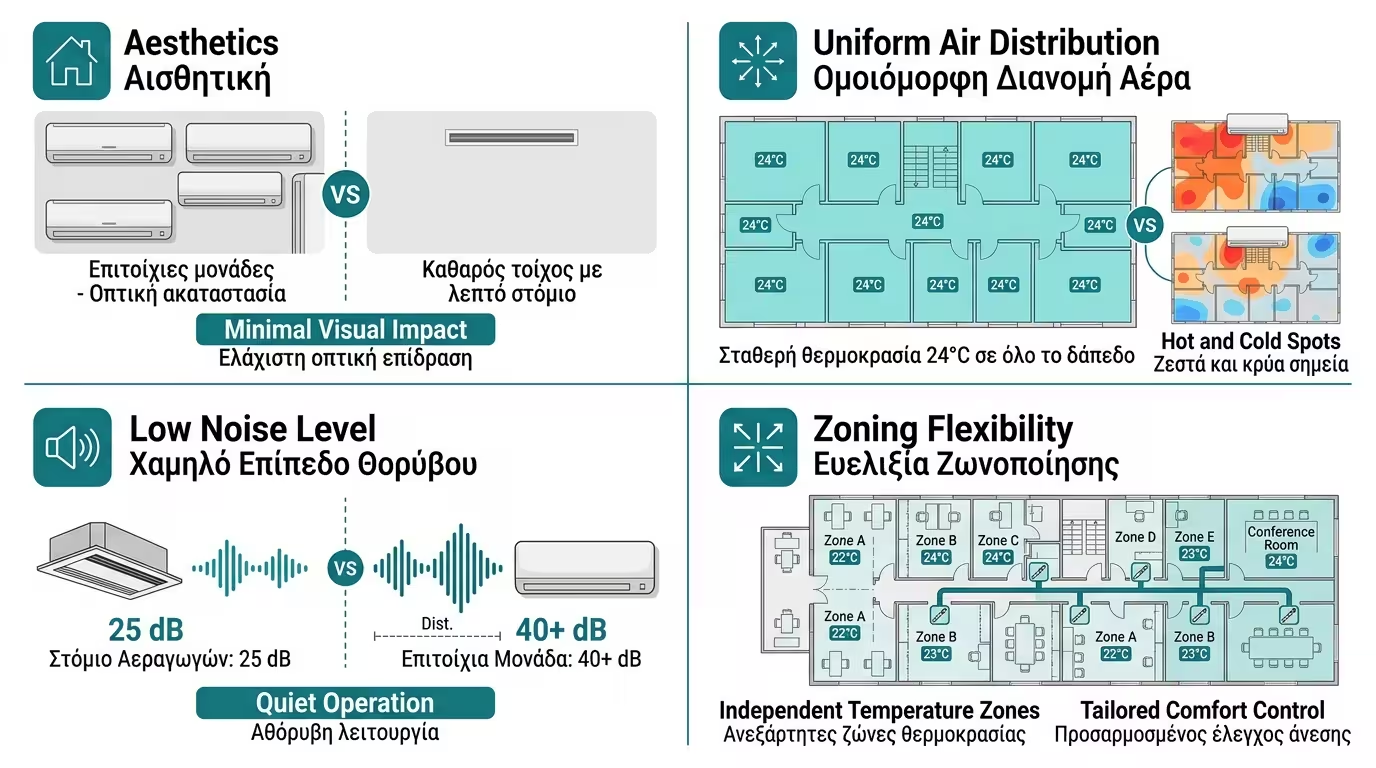
Ducted air conditioning is not simply an alternative to a standard
wall-mounted split. It is an entirely different philosophy: the unit vanishes and the climate control becomes an integral part of the architecture.
✨ 1. Ultimate Aesthetics (Invisible Cooling)
The unit simply does not exist in your field of vision. Instead of a
plastic lump, you have only discreet Linear Slot Diffusers. These can be painted to match the wall colour, run around the
perimeter of the living room or be integrated with concealed
lighting, delivering a stunning, minimal result.
🌡️ 2. Uniform Temperature Distribution
With a wall-mounted unit, if you sit directly below it you freeze,
while at the other end of the room you roast. With a ducted system,
air is distributed intelligently through multiple diffusers. The
temperature is perfectly identical in every square metre of the space. No more "cold drafts" and "hot corners".
🤫 3. Zero Noise
Because the unit itself (and its fan) is hidden far away - e.g. in
the bathroom ceiling or hallway - behind sound-insulating
plasterboard, in the bedroom you hear only a gentle, imperceptible whisper of air emerging from the diffuser. Ideal for light sleepers.
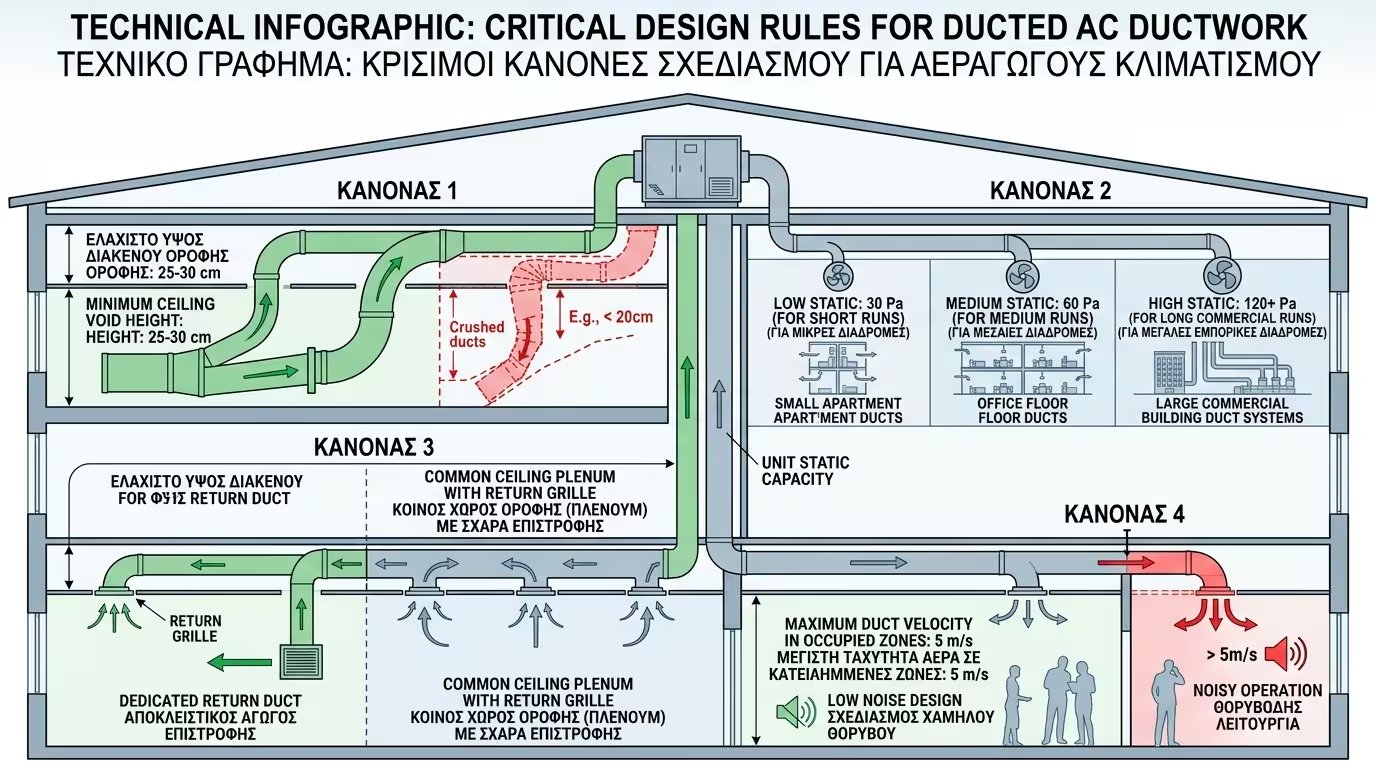
The 3 Non-Negotiable Design Rules
Installing a ducted system is a mechanical engineering project. If the
technician cuts corners, the problems will be enormous. Here are the 3
non-negotiable rules.
📏 Rule #1: False Ceiling Space
You cannot install a ducted system in a flat with low-ceiling rooms
(e.g. 2.60m). To conceal the unit and route the insulated ducts, the
plasterer needs to lower the ceiling by 30 to 40 centimetres. If you don't have that headroom, the space will feel
claustrophobic. This is why ducted units are typically installed in
new builds or homes with generous ceiling heights.
💨 Rule #2: Static Pressure & "Whistling"
The air must travel through narrow ducts for several metres,
creating resistance (Static Pressure). If the installer uses ducts
that are too narrow to save space or money, the air will constrict,
accelerate and the diffusers will start whistling annoyingly. Correct duct sizing by a mechanical engineer and the use of
plenum boxes behind the diffusers are essential.
🔄 Rule #3: Return Air (The Most Common Mistake)
For the AC to blow cool air (supply), it must first draw in the
room's warm air (return). Many people forget to design return air grilles. The result? The unit, sealed inside the plasterboard, "chokes"
from lack of air, underperforms, and sucks in dust and odours from
the ceiling void. Every room with a supply diffuser must also have a
return slot.
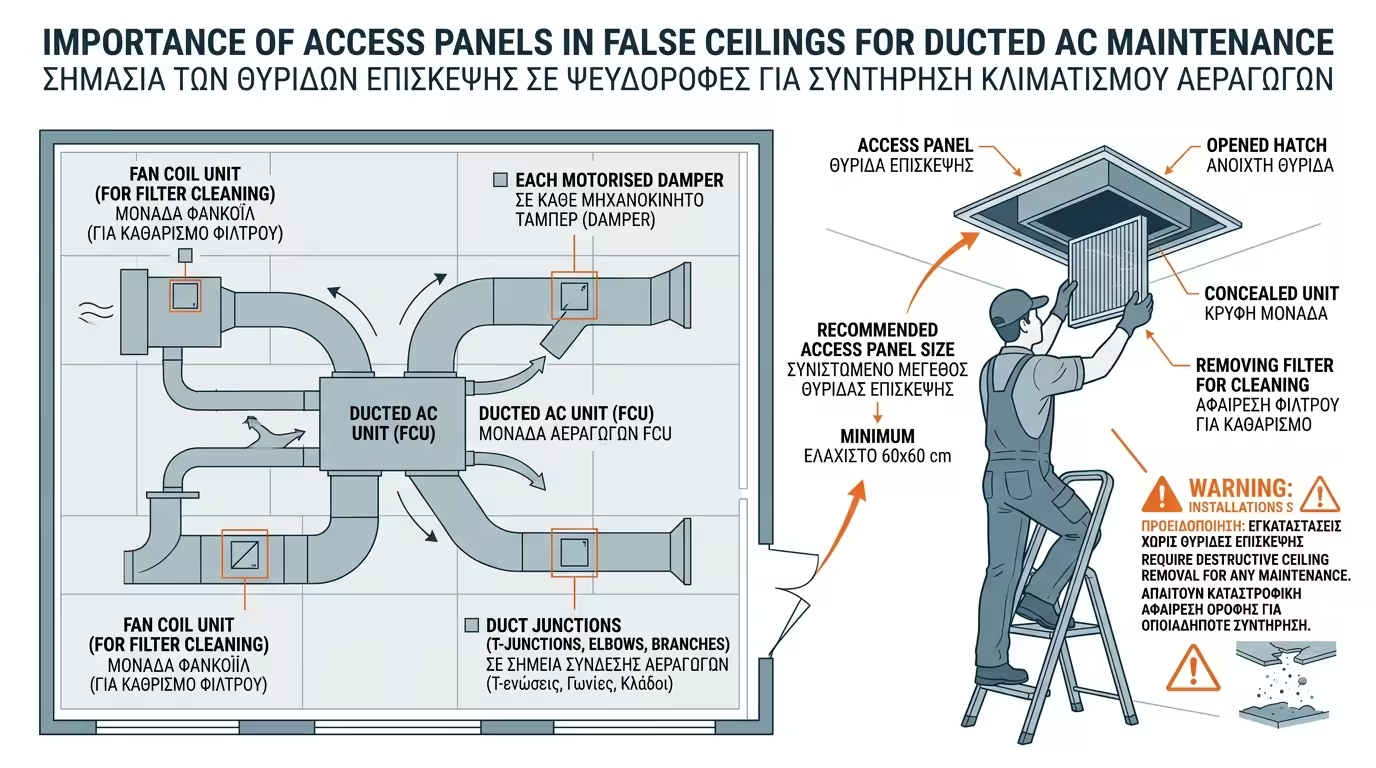
The Access Panel: Don't Forget It!
A ducted air conditioner needs filter cleaning every 6 months and
possible circuit board maintenance. If you "bury" it permanently under
the plasterboard, the technician will have to demolish the ceiling to
service it!
🚪 Concealed hatch
It is absolutely mandatory to build an access panel (hatch) in the plasterboard, directly below the unit. Today, flush-mounted hatches
(with no visible frame) are available that are painted to match the ceiling
colour and open with a simple push (push-to-open), keeping the aesthetics
flawless.
✅ Final summary
Ducted air conditioning is the ultimate "premium" choice. It rewards
the owner with perfect temperature and flawless architecture, provided that the mechanical engineer, refrigeration technician and plasterboard installer
work as a well-oiled team. In the next article, we solve the suffocation
problem: Fresh Air Introduction in Ducted Systems.