Server Room & Data Center Cooling Systems (Close Control Units): The Cooling That Keeps Businesses Alive

If you walk into the server room of a modern business, you will immediately feel the difference. It resembles a furnace running at full blast, combined with the deafening noise from hundreds of computer fans.

These machines are the "heart" and "brain" of the company. If they overheat, the network goes down, data is at risk and the entire business grinds to a halt. Why do standard air-conditioners fail spectacularly here? The answer lies in physics.

The Big Mistake: Why Does a Standard AC Destroy the Server Room?

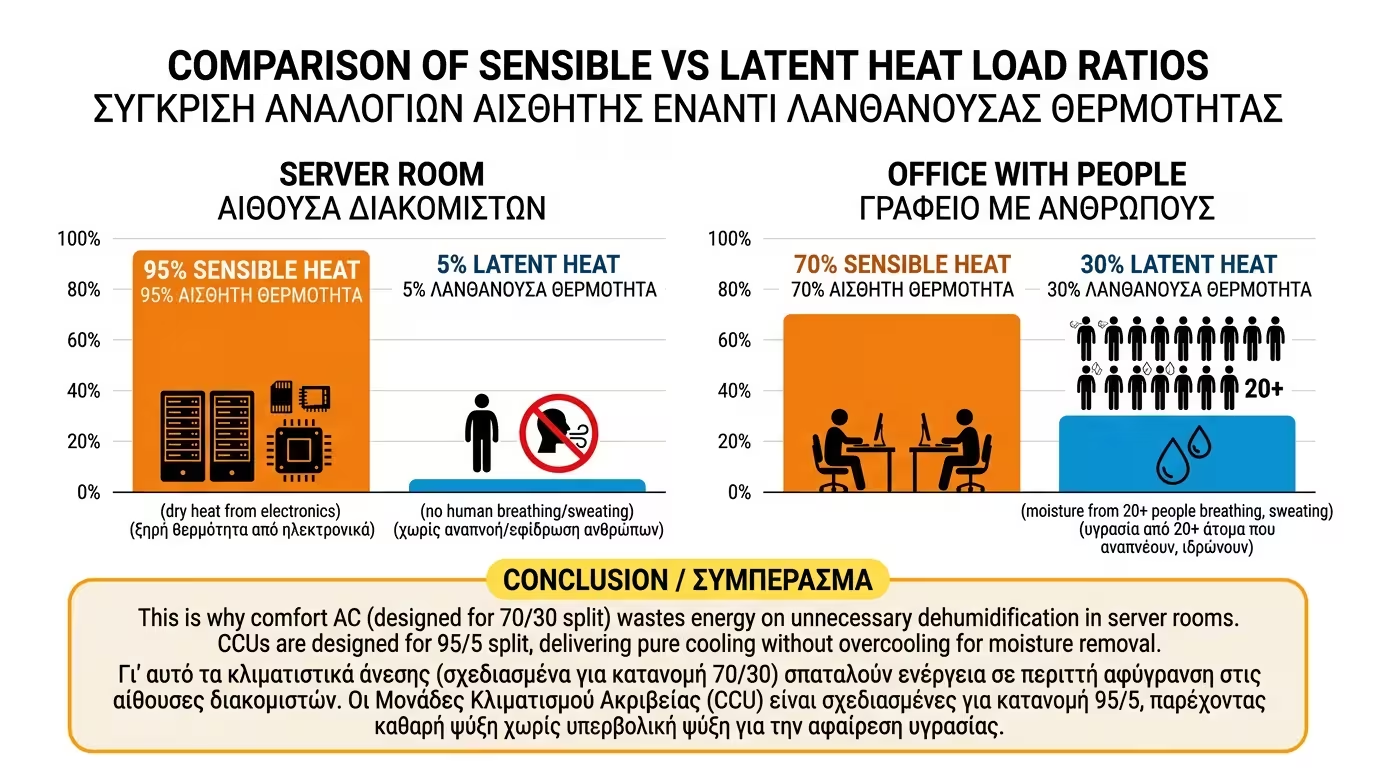
The difference lies in physics, specifically in two concepts: Sensible and Latent heat load.

Sensible vs latent heat load – servers produce 100% dry heat, humans produce both heat and moisture

👤 Humans (sensible + latent)

An office full of people has heat but also humidity (breathing, perspiration). Standard ACs spend ~30% of their energy on dehumidification (latent load) and ~70% on reducing temperature (sensible load). This is correct for human-occupied spaces.
🖥️ Servers (100% sensible)

Computers do not perspire. They produce 100% dry heat. If you install a residential AC in a server room, it will waste 30% of its power dehumidifying air that doesn't need it, dangerously dry the air (creating static electricity that can "fry" motherboards) and strain itself excessively.

What Are Close Control Units (Precision Air Conditioning)?

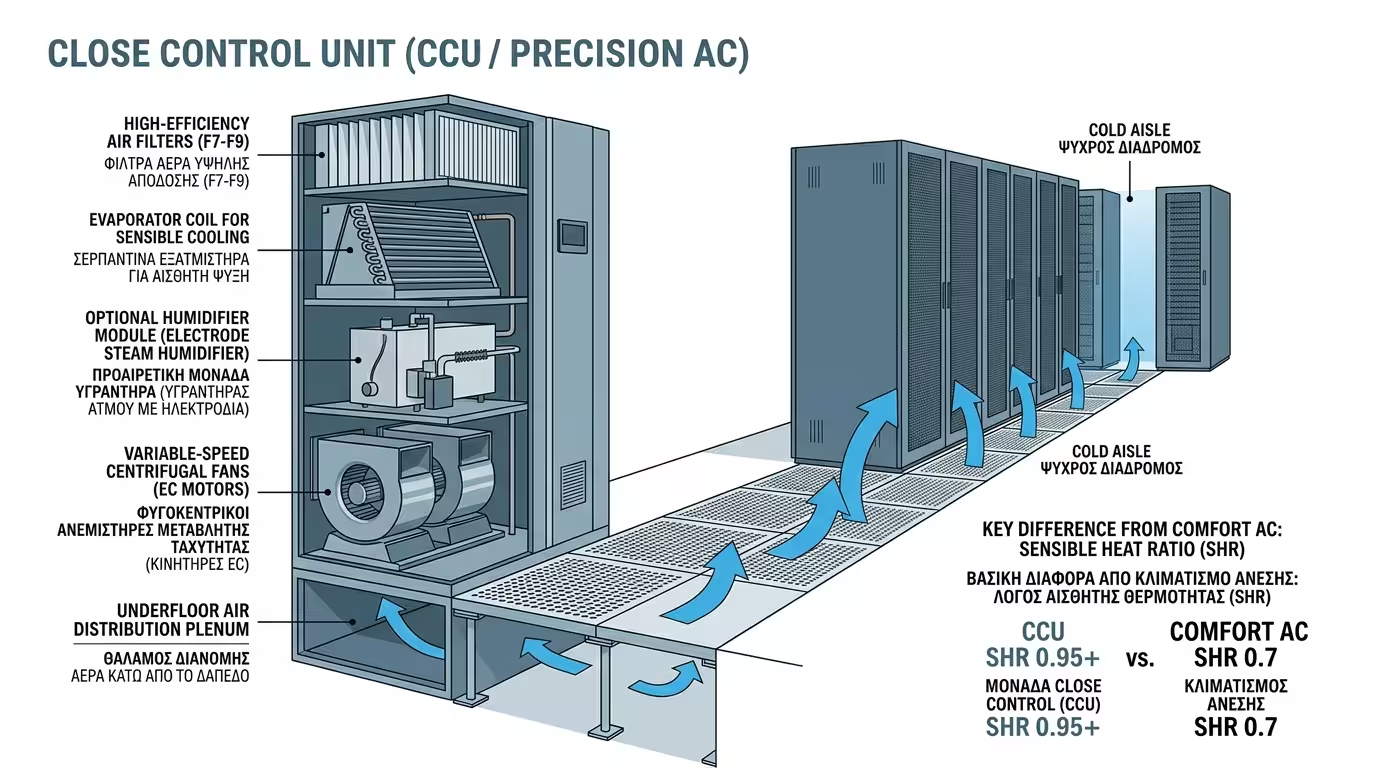
Close Control Units (CCU) look like enormous metal cabinets. They are built exclusively for data centres. Four characteristics make them irreplaceable:

Close Control Unit CCU – large precision cooling cabinet for data centre environments

🎯 1. 100% Sensible Cooling (SHR)

CCUs are engineered so that 95–100% of their energy goes exclusively to reducing temperature, without removing humidity. Oversized heat exchangers ensure maximum efficiency for dry heat loads.

🔬 2. Surgical precision

While a standard AC has 2–3°C deviations, a CCU maintains temperature pinned at 22°C ± 1°C and humidity exactly at 45–50% ± 5%. Built-in humidifiers and dehumidifiers ensure the perfect microclimate to protect hard drives and circuitry.

💨 3. Massive airflow

Giant EC fans push many times more cubic metres of air compared to a residential AC, creating the famous Cold Aisles and Hot Aisles inside the data centre. They typically blow chilled air under the raised access floor.

❄️ 4. Operating at -20°C

While standard ACs enter defrost mode and stop producing cold air, CCUs feature special speed controllers and heaters, allowing them to deliver powerful cooling even when the outside temperature is -20°C.

The Disaster Zone: What Happens If Cooling Stops?

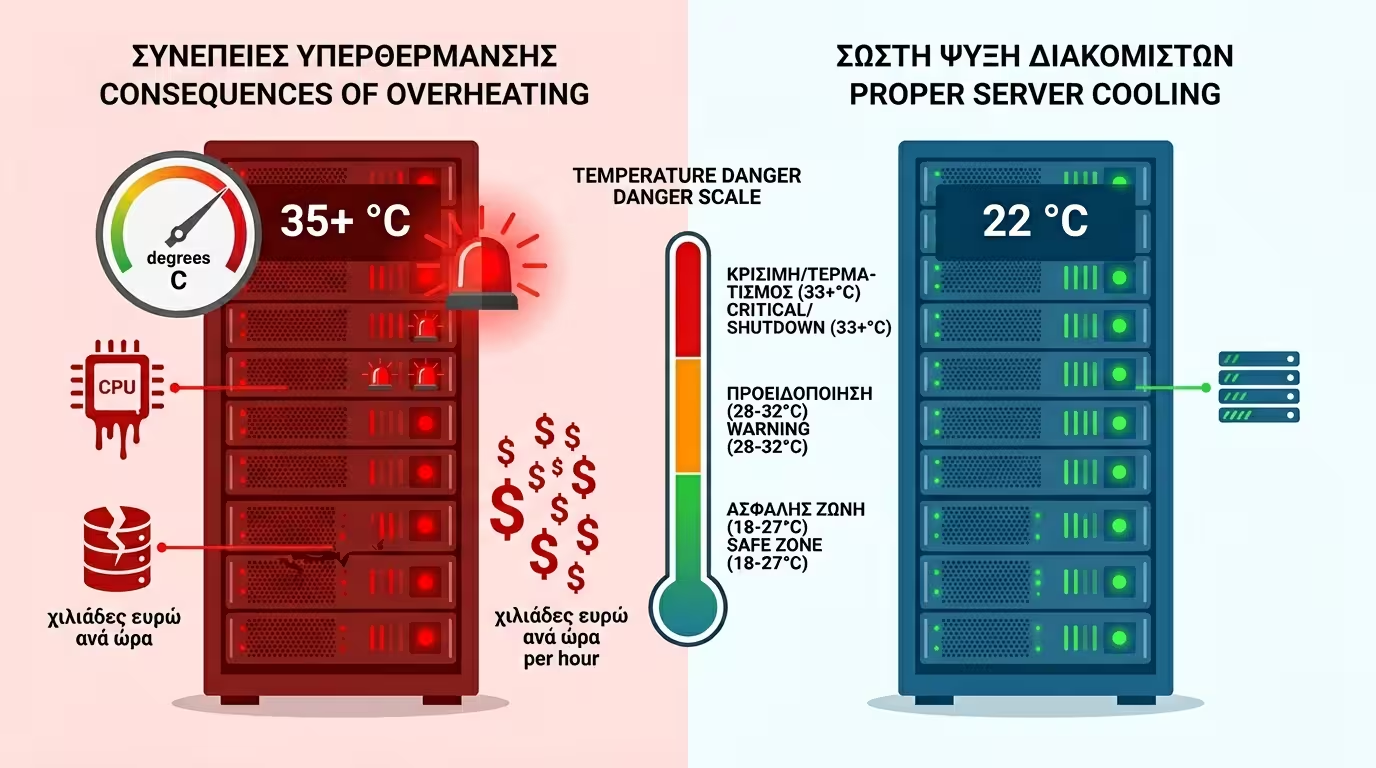
If your living room AC breaks down in August, you will sweat for 2 days. If cooling fails in the server room, the machines will hit 60°C in 15 minutes and shut down automatically (thermal shutdown), taking the entire company down with them.

Server room overheating – racks reach 60°C in 15 minutes without cooling

⏱️ 15 minutes to disaster

Modern servers produce an unimaginable amount of heat 24/7, 365 days a year. Even if it is snowing and -5°C outside, the server room is "boiling" and demands powerful cooling. A cooling system failure costs many times more than a proper CCU installation.

The Golden IT Rule: N+1 Redundancy

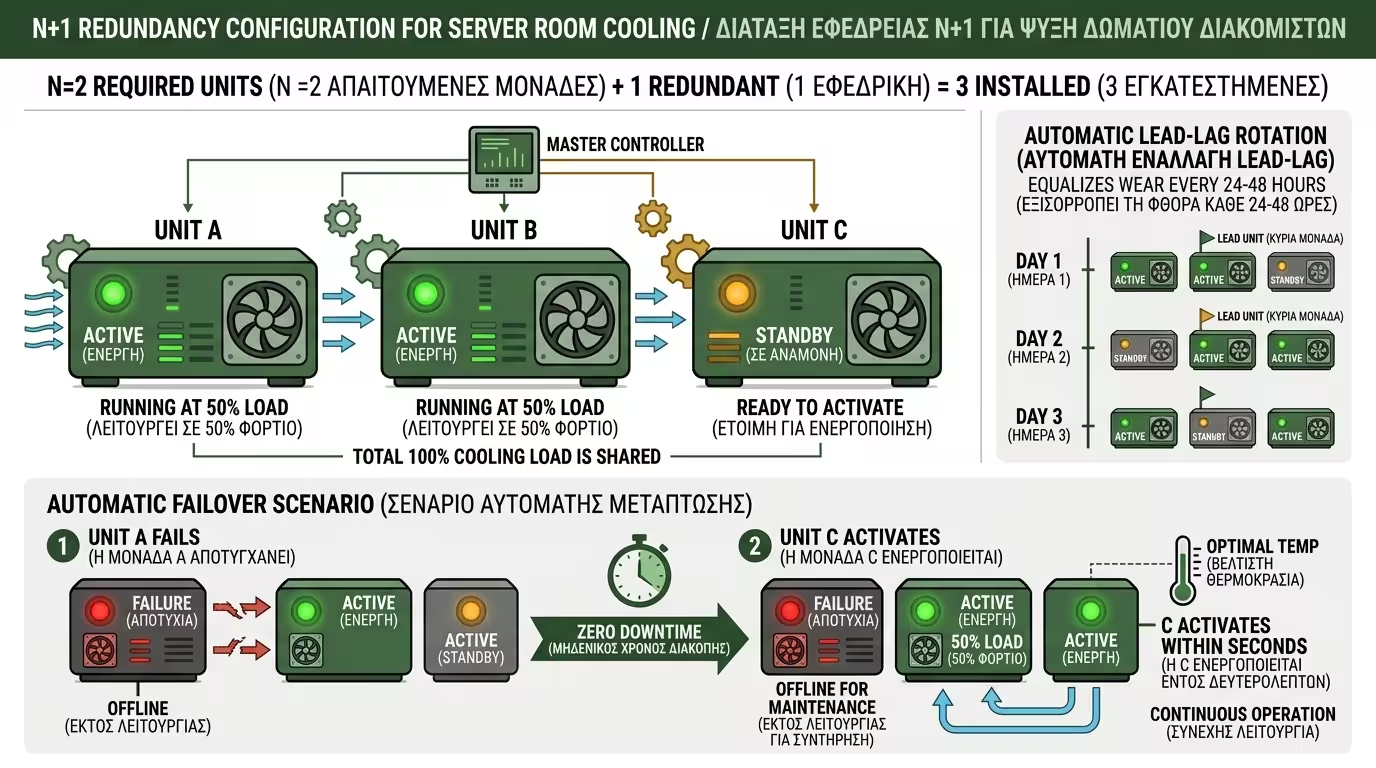
N+1 redundancy in data centre CCU – Lead/Lag rotation, uninterrupted server cooling

In data centre cooling, the unbreakable N+1 (Redundancy) rule applies. If the room needs 2 units, we install 3 units.

🔄 Lead/Lag rotation

The system is programmed to rotate: On Monday, units 1 and 2 run (unit 3 rests); on Tuesday, units 2 and 3 run. This distributes wear and the units last twice as long.

🛡️ Instant failover

If any unit fails suddenly, the standby unit takes over instantly, without risking even a single second of infrastructure downtime.

✅ Final summary

Server room cooling is not merely an installation expense - it is an investment in Business Continuity. A server failure from overheating costs many times more than a proper Close Control installation. Trust only specialised mechanical engineers who understand the critical needs of your IT equipment.

Related Articles

Cooling Energy Production & Air Conditioning

Return to category.

Go to category

Preview