🎛️ Full Autonomy per Room
Each room retains its autonomy. It has its own remote control, you can set a different temperature in each one, or turn on only one room while the others remain off.
You have decided to install air conditioning throughout your home. You need one unit for the living room and two more for the bedrooms. You walk out onto your balcony and realise the following nightmare: If you install 3 separate air conditioners, you will have to stack 3 huge, noisy outdoor compressors (the familiar "boxes") on your veranda wall. Goodbye aesthetics, goodbye space for your coffee table.
At that point, the salesman (or the architect) drops the idea: "Why not get a Multi-Split system? One outdoor unit for all the rooms!".
It sounds like the ultimate dream. Fewer machines, less noise, a "cleaner" façade. But is it really? As engineers, we often see homeowners regretting this choice when installation time arrives - or... the first breakdown. Let us look honestly at the pros, the cons, and when this investment is truly worthwhile.
In conventional air conditioners (Mono-Split), the "relationship" is 1 to 1: one indoor unit, one outdoor unit. In a Multi-Split system, we have one large, powerful outdoor compressor with multiple outlets. To this single compressor we can connect from 2 up to 5 independent indoor units of various sizes (e.g. one 18,000 BTU for the living room and two 9,000 BTU for the bedrooms).
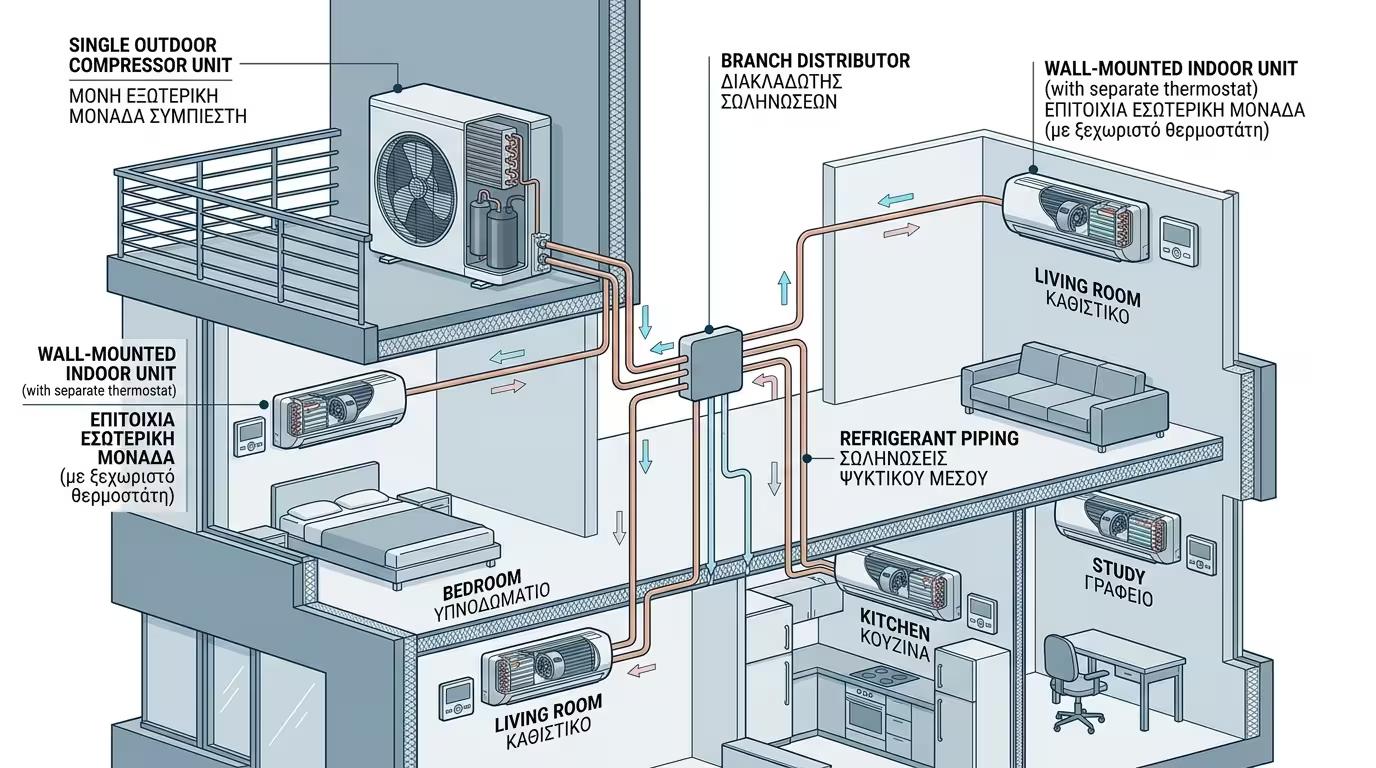
Each room retains its autonomy. It has its own remote control, you can set a different temperature in each one, or turn on only one room while the others remain off.
There are three core reasons that make Multi-Split an attractive choice, particularly in urban apartments with limited outdoor space.
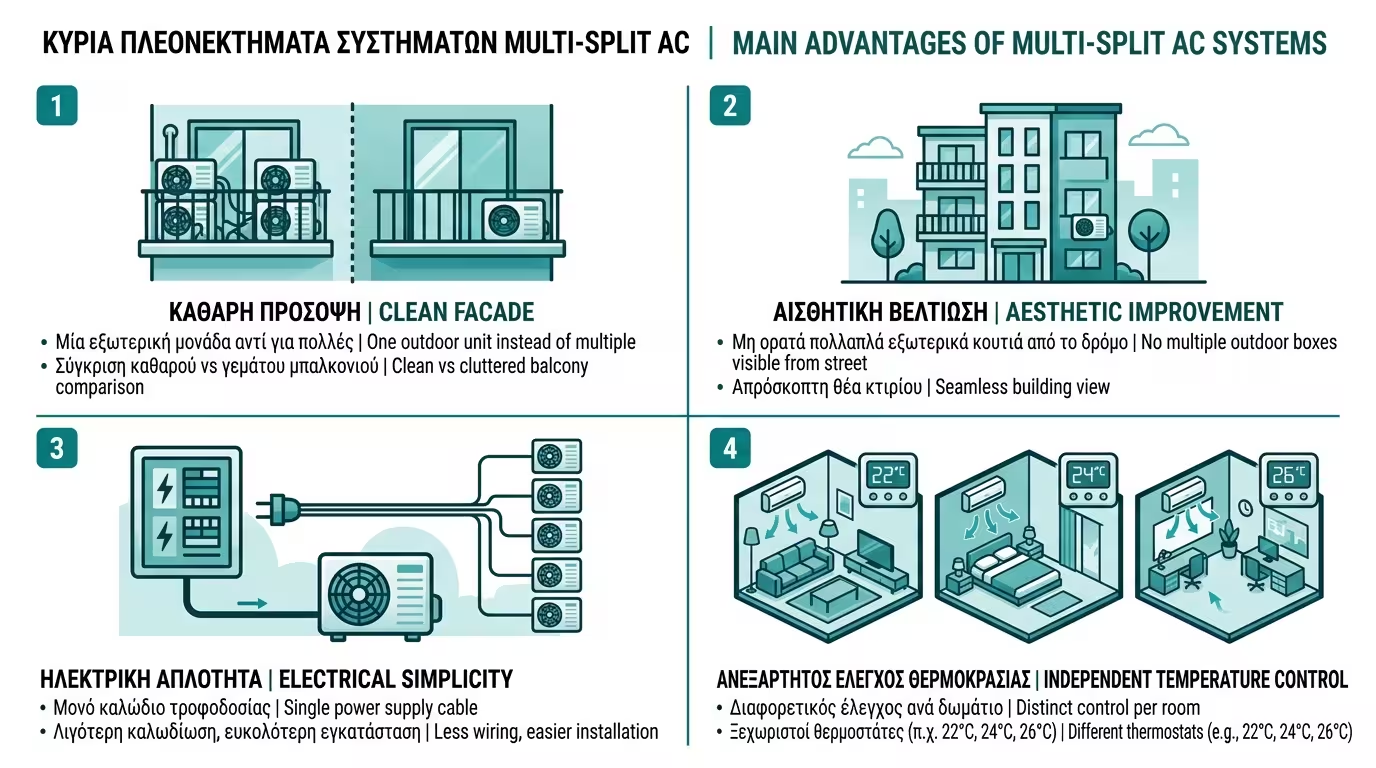
This is the number-one reason to choose it. If you live in an apartment with a tiny balcony, or in a building with strict architectural regulations that prohibit filling the façade with "boxes", Multi-Split saves you. One compact unit, and that's it.
3 separate air conditioners often require 3 separate power lines (with thick cables) from the home's electrical panel. With Multi-Split, you need only one (but reinforced) power line running to the central outdoor unit, saving a lot of wall chasing and cabling.
One large, modern compressor running at low speed produces far less resonance and noise than 3 small compressors running simultaneously and rattling your balcony railings.
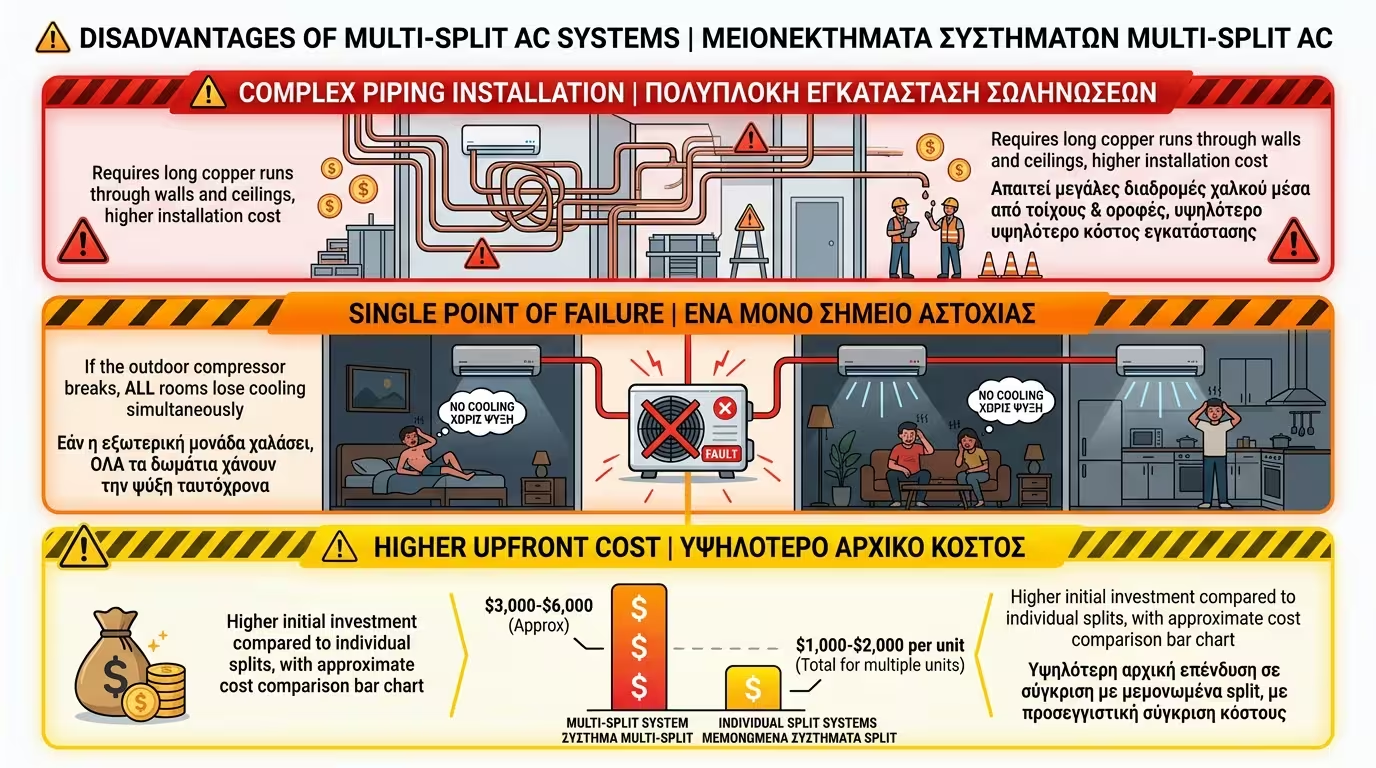
If it were so perfect, everyone would install one. However, reality hides significant "thorns" that salespeople rarely mention.
Consider this: The outdoor unit is on the living room balcony. The children's bedroom is at the other end of the house, 15 metres away. To make the bedroom's indoor unit work, we must run two copper pipes, a cable and a condensate drain pipe from the room to the balcony. In an existing home, this means huge, unsightly plastic trunking along your corridors, or wall chasing and concealment behind plasterboard.
This is every engineer's greatest fear. With independent air conditioners, if the living room unit breaks, you simply sleep comfortably in the bedroom until the technician arrives. With Multi-Split, if the central outdoor unit fails (e.g. the PCB is fried by a lightning strike), you lose air conditioning in the ENTIRE house. You are left without cooling or heating everywhere, in the middle of a heatwave or frost.
Logic says: "Since I'm buying one motor instead of three, it will cost less". Wrong. Due to the complexity of the central PCB, the multiple expansion valves and the enormous amount of copper piping required, a 3-port Multi-Split system typically costs 20% to 30% more than buying 3 individual, quality air conditioners.
Suppose you have a 30,000 BTU outdoor unit. At night, you turn on ONLY the small 9,000 BTU unit in your bedroom. The huge compressor must work for a very small load. No matter how good its Inverter is, it will struggle to reduce its speed so low, resulting in continuous start-stop cycling, consuming more electricity than an independent, small 9,000 BTU machine would.
The answer depends exclusively on the construction phase of your home and the available outdoor space.
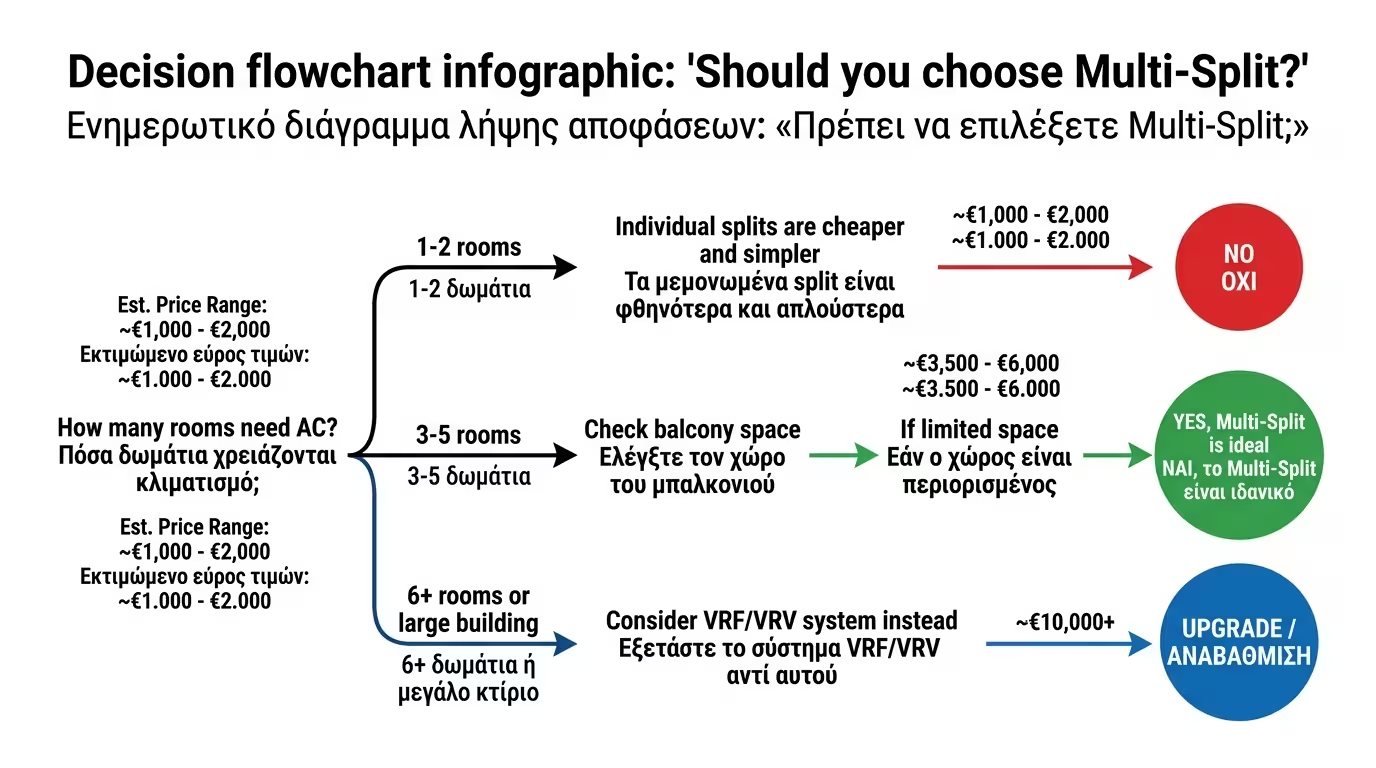
You are currently building your home (or doing a full renovation where the pipes can be hidden under floors or in false ceilings) AND you have a strict space limitation on the balcony or courtyard.
You live in an already occupied home and want to avoid wall chasing, if your budget is limited, or if you have ample space on the roof or courtyard to hide multiple, cheaper and safer (in terms of autonomy) independent units.
Having explored the architectural solutions, let us move to the "heart" of the machine itself. We all hear the word "Inverter" - it's the ultimate sales buzzword - but what exactly does it do inside the unit? In our next article: Inverter Technology in Air Conditioning: How variable compressor speed eliminates start-stop cycling.
Return to category.
Go to categoryReturn to the central guide.
Go to guide