Night Ventilation (Night Purge) & Thermal Mass: How to "Charge" Your Walls with Coolness

We have installed awnings, insulated the roof, and keep the windows closed at midday. Yet, no matter how well we protect the house, the Greek summer heat will eventually "creep" inside. What happens then?

That's when the building's Thermal Mass steps in. Combined with proper Night Ventilation, your home becomes a giant "coolness battery" that charges at night and discharges during the day, saving you hundreds of euros on your electricity bill.

What is Thermal Mass (The "Sponge" for Heat)

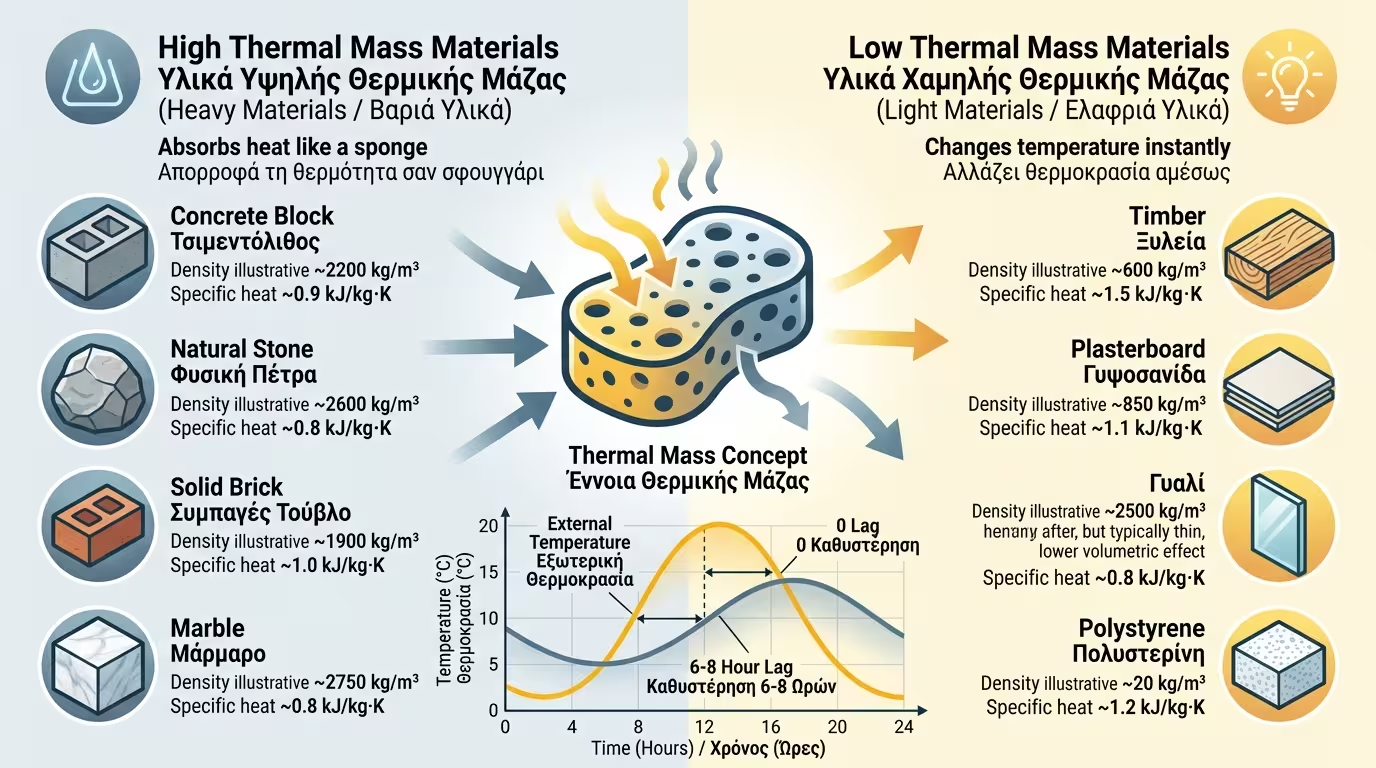
In physics, thermal mass is a material's capacity to absorb and store thermal energy. "Heavy" materials (concrete, stone, solid brick, marble) have enormous thermal mass and function as thermal sponges. By contrast, "light" materials (timber, plasterboard, glass) store virtually nothing - they change temperature almost instantly.

Thermal mass – concrete stone marble absorbing heat like a sponge, lightweight materials change temperature instantly

☀️ How it helps in summer

When midday heat enters the living room, it doesn't instantly warm the air. It begins to be absorbed by the heavy walls and the floor (especially stone or marble tiles). The walls "soak up" the heat, keeping the room air tolerable for hours. This "thermal lag" is your greatest natural ally.
⚠️ But the sponge fills up

At some point the walls reach saturation. If we don't find a way to "wring out" the thermal sponge, they will start radiating the stored heat back into the room all night long, turning your sleep into a torment - this is why concrete apartments "bake" after 22:00.

"Wringing" the Sponge: Night Ventilation (Night Purge)

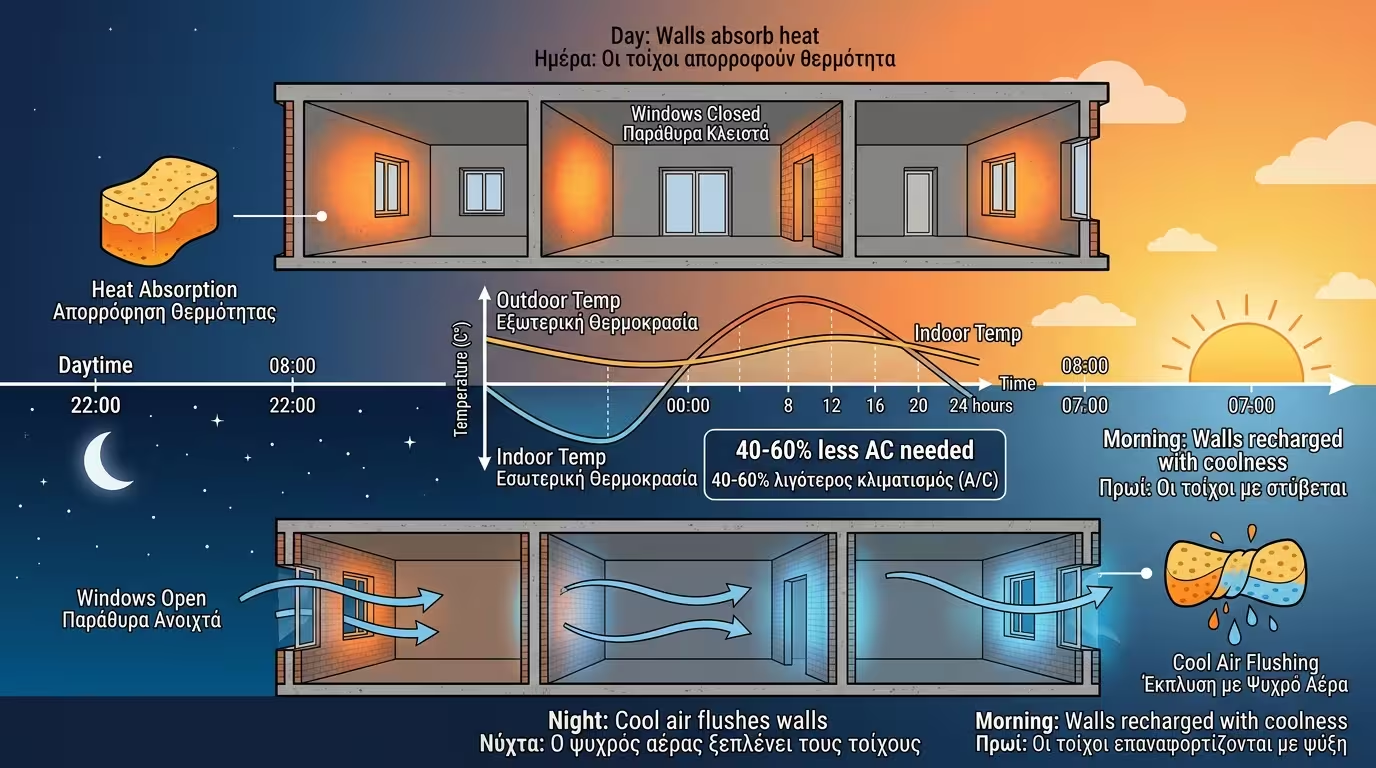
This is where night ventilation enters the picture. The concept is simple: wait for the outside temperature to drop (typically after 22:00) and strategically open the windows. The cool night air does something magical: it "flushes" the walls, pulls the stored heat out of the concrete and furniture and expels it outside. In the morning (~07:00), seal the windows shut. The walls are now "charged" with coolness.

Night purge ventilation – cool night air flushing heat from walls, charging building with coolness

🔄 The coolness cycle

As the day progresses and the external heat starts hitting the building again, the walls are "empty" and ready to re-absorb the heat, keeping the interior cool until late afternoon - without air conditioning. This charge-discharge cycle repeats every 24 hours.

💰 Savings

In buildings with high thermal mass and proper night ventilation, the need for mechanical cooling drops by 40–60%. This technique is used in bioclimatic buildings and also in many traditional stone houses on the Greek islands, which remain naturally cool without any machinery.

How to Apply Night Purge Correctly (The 3 Rules)

For Night Purge to work, it is not enough to tilt one balcony door open. You need a powerful airflow (draft) that sweeps through the entire home. Physics gives us two mechanisms and experience provides an important reminder.

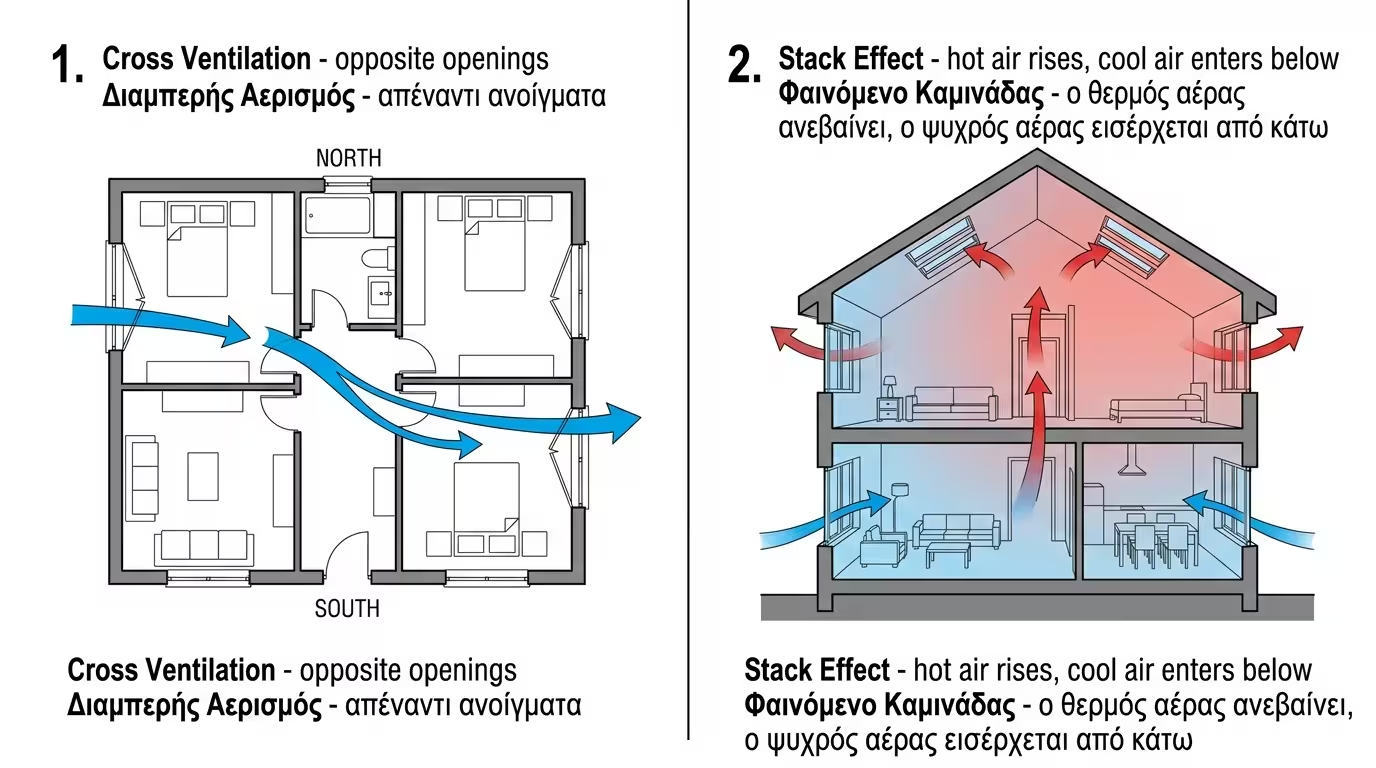
Cross ventilation and stack effect – air enters from north exits south, chimney effect in two-storey house

1️⃣ Cross Ventilation

Open windows on opposite walls (or at least at an angle). If you have one window facing north and another facing south, air will rush in from one side, sweep every corner of the house and exit from the other at tremendous speed. This "air tunnel" is the most effective natural cooling method.

2️⃣ Stack Effect (Chimney Effect)

Hot air always rises. In a maisonette or two-storey house, open the ground-floor windows (cool air enters) and the upper-floor windows or skylights (hot air escapes). The house acts as a natural vacuum that sucks coolness from below and expels heat from above.

3️⃣ Security & Insects

Since the windows must remain wide open all night, you absolutely need sturdy fly screens for mosquitoes and ventilation security locks on the shutters against break-ins. Without these, the technique becomes impractical in real life.

When Does This System NOT Work?

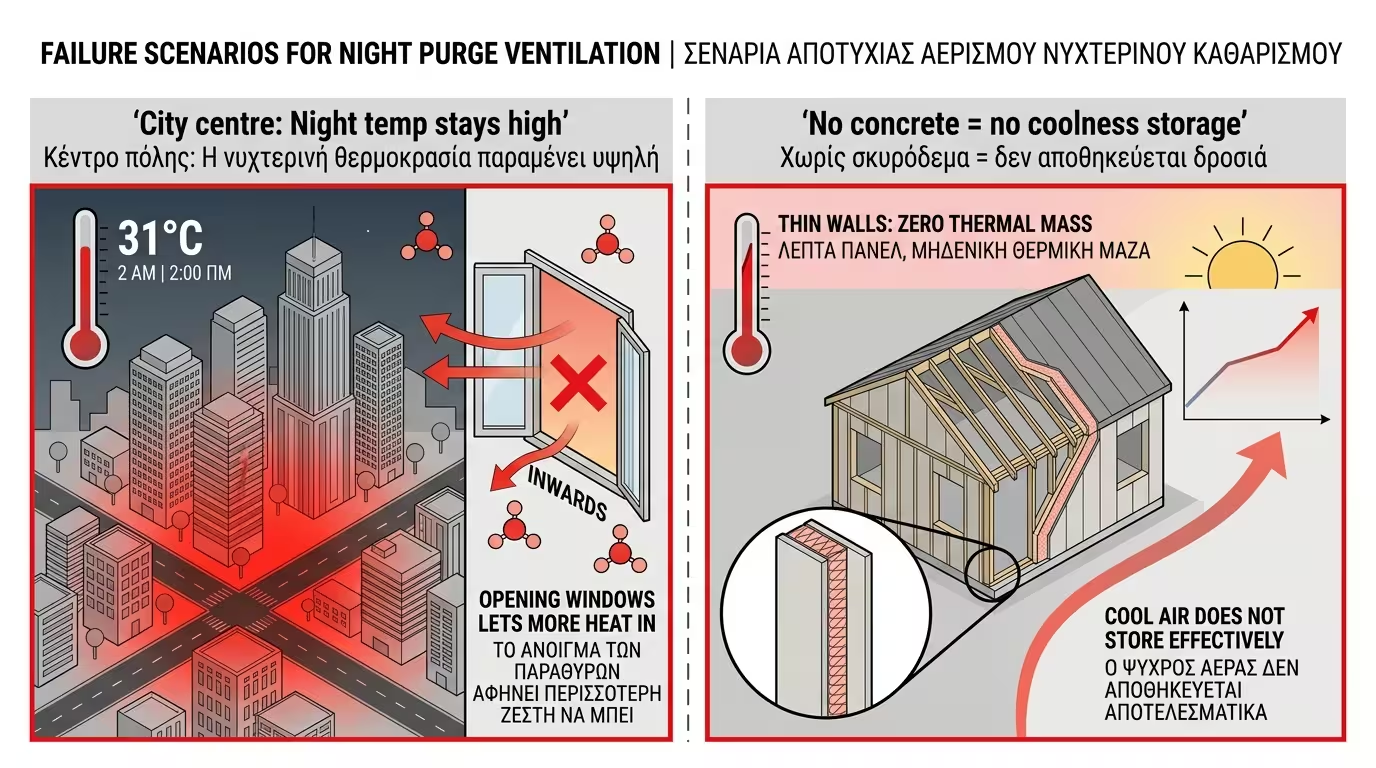
Night purge limitations – urban heat island and lightweight construction without concrete

Thermal mass is the "piggy bank" of your home's temperature. Use the free coolness of the night to fill it. However, there are two failure scenarios to be aware of.

🏙️ Urban Heat Island

In central Athens during a heatwave, the temperature at 2 AM can still be 31°C - asphalt, buildings and cars prevent the city from cooling down. If you open the windows, you simply let more heat in. Night Purge works best in the suburbs, villages and islands, where the night-time temperature drops appreciably.

🏗️ Lightweight construction (Timber / Panels)

If your home is prefabricated or timber-framed, it has no thermal mass (concrete) to store coolness. Night ventilation will cool you only during the night itself, but the moment you close the windows in the morning, the house heats up again within half an hour.

🔗 Next step

The largest piece of thermal mass that the sun "hammers" all day is the roof terrace. How can a simple change in colour and material drop its surface temperature by 20°C? We answer in the next article.

Related Articles

Cooling Energy Production & Air Conditioning

Return to category.

Go to category

Preview