⚙️ How it works
As the moving spiral orbits, it "traps" refrigerant gas at the edges and forces it inward towards the centre. The space shrinks dramatically, the gas is compressed and is ejected through a central port at enormous pressure.
Every time you see a massive building staying cool during a heatwave, you owe a big "thank you" to a piece of metal working non-stop in the basement or on the roof: The Compressor of the water chiller.
The compressor draws refrigerant gas at low pressure, "squeezes" it with enormous force and sends it out hot and at high pressure to continue the cooling cycle. Not all compressors squeeze the gas the same way. Depending on the building size, engineers choose between three completely different technologies.
The most widespread technology for small and medium chillers (and also for high-quality residential air-conditioners and heat pumps). Imagine two metal spirals (like a snail shell) one inside the other. One spiral is completely stationary; the other does not rotate but performs an eccentric, orbital motion inside the first.
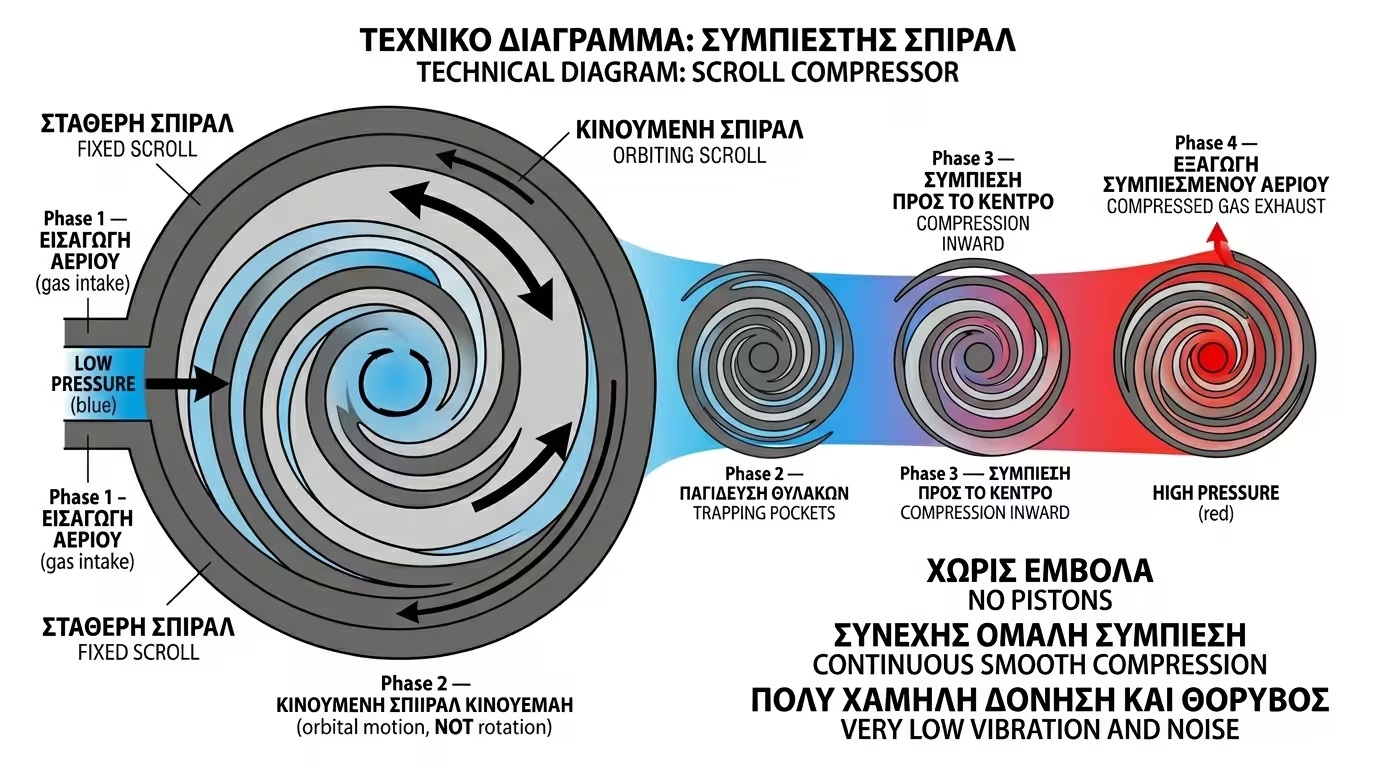
As the moving spiral orbits, it "traps" refrigerant gas at the edges and forces it inward towards the centre. The space shrinks dramatically, the gas is compressed and is ejected through a central port at enormous pressure.
Silent: No pistons means perfectly smooth, continuous compression. Reliable: Very few moving parts. If more capacity is needed, manufacturers simply install 2, 4 or 6 Scrolls in a Tandem/Trio arrangement.
Small and medium-capacity chillers, from 10 kW to 200 kW. Also used in high-quality residential air-conditioners and heat pumps.
When the building gets very large (major hospital, factory), Scrolls are no longer sufficient. This is where Screw compressors enter the picture - the ultimate choice for heavy, non-stop duty. Opening a Screw compressor, you will see two massive metal helical rotors (like giant screws or the inside of a meat grinder) that mesh and interlock perfectly together.
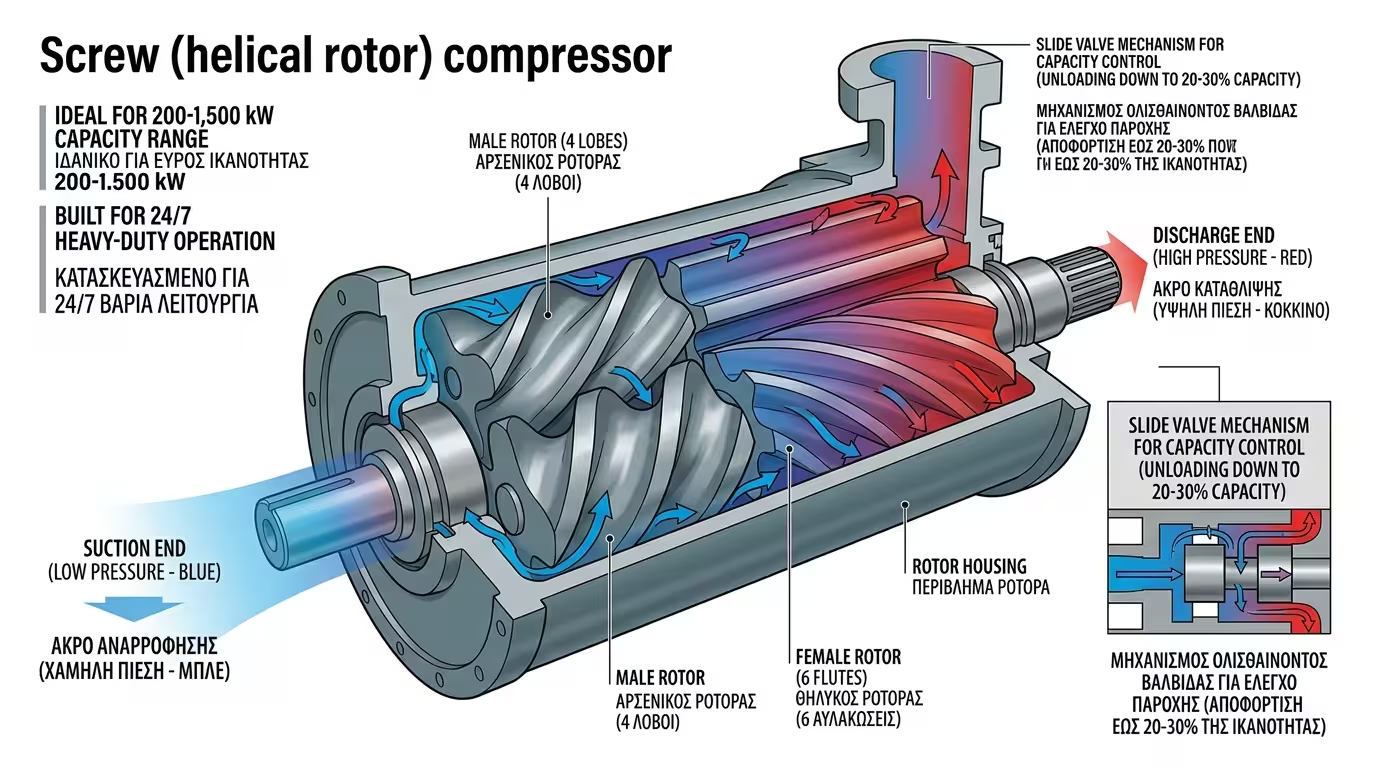
The rotors spin at speed, drawing gas in from one end. It is trapped in the gaps between the "teeth". As it advances, the space narrows and crushes the gas, raising its pressure enormously.
24/7 endurance: Built for enormous, uninterrupted demands. Excellent part-load: Via a slide valve or Inverter technology, they can reduce output to 20–30% with precision, saving electricity when the building is not fully occupied.
Large commercial and industrial buildings, from 200 kW to 1,500+ kW. The undisputed "king" of the medium-to-large segment.
The absolute pinnacle. Not used for ordinary buildings, but for skyscrapers, massive airports or District Cooling networks. Their technology resembles a jet turbine.
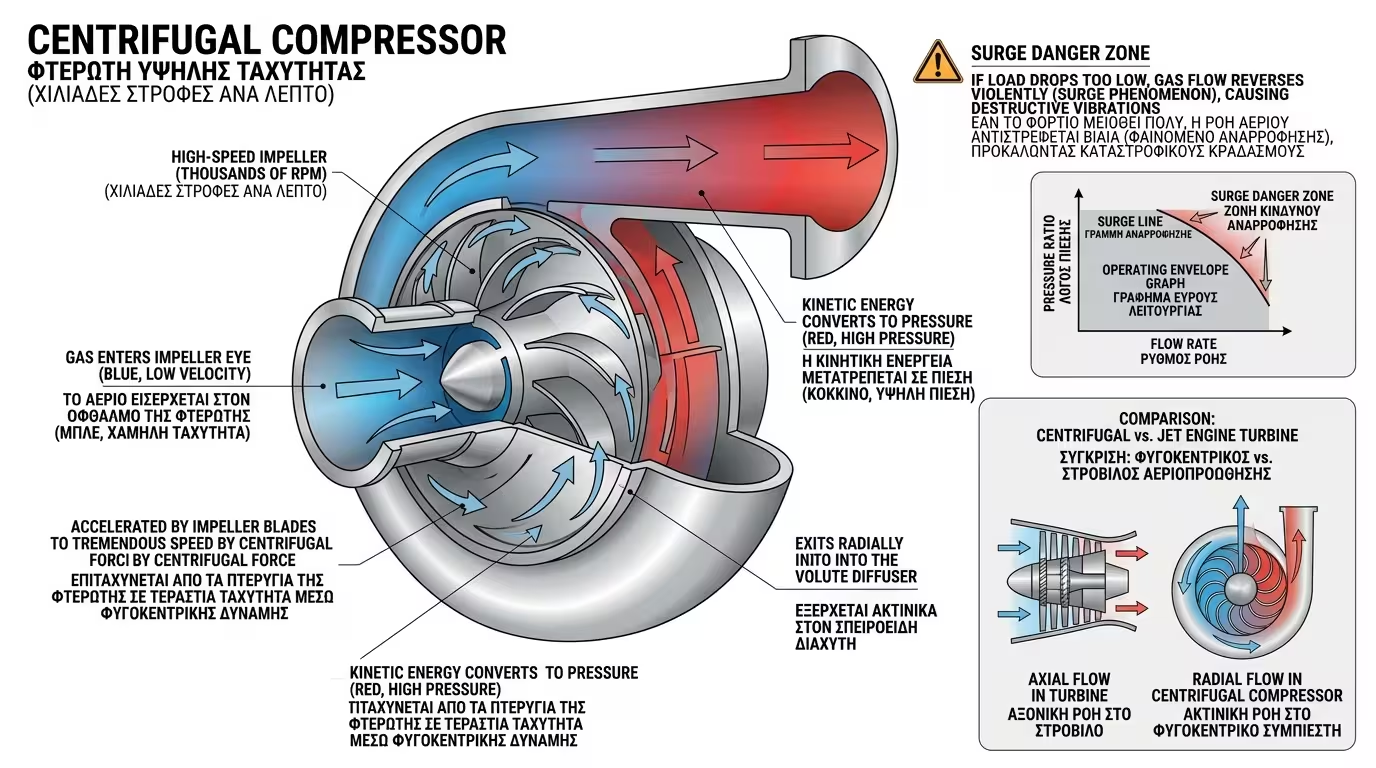
A massive impeller spins at thousands of RPM. Gas enters the centre, is caught by the blades and flung outward at tremendous speed by centrifugal force. This kinetic energy is violently converted into pressure.
Ultimate efficiency: At 100% load, by far the most efficient compression method on the planet. Immense power: A single compressor can deliver thousands of kW of cooling.
If the building demands very little cooling, the impeller cannot operate at very low speeds. The gas "flows backward" (surge phenomenon), creating violent vibrations that can destroy the machine in seconds.
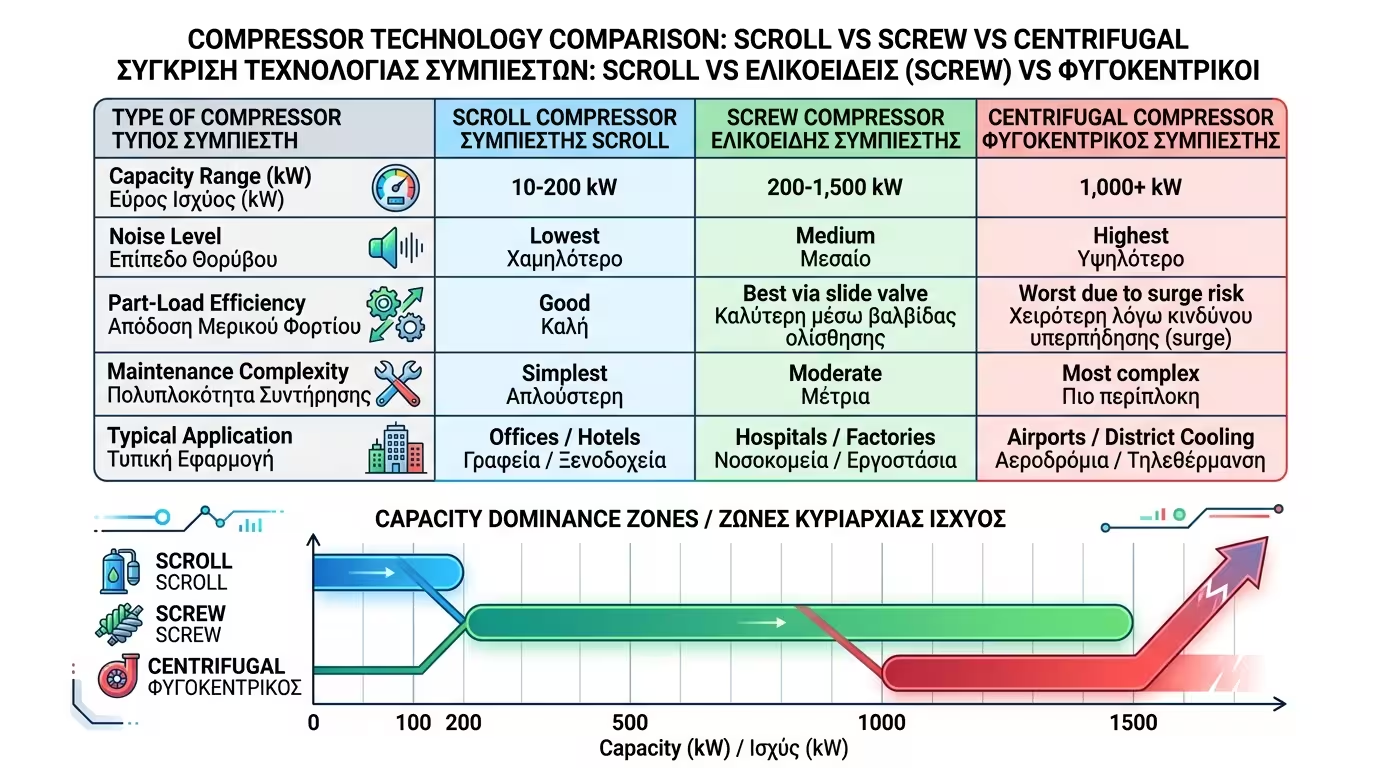
To avoid getting lost in technical details, engineers follow a simple fundamental sizing rule for every project:
The almost always correct choice for small and medium buildings, offices and city hotels. Silent, reliable, with low purchase and maintenance costs.
The "king" of commercial and industrial installations. Tireless, with excellent part-load performance and the ability to run non-stop under harsh conditions.
Takes the reins only in mega-installations: skyscrapers, airports, district cooling for entire neighbourhoods. Ultimate full-load efficiency, but with the risk of surge at low loads.
Return to category.
Go to categoryReturn to the central guide.
Go to guide