📏 COP Example
If an air conditioner had a COP of 3.0, it meant it "consumed" 1 kW of electricity and delivered 3 kW of heat. The same logic applied to EER for cooling.
You are standing in front of two 12,000 BTU air conditioners. One costs €450 and the other €850. Both display in huge letters on the box "Energy Class A++". You quite logically wonder: "Since both are A++, why should I pay double for the expensive one?".
The answer is not in the letters but in two English acronyms printed in smaller numbers on the colourful EU energy label: SEER and SCOP.
These two numbers are the "mirror" of your wallet. They determine exactly how much electricity the machine will consume over a 10-year period. Let us look at what they mean, how they translate into savings, and what is the "sneaky" detail that manufacturers hide on the label.
A few years ago, air conditioner efficiency was measured using EER (for cooling) and COP (for heating). These indices showed how much energy the machine delivers for every 1 kW of electricity it consumes.
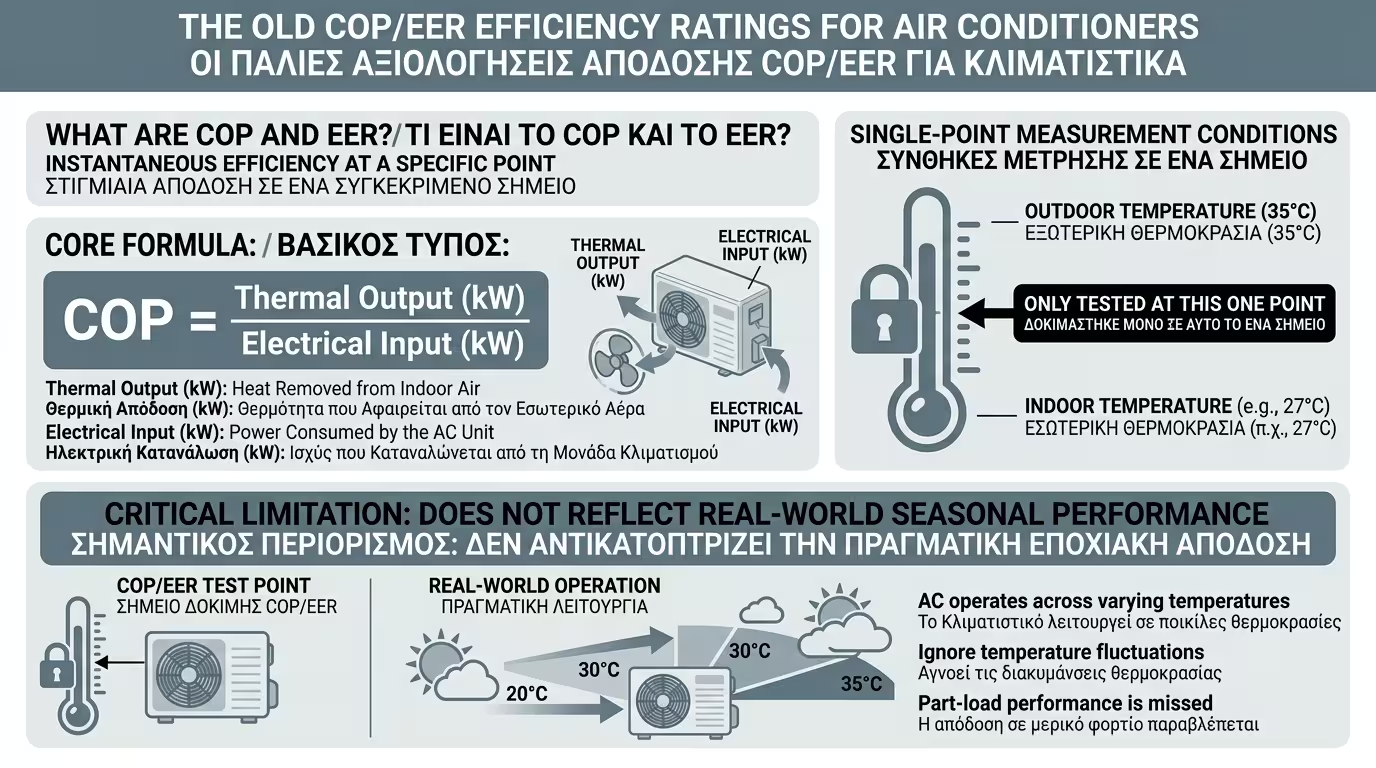
If an air conditioner had a COP of 3.0, it meant it "consumed" 1 kW of electricity and delivered 3 kW of heat. The same logic applied to EER for cooling.
These measurements were taken in the laboratory at one fixed temperature (e.g. always 7°C outside). In reality, however, winter is not a constant 7°C. November has 15°C, January has 2°C. The old system did not reflect real-world consumption.
The European Union changed the rules and added the letter "S" (Seasonal). Now the measurement is taken under real-world conditions, with temperatures fluctuating across the entire season.
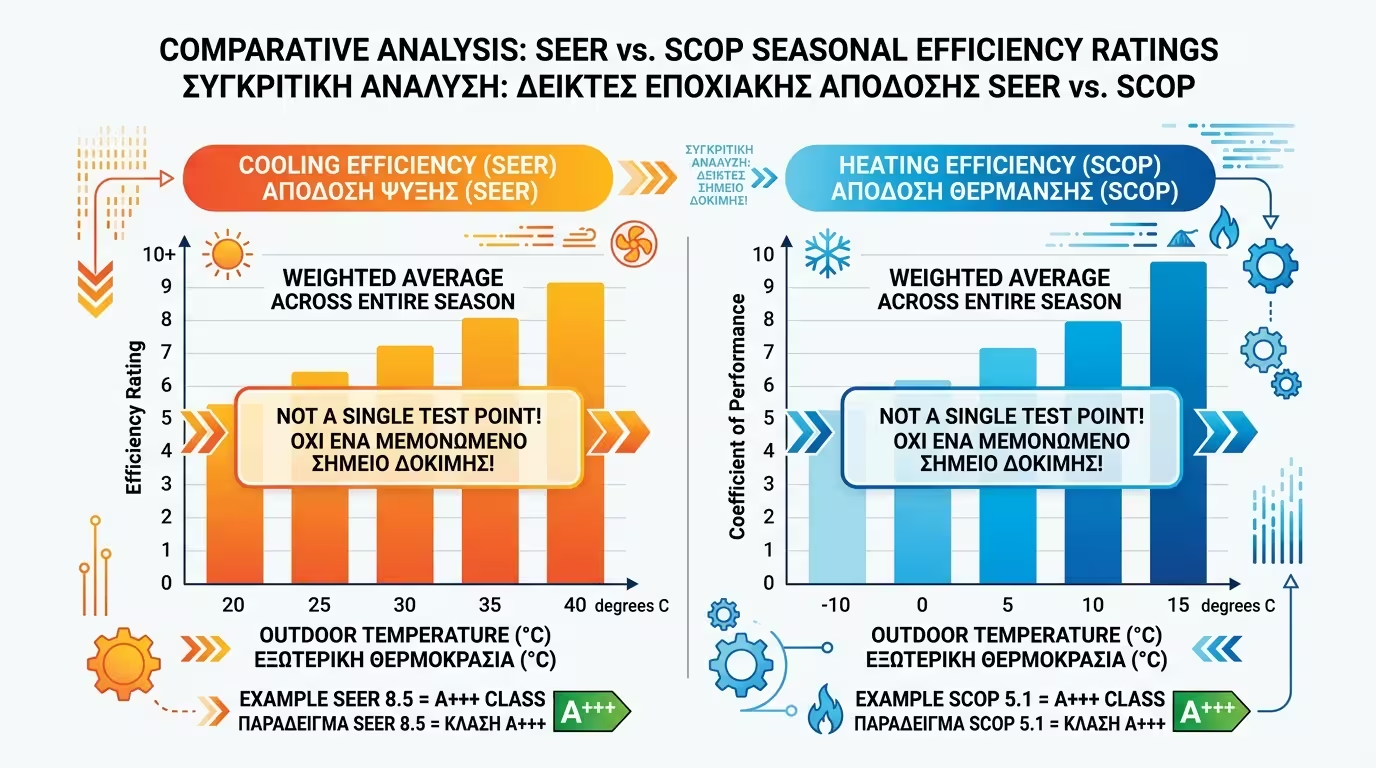
The Seasonal Efficiency Ratio for Cooling. It measures the air conditioner's performance across the entire summer, with temperatures rising and falling. Look for a value above 7.0 for good cooling.
The Seasonal Efficiency Ratio for Heating. It measures the machine's performance across a typical winter. Look for a value above 4.0 in the average (green) climate zone.
The higher the SEER and SCOP number, the less electricity the air conditioner consumes. A unit with SEER 8.5 is impressively more economical than one with SEER 6.1, even if both are advertised as A++. Don't look at the "plus" signs (+) - look at the numbers!
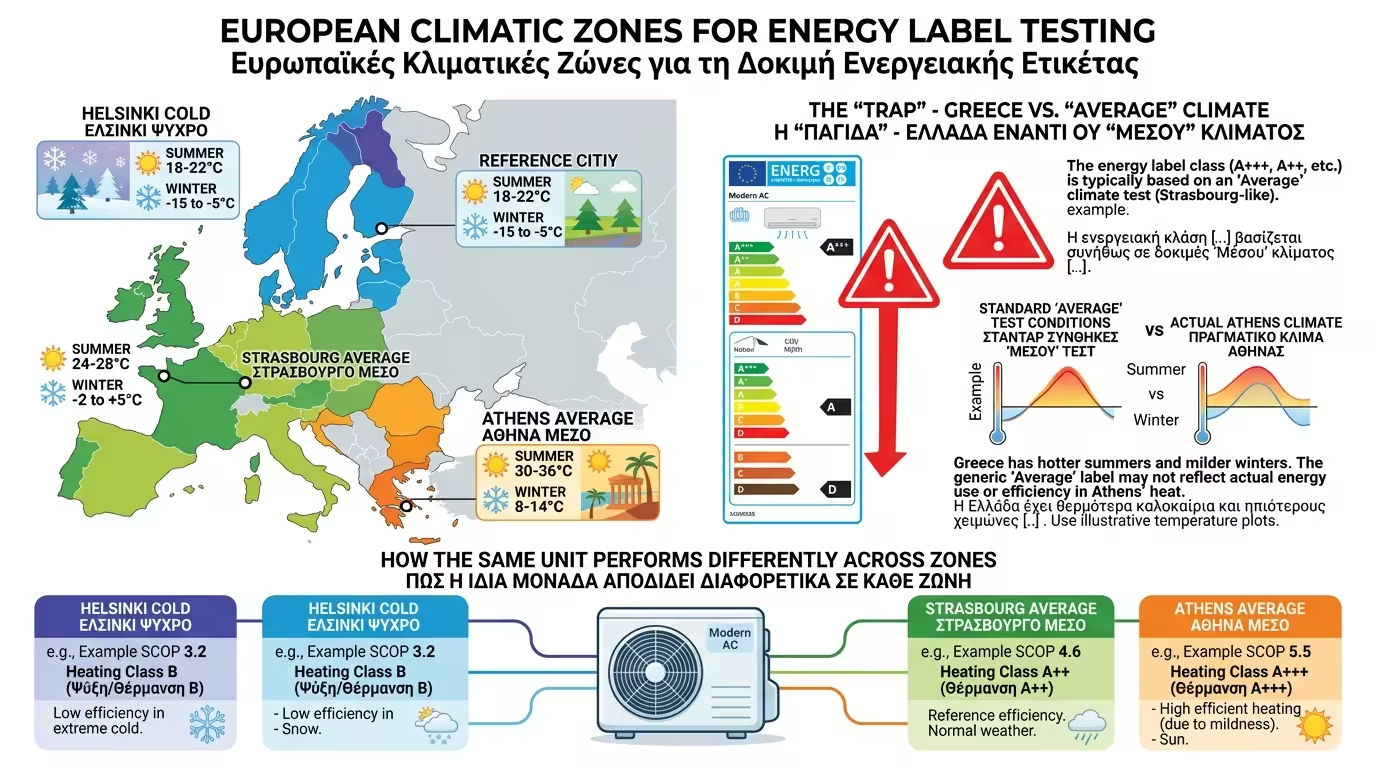
Here lies the market's biggest secret, which marketing departments exploit to sell you cheap machines as top-of-the-range. If you look carefully at the energy label (bottom right, next to the heating symbol), you will see a small map of Europe divided into 3 colours (Climate Zones).
Northern Europe (e.g. Helsinki). Extremely low winter temperatures, requiring machines with enormous heating capacity.
Central Europe (e.g. Strasbourg). This is the official reference zone according to EU legislation - SCOP values are measured here.
Southern Europe (e.g. Athens). The mild Greek winter favours the machines, giving them artificially high ratings.
EU legislation requires manufacturers to state the SCOP (Heating) energy class based on the Green (Average) Zone. However, it also allows them to optionally display the performance for the Orange (Warm) Zone. What do many companies do (especially on budget models)? They print in huge letters on the box "A+++"!
If you read the fine print on the label, you will see that in the Green Zone (the official, strict EU measurement), the machine is simply A+ (with an SCOP of e.g. 4.0). In the Orange Zone (Greece), because our winter is very mild, the same machine scores SCOP 5.1 and earns the A+++ title. A machine rated A+ in the Green Zone that is "baptised" A+++ in the Orange Zone is a mediocre machine that simply benefits from Greece's good weather.
⚠️ If you want a truly top-tier machine (one that performs well in tough conditions and doesn't guzzle electricity), you must always check the SCOP in the Green Zone (Average Climate). A machine rated A+++ in the Green Zone is a genuine "beast" of efficiency and build quality.
Returning to the dilemma at the start (the €450 vs €850 machine), the answer depends exclusively on the use you will make of it.
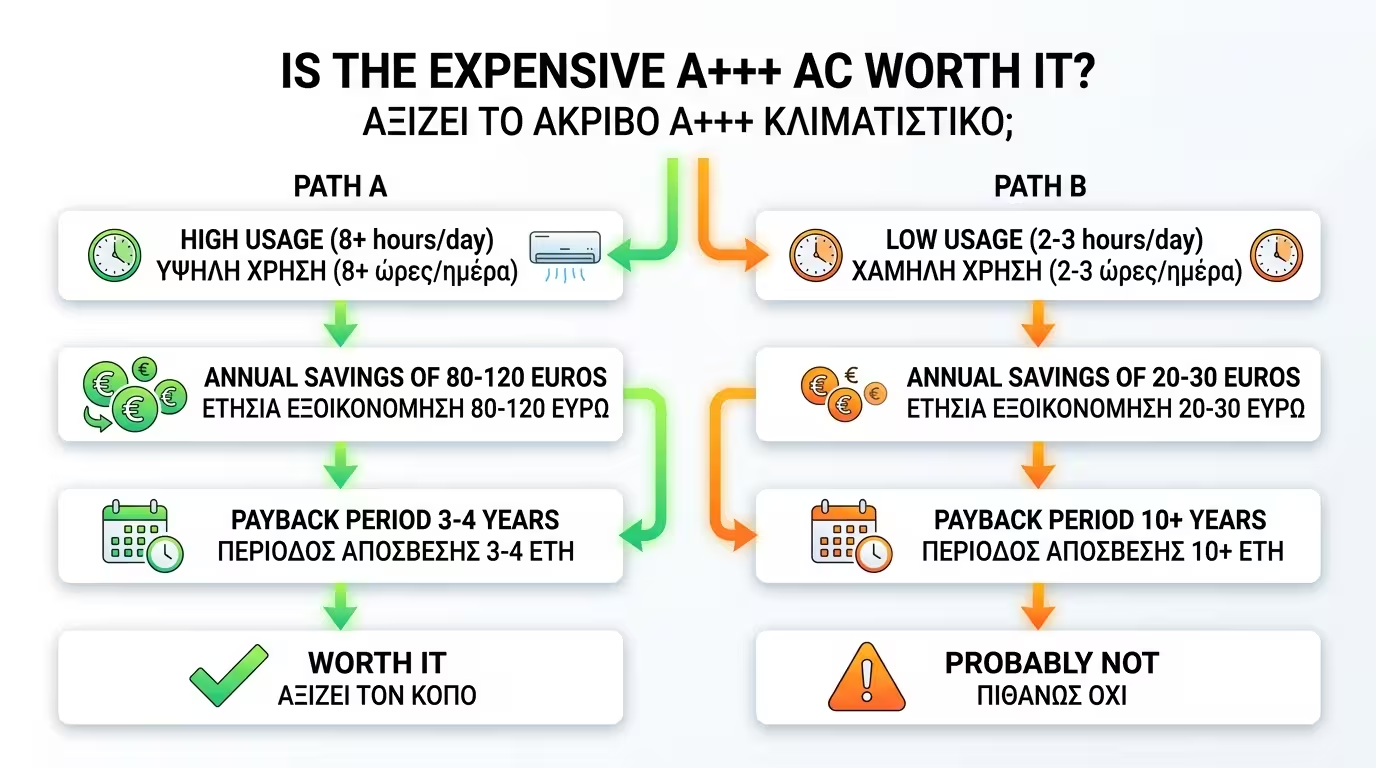
If it is intended for your living room, which will run 10 hours a day in summer for cooling and all winter as the main heating source. The €400 difference will pay for itself through lower electricity bills within 2–3 years.
If it is for a holiday home you visit for 15 days in August, for the guest bedroom, or if you already have natural gas for winter and only want the AC for 2 hours at midday in summer. In this case, the expensive machine will never pay for itself.
Next time you compare air conditioners, ignore the huge stickers. Look at the numbers on the energy label. Seek SEER above 7.0 (for good cooling) and SCOP in the average (green) zone above 4.0 (for economical heating).
Now that you have found the right size and ideal energy class, a practical problem arises: You have 3 bedrooms. Are you going to fill your balcony with 3 huge, noisy outdoor compressors? In our next article, we analyse Multi-Split Air Conditioning Systems: Is it actually a good idea to connect 3 indoor units to just 1 outdoor unit, or does it carry risks?
Return to category.
Go to categoryReturn to the central guide.
Go to guide