Inverter Technology in Air Conditioning: How Variable Compressor Speed
Eliminates Start-Stop Cycling
If you search for an air conditioner today, you will find the word
"Inverter" printed in huge letters on every box, every brochure and
every e-shop listing. It has become the ultimate synonym for electricity
savings.
However, if you ask the average consumer "What exactly is Inverter?", the most common answer you will get is: "Well, it's a system that uses less electricity". This is true, but it doesn't explain why.
To understand why this technology revolutionised the industry (and why,
if you use your air conditioner incorrectly, Inverter won't save you),
we need to look at how old machines worked and how the Inverter "brain"
changed the rules of the game.
1. The Past: The ON/OFF Era (The Switch Syndrome)
The "heart" of an air conditioner (what produces cooling or heating)
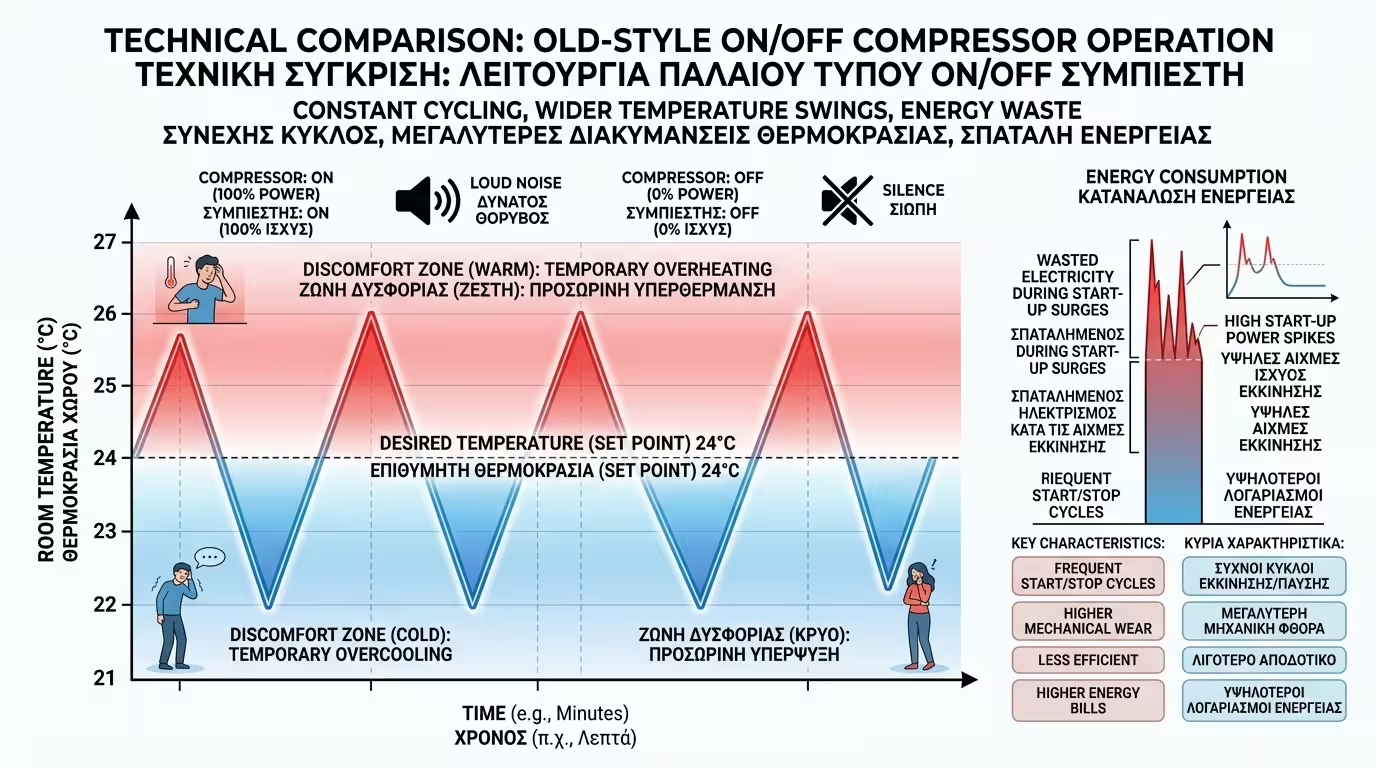
is a large motor in the outdoor unit called the compressor. In old machines, this motor had only two speeds: 100% (Full Throttle) or 0% (Off).
🔌 How It Worked
If you set the thermostat to 26°C, the machine would fire up at
100%, drawing enormous amounts of electricity (Start). Once the room
reached 26°C, the compressor would shut off completely (Stop). After
a while, the room would warm up again (e.g. rising to 28°C), and the
compressor would "slam" back on at 100%.
🚗 The Car Analogy
Imagine driving your car on the motorway, and instead of maintaining
a steady speed, you floor the accelerator, then slam on the brakes
until you stop, and then floor it again. The fuel consumption (and engine wear) would be enormous! That's
exactly what old AC units did.
2. The Present: How Inverter Works (Ultimate Control)
The word Inverter does not describe a new type of refrigerant or a
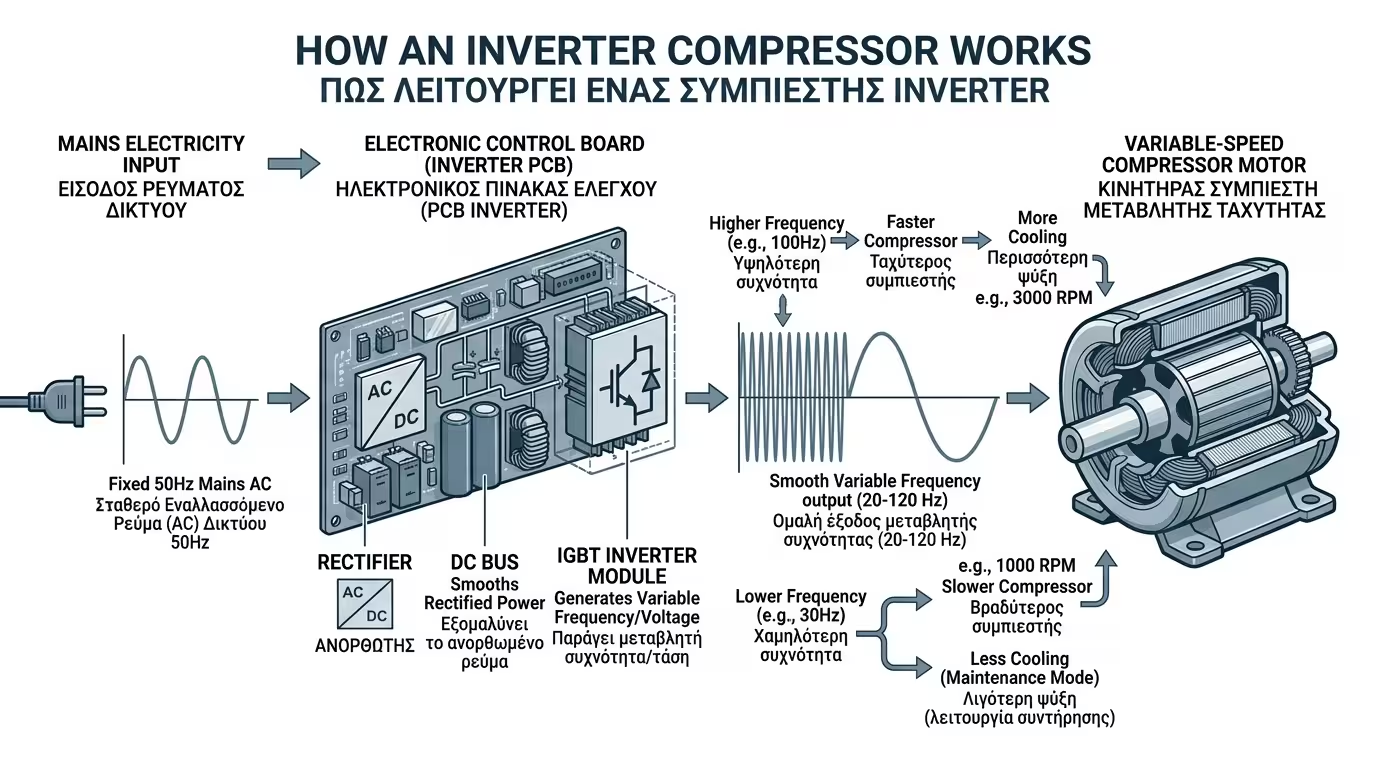
different fan. It describes an electronic circuit board (a microcomputer) that sits before the compressor motor.
⚡ The Magic Property
This circuit board varies the frequency of the electrical current (the Hz) feeding the motor. By changing the current, it smoothly adjusts the
compressor's RPM (speed), exactly like gently pressing the accelerator
pedal in a car.
🎯 How It Works in Practice
You turn on the air conditioner at 26°C. The Inverter senses the
room is "boiling" (35°C), so it runs the motor at 100% to cool it
down quickly.
📉 The Smooth Slow-Down
As the temperature approaches 26°C, the "brain" instructs the motor: "Don't switch off! Just reduce your speed to 30%". The machine never stops. It continues running
quietly at idle, delivering exactly the cooling needed to maintain
26°C while only compensating for losses.
3. The 4 Enormous Advantages of Inverter
Inverter technology is not merely a marketing slogan. The advantages
are measurable and substantial.
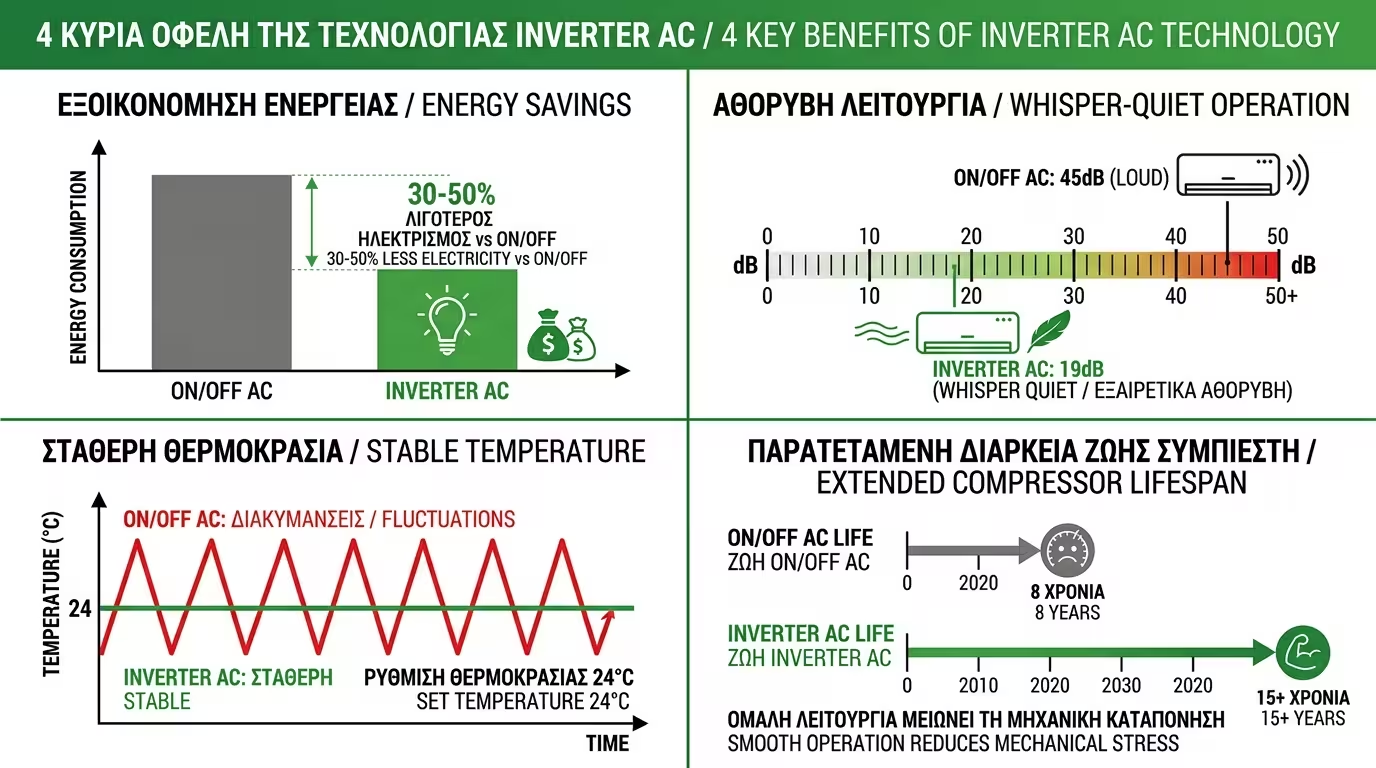
The moment a large motor starts from zero (start), it momentarily
draws 3 to 4 times more electricity than during normal
operation. By eliminating continuous start-stop cycling, Inverter reduces
electricity consumption by up to 50%.
🌡️ 2. Perfect Temperature Stability (Comfort)
No more hot-cold swings. The room stays "locked" at the degrees you
requested, without deviations.
🔇 3. Silent Operation
Since the machine runs at 30% or 40% of its capacity most of the
time, the outdoor compressor sounds like a gentle murmur, allowing you (and your neighbours) to sleep peacefully.
🛡️ 4. Enormous Longevity
The continuous, violent start-stop cycles placed tremendous
mechanical stress on old motors. An Inverter compressor running
smoothly lasts many more years without breakdowns.
4. The Golden Rule (The Mistake We All Make)
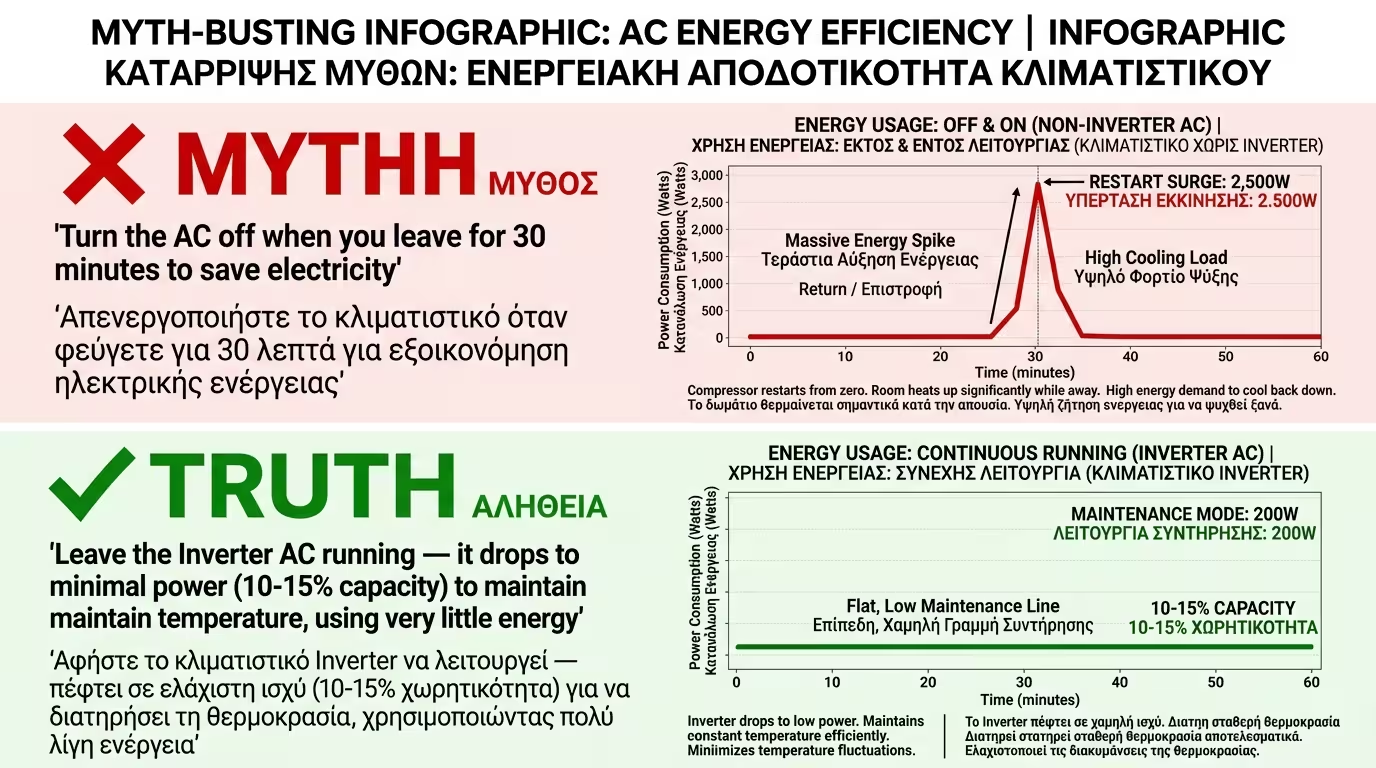
To save electricity with Inverter, you must break an old, bad habit: Stop turning your air conditioner on and off every half hour!
❌ What Most People Do Wrong
Many people come home, set the Inverter to 18°C "to freeze the
place", and after 20 minutes when they feel cold, they switch it
off. As soon as they get warm again, they turn it back on. By doing
this, you completely negate the Inverter board. You force
it to work permanently at 100% like an old ON/OFF machine, burning maximum
electricity!
✅ The Right Way
Set your air conditioner to 26°C (in summer) or 21°C (in winter) and... leave it alone! Let it run continuously
for 5, 8 or 10 hours. The brain will drop the speed to minimum, the electricity
meter will "go to sleep", and you will enjoy the coolest and cheapest summer of your life.
5. Summary
🎯 A Necessity, Not a Luxury
Inverter technology is not a luxury - it is now the only option (and European law). It is the reason modern air conditioners are one
of the cheapest heating solutions in winter.
➡️ Next Step
Now that you have an efficient, "smart" machine, you need to decide
where to place it. If the installer mounts it above your sofa or
directly opposite your bed, the air conditioning experience will
become a nightmare. In our next article: Ideal Air Conditioner Placement - Where the indoor and outdoor
units should go so the airflow doesn't blow directly on you.