🇯🇵 VRV (Variable Refrigerant Volume)
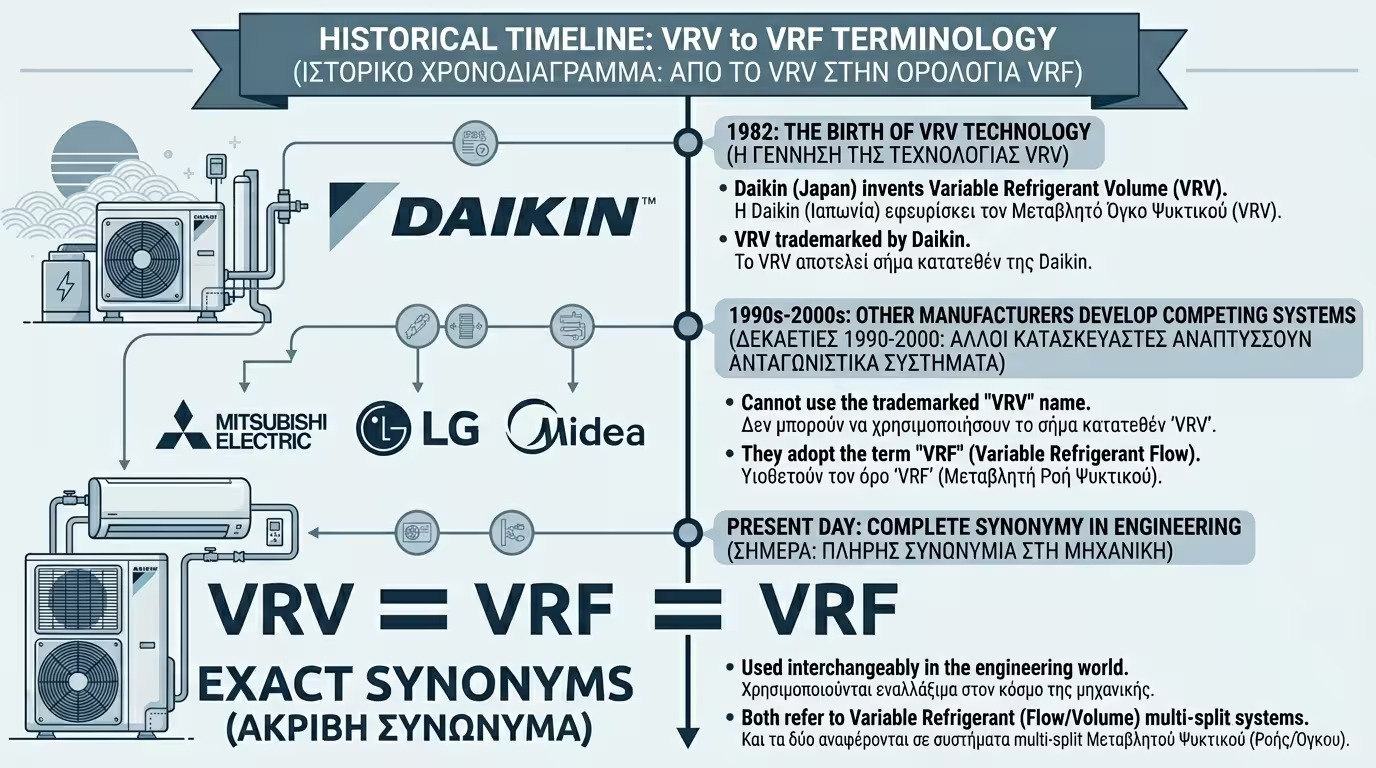
The acronym VRV was coined in 1982 by the Japanese company Daikin, which invented the technology. Daikin registered the term as a trademark, so no other company was permitted to use it.
Imagine you are building a three-storey office block, a boutique hotel with 20 rooms, or a large, luxury duplex. You need to air-condition dozens of different spaces.
If you used simple Split air conditioners, you would have to fill the roof and façades with dozens of outdoor compressors, creating an aesthetic (and acoustic) nightmare. If instead you chose a large residential Multi-Split, you would hit its limits: a Multi-Split handles up to 5 indoor units and its piping cannot exceed relatively short distances.
What solution allows us to connect up to 64 indoor units to a single central outdoor unit, with piping spanning entire city blocks? The answer goes by the initials VRF (or VRV).
Let us first clear up the market's biggest misunderstanding. Many people ask whether they should buy a "VRV System" or a "VRF System". They are EXACTLY the same technology.
The acronym VRV was coined in 1982 by the Japanese company Daikin, which invented the technology. Daikin registered the term as a trademark, so no other company was permitted to use it.
Consequently, all other manufacturers (Mitsubishi, LG, Midea, etc.) named their equivalent systems VRF (Variable Refrigerant Flow). In the engineering world, the two terms are now used as synonyms.
In a conventional air conditioner, the compressor sends refrigerant to the indoor unit at a fixed, predetermined flow rate. A VRF system does something entirely different: it operates like the building's "traffic controller".
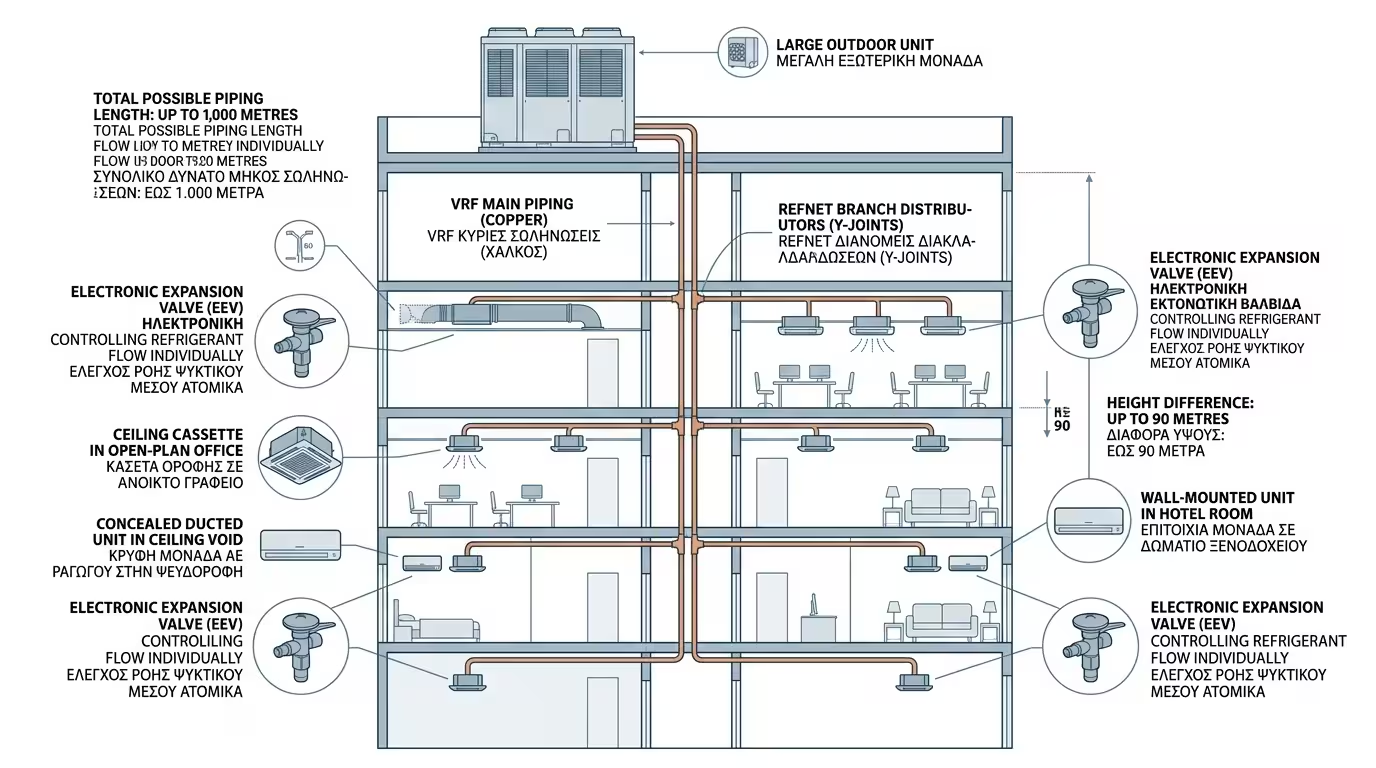
The massive outdoor unit (hidden on the roof) features state-of-the-art Inverter compressors and a powerful electronic brain. From it, a single pair of large copper pipes enters the building. As this main pipe runs through the floors, special branch distributors (Refnets or Y-joints) "cut" smaller branches towards individual rooms.
The central unit continuously calculates how many rooms are active, what temperature each one demands, and sends the EXACT, variable quantity of refrigerant (Flow) each unit needs individually at that moment. If Room 1 needs heavy cooling, it receives more refrigerant. If Room 2 has reached its setpoint, an electronic valve "throttles" the flow to it. Nothing is wasted!
Why do architects and mechanical engineers love VRF systems?
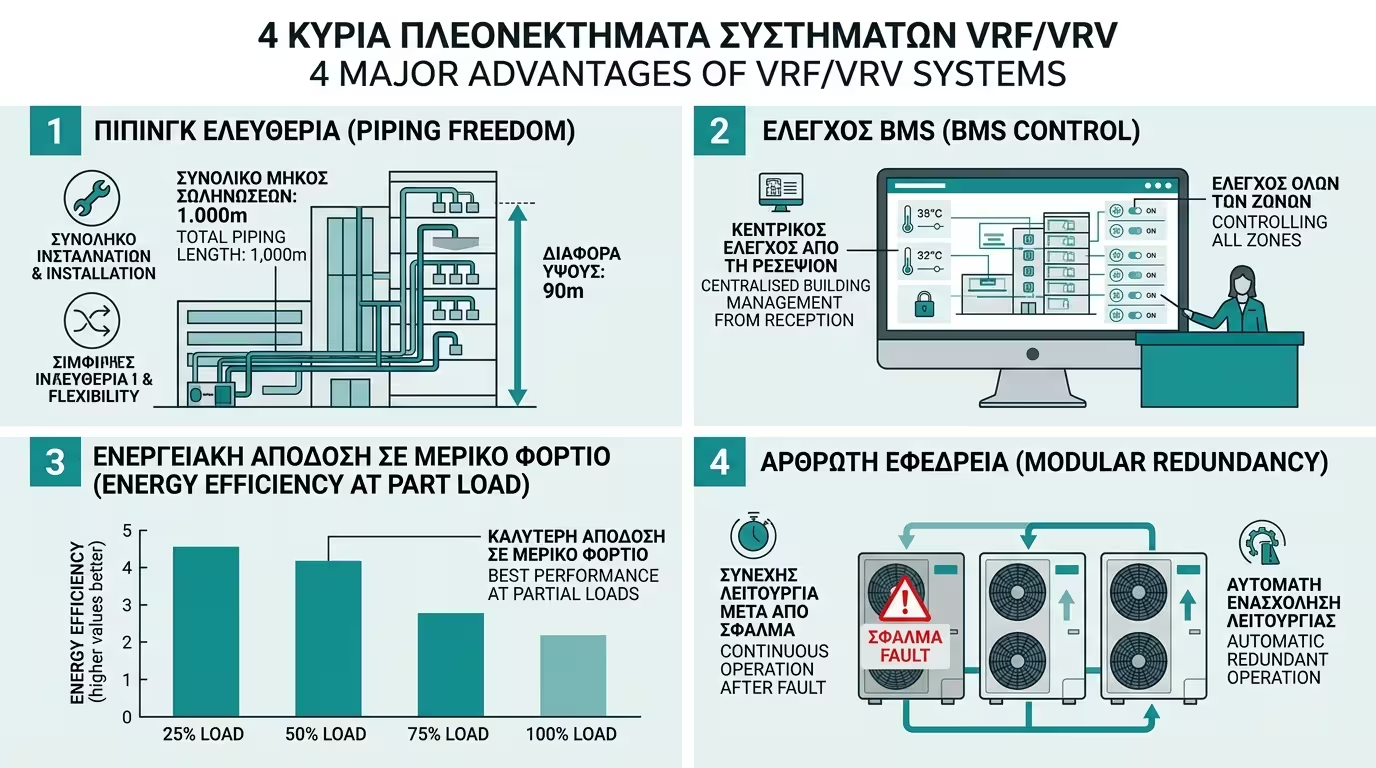
This is the primary reason the system exists. In a VRF, total piping distance can reach 1,000 metres, and the height difference between the outdoor unit on the roof and the last indoor unit on the ground floor can exceed 90 metres! You can hide all equipment on the roof and keep perfectly clean façades.
You can connect dozens of units of various types: concealed ducted in the lounge, ceiling cassettes in the kitchen, wall-mounted in the bedrooms. All controlled independently via Building Management Systems (BMS), allowing, for example, a hotel's front desk to manage everything from a computer.
Because almost never are all rooms in a building running at 100%, the VRF drops its compressor speeds to minimum, achieving SEER and SCOP values that reach the top of the charts, dramatically reducing operating costs compared to individual units.
VRF outdoor units are typically "Modular": 2 or 3 are banked together to deliver the building's total kW. If one compressor fails, the system does not "die" (unlike Multi-Split). The brain puts the remaining compressors to work harder, keeping the building operational until the technician arrives.
Like every professional solution, VRF has one primary drawback: The enormous upfront cost.
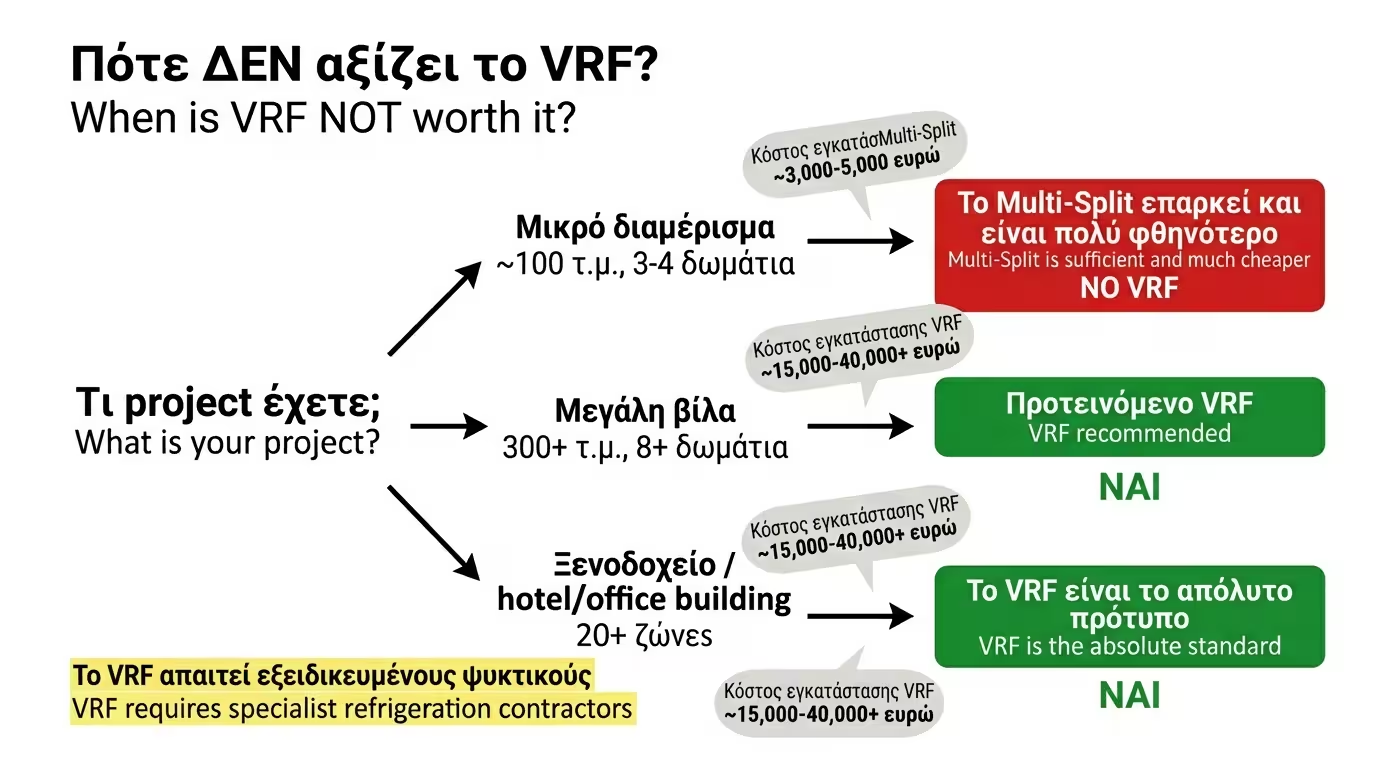
These systems are expensive both in terms of equipment and the special branch fittings (Refnets). Installation requires top-tier, specialist HVAC contractors - the slightest leak or bad solder joint in the copper piping can haunt you for years.
If you are building a 100 m² apartment with 4 rooms, a good Multi-Split is more than adequate and far more economical. If, however, you are constructing a three-storey villa, a hotel or a clinic, VRF is the absolute go-to solution.
The VRF/VRV system is the pinnacle of modern HVAC engineering. It delivers perfect temperature in every room, with minimal consumption and complete aesthetic freedom.
So far we have discussed the basic VRF type (2-Pipe System), where the entire building operates in either cooling or heating mode. But what happens in a modern glass-walled office building in November, where sun-facing offices are "boiling" and need cooling while the rear offices are freezing and need heating? In our next article: Heat Recovery VRF (3-Pipe Systems) - simultaneous cooling and heating in the same building, for free!
Return to category.
Go to categoryReturn to the central guide.
Go to guide