Bioclimatic Design & Building Orientation: Harnessing the Sun in Winter and Blocking it in Summer

Imagine a house that stays cool in August without turning on the air conditioner and warm in January with minimal heating. It sounds like a sales pitch for expensive machinery, but in reality it is the essence of Bioclimatic Design - the correct use of architecture and the sun's path.

Instead of building "blind" concrete boxes and then trying to cool or heat them with enormous energy consumption, we design the building to "cooperate" with the local climate. Correct orientation alone can reduce a home's energy consumption by 40%.

The "Smart" Geometry of the Sun (Summer vs Winter)

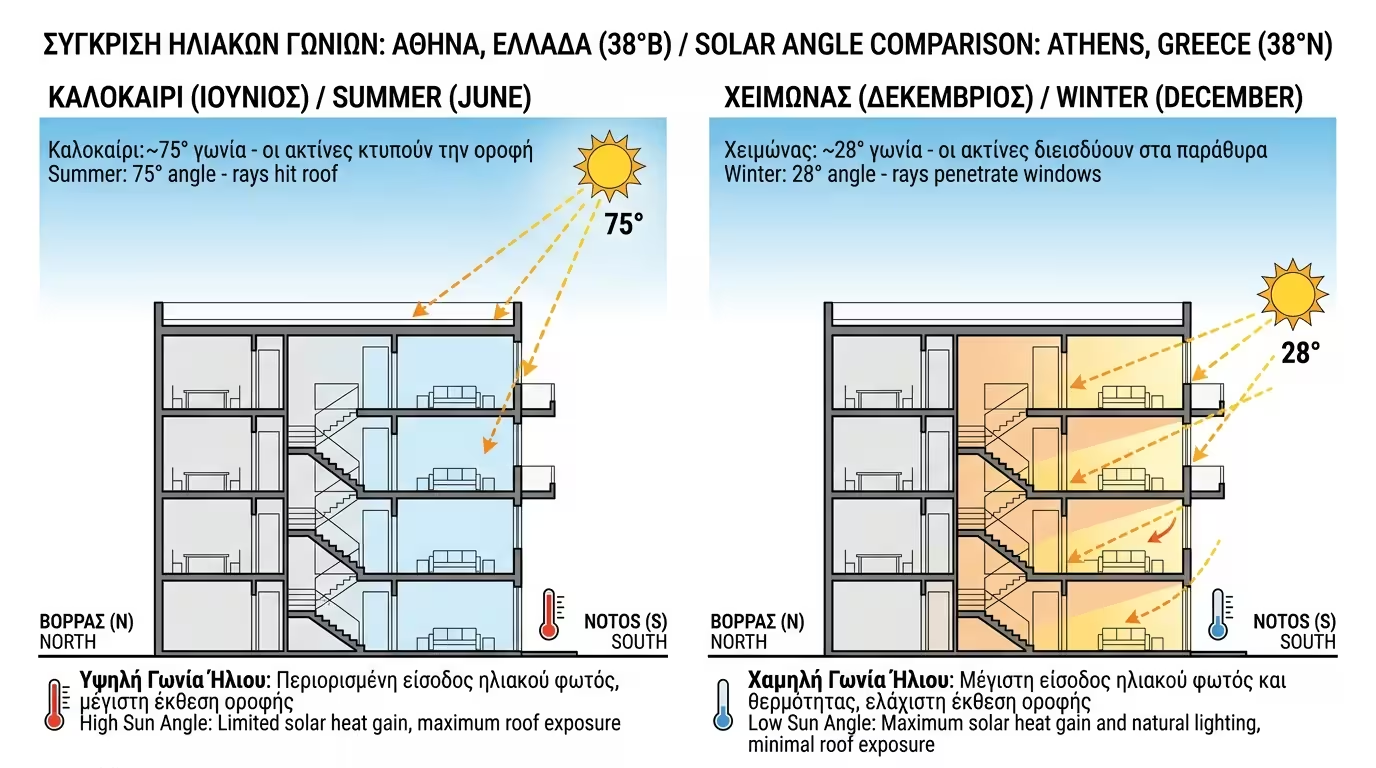
The greatest advantage nature gives us is that the sun does not follow the same path all year round. In the Northern Hemisphere (including Greece), the angle of incidence changes dramatically with the seasons. This cyclical alternation of angles is the foundation of every bioclimatic study - by knowing exactly where the sun is each month, the engineer positions the openings, the orientation and the shading elements with mathematical precision.

Sun angle summer vs winter – high rays vs low horizontal rays reaching deep inside rooms

☀️ In summer

The sun rises north-east, reaches very high in the sky at midday (almost vertically overhead, at approximately 70°) and sets north-west. Its rays "hit" the roof and fall nearly perpendicular to the ground. At this angle, minimal shading is needed to block them.
❄️ In winter

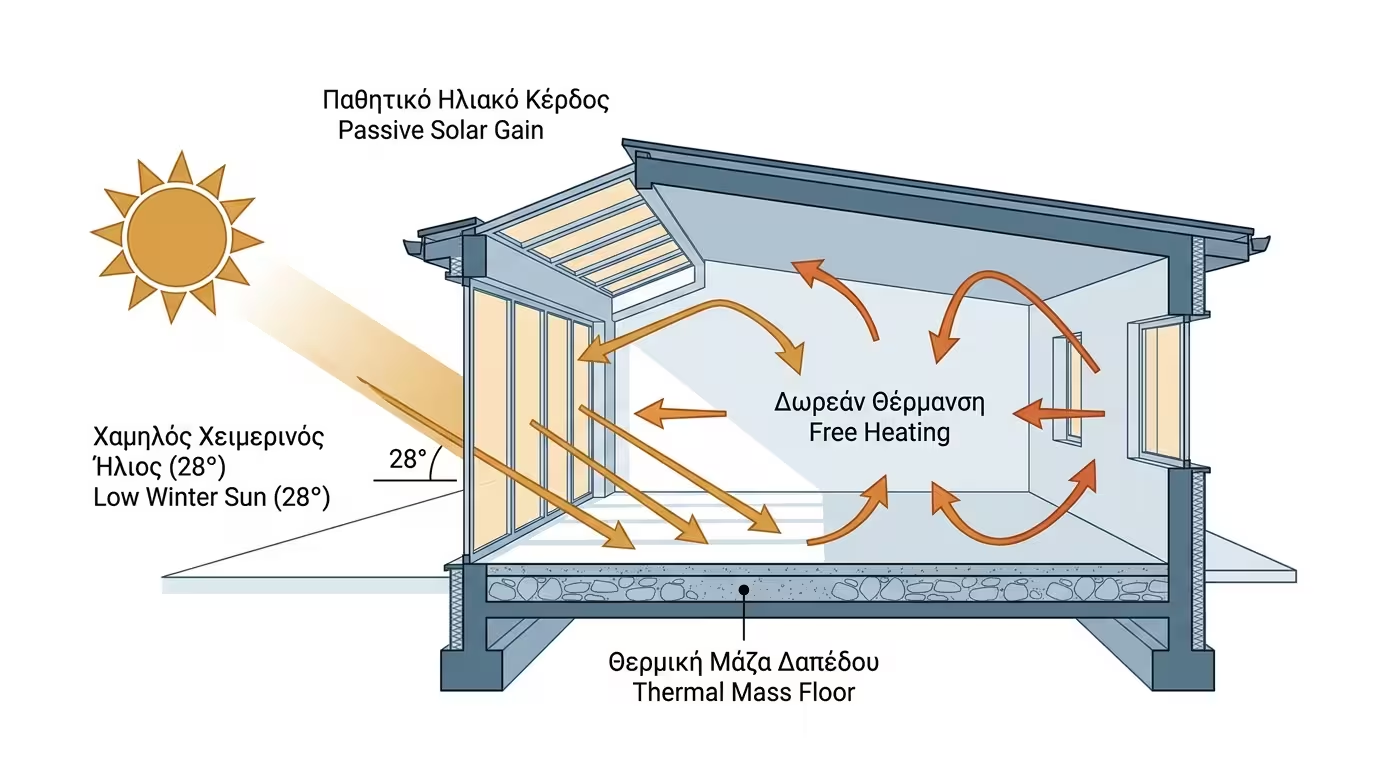
The sun rises south-east, traces a very low arc close to the horizon (~30°) and sets south-west. Its rays travel almost horizontally, entering deep into rooms through south-facing windows and warming the space for free.

🔑 The key

This huge difference in angle between summer and winter is the "key" to bioclimatic design. If we know where the sun will strike in each season, we can position rooms and windows in exactly the right places. The difference between a well-designed and a randomly positioned building can reach 30–40% in annual energy consumption - simply through correct orientation, with zero additional construction cost.

The 4 Orientations: Where to Place Each Room

When the architect receives an empty plot, the very first thing they do is find North. The positioning of rooms determines your comfort for the next 50 years. Every side of the building receives entirely different solar radiation and the engineer must exploit this difference by placing the right spaces on the right side.

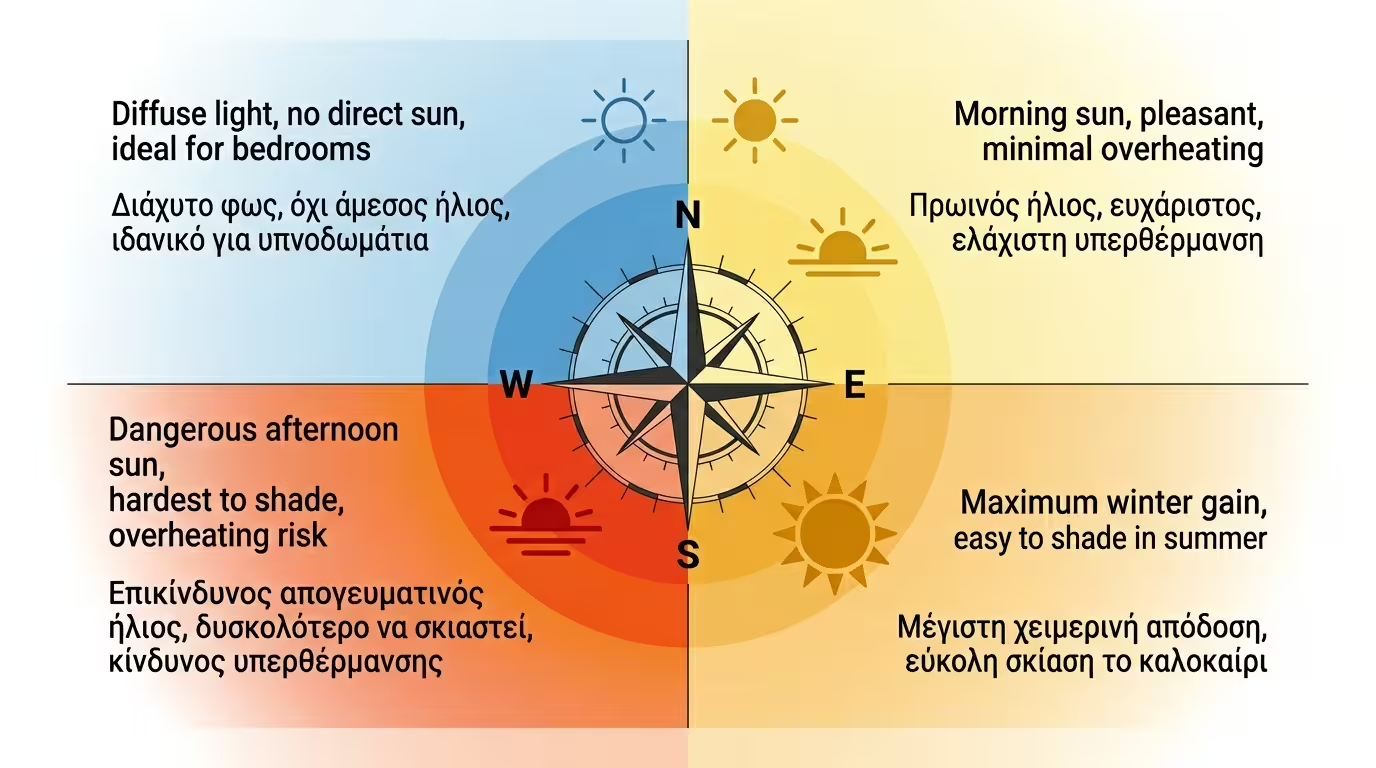
Four building orientations – South living room, North utilities, East bedrooms, West oven problem

🧭 South - The "Engine"

The most valuable side. This is where we place the living room, dining room, master bedroom. In winter, the low-angle rays pass through large glazed openings and heat the space for free (Passive Solar Heating). In summer, the high sun is easily blocked by a simple horizontal overhang.

🛡️ North - The "Shield"

Never receives direct sunlight. Here we place utility spaces: bathrooms, storage, corridors, stairwell, kitchen (which already generates its own heat from cooking). Small windows only for natural light. North light is consistent and shadow-free - ideal for offices or studios.

🌅 East - The "Wake-up"

Receives sun early in the morning when the air is still cool. The ideal position for bedrooms or a breakfast room. You wake with natural light, while on summer afternoons these rooms lie in deep shade.

🔥 West - The "Oven"

The big headache. The western sun strikes in the afternoon, when the atmosphere has already heated up. It is low and "drills" deep into rooms. Rule: Avoid large openings on the West! If unavoidable, special vertical shading systems are essential.

The Magic of the Overhang (Awning / Brise-Soleil)

The smartest weapon of bioclimatic design is not an expensive machine, but a piece of concrete (or timber) projecting above the south-facing window. Called an Overhang (or Awning), it functions as nature's "seasonal switch". It is a construction with no moving parts, no maintenance and zero energy consumption - yet its impact on indoor temperature is enormous.

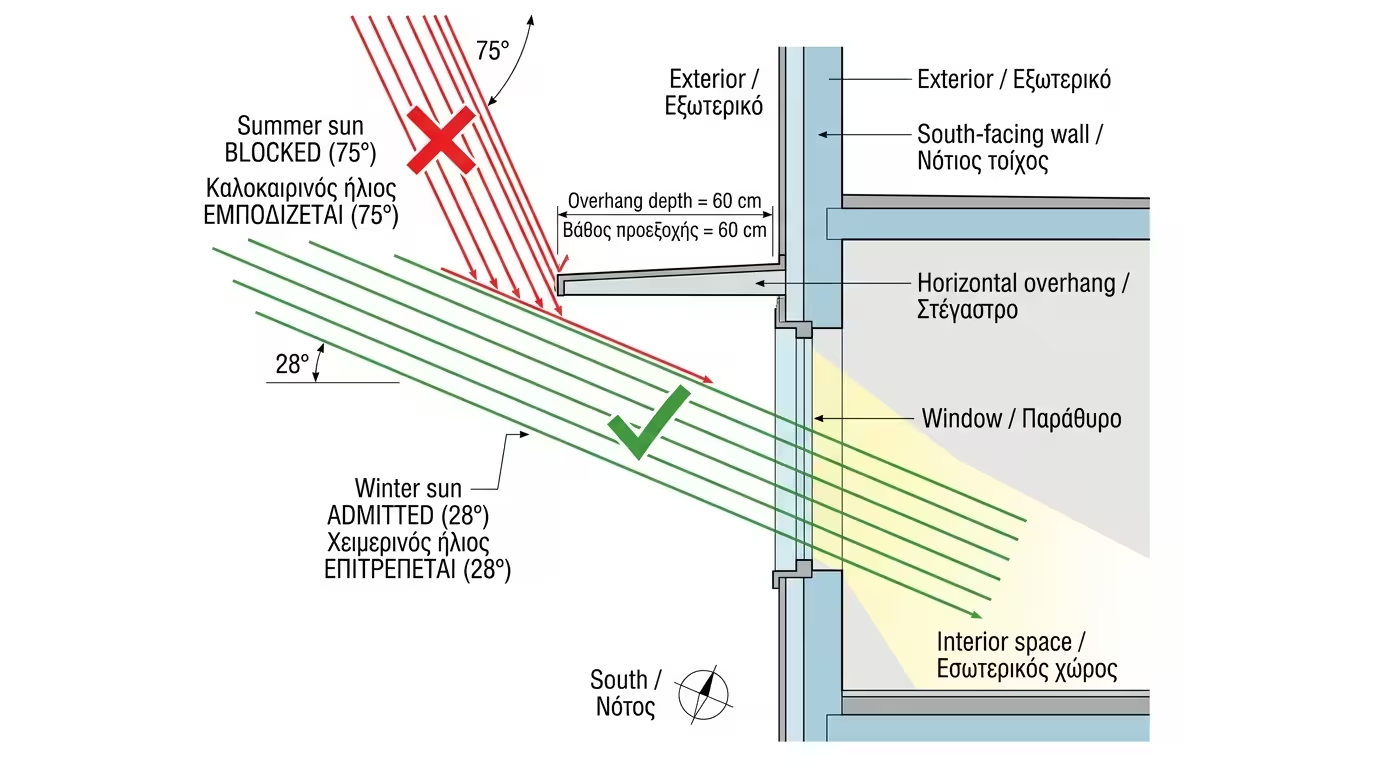
Overhang awning blocking 70° summer sun while allowing 30° winter sun to enter

🚫 Blocks the heatwave

In summer, when the sun is high (~70°), the overhang creates a deep shadow that covers the entire glazed opening. The room remains bright, but the scorching sun never touches the glass.

☀️ Lets the warmth in

In winter, when the sun drops low (~30°), the rays pass unhindered beneath the overhang, cross the glass and "bathe" the living room floor in completely free heating.

📐 The calculation

The overhang length is calculated with mathematical precision, based on the geographic latitude of the site. An overhang in Crete differs from one in northern Greece, because the maximum solar angle changes with position on the map.

Summary

Passive solar heating – south-facing glazing in winter lets rays deep into the living room

Bioclimatic design is proof that nature works in our favour - if we know how to "listen" to it. Correct room placement, large south-facing glazing, small north-facing openings and "smart" overhangs compose the ideal home - one that needs minimal air conditioning.

📊 Savings

Correct application of bioclimatic principles can reduce cooling and heating needs by 30–40%, with zero additional cost. All it takes is for the engineer to consider the sun and the winds before drawing the plans. In many cases, a bioclimatically designed house can operate with small split air-conditioners instead of a central system, saving thousands of euros in the initial investment.

🏛️ Energy Performance Certificate (EPC)

The Greek Building Energy Performance Regulation (K.En.A.K.) takes the orientation of every façade into account when calculating the Energy Performance Certificate. A building with poor orientation starts at a disadvantage, even if its insulation is excellent. Conversely, correct bioclimatic design automatically raises the energy rating by one or two categories.

🔗 What about existing homes?

Homes built with the wrong orientation that are "baked" by the sun need external protection. In the next article we reveal why heavy curtains do not protect you from the heat at all and how external shading makes all the difference.

Related Articles

Cooling Energy Production & Air Conditioning

Return to category.

Go to category

Preview