❄️ Cooling mode
When the system is set to cooling, the pipes carry cold refrigerant to every room. Every indoor unit receives cold refrigerant and delivers cool air to the space.
Picture an ultramodern glass office building in the centre of Athens. It is midday in November. The sun is beating mercilessly on the south facade. The offices there have turned into a greenhouse - the temperature has hit 28°C and the employees are desperately requesting air conditioning (cooling).
At the exact same moment, on the rear side of the building (the north), which is permanently in shade, the temperature is just 15°C. The employees there are freezing and want the radiator (heating).
If the building has a standard central system (even a simple, expensive VRF), the building manager has a massive problem: the central unit can operate either in cooling mode or heating mode for the entire building. It cannot do both. Someone will have to suffer.
The solution to this conundrum is called a Heat Recovery VRF System. It is the technological "Holy Grail" of air conditioning, allowing different rooms within the same building to do whatever they want, simultaneously. Let us see how this "magic" works.
As we saw in the previous article, a typical VRF system sends the refrigerant from the outdoor unit to the indoor units through two pipes (2-Pipe System).
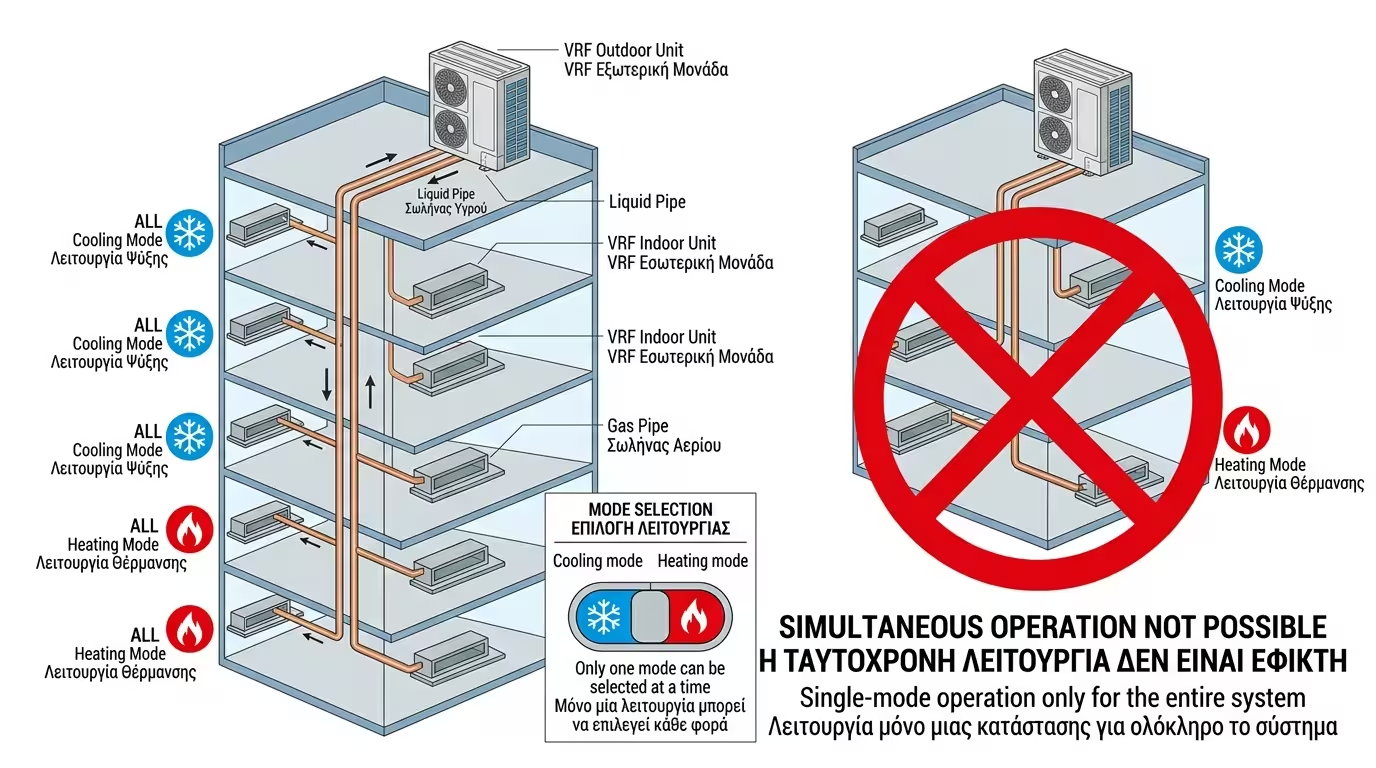
When the system is set to cooling, the pipes carry cold refrigerant to every room. Every indoor unit receives cold refrigerant and delivers cool air to the space.
When the system is set to heating, a four-way valve in the outdoor unit reverses the cycle, and the same two pipes carry hot refrigerant everywhere.
There is no way to send cold and hot refrigerant through the same pipe. If one room wants cooling and another wants heating at the same time, someone will have to make do.
Engineers decided to add a third pipe to the central network, completely rewriting the rules of fluid dynamics. In the Heat Recovery system, the three copper pipes running through the building have specific, separate roles.
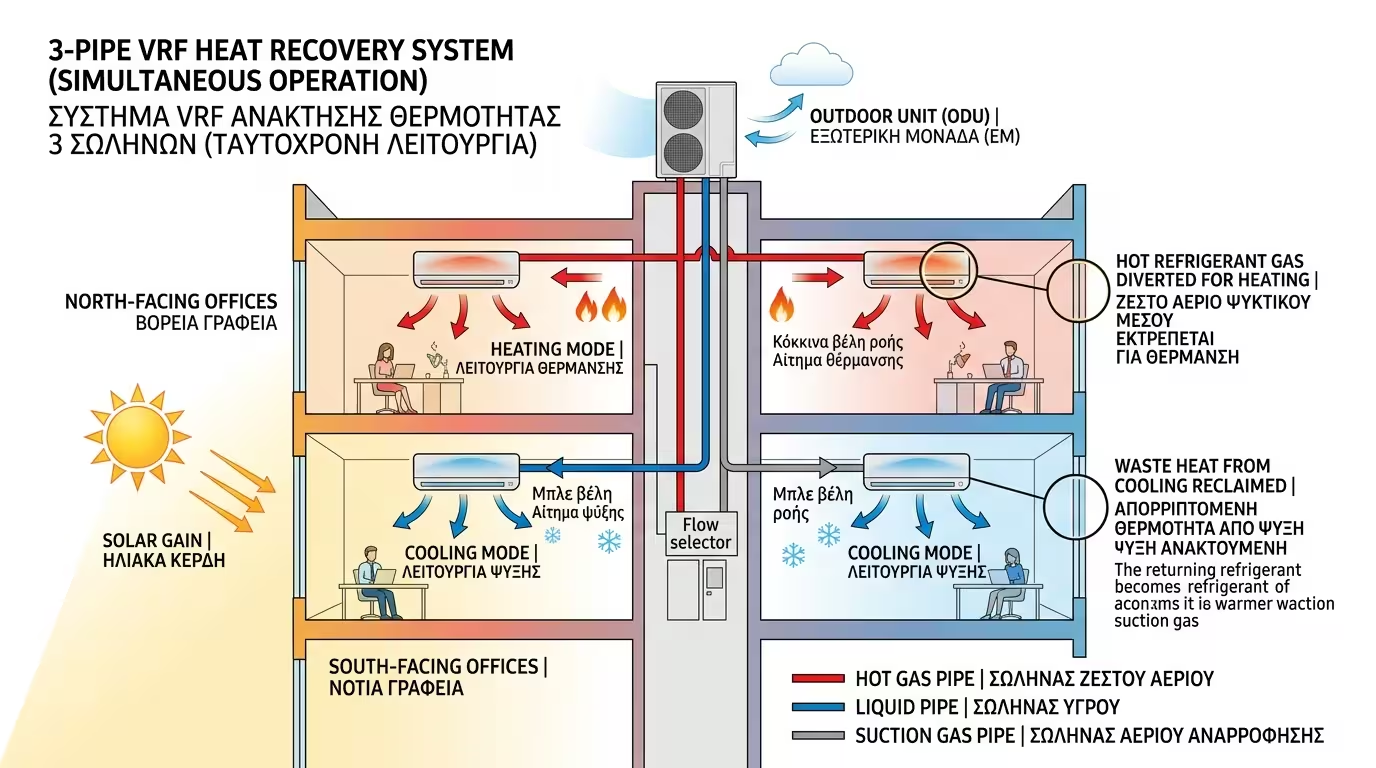
The first pipe carries hot gas (heat). It is the pipe that feeds rooms requesting heating, supplying high-temperature refrigerant at high pressure.
The second pipe carries cold gas (cooling). It feeds rooms requesting air conditioning, providing low-temperature refrigerant at low pressure.
The third pipe returns the refrigerant (in liquid form) back to the outdoor unit, completing the thermodynamic cycle. Three pipes, three roles, absolute flexibility.
The three main pipes do not go directly to the indoor units. They first terminate at special distribution boxes hidden in the corridor false ceilings, known as Branch Controllers (BC) or BS Boxes.
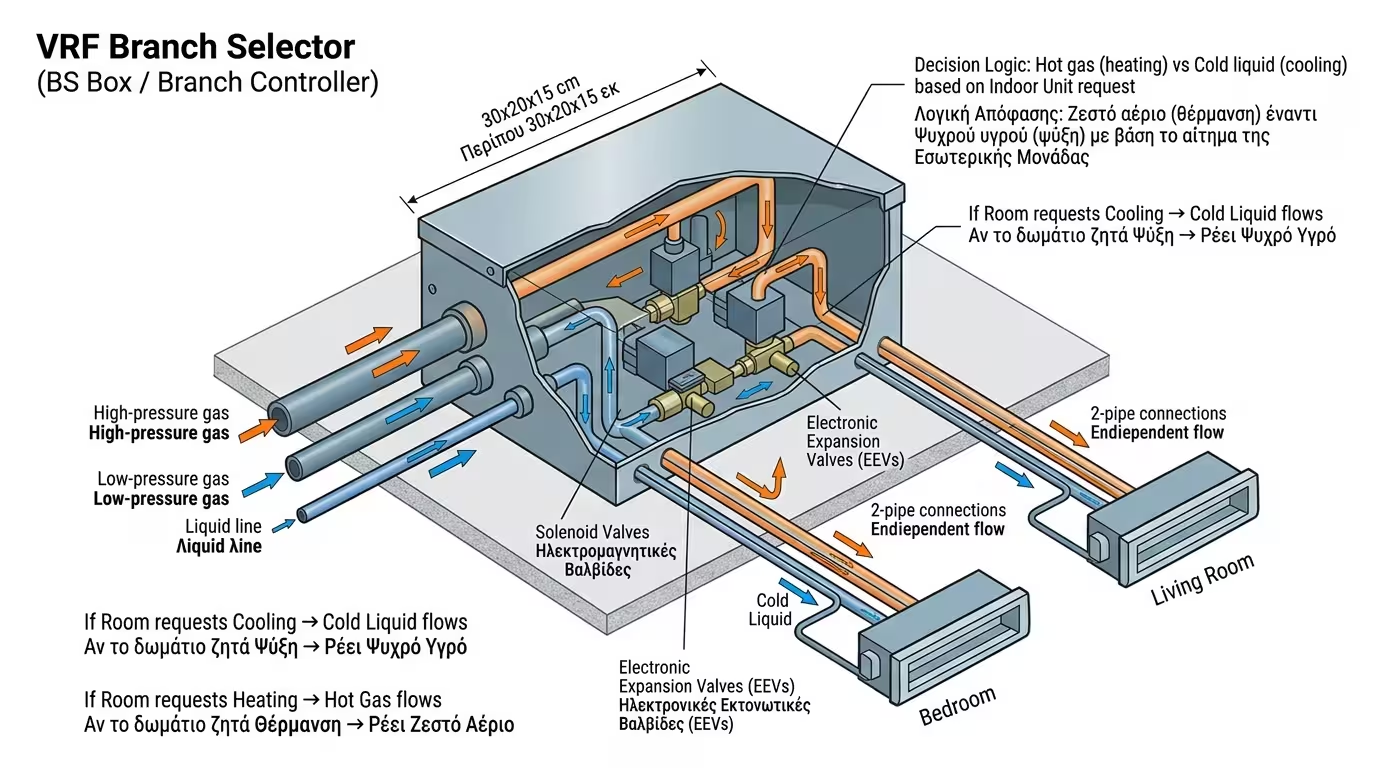
These boxes are the real brains. They contain dozens of solenoid valves. The director's office (south-facing) requests cooling? The box sends refrigerant from the "cold" pipe. The adjacent office (north-facing) requests heating? The same box, at exactly the same time, sends refrigerant from the "hot" pipe.
Every room enjoys complete temperature independence, connected to the same central system. Each user adjusts the temperature they want without affecting anyone else, even if their neighbour is doing the exact opposite.
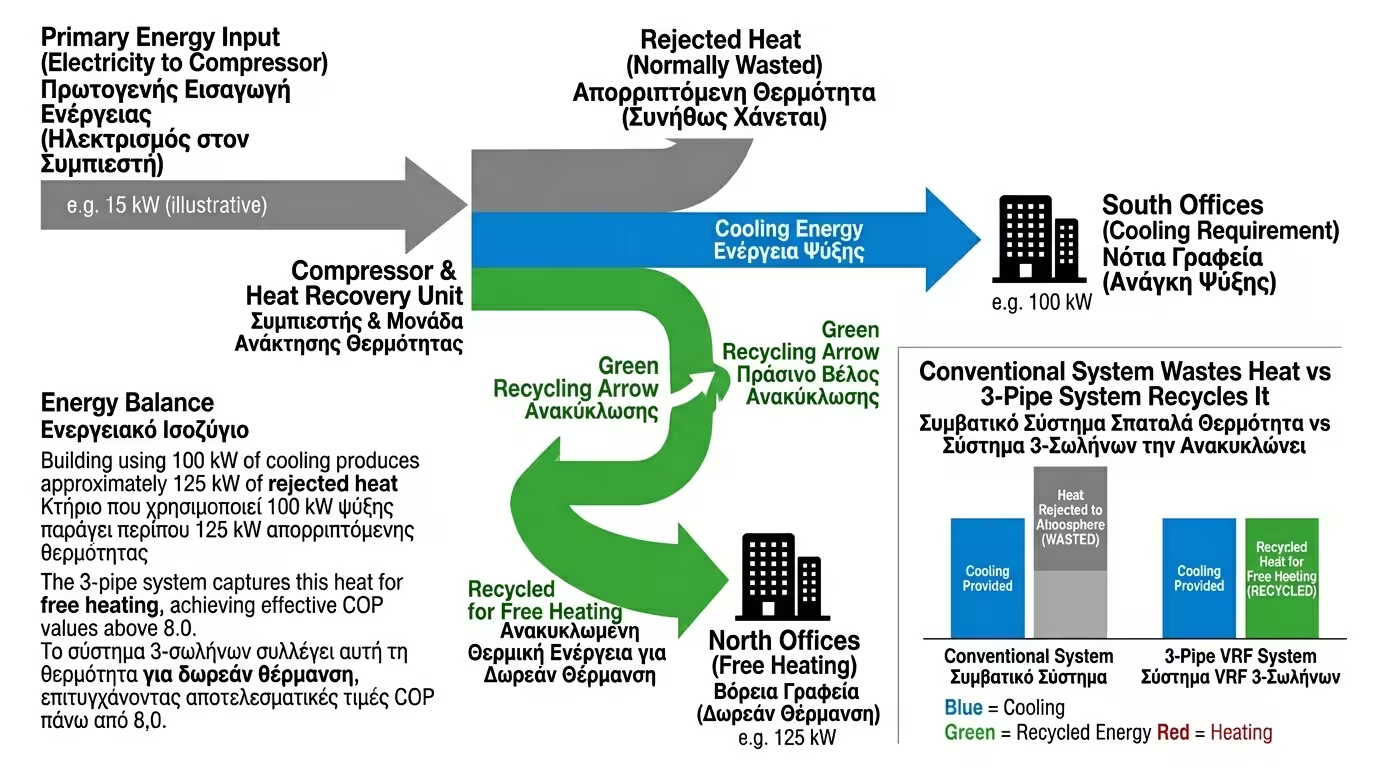
This is the point that leaves building owners speechless. This system does not merely offer comfort - it produces virtually free energy. How? Through thermodynamic transfer.
When an air conditioner cools a room, it removes heat from the air. In a standard system, that heat travels back to the rooftop outdoor unit and is expelled (wasted) into the atmosphere via the condenser fan. It is energy completely lost.
In the Heat Recovery system, the "magic" BC box intervenes. It takes the heat "stolen" from the hot office, prevents it from going to the rooftop, and sends it directly to the cold office requesting heating! In practice, the building heats one side using the free waste heat that the other side is rejecting!
The central compressor on the roof operates at minimum capacity, merely covering minor differences. Electricity savings reach 30-50% compared to 2-Pipe systems, and in buildings with large thermal differences between facades, full payback of the extra cost typically occurs within 3 to 5 years.
Enormous solar heat gains on modern glass buildings create massive temperature differences between facades. The south side may need cooling while the north needs heating, on the very same day.
The guest in Room 101 wants to sleep at 24°C. The guest in Room 102 (perhaps from a Scandinavian country) wants 18°C with cool air. Satisfying every guest individually, with zero interaction between them, is the height of luxury in air conditioning.
Server rooms demand powerful cooling 365 days per year, even in the depths of winter. The Heat Recovery system extracts the heat from the servers and uses it to heat the remaining offices completely free of charge during winter!
A Heat Recovery VRF system is by far the most expensive air conditioning solution on the market. It requires a triple copper piping network, dozens of expensive distribution boxes (BC boxes) and countless man-hours from top-tier mechanical engineers and refrigeration technicians for design and brazing.
In large commercial buildings, the enormous electricity savings (thanks to the "free" energy transfer between rooms) achieve full payback of the extra cost typically within 3 to 5 years. After that, the system delivers net financial gain every month.
If you are planning a large commercial building with complex requirements, Heat Recovery VRF (3-Pipe) is the ultimate choice. It delivers happy occupants and eliminates energy waste. In the next article, we enter the world of concealed air conditioning: Ducted Air Conditioning Systems.
Return to category.
Go to categoryReturn to the central guide.
Go to guide