Air Conditioner BTU Calculator: How to Choose the Right Size Without
Relying Only on Room Area
You walk into an appliance store to buy an air conditioner. The salesman
asks you the classic, expected question: "How many square metres is your room?". You reply "About 20 square metres", and he immediately points you
towards a 9,000 BTU unit.
It sounds logical and fast. However, this approach is the number one
reason thousands of consumers end up with air conditioners that either
"freeze" the room clumsily, or run non-stop at full blast consuming
enormous amounts of electricity, without ever adequately cooling the
space.
As engineers, we must clarify the following: Square metres are only the starting point of the calculation, not the
end. Let us look at what BTU really means, why the "rule of thumb" often fails,
and what are the 4 hidden factors you must consider before making your purchase.
1. What Does BTU Stand For? The Unit of Measurement That Determines
Everything
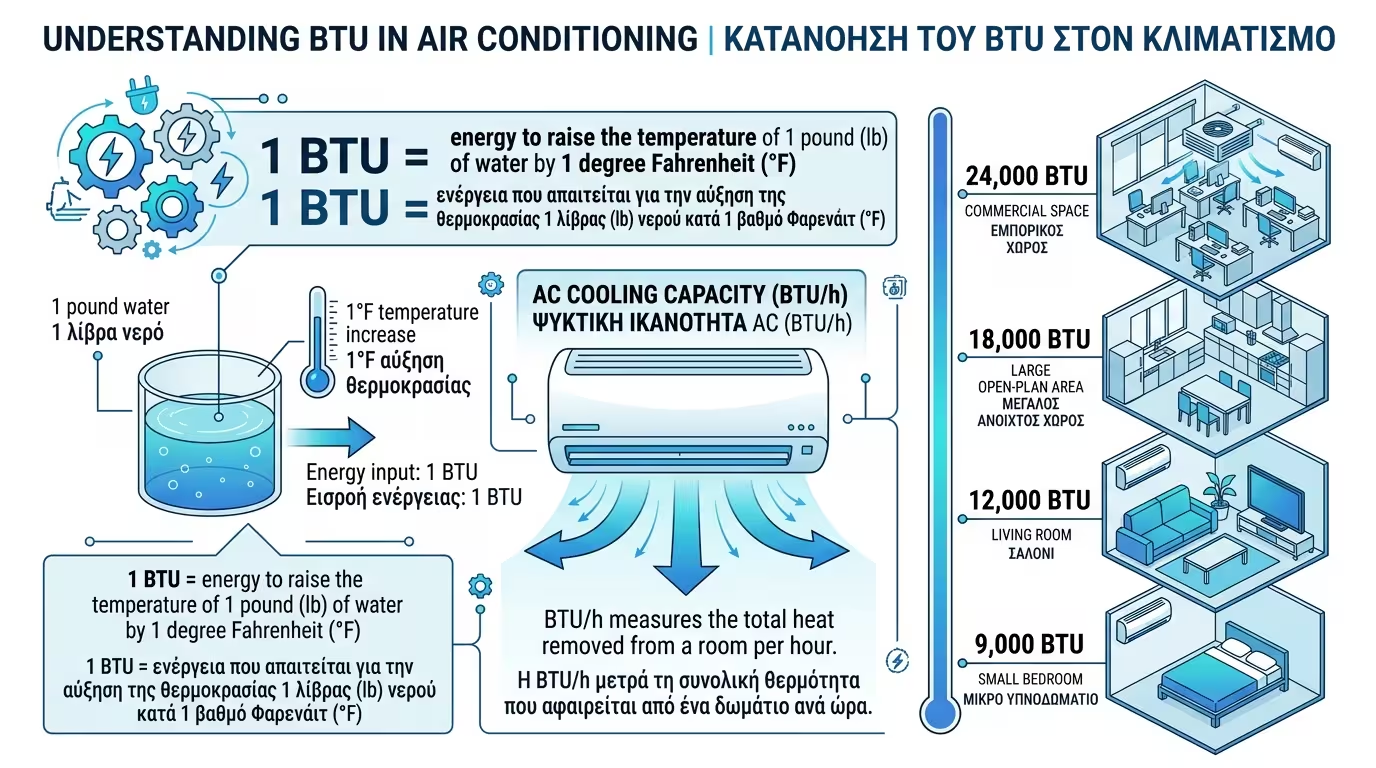
The abbreviation stands for British Thermal Unit. It
is the unit of energy measurement used worldwide in air conditioning.
In practical terms, it shows us the "capacity" (power) an air
conditioner has to remove heat from your room within one hour.
📏 The Higher the BTU, the More Powerful the Unit
The BTU number indicates how much thermal energy the air conditioner
can transfer from indoors to outdoors within one hour. The typical
residential categories are 9,000, 12,000, 18,000 and 24,000 BTU. Each category covers a specific range of spaces, but the final
choice depends on much more than simple square metres.
2. The "Rule of Thumb": A Starting Point
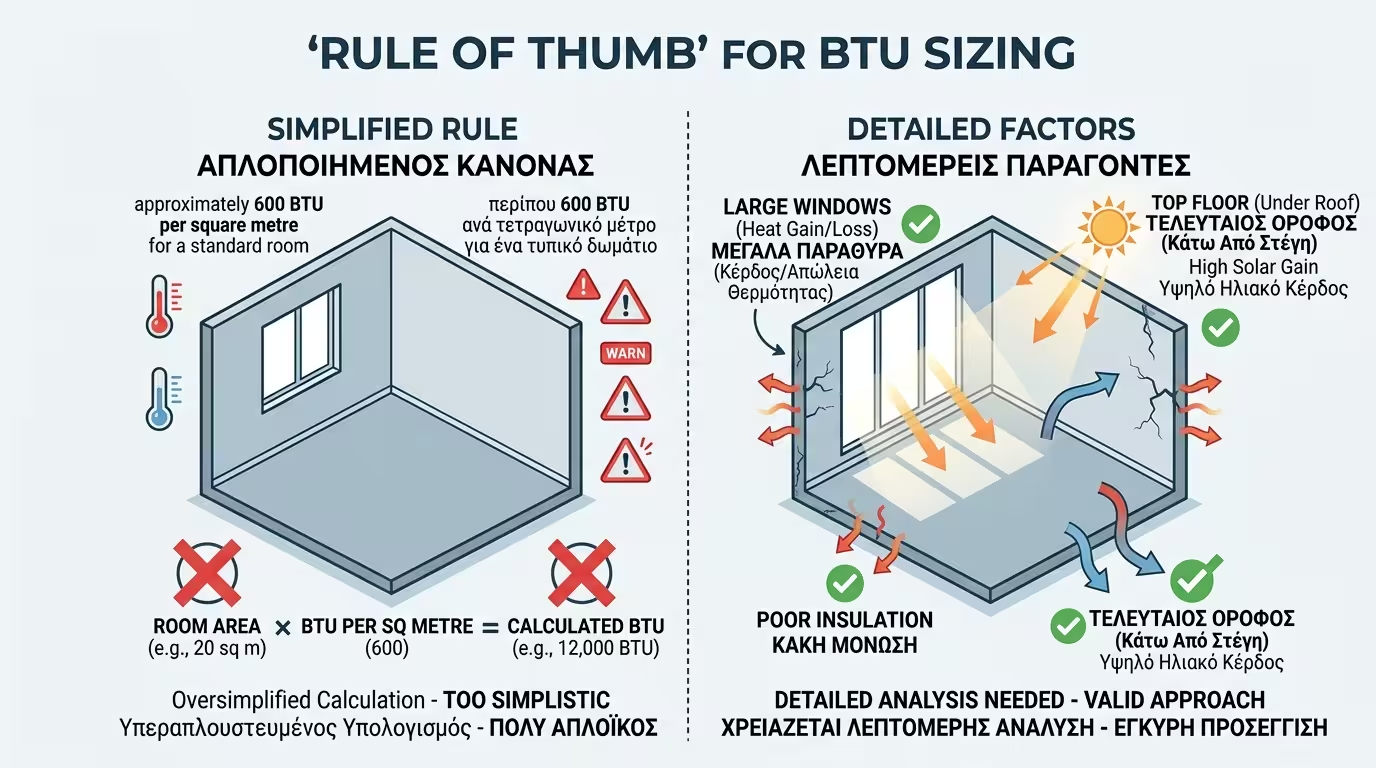
To get an absolutely basic order of magnitude, engineers use a quick
multiplier: we roughly calculate 250 to 300 BTU per 1 square metre for a room with a standard ceiling height (around 2.80 metres).
🏠 15 m² Room
15 × 300 = 4,500 BTU. We go up to the smallest available, i.e. 9,000 BTU. A typical bedroom in a mid-range apartment, with no particular
thermal loads, is comfortably covered.
🛋️ 25 m² Room
25 × 300 = 7,500 BTU. We go for 9,000 BTU or marginally
12,000 BTU. It depends on the orientation and
insulation as to whether an "upgrade" is needed.
🏗️ 40 m² Living Room
40 × 300 = 12,000 BTU. We go for 12,000 BTU or 18,000 BTU. Here, large windows, the kitchen and the number of occupants
begin to play a significant role.
📐 60 m² Open-Plan Space
60 × 300 = 18,000 BTU. We go for 18,000 BTU or 24,000 BTU. In such a large space, a proper engineering study is virtually
mandatory.
💡 This rule works excellently... only if your home has perfect
insulation, is never hit by sunlight, and nobody cooks inside it! Since we
live in the real world, this is where thermal loads come
into play.
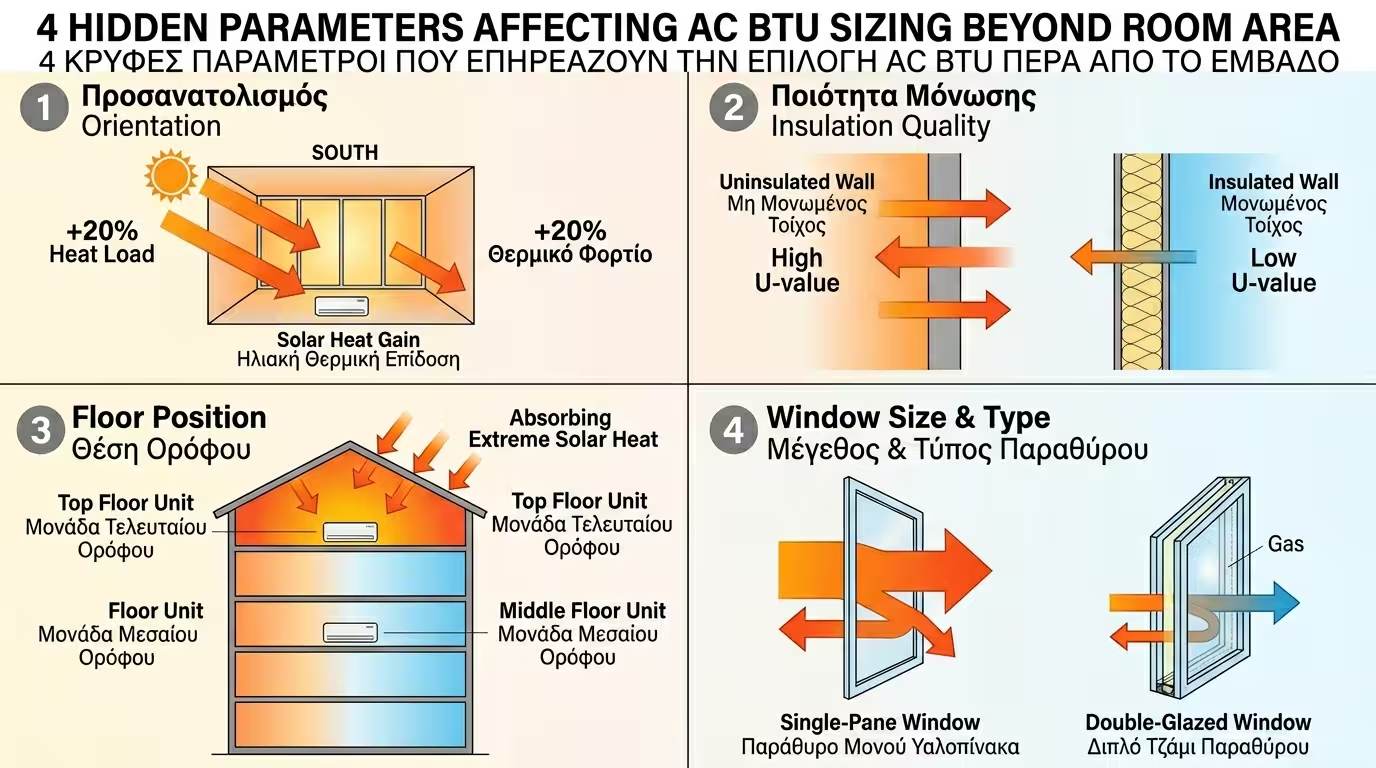
3. The 4 Hidden Factors That Radically Change the Equation
To find the real air conditioner size you need, you must ask yourself
the following four questions. The answer to each can dramatically
change the result.
☀️ 1. Orientation (What Does the Sun See?)
A 15 m² bedroom facing north that is permanently shaded is
comfortably covered by a 9,000 BTU unit. The very same room (15 m²),
if facing south-west, with huge glazing and
hammered by the midday and afternoon sun in August, needs almost 30% more cooling capacity. There, a 9,000 BTU unit will struggle, and you probably need
12,000 BTU.
🧱 2. Thermal Insulation (Windows and Walls)
If you live in an old building (pre-1980) with single glazing,
draughty wooden windows and uninsulated walls, the coolness from the
air conditioner "escapes" instantly. Conversely, in a new building
with external insulation and energy-efficient windows, losses are
minimal. Tip: If your space is the top floor (penthouse)
and the roof above has no insulation, add at least 15% to the required BTU. The roof in summer acts as a huge radiator emitting heat
downwards.
🍳 3. Room Usage (Kitchen or Bedroom?)
Which room will the unit go in? If it is for the open-plan
living-kitchen area, you must account for the heat generated by
appliances. An oven that is baking, hobs that are boiling, even the
fridge or a large television, produce enormous amounts of heat. A space with a kitchen always requires "one size up" air
conditioner compared to a plain living room.
👥 4. How Many People Occupy the Space?
The human body, even when sitting relaxed on the sofa, emits heat
(approximately 400 BTU per hour, per person). If
your living room regularly hosts a family of five, or you frequently
entertain guests, the air conditioner must have the power to absorb
this extra heat (latent load).
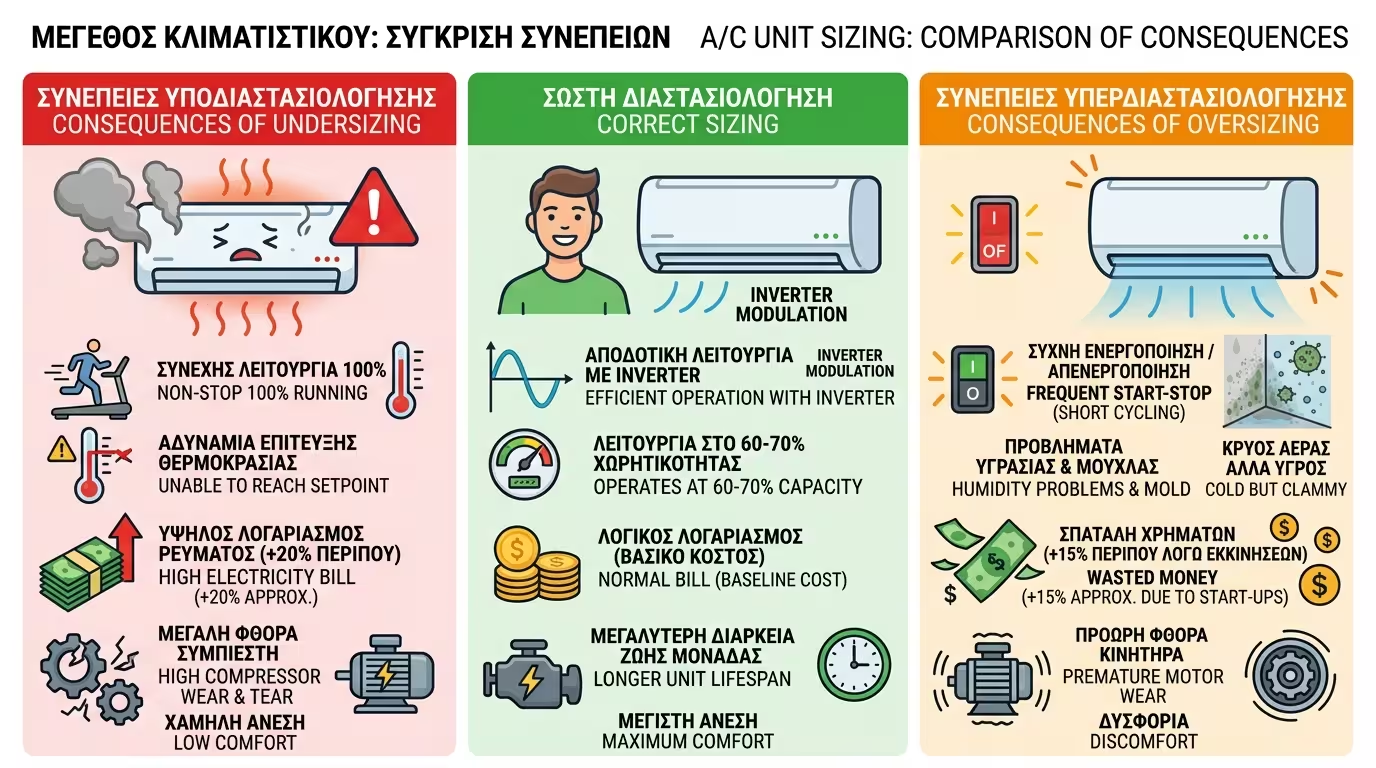
4. The Great Trap: Undersizing and Oversizing - Two Sides of the Same
Mistake
Choosing the wrong air conditioner size has two faces, and both are
equally destructive. Let us look in detail at what happens in each
case.
❌ The Too-Small Air Conditioner (Undersizing)
You put a 9,000 BTU unit in a 35 m² living room because it was on
sale. The machine will never reach the desired temperature (e.g. 26°C). The compressor will run non-stop at 100% of its capacity,
electricity consumption will skyrocket, and the machine will break down
much sooner due to wear.
⚠️ The Too-Large Air Conditioner (Oversizing)
The mentality of "let me get the 24,000 BTU to be safe, even though the living
room is 25 m²". This is perhaps the biggest mistake in air conditioning. An oversized unit will drop the air temperature abruptly in just
5 minutes and shut off. However, it won't have time to dehumidify. The room will be freezing cold but with a "heavy", damp
atmosphere. Furthermore, the abrupt on-off cycling destroys the core
advantage of Inverter technology.
5. Conclusion: How to Choose Correctly
✅ Don't Rely Solely on Square Metres
To choose the right air conditioner, look at your windows, think
about when the sun hits, and whether your roof is insulated. If you
are borderline between two sizes (e.g. between 12,000 and 18,000
BTU), in an uninsulated, sun-drenched space go for the larger one. In a shaded, well-insulated space, stick with the smaller one.
➡️ Next Step
Now that you know how many BTU you need, it is time to look at the
label with the unit's energy characteristics. And there hides yet
another alphabet: SEER, SCOP, A+++. In our next
article, we decode exactly what these abbreviations mean and how to
avoid being misled by the energy label.