Radiator Bleeding & Black Water (Magnetite Sludge): The Complete DIY Guide

It is cold outside, you turn on the heating and go to touch the radiator. The bottom half is burning hot, but the top half is completely ice-cold. Or, even worse, you hear an annoying noise - like water running through a stream - inside the pipes.

The problem is trapped air. The heating network is a closed water circuit. Through micro-leaks, the fresh water we top up, or even chemical reactions between metals, gases are created. Air, being lighter than water, gets trapped at the highest point - the top of your radiators. Where hot water cannot reach, you get no heat.

1. Step-by-Step: Proper Radiator Bleeding (And the Big Mistake!)

Bleeding is the simplest maintenance you can do yourself, provided you avoid the classic mistake: never bleed while the boiler or Heat Pump is running! If the circulator is pushing water under pressure at that moment, the air will not escape properly - worse, if the system pressure is low, opening the valve may actually suck more air in!

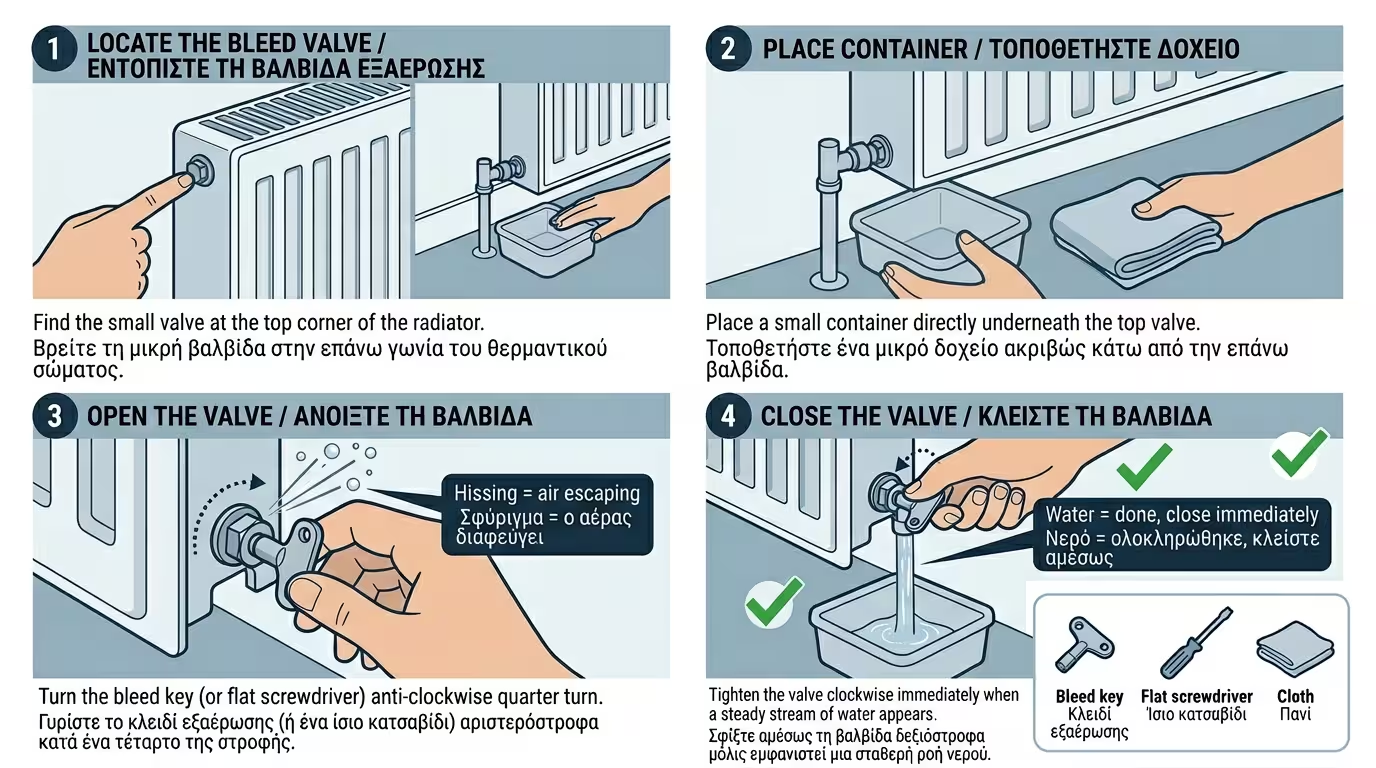
Step-by-step radiator bleeding: bleed key, valve, cloth, pressure gauge

📋 Step 1: Turn off the heating

Switch off the thermostat and wait 30-40 minutes. The circulator must stop completely and the water should cool slightly so you do not burn yourself during the process. This step is never skipped - it is a matter of safety.
🔧 Step 2: The tools

You need only two things: the special bleed key (or a flat-head screwdriver, depending on the valve type) and an old cloth or a small plastic cup to catch the drips. No plumber needed.

🔑 Steps 3-4: Find the valve

Start from the highest point (the top floor or the most remote radiator). Find the small bleed valve at the end of the radiator (opposite the shut‑off valve). Insert the key and turn slowly counter‑clockwise - half to one turn is enough.

💨 Steps 5-7: The hiss & the check

You will hear a "psssst" - that is the air escaping. As soon as it stops and continuous water without bubbles flows onto your cloth, close the valve. Finally, check the pressure gauge in the plant room: if pressure has dropped below 1.2 bar, open the filling valve until it reads 1.5 bar.

2. The Black Water Shock: What Is Magnetite Sludge?

During the bleeding, look at the water that ran onto your cloth. Is it clear? Brownish? Or jet black, like ink? If you see black water, you are facing a serious, "silent" problem: Magnetite Sludge.

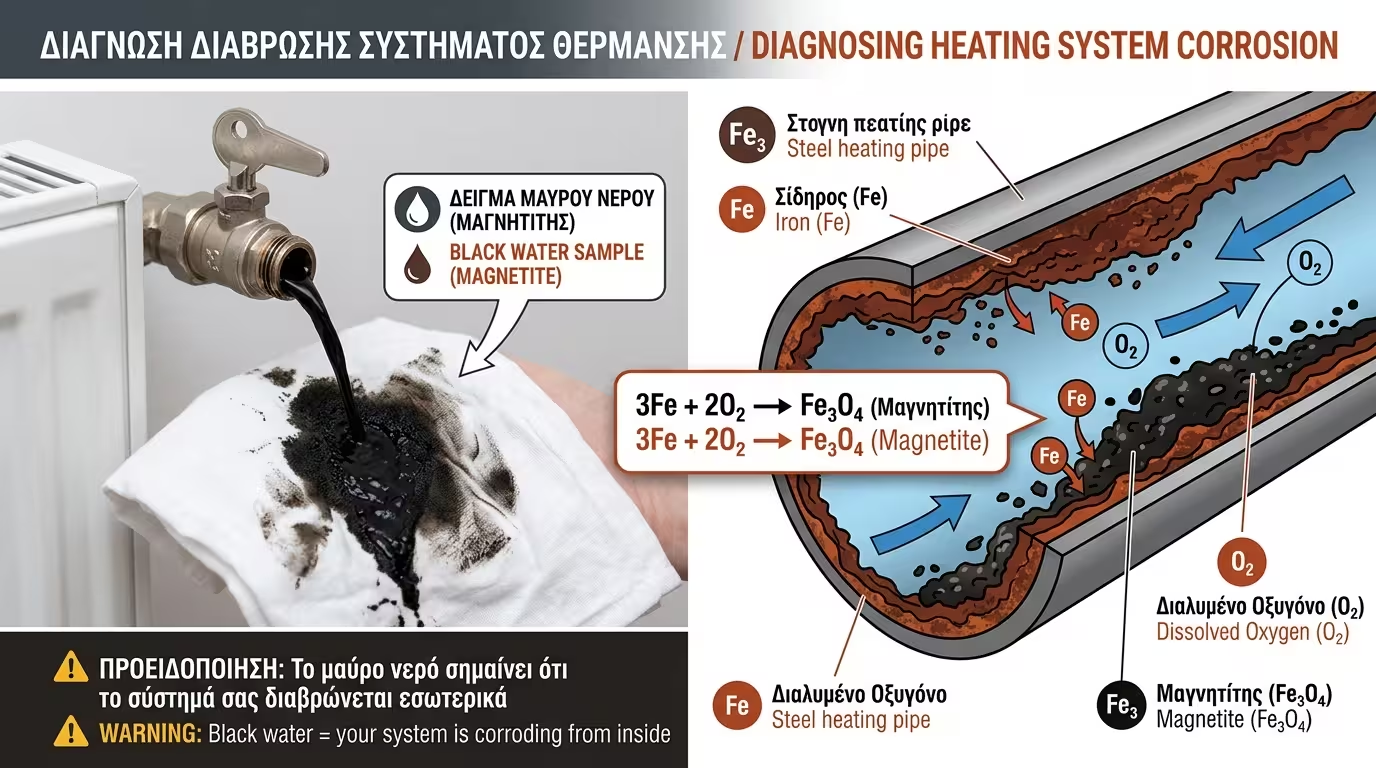
Black water - magnetite sludge on cloth after radiator bleeding

🧪 How it forms

Steel panel radiators are made from steel (iron). When iron comes into contact with water and oxygen (from trapped air), it begins to corrode internally. This black rust - iron oxide Fe₃O₄ - dissolves into the water and creates a heavy, magnetic sludge that circulates throughout the entire system.

⚠️ Cold bottom ≠ air!

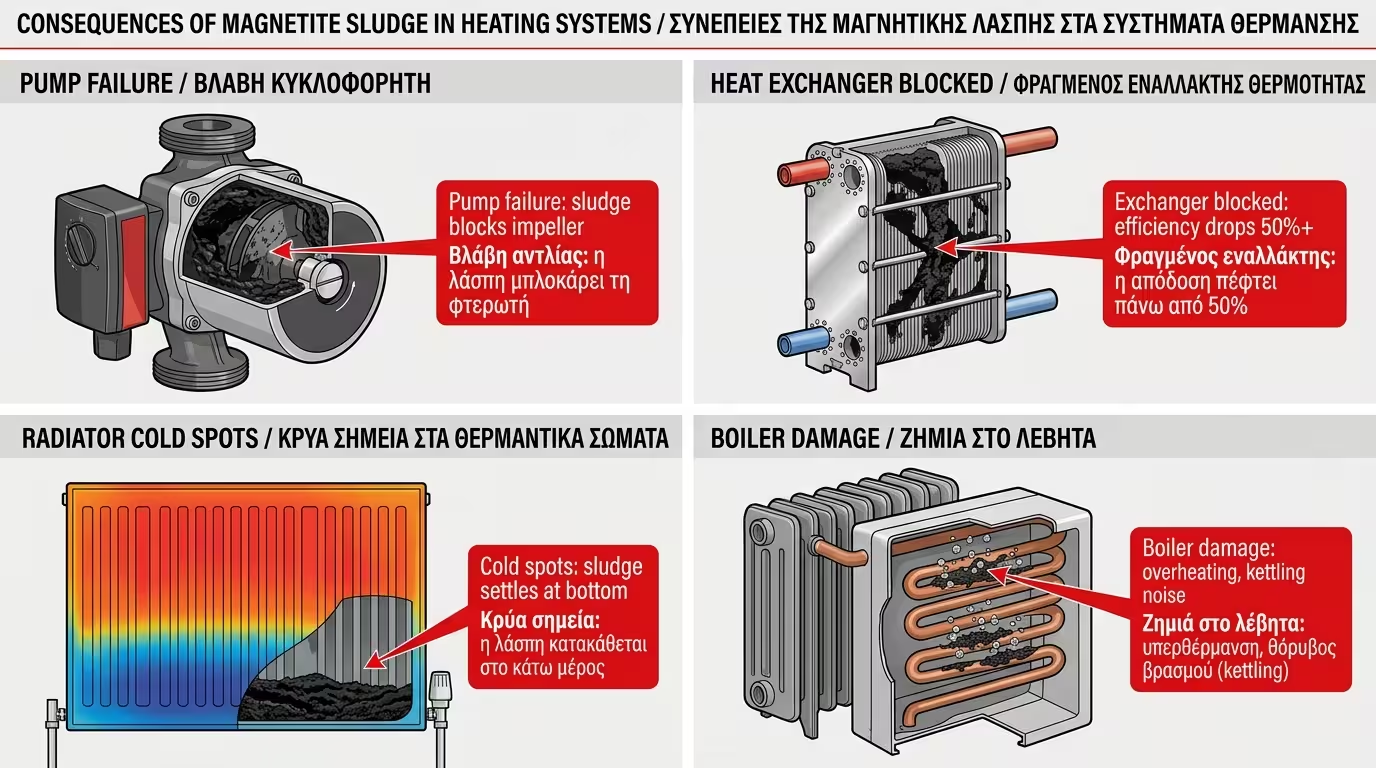
A critical distinction: air rises to the top (cold top = needs bleeding). Magnetite sludge is heavy and sinks to the bottom. If your radiator is hot at the top but ice-cold at the centre and bottom, it does not need bleeding - it is clogged with sludge!

🔍 How serious is it?

Very serious. The sludge does not stay only in the radiators. It circulates throughout the entire network: pipes, valves, heat exchangers. In systems older than 10 years without maintenance, the quantity of sludge can reach several kilograms of accumulated rust.

📊 How do I know for sure?

The easiest way: place a white cloth under the bleed valve. Clear water = healthy system. Slightly brown = early corrosion. Black ink = immediate action needed. A magnet near the jar will show if the sludge is metallic (it sticks to the magnet).

3. The Destructive Consequences: How Sludge "Kills" Your Equipment

Magnetite sludge damage: blocked circulator, clogged heat exchanger

Magnetite sludge is not just "dirt" - it is the silent killer of every modern heating installation. The damage it causes is expensive and often irreversible if not addressed in time.

⚙️ Circulator death

Modern circulators (e.g. Grundfos, Wilo) use magnetic rotors. The magnetic sludge sticks to them, slows them down, and eventually burns them out. A new circulator costs €200-400 - and if you replace it without cleaning the system, it will burn out again within months.

🔥 Blocked heat exchanger

The sludge settles in the narrow tubes of the heat exchanger (inside the boiler or Heat Pump). Result: 30-50% drop in efficiency. The machine strains, runs longer, raises temperatures - and the electricity or gas bill skyrockets.

🚿 Jammed valves & TRVs

Thermostatic heads (TRVs) and tiny zone valves get jammed by sludge. Rooms stop being regulated correctly. Often the owner believes "the TRV has broken" - in reality, the sludge has wedged it open or closed.

💰 The hidden cost

A "dirty" system can increase the annual heating bill by 15-25% due to reduced efficiency. In a home paying €1,500/year, that means €225-375 wasted every winter - money that could have paid for the power flush.

4. How to Save Your System: Power Flushing & Magnetic Filter

If your circuit is full of sludge, bleeding alone is not enough. You need two drastic measures from a professional plumber - and the investment will pay for itself in 1-2 winters through reduced energy consumption.

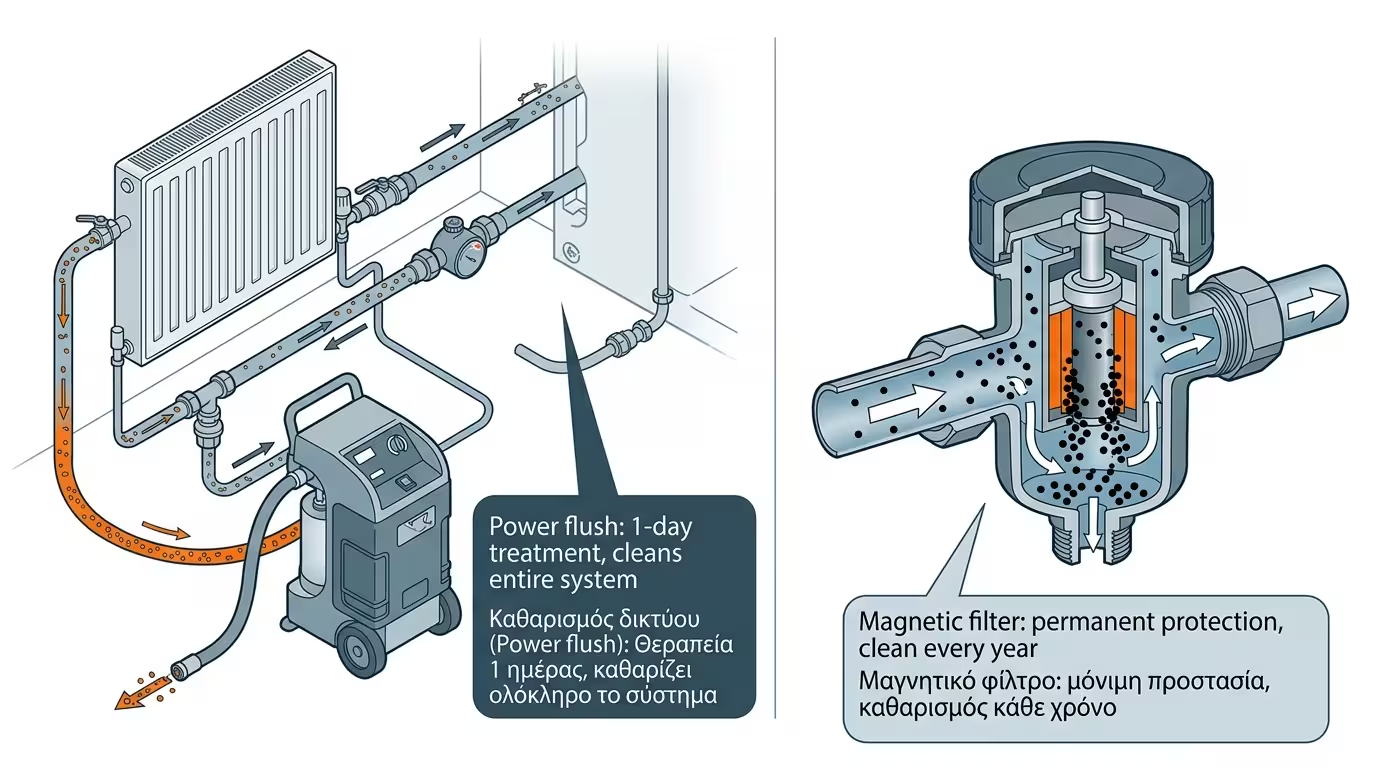
Power flushing - dynamic system cleaning and magnetic filter on boiler return

🔄 Power Flushing

The plumber connects a specialised machine to the network. The machine sends water with chemical cleaning agents under pressure, "flushing" pipes, radiators and exchangers. The sludge exits to the drain until the water runs crystal clear. It takes 4-8 hours, depending on the home's size.

🧲 Magnetic Filter (The permanent shield)

After cleaning, a magnetic filter is MANDATORY on the boiler/Heat Pump return pipe. The powerful magnet inside "catches" every new rust particle before it enters the machine. Result: clean water, permanently.

💧 Corrosion Inhibitor

After flushing, the plumber adds a specialised corrosion inhibitor chemical (e.g. Fernox F1 or Sentinel X100). This creates a protective film on the internal steel surfaces, effectively stopping corrosion at its source.

📅 Maintenance Schedule

Bleeding: 1-2 times a year (start of winter). Magnetic filter cleaning: every autumn (open, remove particles, rinse). Power Flushing: every 5-8 years or if black water appears. Inhibitor: top up every 5 years or after every water refill.

🔧 Bleeding saves the radiators, but only a power flush + magnetic filter saves the entire network from the "silent" destruction of magnetite sludge.

Related Articles

Emission Systems: Underfloor, Fancoils & Radiators

Return to category.

Go to category

Preview