Underfloor Cooling & the Dew Point: How the floor becomes an air conditioner (and how to prevent it from being destroyed)

You have the perfect underfloor heating for winter. What if, in summer, instead of sending hot water, you set the Heat Pump to send chilled water through the pipes? The floor would cool the entire home in complete silence, without the annoying draughts of conventional air conditioning!

It sounds magical, but nature has a strict rule. If you push it too far, your living room will turn into a water-soaked ice rink. Underfloor cooling absorbs your body heat and the heat from the walls (via radiation), creating the sensation of a cool cave in the height of summer.

1. The Physics of Disaster: What is the Dew Point?

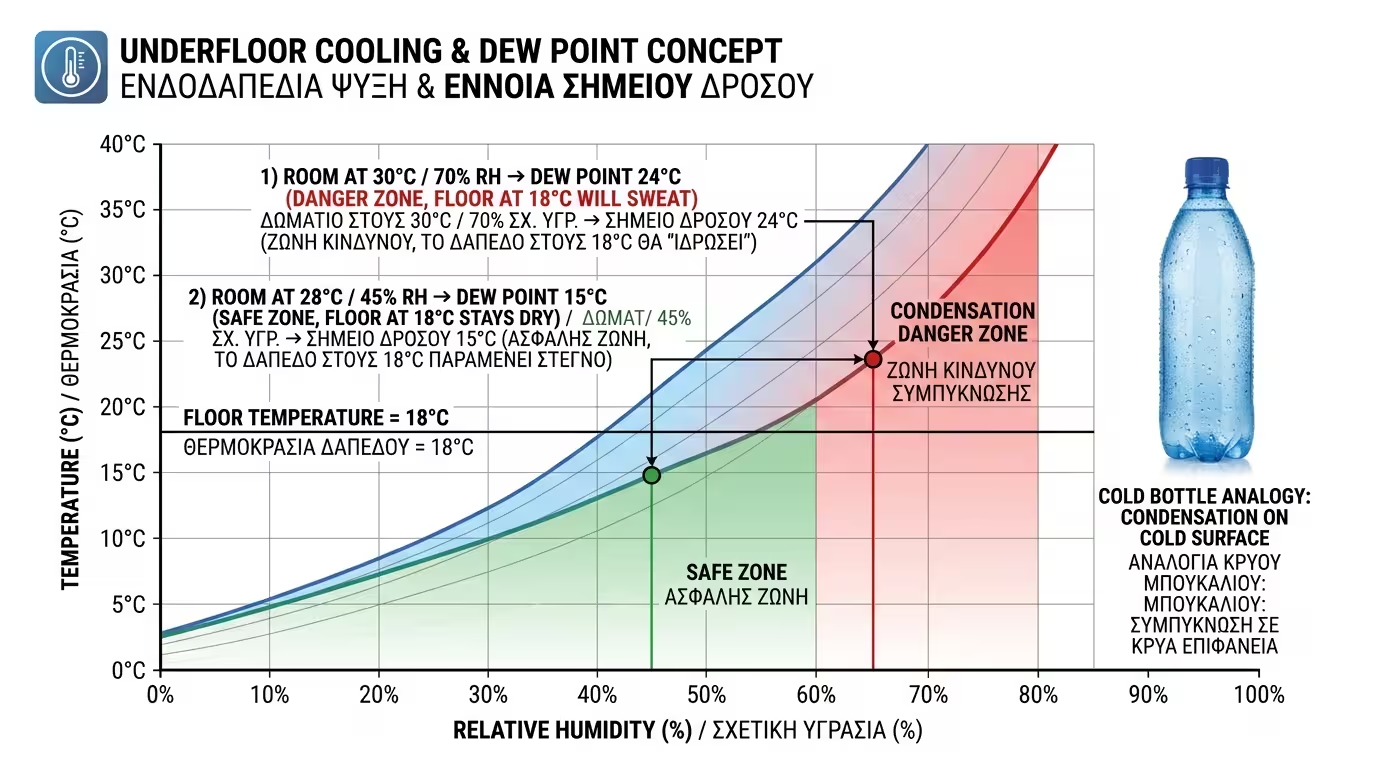
Take a cold bottle of water from the fridge and leave it on the table on a hot summer day. Within 2 minutes, the outside of the bottle will be covered in water droplets (it will "sweat"). The bottle is not leaking - what happened is called Condensation.

Dew Point diagram - how air moisture condenses on cold underfloor cooling surface

💧 How it works

The warm air (full of water vapour) touches the freezing surface and cools abruptly. Cold air cannot hold as much moisture, so it "drops" it on the surface as liquid water. The exact temperature at which this liquefaction starts is called the Dew Point.
🔴 The floor danger

If we send 7°C water to the underfloor system (as conventional air conditioners do), the floor will freeze. The humid room air will touch the floor and the tiles will "sweat" exactly like the bottle.

⚠️ Slippery tiles

The tiles will become dangerously slippery - a fall hazard especially for elderly people and children. An uncontrolled puddle of water forms across the floor, damaging everything.

🪵 Wood destruction

Wooden floors (laminate or engineered wood) will absorb the water, swell and be destroyed completely. Repair requires full removal and replacement of the entire floor.

2. Solution No.1: "Smart" Temperature & Humidity Control

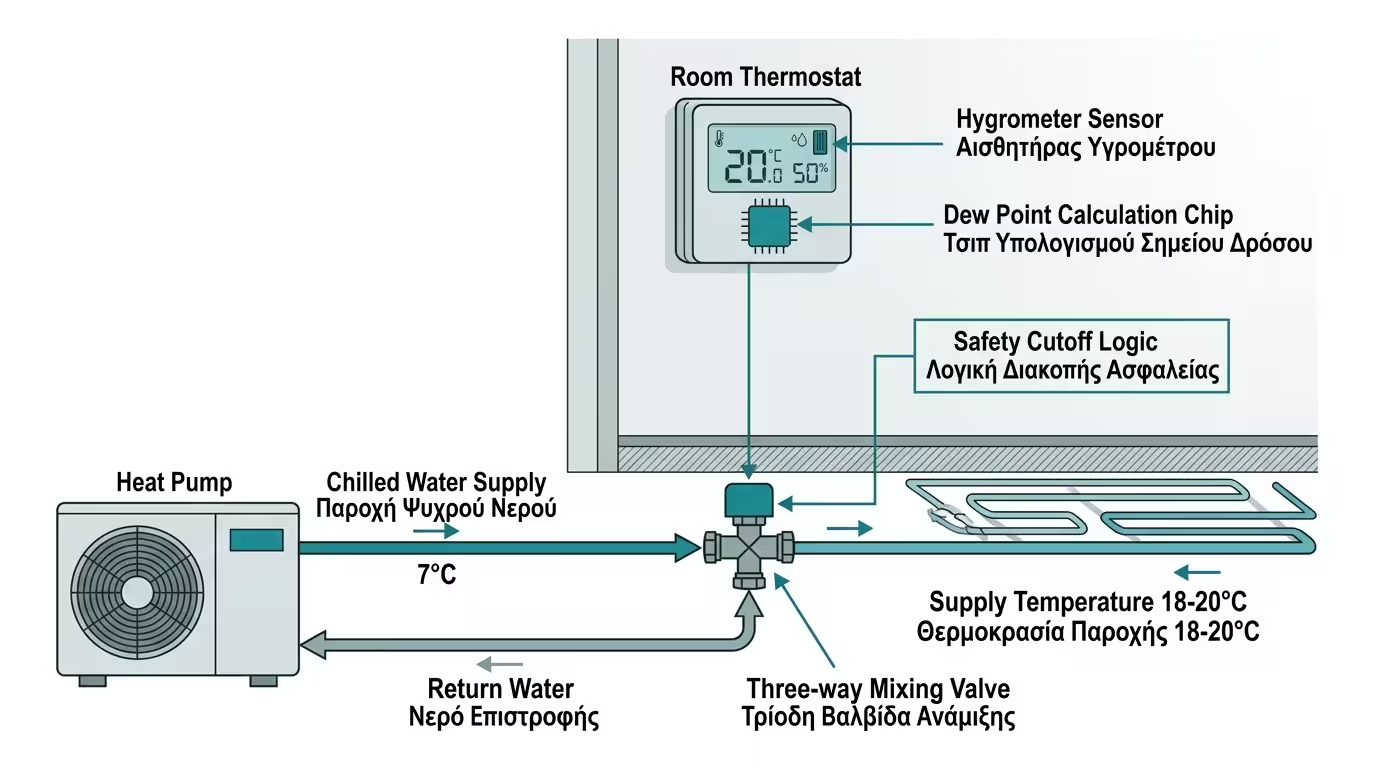
To achieve cooling without "sweating", the engineer never allows the water to become excessively cold. In a cooling system, the water entering the floor is strictly regulated (via a three-way mixing valve) at around 18°C to 20°C. Never lower!

Cooling thermostat with built-in hygrometer - automatic Dew Point control

🌡️ Humidity sensors

In each room, a specialised thermostat with a built-in hygrometer is installed. This brain continuously measures the temperature and humidity of the air and calculates the Dew Point in real time.

🔄 Automatic response

If the humidity in the room rises dangerously (e.g. you opened the patio door or are boiling pasta), the thermostat commands the three-way valve to slightly warm the water (from 18°C to 21°C) to keep the floor safe.

⚙️ Three-way mixing valve

The three-way valve works like a "mixer" of hot and cold water. Depending on the thermostat's command, it blends warm water into the chilled water to keep the temperature above the Dew Point.

❌ Drawback

If the thermostat raises the floor temperature to 22°C to prevent sweating, the home stops cooling effectively! You will feel warm. That is why we need Solution No.2.

3. Solution No.2: Fan Coils & Network Dehumidifiers (The absolute necessity)

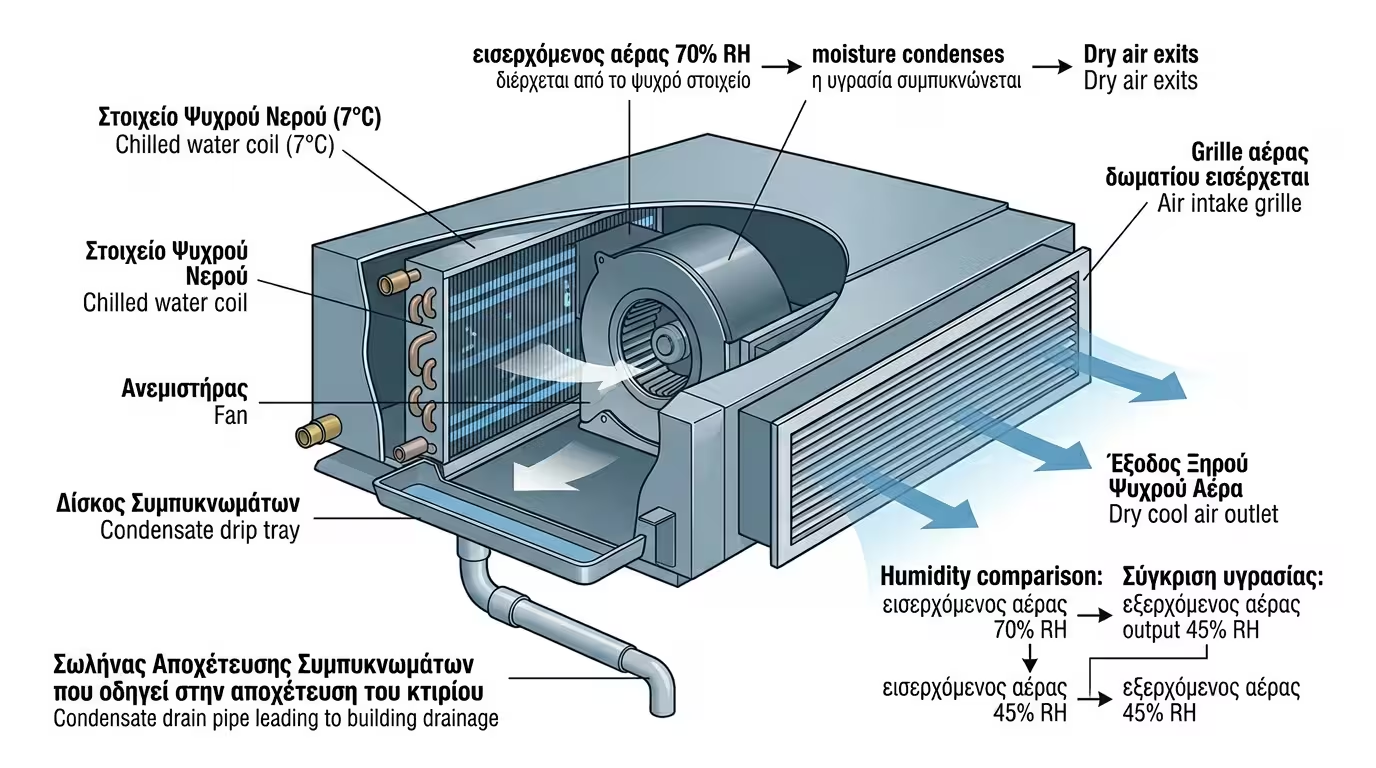
Ceiling Fan Coil connected to drainage - removes humidity and lowers the Dew Point

To solve the problem at its root, we must dry the air. If we lower the room humidity (e.g. from 70% to 45%), the Dew Point drops dramatically. The floor can then safely operate at 16°C and cool you properly!

🚫 No portable dehumidifiers

Do NOT use ordinary portable dehumidifiers on wheels. They emit heat as they operate, completely cancelling out the cooling effect. The correct installation requires integrated systems.

❄️ Ceiling Fan Coils (FCU)

Concealed in the ceiling. They take the same chilled water (7°C) directly from the Heat Pump. Because they have a drainage connection, we let them "sweat" freely! They pull in the air, trap the moisture (sending it to the drain) and blow out dry, chilled air.

🏢 Central dehumidifiers

Specialised units installed in the false ceiling and connected to the ventilation ductwork to dehumidify the entire home centrally. Ideal for large residences and commercial spaces.

🔄 The operating cycle

Fan Coils remove humidity → Humidity drops → Dew Point lowers → The floor can now safely operate at a lower temperature → Cooling becomes effective. The two systems work in parallel and complement each other perfectly.

4. Summary: Why cooling without dehumidification is incomplete

Underfloor cooling is not air conditioning. It removes sensible heat (warmth), but it cannot remove latent heat (humidity). A cooling system without Fan Coils or central dehumidification is practically incomplete and carries enormous risk for your floors on scorching, humid days.

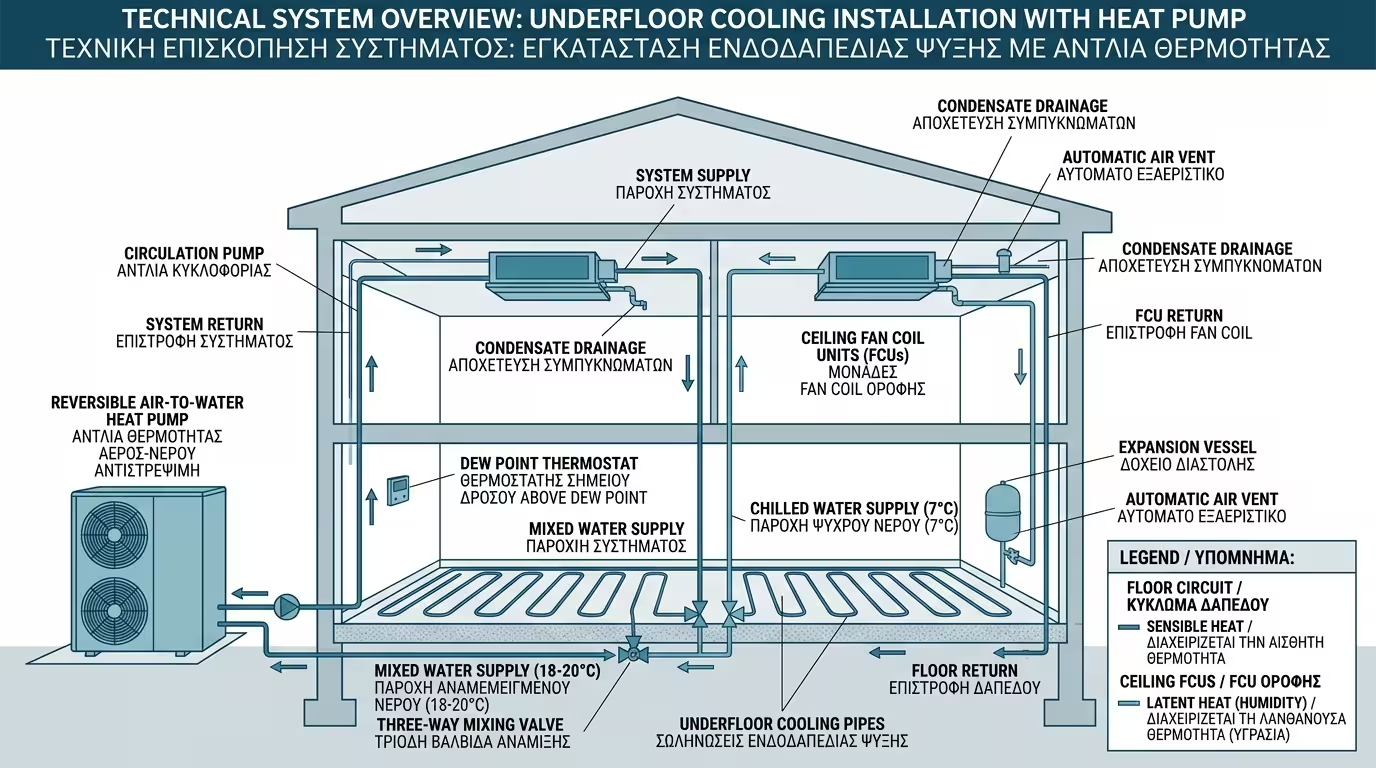
Complete underfloor cooling system with Heat Pump, Fan Coils and humidity sensors

✅ What you need

A reversible Heat Pump (for heating + cooling), thermostats with hygrometer, three-way mixing valve, Fan Coils with drainage connection and a proper HVAC design study.

🌡️ Water temperature

To the floor: 18–20°C (controlled above the Dew Point). To the Fan Coils: 7°C (free dehumidification via drainage). The two systems work in parallel and complement each other.

💨 Silent cooling

Unlike air conditioners, underfloor cooling is 100% silent - no fan, no air current. The cooling comes via radiation, like the coolness of a marble staircase on a hot day.

⚠️ Dry climates

In exceptionally dry climates (e.g. Aegean islands with meltemi winds), dehumidification may be needed less. But never install underfloor cooling without Fan Coils - even if the installer claims "they are not needed".

⚠️ An underfloor cooling system without Fan Coils or central dehumidification carries enormous risk for your floors, especially on days of extreme heat combined with humidity. Do not risk your wooden floors and your safety!

Related Articles

Emission Systems: Underfloor, Fancoils & Radiators

Return to category.

Go to category

Preview