💰 Low installation cost
The most affordable option. The plumber runs the pipes, screws the unit to the wall, plugs it in and you are done. No plasterboard, no ductwork. Installation is completed in half a day.
You have selected a Heat Pump. You know that hot and cold water will reach your rooms. The question now: where do we place the unit? Do we leave it visible like a modern radiator, or do we hide it inside the ceiling?
The beauty of water-based systems (Fan Coils) is that they adapt perfectly to the architectural requirements of your home. Depending on whether you are renovating or building from scratch, you have two main paths.
This is the most common choice for apartment renovations. The unit is mounted low on the wall, exactly where a traditional radiator would go. Externally, it looks like a very elegant, slim radiator with top grilles through which the air exits.
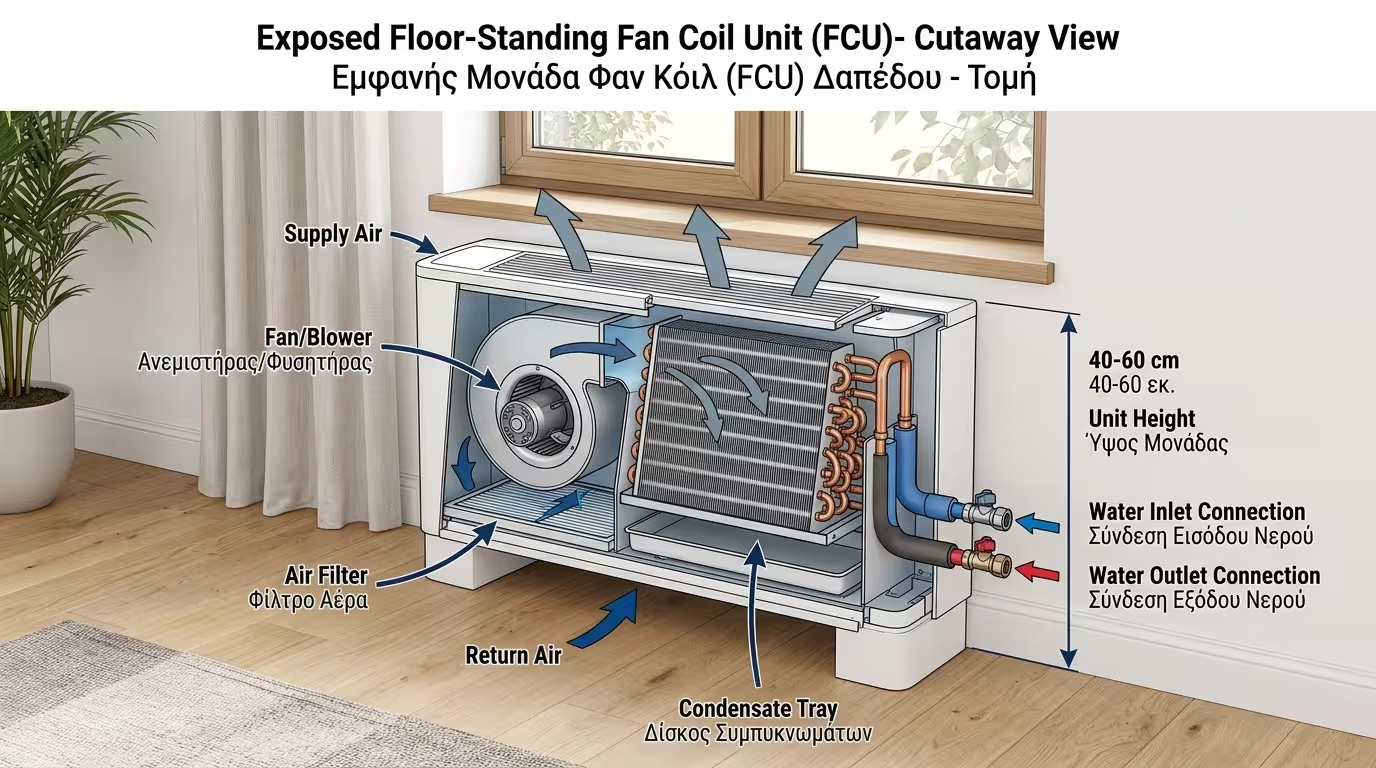
The most affordable option. The plumber runs the pipes, screws the unit to the wall, plugs it in and you are done. No plasterboard, no ductwork. Installation is completed in half a day.
Physics dictates that warm air is light and rises. Since the Fan Coil sits at floor level, it blows warm air low. The air wraps around your feet and rises smoothly, heating the entire space perfectly - just like a traditional radiator.
Open the cover in one move, remove the filters, wash them in the bathtub and reinsert. The technician has direct access to the entire machine: motor, coil, valve. No plasterboard in the way.
They occupy wall space - you cannot place a sofa or wardrobe in front of them. In cooling mode, the chilled air exits from below and may hit your feet directly if you sit nearby.
This is the choice of luxury residences and hotels. The unit is completely invisible. It hangs high, directly from the concrete slab, and disappears entirely inside a false ceiling (plasterboard). The only visible element is the elegant slits (linear diffusers) from which air exits.
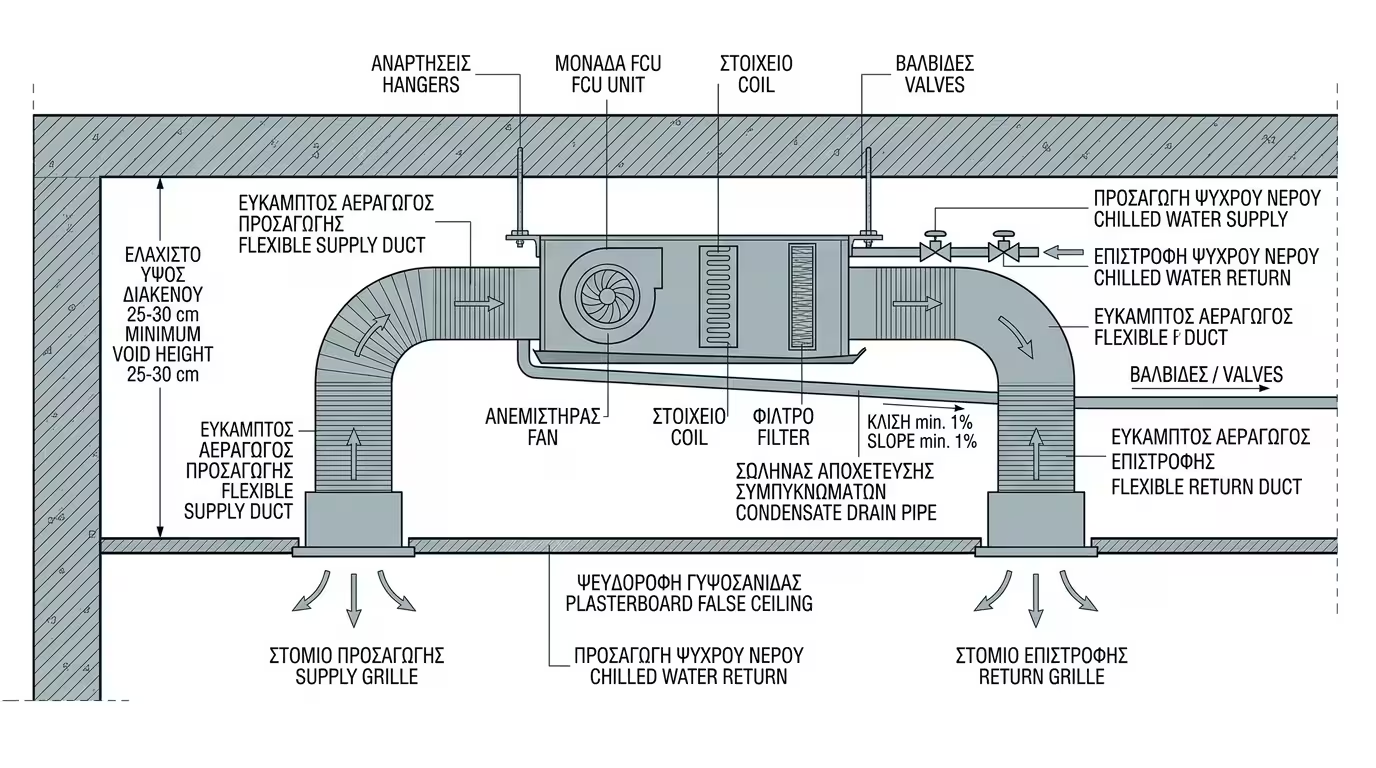
Your home stays completely "clean". Walls are free for furniture, artwork and decoration. It is the epitome of minimalism - especially in open-plan living rooms where every square metre counts.
The chilled air exits high from the ceiling, "sticks" to the ceiling surface, spreads across the entire room and descends like a gentle, invisible "rain" of freshness. It does not hit you at all - the ideal form of air conditioning.
Because the motor is hidden behind plasterboard (and insulated), noise reaching your ears is minimal to zero. Ideal for bedrooms and spaces requiring quiet (libraries, consulting rooms).
They require 25-30 cm free height for the false ceiling. In low-ceiling homes (2.60 m), the space will feel cramped. Cost nearly doubles (plasterboard + linear diffusers + ductwork). Maintenance access is only through inspection hatches.
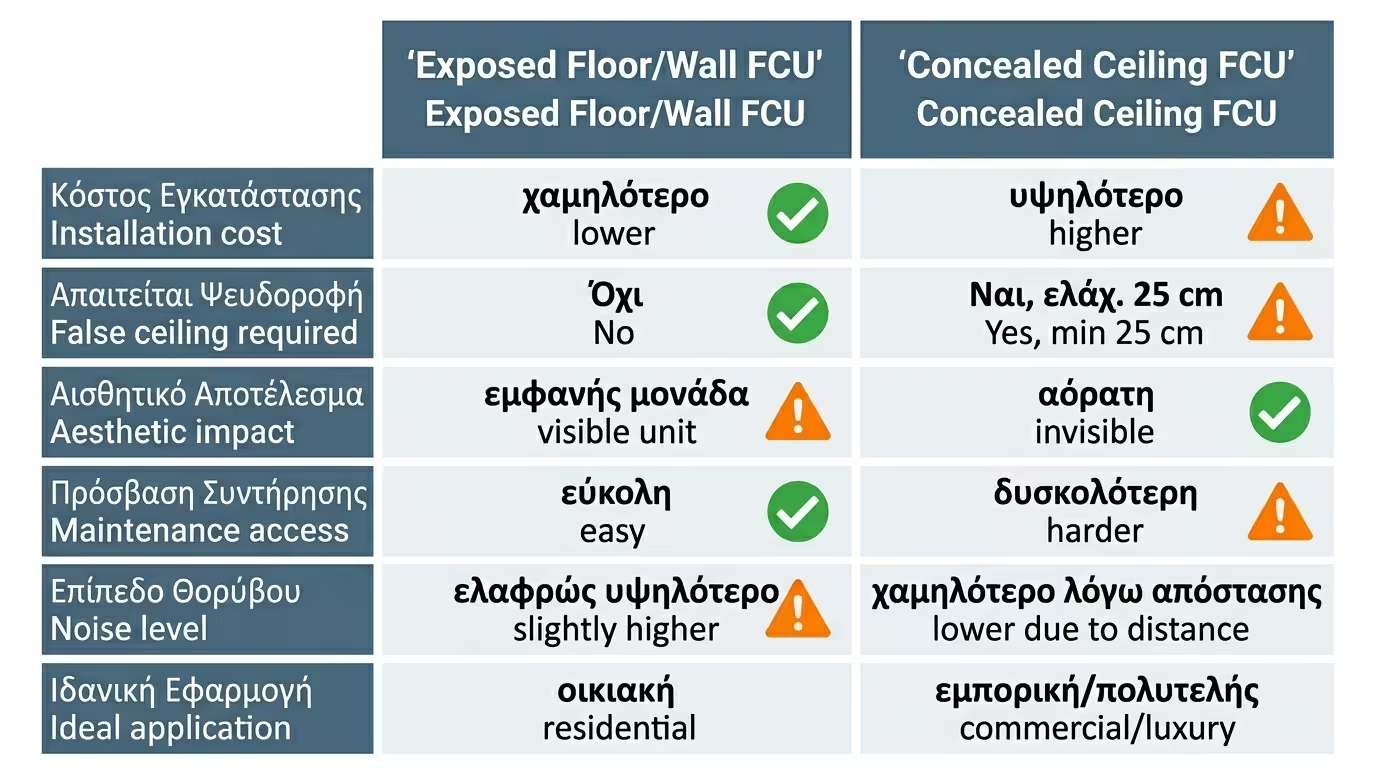
The difference between the two solutions is not about performance - both use the same type of heat exchanger (water coil + fan). The difference is purely architectural and financial.
If the clear height is below 2.70 m, concealed ceiling units will dramatically reduce the space. Solution: hide the unit in the ceiling of the hallway or bathroom (low height is not an issue there) and duct the air into the living room.
Floor-standing: €500-800 (unit + pipes). Ceiling-concealed: €1,200-2,000 per room (unit + plasterboard + diffusers + ductwork). For a 4-room home, the difference reaches €3,000-5,000.
If heating is the primary priority (e.g. Northern Greece), floor-standing units excel. If cooling is more important (islands, enclosed villas), ceiling-concealed units deliver superior results thanks to the Coanda Effect.
Renovation: almost always floor-standing - remove the old radiators and install Fan Coils in the same positions. New construction: design the false ceiling into the plans from the start.
The choice between floor and ceiling is primarily a matter of spatial planning and architecture. The heart of the system (the Heat Pump and water) remains the same, guaranteeing top efficiency in both cases.
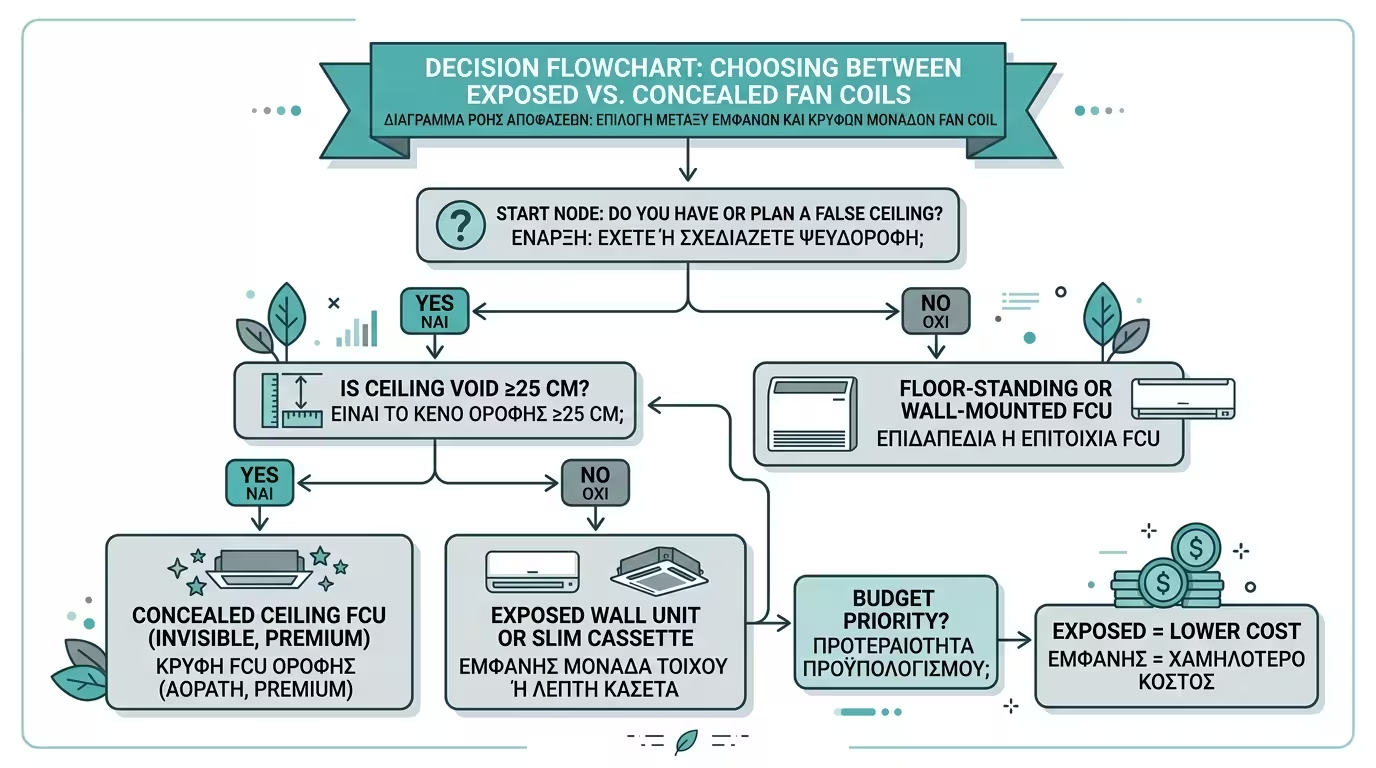
Ideal for renovations, low ceilings, limited budget. Excellent heating thanks to the low position. Easy access for filter cleaning.
Ideal for new builds, high ceilings, minimalist aesthetics. Superior cooling thanks to the Coanda Effect. Silent operation behind plasterboard.
Combine both: concealed in the living room (cooling), floor-standing in bedrooms (heating + easy maintenance). The Heat Pump feeds both simultaneously without issue.
Whether you install on the floor or ceiling, Fan Coils can provide cooling in one room and heating in the next at the same time! In the next article we reveal the magic of 2-pipe and 4-pipe systems.
🏗️ The difference between exposed and concealed Fan Coils is not about performance, but about spatial planning. The Heat Pump works equally efficiently in both cases.
Return to category.
Go to categoryReturn to the central guide.
Go to guide