Trench Heaters (Floor Channels): Invisible Heating for Large Glazed
Facades
Imagine a luxury villa or a modern office building. The architect has
designed enormous floor-to-ceiling glass facades for an unobstructed
view. Where do you put radiators when there is no wall?
This is where Trench Heaters come in - "hidden" radiators
or small Fan Coils literally buried inside the floor slab. The only visible
element: an elegant, elongated grille running parallel to the glass.
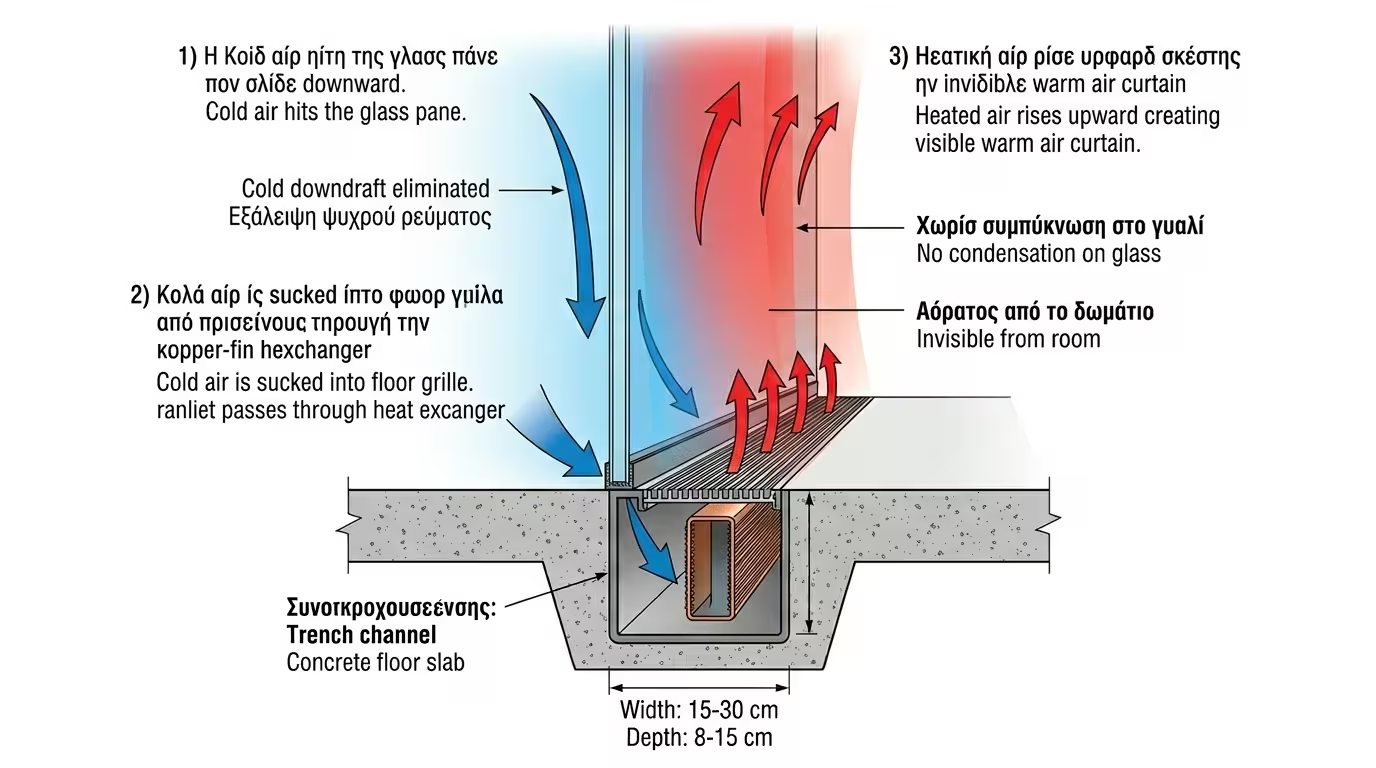
1. How the "Invisible Air Curtain" Works
Inside the metal trough beneath the floor sits a heat exchanger - a copper coil with aluminium fins - through which the hot water from
the Heat Pump or boiler flows.
❄️ Step 1: The cold "slides"
In winter, the massive glass pane is ice cold. The air touching it
cools, becomes heavier, and "slides down" towards the floor creating a permanent, freezing draft at your feet (cold downdraft).
Without intervention, this current floods the entire living room.
🔥 Step 2: Sucked into the grille
As soon as the cold air reaches the floor, it is "sucked in" through the grille of the channel. There, it passes through the hot exchanger and is heated
instantaneously. The warm air (lighter) is propelled upwards, directly
in front of the glass.
🛡️ Step 3: The heat "curtain"
A continuous, invisible "curtain" of warm air is created
right in front of the glass facade. This curtain "kills" the cold downdraft
before it even enters the living space, while simultaneously preventing
steam from fogging the windows (condensation).
📐 Installation dimensions
A floor channel is 15-30 cm wide and 8-15 cm deep. It requires planning during construction - the engineer leaves a
recess in the concrete slab. The length runs parallel to the entire
glass facade (1-6+ metres).
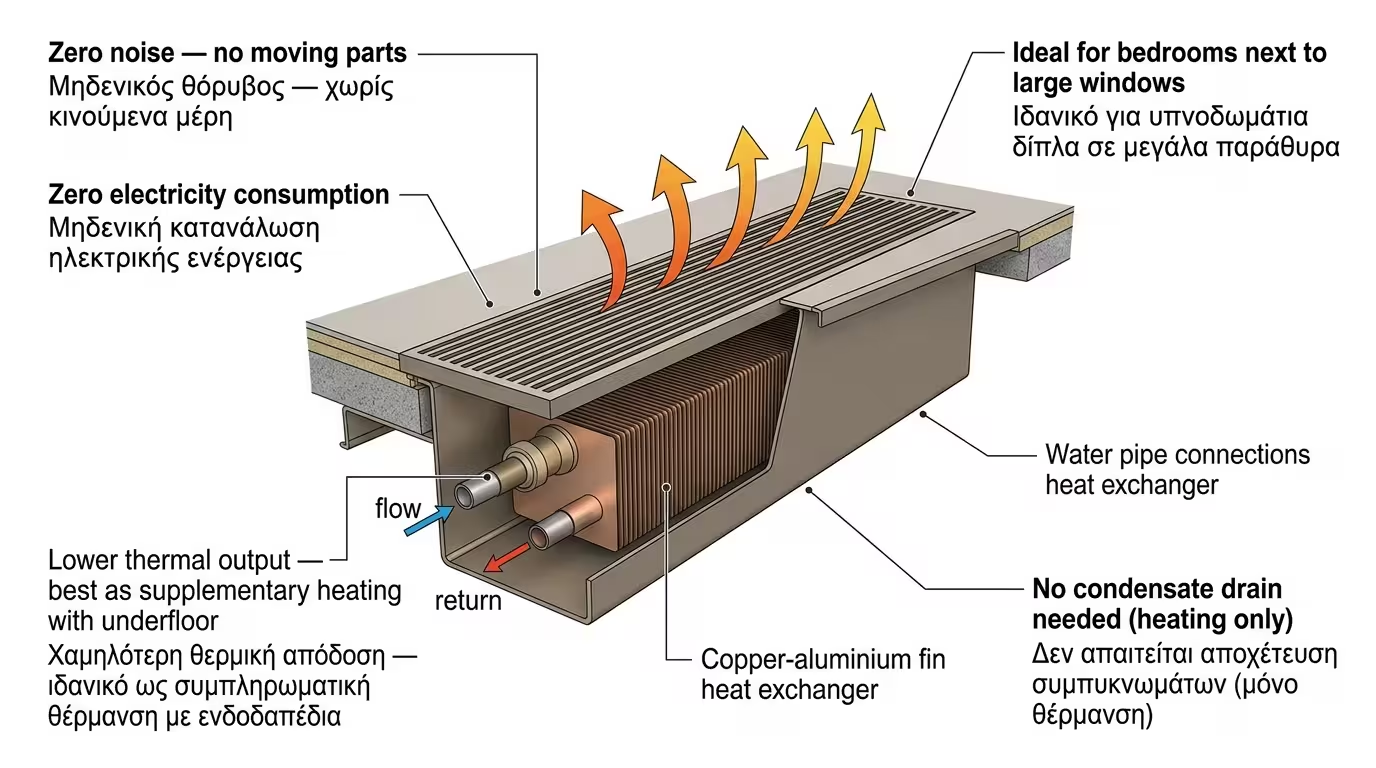
2. Natural Convection - Silent Operation
These channels have no motor whatsoever. They rely 100% on the laws of physics: warm air rises, cold air descends. The movement happens
automatically, without assistance.
✅ Completely silent
No moving parts - zero noise. They never break
down, require no maintenance, and consume no electricity. They need
only hot water. Ideal for bedrooms and libraries next to large
windows.
⚠️ Lower output (Watts)
Without a fan, the thermal output is lower. They
are not sufficient on their own to heat an entire living room. They
usually function as supplementary heating: you have
underfloor heating in the room, and the channel only cuts the chill
from the glass.
🏠 Ideal application
Homes with underfloor heating + large windows. The natural
convection channel does not replace the primary heating - it simply eliminates the cold downdraft and window condensation. Minimal running cost (zero electricity).
💧 No condensate issues
Because it provides heating only (no cooling), no condensate drain is needed. The installation is simpler and cheaper - just two water
pipes (flow-return) and the metal trough.
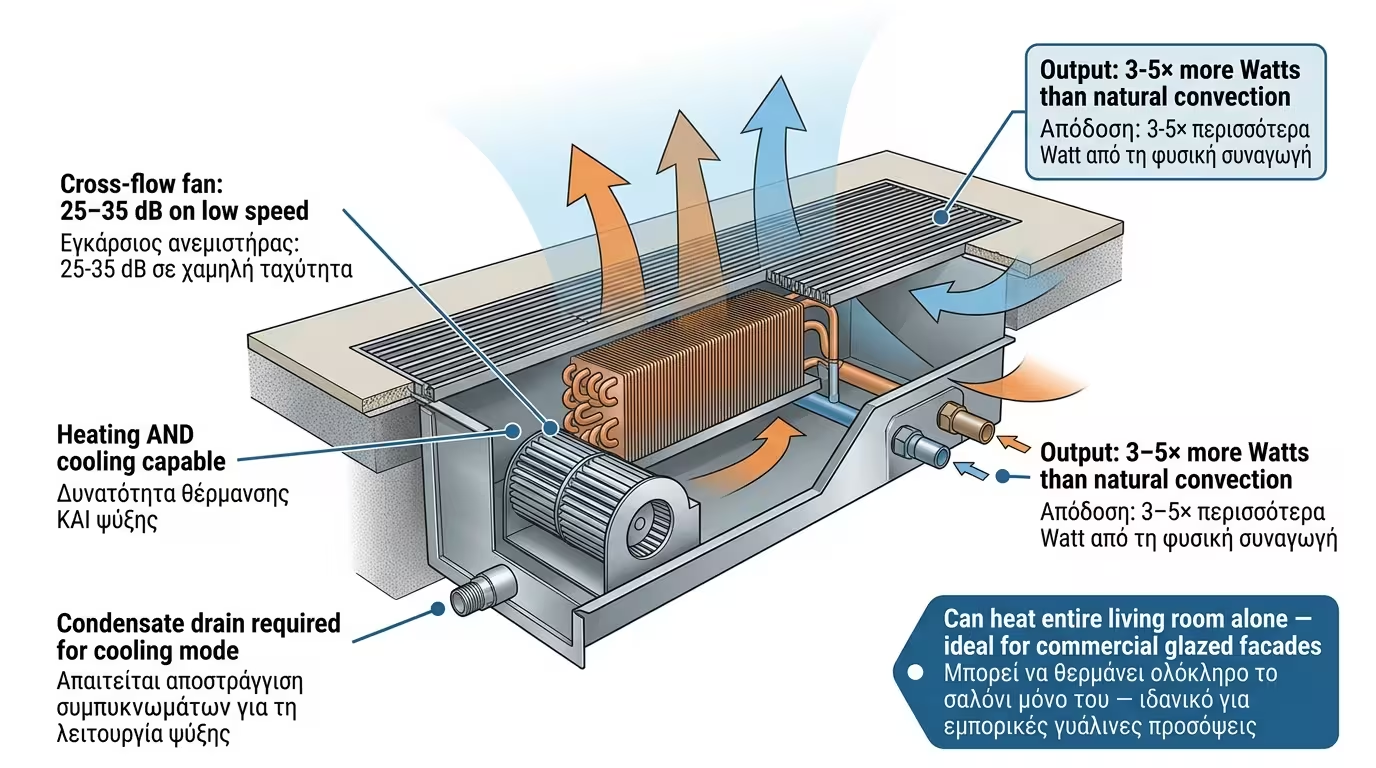
3. Forced Convection - With a Fan
Here, inside the channel sits a long, cylindrical cross-flow fan that sucks and forces air aggressively through the heat exchanger. In
practice, it is a hidden Fan Coil inside the floor.
🔥 Massive thermal output
Fan-assisted channels deliver many times more Watts compared
to natural convection types. They can heat an entire living room on their own, without any additional heat source. Ideal for large openings in
commercial buildings.
❄️ Summer cooling
When connected to a Heat Pump, they can also provide cooling! In summer you send chilled water (7-10°C), the fan blows cool air
upwards - effectively like a low, invisible Fan Coil.
🔊 Slight hum
Due to the fan, there is a slight hum (25-35 dB on low
speed). Modern units with EC/inverter motors keep noise exceptionally
low - but they are not 100% silent like natural convection types.
💧 Condensate drainage
When cooling, the chilled exchanger produces condensate (water). A drain must exist within the recess - exactly as with Fan Coils.
The engineer must plan this from the start of construction.
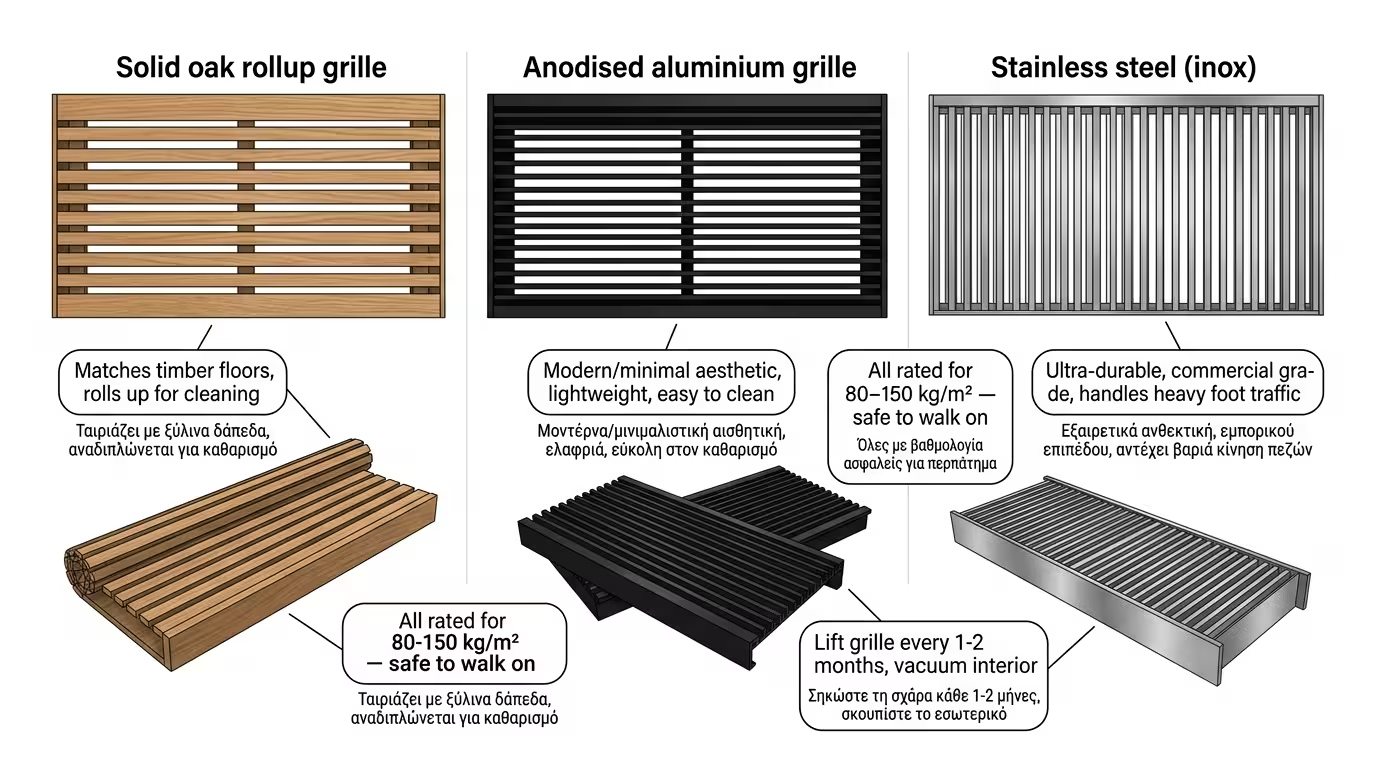
4. The Aesthetics: Walk-On Grilles!
The only visible part of this system is the grille.
And here the options are superb - engineered so you can walk on them without fear of breakage (designed for 80-150 kg/m²).
🪵 Wooden (Roll-up)
Made from solid hardwood (oak, beech) that roll up for
easy removal and cleaning. They blend perfectly if the room has a timber
floor - making the channel practically "invisible."
🔩 Aluminium
Available in various finishes (natural, black, satin). Ideal for modern, minimal spaces or when the floor is tile, microcement, or terrazzo. Lightweight, durable
and effortless to clean.
⚙️ Stainless steel (Inox)
Ultra-durable, chosen for commercial spaces or office
buildings with heavy foot traffic. They withstand heavy footsteps, heels,
trolleys - without scratching or deforming. The most expensive but also
most resilient option.
🧹 The dirt "trap"
Because it is a hole in the floor, channels collect dust, hair, crumbs. Fortunately, the grille lifts off easily by hand. You vacuum the
interior - this maintenance must be done regularly (every
1-2 months).
🏢 Trench heaters eliminate bulky radiators, showcase the view, and
create an invisible "wall" of warmth exactly where the building hurts
most: in front of massive glass facades.