Infrared Radiation Panels (IR): Truths, Myths & Real-World Applications

You have seen the adverts: "Warmth like sunshine! A 400W panel heats 20 m²! Cut your bill in half!" Infrared panels (IR panels) are perhaps the most controversial heating technology on the market - with passionate supporters and fierce opponents. What truth hides behind the noise?

In this article we separate the undeniable advantages from the aggressive marketing lies, and give a calm, engineering-based assessment of where they genuinely belong - and where they do not.

1. How It Works: The "Sunshine Effect"

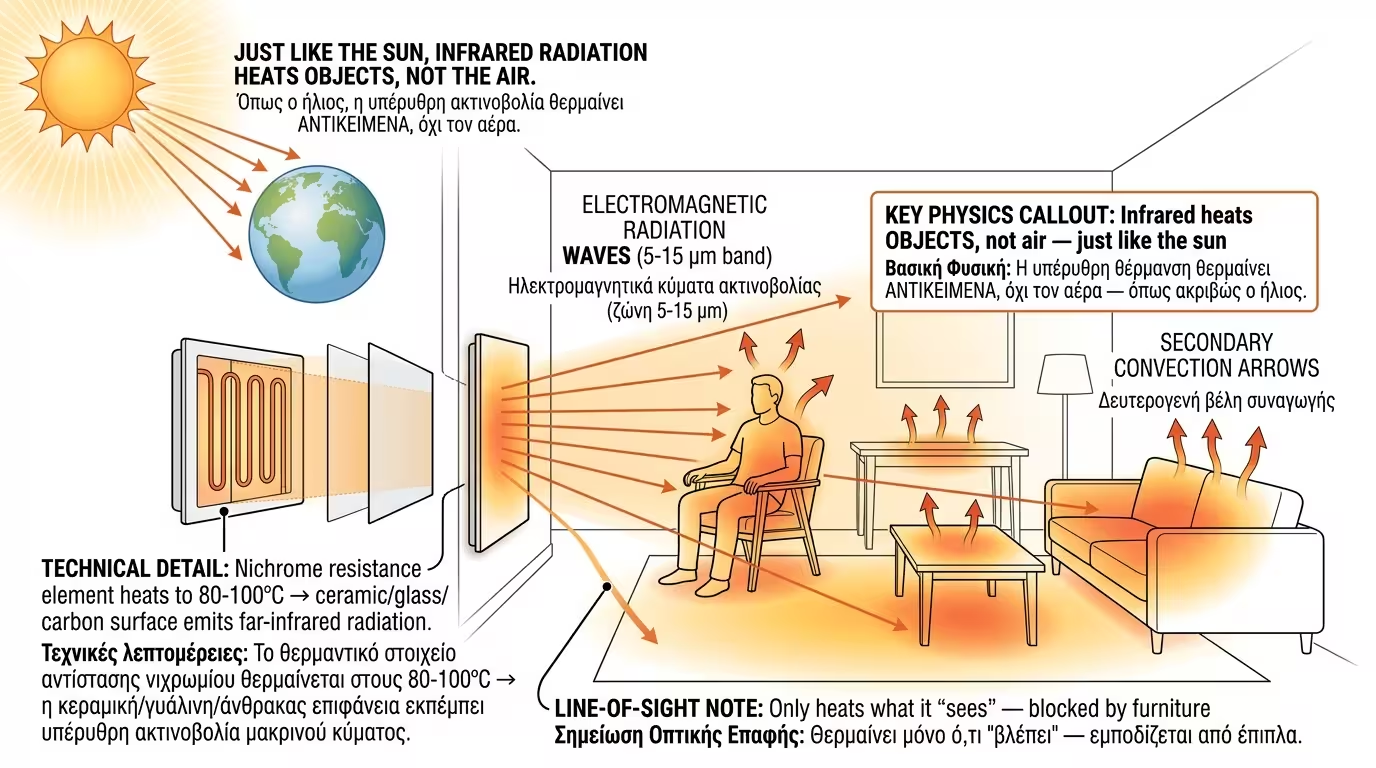
IR panels work exactly like the sun. The sun does not heat the air - it heats the objects the radiation falls on (floor, skin, furniture), and those objects then release the warmth to the surrounding air.

Sunshine effect: infrared radiation heats objects, not air

🌡️ The technology

Inside the panel is an electric resistance element (nichrome) that heats to 80-100°C. The heat transfers to the front surface (ceramic, glass or carbon fibre) which emits electromagnetic radiation in the 5-15 μm band (far infrared-C).
⚡ COP = 1.0 (Always)

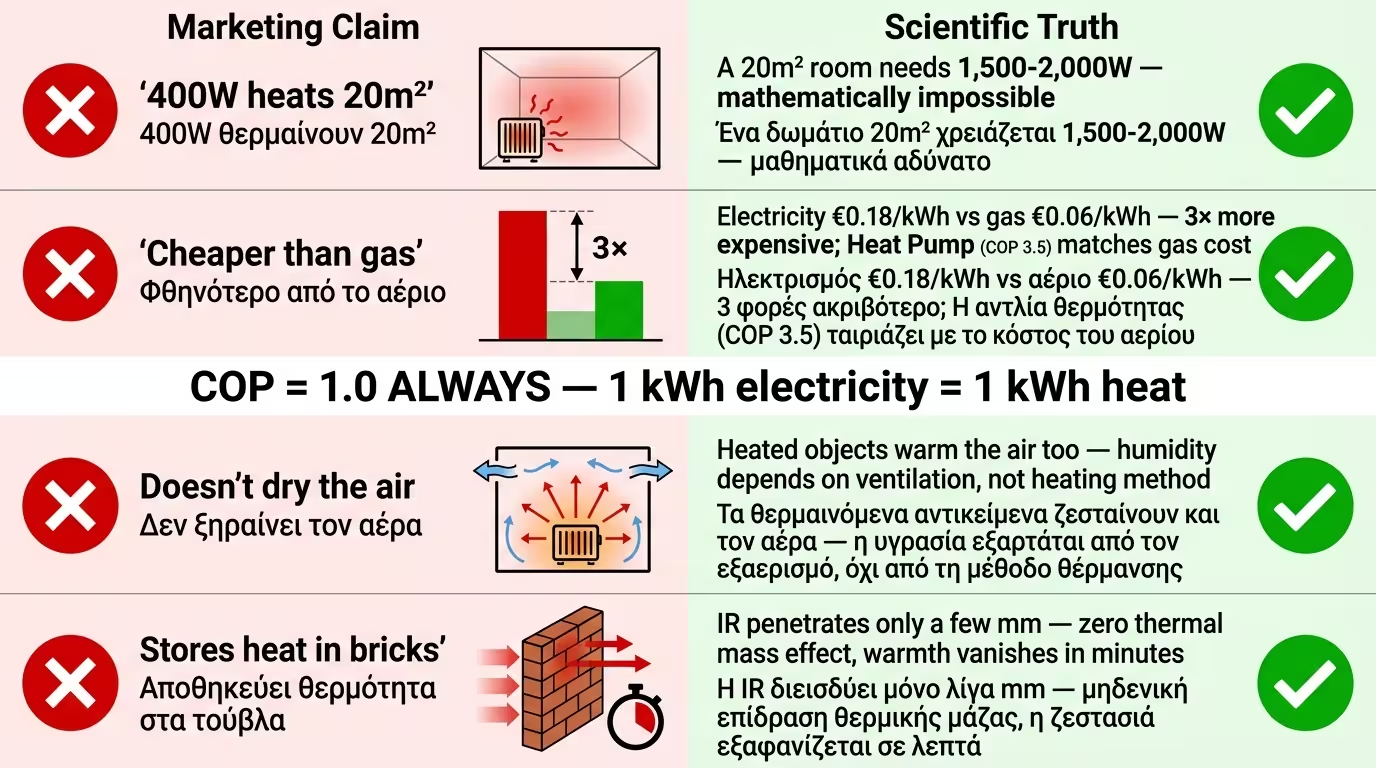
This truth "hurts." Every electric heating device (convector, panel, electric radiator) converts 1 kWh of electricity into exactly 1 kWh of heat. The law of thermodynamics is non-negotiable. A Heat Pump delivers 3-5 kWh of heat per 1 kWh of electricity (COP 3-5).

📐 Where the heat "falls"

The radiation is emitted in a straight line. It heats only what it "sees" in front of it. If you sit behind the sofa, it does not warm you. This means: a panel heats point-to-point, not the entire room uniformly.

🕰️ Zero inertia

Unlike radiators, IR panels heat instantly when switched on - you feel warmth within seconds. But the moment they switch off, the warmth vanishes just as quickly. There is no energy "storage."

2. The 4 Marketing Myths - Debunked!

The IR panel industry (especially cheap manufacturers) uses extremely misleading marketing. Let us break them down one by one.

IR panel myths: false consumption claims, COP 1:1, Heat Pump vs panel

❌ Myth 1: "400W heats 20 m²"

A 20 m² room in a modern building requires approximately ~1,500-2,000W of heat load. A 400W panel cannot even fully cover 4 m². This claim is mathematically impossible.

❌ Myth 2: "Cheaper than gas"

Electricity costs ~€0.18/kWh, natural gas ~€0.05-0.07/kWh. Even if radiation were magical, electricity remains 2-3× more expensive. A Heat Pump (COP 3.5) brings heat cost per kWh down to €0.05/kWh - matching gas, without any fuel.

❌ Myth 3: "It doesn't dry the air"

Half-truth. IR panels heat objects, but those objects heat the air too! Indoor humidity depends on ventilation, insulation and occupancy, not on the heating method. A warm room dries out - regardless of how it is heated.

❌ Myth 4: "It heats bricks = stores warmth"

The radiation heats only a few millimetres deep into objects. It does not "charge" the masonry the way underfloor heating charges thermal screed. Once the panel switches off, the warmth evaporates in minutes, not hours. The "thermal mass" effect is negligible.

3. Where They DO Have a Place (Spot Heating)

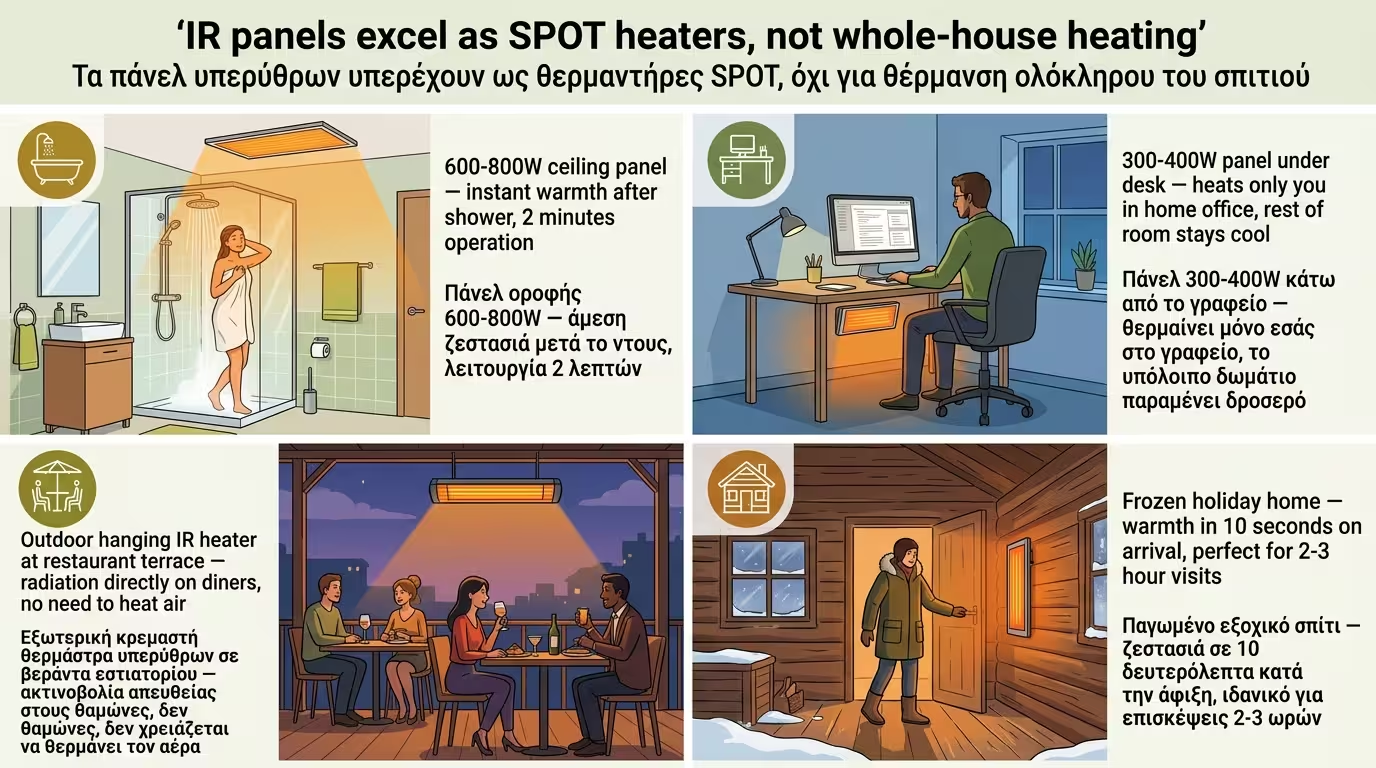
IR panel applications: bathroom, office, terrace - spot heating

Enough negatives. IR panels are NOT always the wrong choice. They have genuine, serious applications - as long as we use them as supplementary spot heating and not as the primary system for an entire home.

🛁 Bathroom

Perfect application. A 600-800W panel on the ceiling or wall warms the user instantly after a shower. No need to heat the air - it heats you. In practice: 2 minutes of operation and you feel sunshine. Ideal for winter mornings.

💼 Office / Reading corner

A small 300-400W panel under the desk or above the reading chair. It heats only you while the rest of the space can remain cool. Exceptionally economical in "one person in one spot" scenarios or in a home office.

🏗️ Terrace / Outdoors

Outdoor IR panels (like the hanging ones you see at restaurants) warm people in open spaces. Here there is no need to heat the air (impossible) - the radiation falls directly on you. Perfect application.

🏠 Holiday home (brief use)

You arrive at the freezing holiday home, plug in, and in 10 seconds you feel warmth in front of the panel. No waiting 2 hours (underfloor) or 30-60 minutes (radiator). Ideal if you stay only 2-3 hours at the property.

4. Final Verdict: Supplement, Not Primary Heating

The answer is clear - and it is neither "miracle" nor "scam." IR panels are a very specific tool that shines in very specific uses.

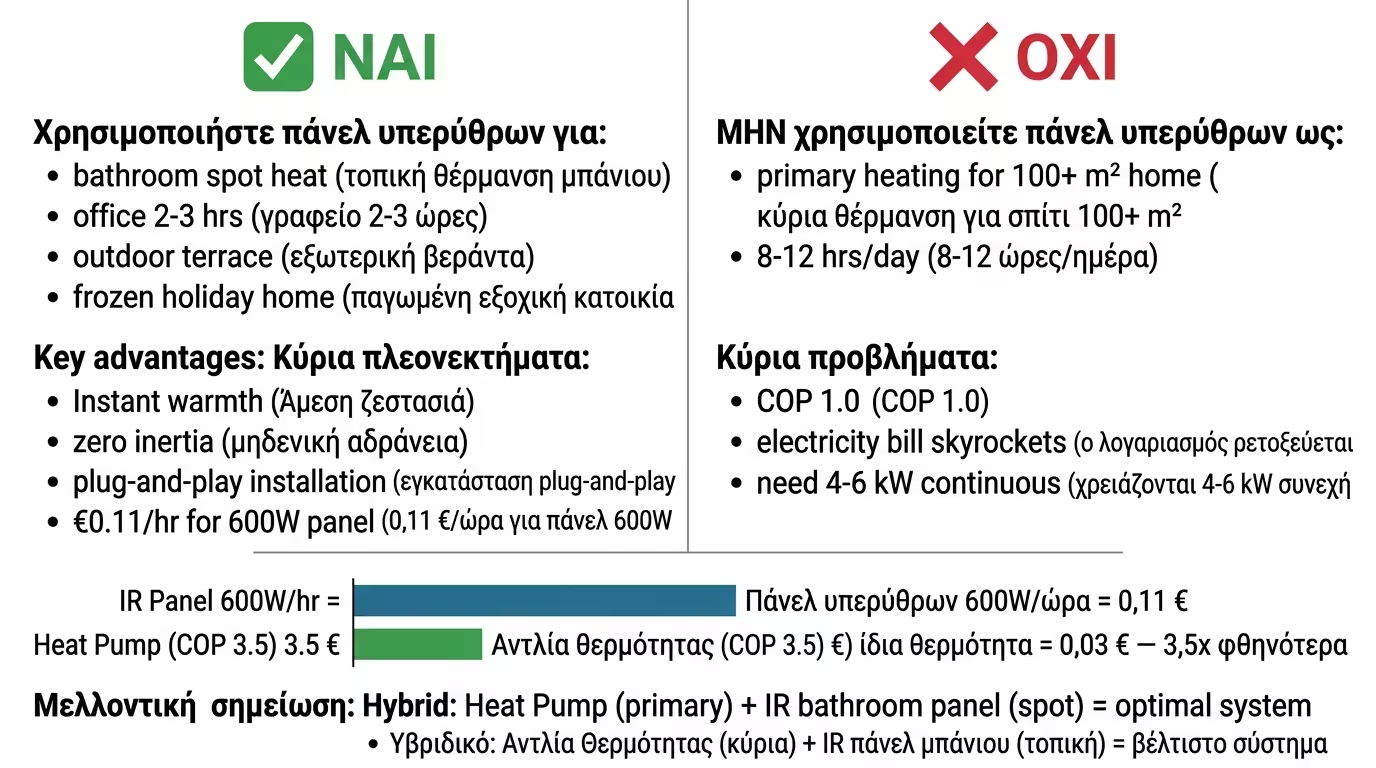
Final verdict: IR panel as supplementary heating vs primary system

✅ YES, if...

You use IR panels for localised, brief heating: bathroom after a shower, office for 2-3 hours, restaurant terrace, frozen holiday home for a weekend. There, the immediacy, zero inertia, and ease of installation are irreplaceable advantages.

⛔ NO, if...

You plan to heat an entire 100+ m² home using only IR panels, 8-12 hours a day. You will need 4-6+ kW of electric power, the bill will skyrocket (vs a Heat Pump delivering the same kW of heat with COP 3.5 → 3.5× cheaper).

📊 Cost per hour comparison

Panel 600W × 1 hour = 0.6 kWh × €0.18/kWh = ~€0.11. Heat Pump (COP 3.5) for the same heat (600 Wh) = 0.17 kWh electricity × €0.18/kWh = ~€0.03. The HP costs 3.5× less per hour of operation.

🔮 Future

IR panels will find their place in smart homes as a supplementary element: a presence sensor turns on the panel only when someone enters the bathroom. Combined with a Heat Pump for primary heating, they create a highly efficient hybrid system.

☀️ IR panels are neither "miracle" nor "scam." They are electric radiant heaters - excellent as spot heaters, disastrous as primary heating. Do not argue with physics; embrace the Heat Pump.

Related Articles

Emission Systems: Underfloor, Fancoils & Radiators

Return to category.

Go to category

Preview