Dual-Fuel Bathroom Towel Rails: Warm Towels All Year Round
It is mid-October. The house does not need heating yet, so the Heat Pump
or boiler is switched off. But when you step out of the shower, you are shivering - and the wet towels stay damp for days, developing mould.
How can we heat only the bathroom, without firing up the central
heating for the entire house? The answer is the Dual-Fuel Towel Rail - a radiator that uses hot water in winter and works as an electric heater
during the in-between seasons, thanks to two simple components.
1. The Electric Heating Element: The Radiator's "Immersion Heater"
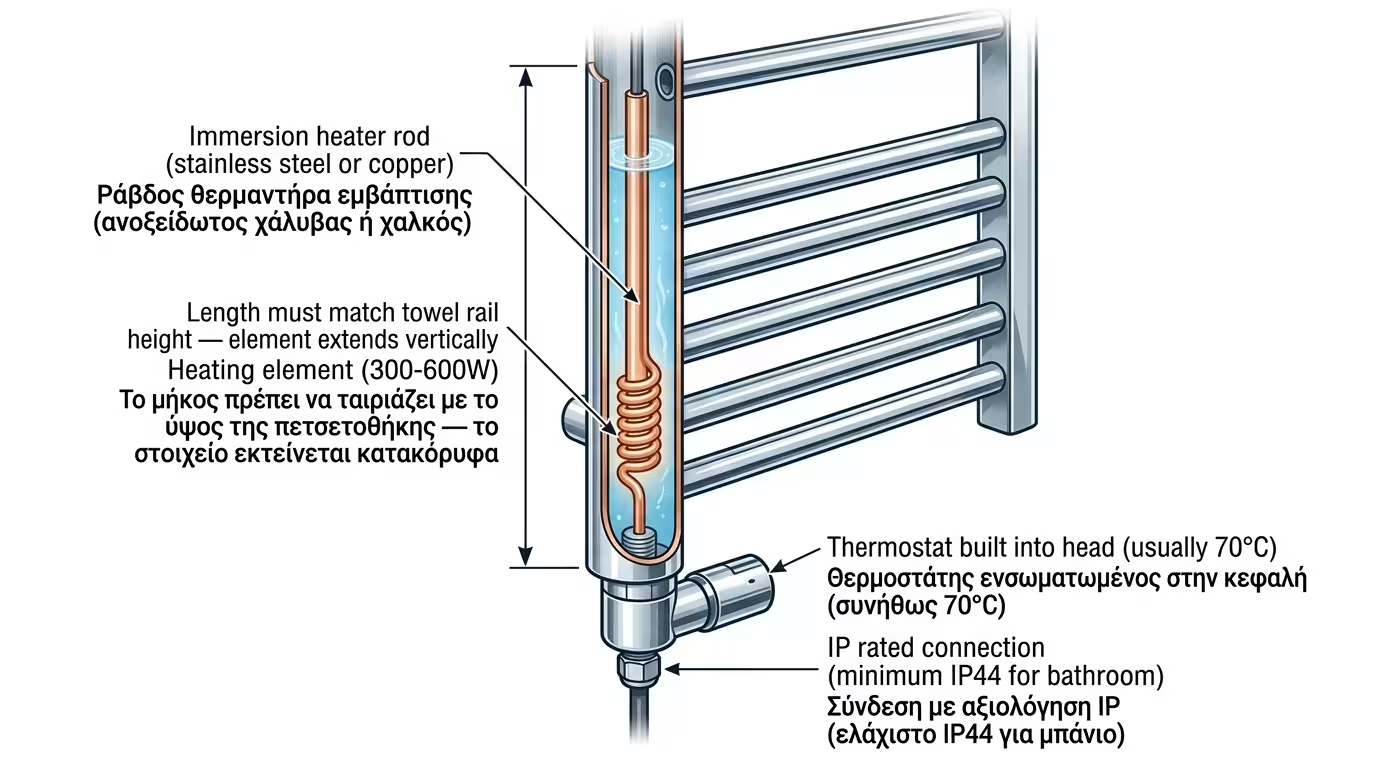
The first component you need is a specialised electric heating element. It looks like a long, metal rod that ends in a small thermostat
with a power cable.
🔌 How it works
The rod slides inside the vertical tube of the towel
rail (usually from the bottom) and is submerged in the water already present
in the radiator. When you plug it in, it heats the water exactly like an immersion heater - no boiler needed.
⚡ How to choose
The element must match the Watt rating of the radiator. If the towel rail outputs 600W thermal power on water, buy a 600W electric element. Too large an element in a small radiator will trip
its fuse. Too small, and your towels stay cold.
💧 Bathroom safety (IP Rating)
Since we are in a space with steam and water splashes, the element's
thermostat must have a high ingress protection rating: at least IP44 or IPX4. This ensures there is no risk of short circuit even if water
splashes onto the unit.
🌡️ Thermostat
Modern elements come with a built-in thermostat (digital
or analogue). You set the desired temperature (e.g. 40°C) and the element
cycles on and off automatically. Some models also have a timer so it turns on 30 minutes before you wake up.
2. The Dual-Fuel T-Piece: The Plumbing Solution
Here is where DIY enthusiasts get stuck: the towel rail only has two openings at the bottom - one for the hot water valve and one for the return. Where do we screw in the electric element when there is no spare
hole?
🔧 What is a T-piece?
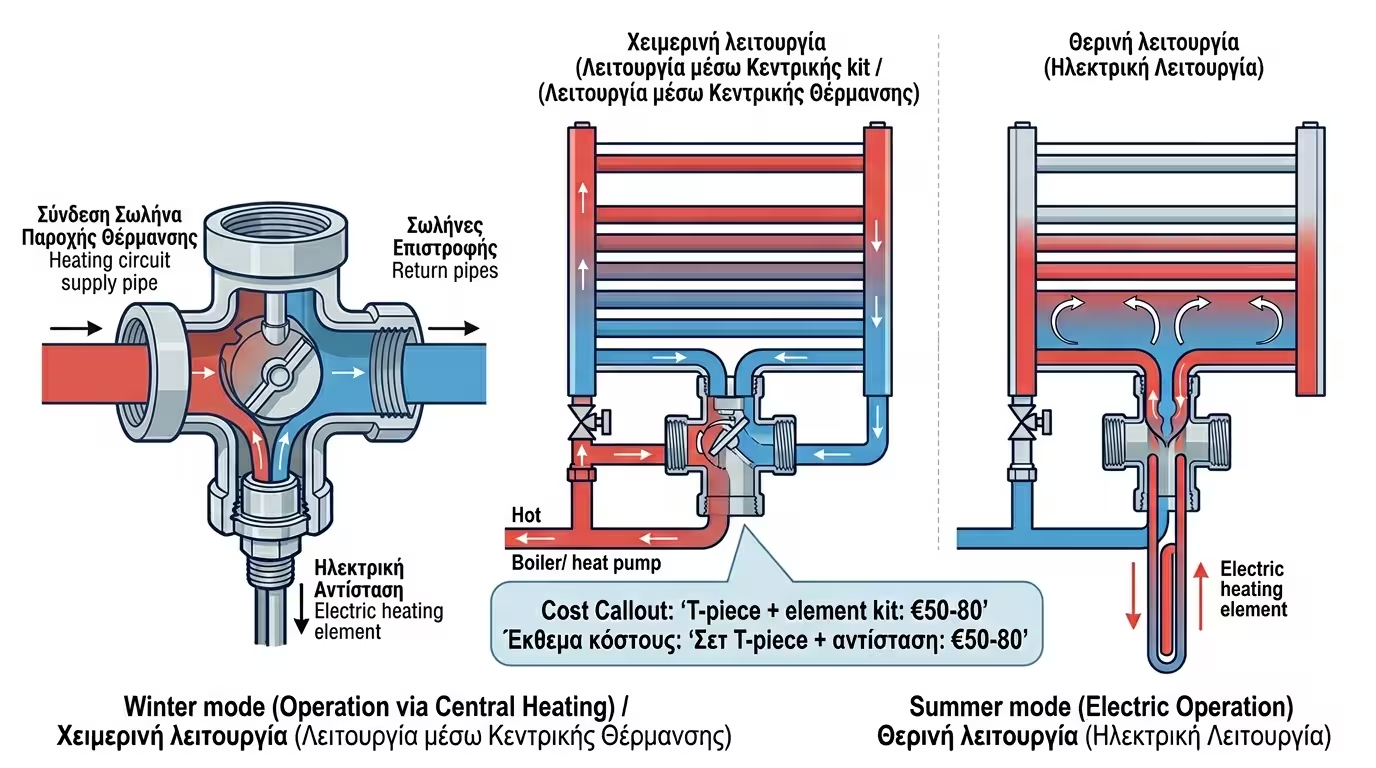
It is a small, brass (or chrome) fitting shaped like a "T". It screws into one of the two bottom openings of the towel rail.
On one branch you connect the normal water valve,
and on the bottom branch you thread the electric element, which rises straight up inside the radiator.
✅ The "2 in 1" solution
With the T-piece, the same opening serves both the water
pipe and the electric element! No drilling, no extra pipework. The installation
is painless - simply remove the valve, screw in the T-piece, then reattach
the valve to one branch.
📐 Sizes and connection
T-pieces come in ½" and ¾" (the most common towel rail
sizes). The element has a matching thread. Make sure you buy the same size T-piece + element + valve. Always use PTFE (Teflon) tape on all threads
for a perfect seal.
💰 Conversion cost
The entire conversion costs €50-80 (T-piece + element).
If you hire a plumber, add €50-80 for labour. Compared to buying a ready-made
dual-fuel towel rail (€200-400), the upgrade is exceptionally affordable.
3. The Golden Operating Rule: WARNING - Burst Risk!
Once everything is connected and October comes, you want to turn on
the element. If you simply flick the switch, the element will start
heating the water inside the towel rail. But be careful - there is a critical rule that, if ignored, can make things dangerous.
✅ What to close
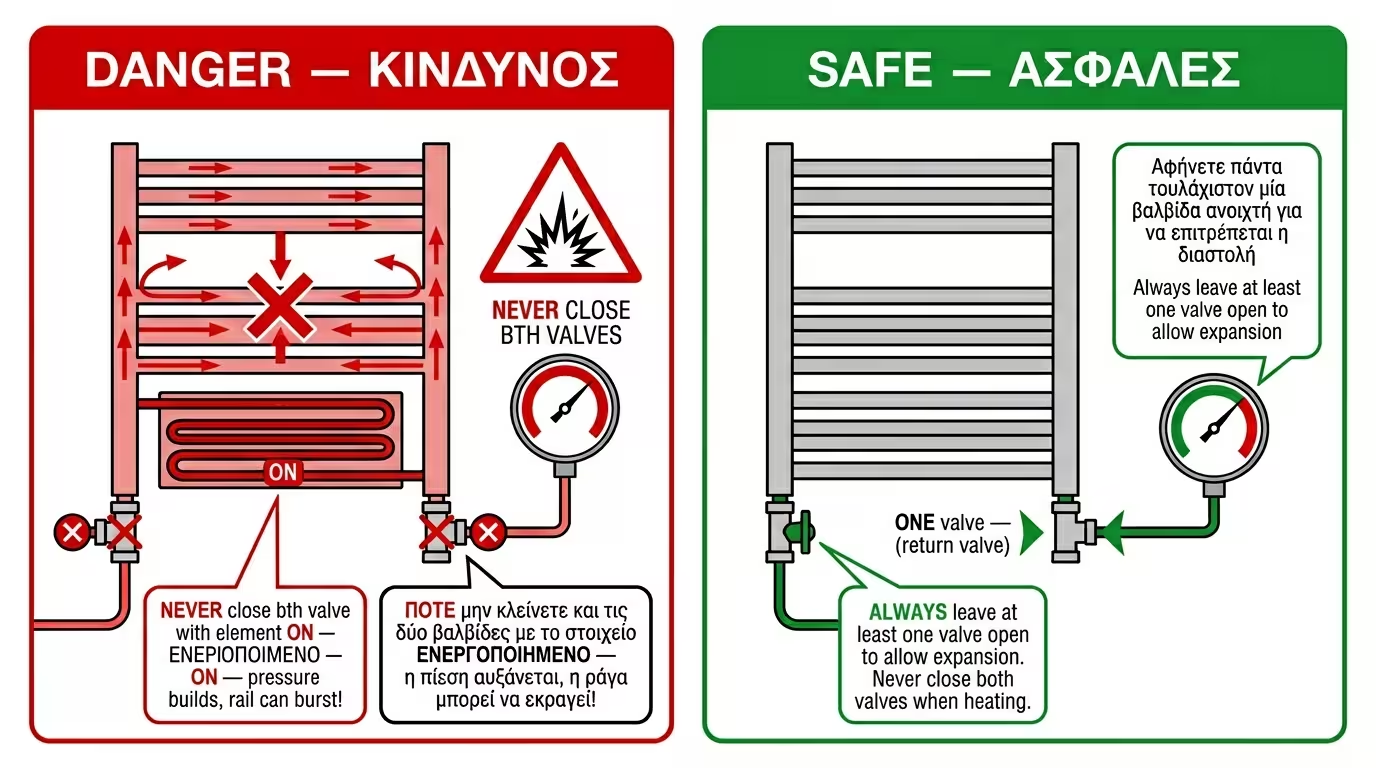
Close ONLY ONE VALVE - usually the supply (flow) valve.
This stops water circulating to the rest of the house, so the heat stays
inside the towel rail only and does not "escape" through the pipes. Otherwise,
you would be paying for electricity to heat the walls.
⛔ What you must NEVER close
Never close BOTH valves at the same time! When the element
heats the water, it expands (increases in volume). If
both valves are locked, the water has nowhere to go. Pressure inside the
radiator will rise dramatically - and the towel rail may burst (rupture) from overpressure!
🔓 The return: the "safety valve"
By leaving the return valve open, the expanding
water can push freely into the closed system of the house. The vast
volume of water in the pipes absorbs this tiny pressure increase
with absolute safety. Zero risk.
📝 Memory rule
"One closed, one open - always!" Write it on a sticker
and attach it next to the plug or the valve. When you want to switch back
to water mode (winter), simply open both valves and let the house heating
take over.
4. Summary: Warm Towels Winter and Summer
Converting a towel rail to Dual Fuel costs very little
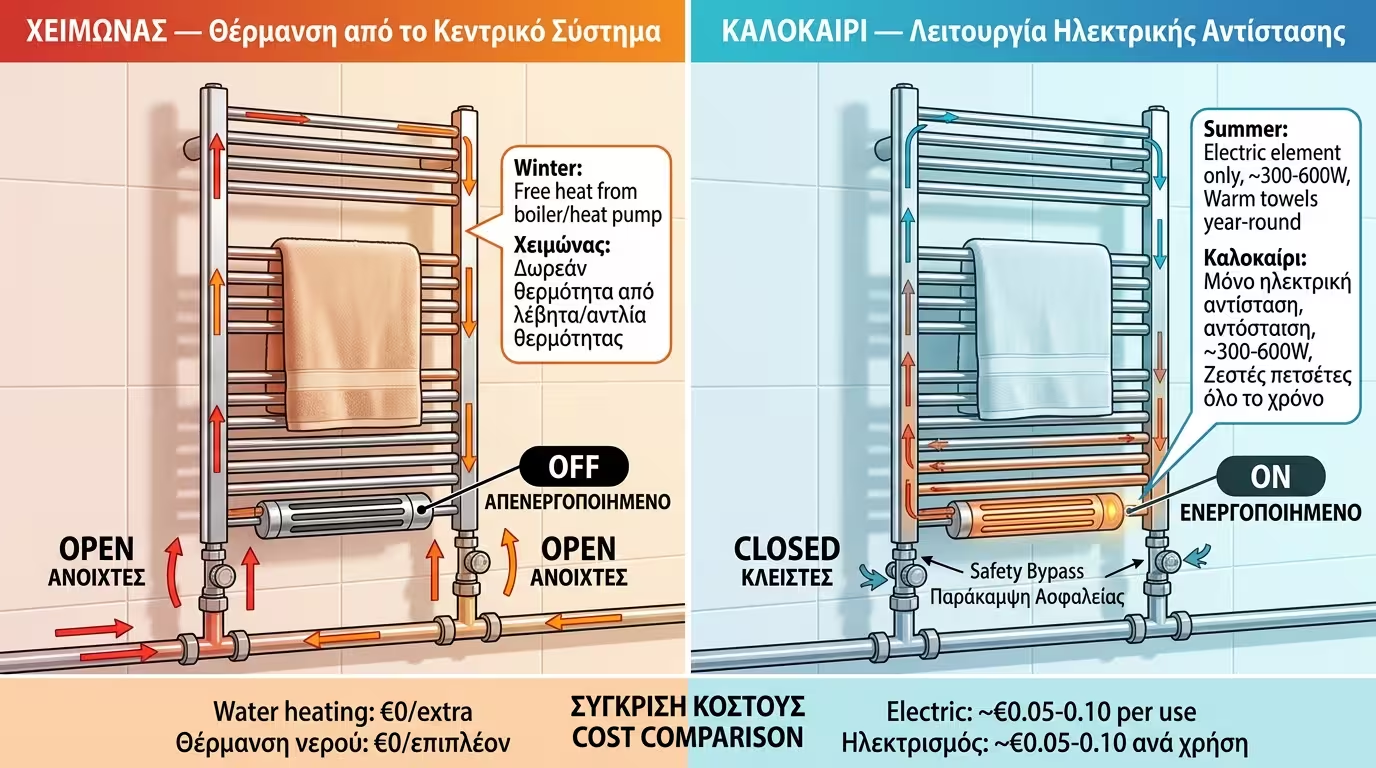
but dramatically upgrades your quality of life. In winter it uses the network's
hot water, in shoulder seasons it "fires up" as an electric heater - regardless
of whether the central heating is on or off.
🧺 Dry, hygienic towels
Wet towels in a cold bathroom = mould, bacteria, musty smells. With
dual fuel they dry in hours instead of days. Ideal for families with children or homes without large bathroom windows (no sun = permanent moisture).
🔌 Low running cost
A 600W element running 2 hours/day during shoulder months (October,
November, March, April) costs about €0.22/day (at ~€0.18/kWh).
Minimal cost for massive comfort - and far cheaper than firing up the
entire Heat Pump.
🏠 Which towel rails can be converted?
Almost all classic water-type towel rails. White steel,
chrome, even designer stainless steel models. The only requirement: ½"
or ¾" bottom connections and enough internal depth for the element rod
to fit inside the vertical tube.
⚡ Electrical requirements
The element plugs into a standard Schuko socket inside
the bathroom or an IP44 waterproof socket. Ensure the circuit has a 30mA RCD (residual current device) - this is already mandatory in modern bathroom electrical installations.
No consumer unit upgrade needed.
🛁 T-piece + element = €50-80. Warm towels 12 months a year. Just
remember the rule: "one valve closed, one open - always!"