Ceiling & Wall Heating / Cooling: When Underfloor "Moves" Upwards

What if you own a beautiful neoclassical building or a 1970s flat with a stunning old oak herringbone parquet you absolutely refuse to remove? Or if the room height does not allow you to raise the floor even a single centimetre?

Then, engineering takes underfloor heating and "moves" it to the ceiling and walls! The concept is based on radiation - just as the sun warms you even when the air is freezing, a large surface can emit heat or cooling directly to your body, without blowing any air at all.

1. Ceiling Systems: The Ceiling That "Radiates"

This is the most popular solution in luxury renovations and modern offices. The system hides entirely inside the false ceiling - completely invisible. The space gains climate control without any visible element on the walls or floor.

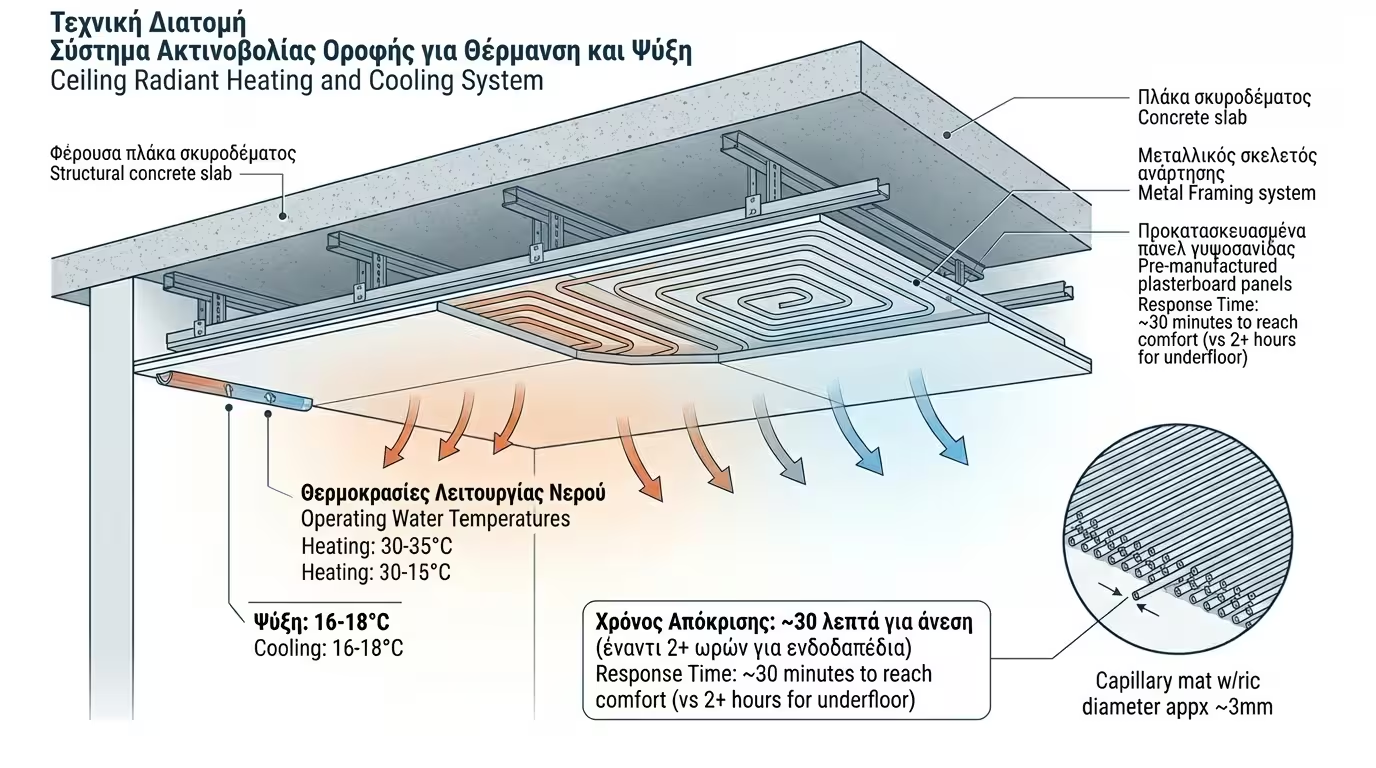
Ceiling heating/cooling system: plasterboard panels with embedded capillary tubes

📦 Pre-built plasterboard

The fastest method: special, pre-manufactured plasterboard panels that, when flipped over, already have a thin plastic pipe embedded (grooved into them). The installer screws the board to the ceiling, connects the pipes together - and done!
🧵 Capillary mats

Very thin, plastic "mats" made up of dozens of microscopic tubes (like thin spaghetti). They are fixed to the ceiling and covered with a special, thin thermally conductive plaster. They offer exceptionally uniform temperature distribution thanks to their dense network.

❄️ The "emperor" of cooling

While underfloor is "king" at heating, the ceiling is the absolute emperor of cooling. Physics dictates that cold air falls. When the ceiling is chilled (water at ~16°C), it creates a silent, natural "rain" of coolness - without the risk of freezing your feet.

⏱️ Lightning-fast response

Because the pipes hide behind thin plasterboard (not under 7 cm of concrete), they heat and cool the space in record time - ~30 minutes. In contrast to underfloor heating which needs 2+ hours to "push through" the thermal screed.

2. Wall Systems: Embracing the Space

If the home lacks ceiling height for a plasterboard drop, the installation moves to the vertical walls. Wall heating offers the warmest "embrace" you can feel - the radiation comes horizontally and hits your body directly.

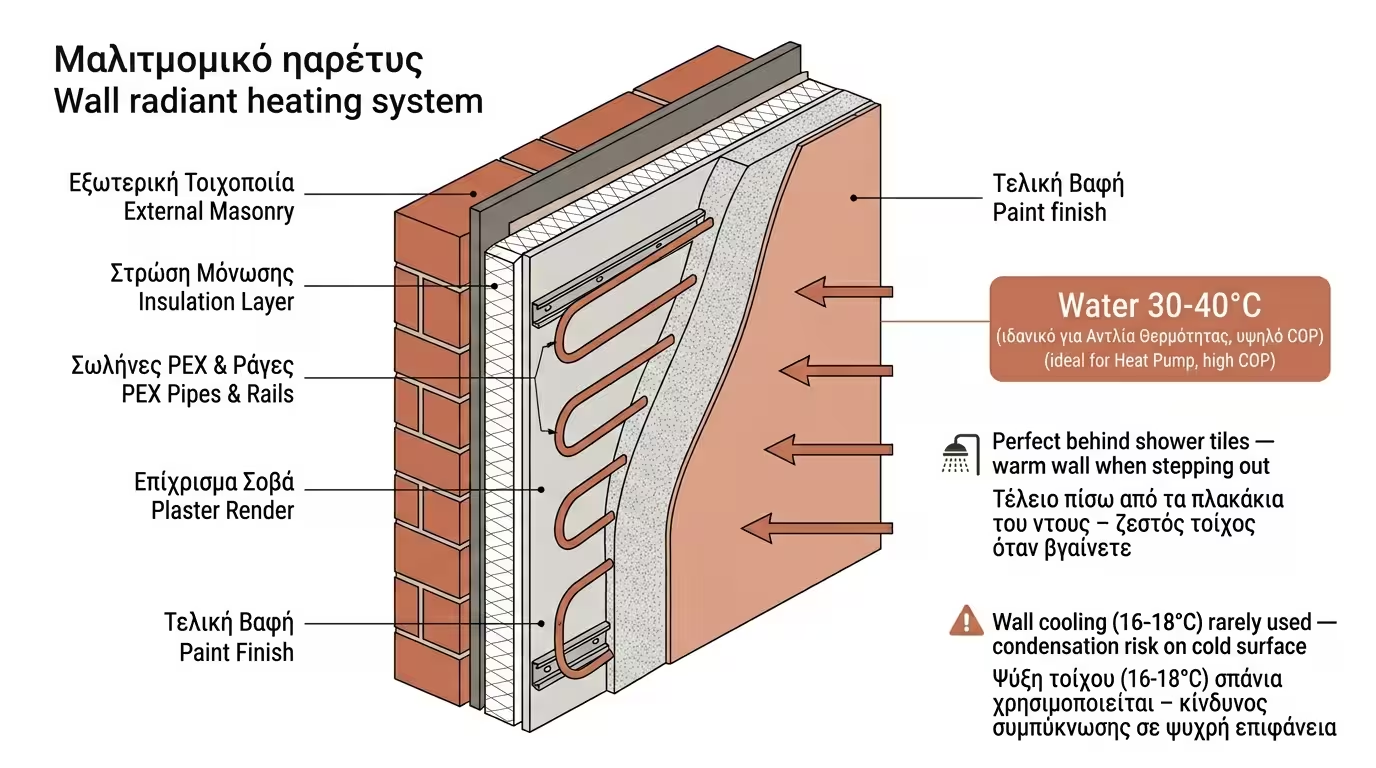
Wall heating: PEX pipes in serpentine pattern fixed to rails, covered with plaster

🧱 Construction

Special rails are fixed to the masonry. PEX pipe clips into them in a serpentine pattern. Then the plasterer "buries" the pipes under a thick layer of render. The surface is plastered normally - nobody sees a thing.

🛁 Perfect for cold bathrooms

It can go behind the shower tiles! Imagine stepping out of the shower and the wall around you emitting gentle warmth. Also an ideal solution for the exterior, cold north-facing walls of a living room.

⬅️ Horizontal radiation

Unlike underfloor (bottom-up) and ceiling (top-down), wall heating emits horizontally. This means the heat hits your torso directly - the space feels warm even at a lower air temperature.

🌡️ Operating temperatures

Heating: water at 30-40°C (ideal for Heat Pump, excellent COP). Wall cooling: 16-18°C - but rarely applied due to condensation risk on the cold internal surface. In practice, cooling is left mainly to the ceiling.

3. The 3 Enormous Advantages

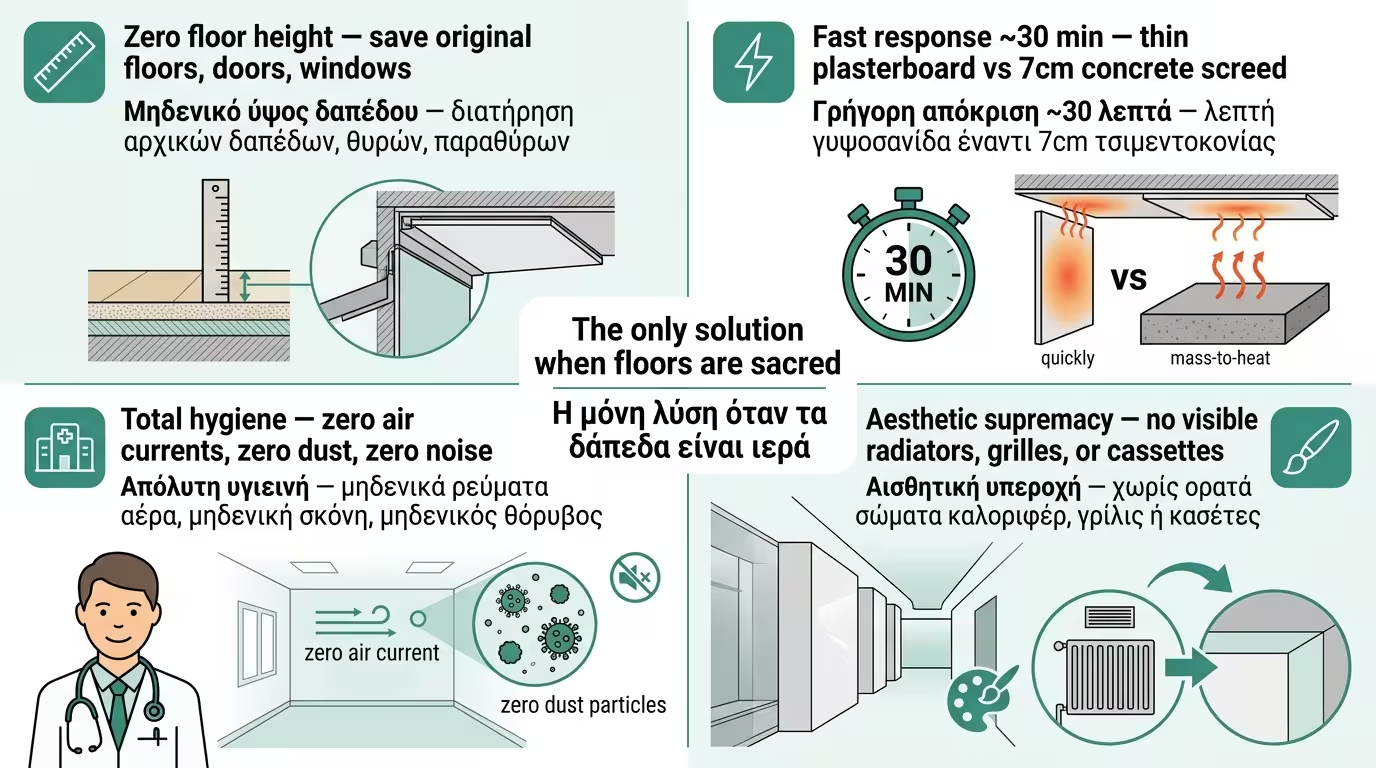
Advantages: zero floor height, lightning response, absolute hygiene

Ceiling and wall systems are not merely "alternatives" - in certain cases they are the only correct solution. Here is why so many architects choose them for luxury renovations.

📏 Zero floor height

You save your original floors, doors, and French windows. There is no need to raise the floor by even a millimetre. Ideal for neoclassical buildings, listed properties, or apartments where the floor level cannot change (e.g. shared stairwells).

⚡ Lightning-fast response (~30 min)

The thin plasterboard or thin plaster does not have the thermal inertia of concrete. You change the thermostat setting and feel the difference in half an hour - instead of the 2-3+ hours that classic underfloor with thermal screed requires.

🏥 Absolute hygiene

Zero air currents, zero dust circulation - ideal for allergy and asthma sufferers. Zero noise (no motors, no fans). The climate control experience feels like… nature, not a machine.

🎨 Aesthetic supremacy

No visible elements: no wall radiators, no grilles, no cassettes. The architect gains absolute freedom in interior design. Finished rooms look as though they have no heating-cooling system at all - yet they do.

4. The 2 "Traps" You Need to Know

Naturally, not everything is perfect. If you choose these systems, you must be prepared for two compromises that require careful planning.

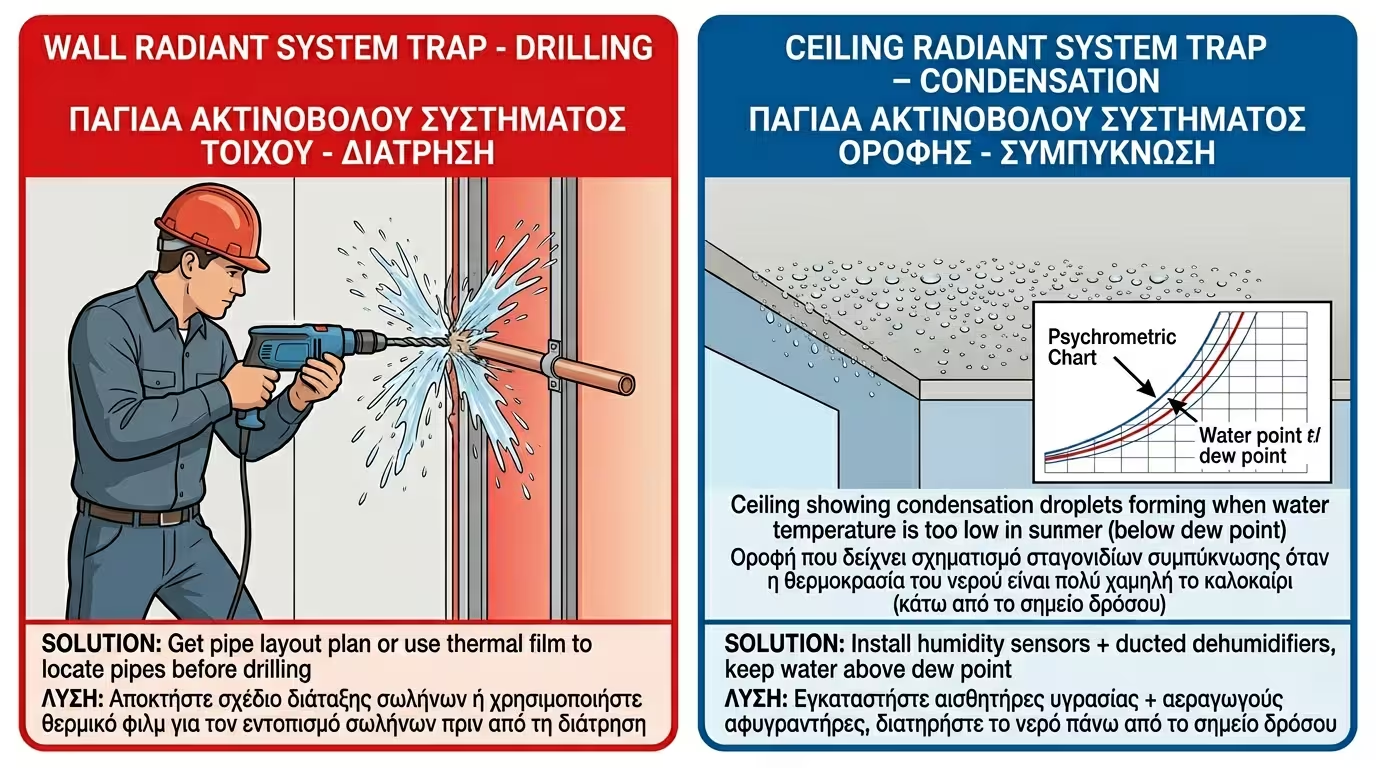
Traps: no drilling in walls, dew point risk on ceiling

🖼️ No drilling allowed!

Wall heating + drill for a picture frame = disaster. If you pierce a pipe, your living room becomes a swimming pool. Solution: obtain the pipe layout plan from the installer, or buy a thermal film (a sheet that changes colour when the wall is warm) to see where the pipes run before drilling.

💧 The dew point

For ceiling cooling, if you send excessively cold water in summer, the ceiling will "sweat" and drip water on your head. Strict humidity control is required (sensors + ducted dehumidifiers) so the water temperature always stays above the dew point.

🛋️ Furniture blocking

Wall heating loses performance if you place a large sofa or heavy wardrobe in front of it - they block the radiation. Plan beforehand which walls will be heated and which will receive furniture. Ideally: heat the external (north-facing) walls, leaving internal walls free.

💰 Installation cost

Ceiling/wall systems are more expensive than classic underfloor (20-40% more per m²). However, in renovations where the alternative is "rip up the floor + new screed + new doors," the cost equalises or even drops significantly.

🏛️ Ceiling/wall heating-cooling saves renovations where floors are "sacred." Expensive but aristocratic - climate control quality that air conditioning units cannot even dream of.

Related Articles

Emission Systems: Underfloor, Fancoils & Radiators

Return to category.

Go to category

Preview