Baseboard Heating: Perimeter Warmth Without Radiators
Imagine a living room with no visible radiators, no cassettes, no
ceiling grilles - and yet the entire wall emits a gentle warmth. This is the sensation baseboard heating delivers: an extremely low,
elongated element that runs along the base of the wall,
exactly where you would normally see the skirting board.
Barely known in Greece, hugely popular in Northern Europe and America, it is arguably the most elegant and underrated heat emission
technology. It costs no more than a modern designer radiator - but the sensation
is entirely different.
1. Inside the "Baseboard": What Hides Within
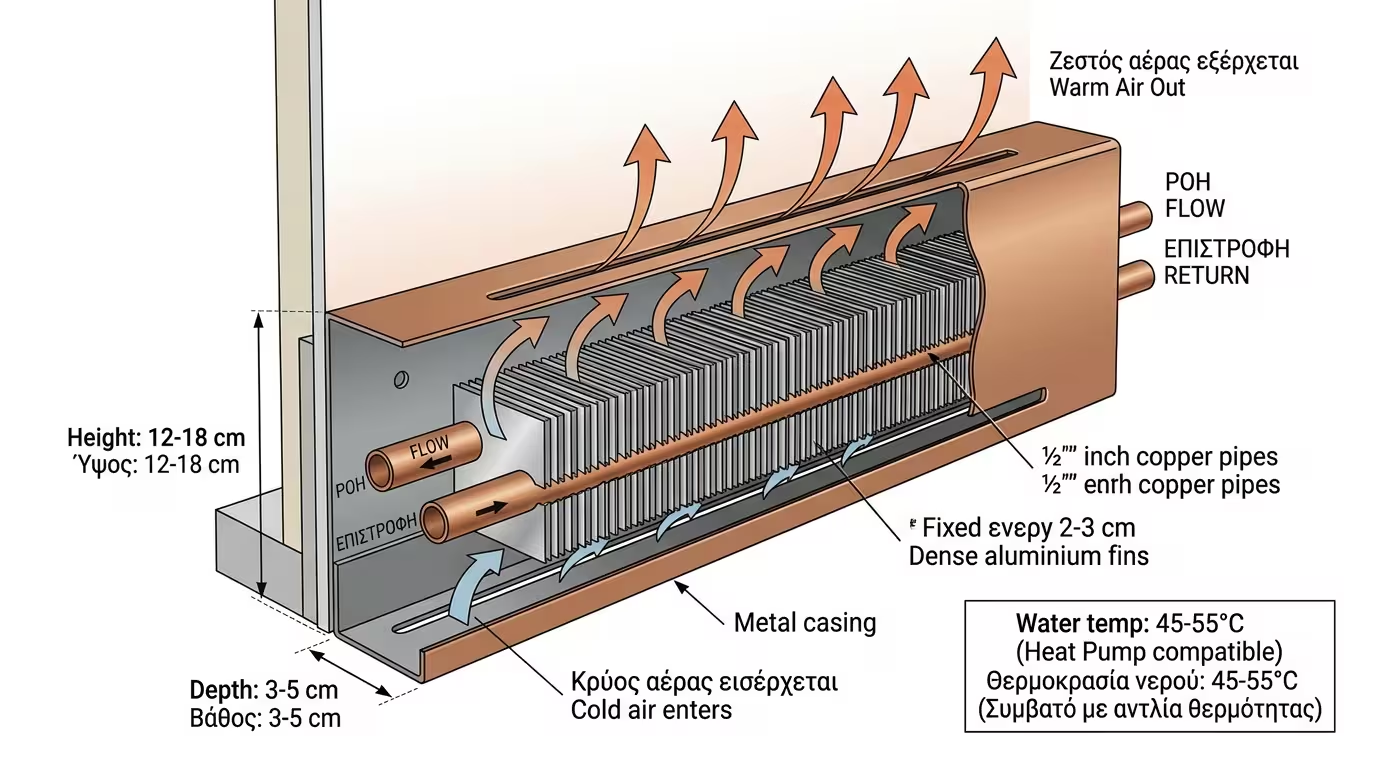
The system consists of a metal casing 12-18 cm tall and
3-5 cm deep, that looks like an oversized skirting board. Inside it hides
the "heart": ½" or ¾" copper pipes with aluminium fins
(like a miniature wide radiator in strip form).
🔧 Construction
Two copper pipes (flow and return) run along the entire wall at skirting level. Fixed to them every 2-3 cm are aluminium fins that
multiply the heat transfer surface. Hot water at 45-55°C circulates inside
- ideal for Heat Pump operation.
📏 Dimensions
Height: 12-18 cm (like a tall skirting board). Depth: 3-5 cm (hugs the wall like a "second skin"). Length: as needed - it can run around the entire perimeter of the room, turning corners with special fittings.
🏗️ Installation
It mounts on the wall above the finished floor. No
slab digging, minimal disruption. Ideal for renovations: the plumber
routes the pipes along the wall, tightens the joints, screws on the
covers - done!
🔇 Silent operation
No moving parts - zero noise. Heating is 100% via
natural convection and radiation. The only sound: perhaps a faint
"click" as the copper heats and expands - entirely normal.
2. The Coanda Effect: The Wall Becomes a "Radiator"
Here lies the magic of baseboard heating - and the reason it
noticeably outperforms a standard radiator in comfort quality: the Coanda effect.
🌡️ How it works
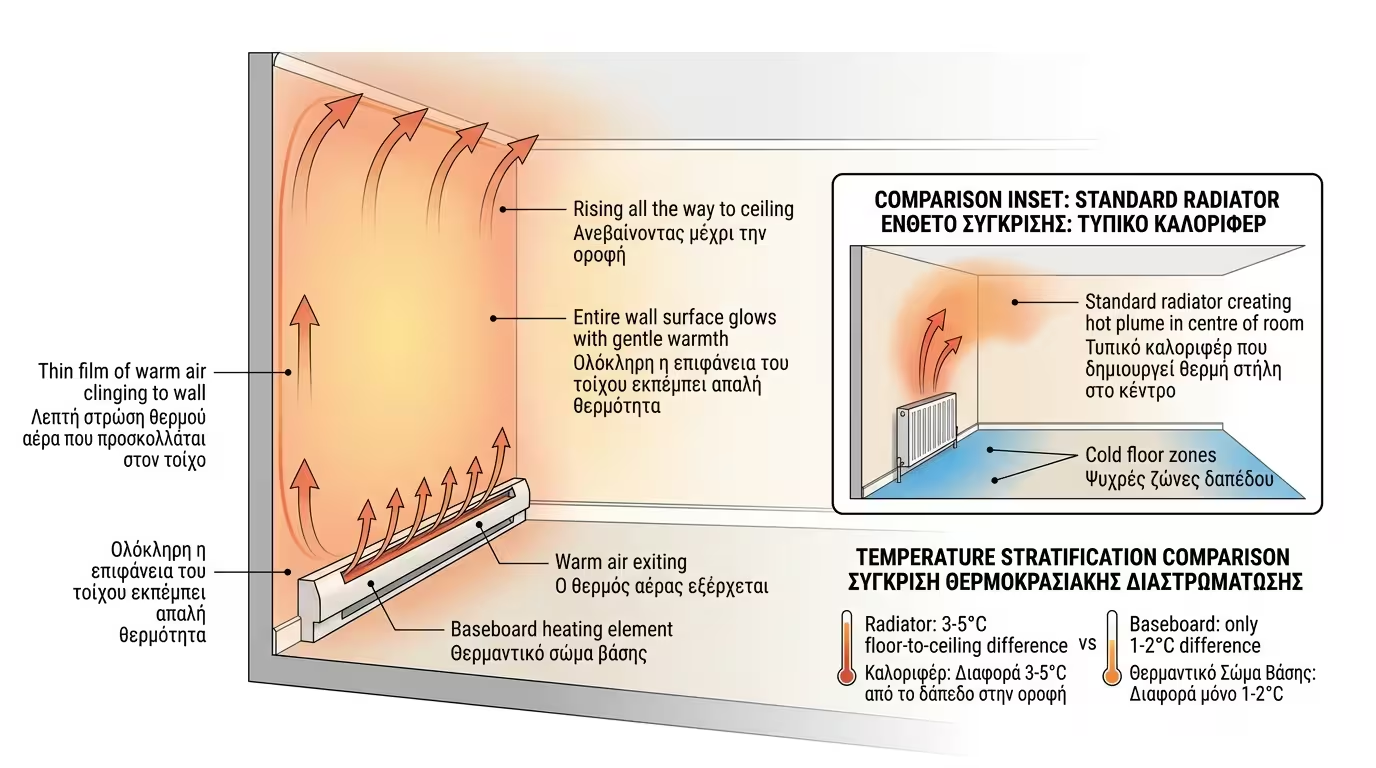
The warm air exiting the top slot of the baseboard does not shoot
into the centre of the room. Instead, it "clings" to the wall surface (Coanda effect) and rises as a thin film of warm air all the way to
the ceiling. The entire wall effectively becomes a huge radiant heating surface.
🧠 Heating sensation
The sensation is remarkably uniform. Instead of one
"hot spot" (the radiator under the window), you feel warmth everywhere - because the entire perimeter emits heat. It feels like underfloor
heating - only "turned vertical."
📊 Thermal stratification
Standard radiators create a huge temperature difference between floor and ceiling (3-5°C). Baseboard heating, thanks to Coanda,
reduces this gap to just 1-2°C - virtually the same temperature
at every height.
🔥 Cold downdraft defence
Running along the external wall (below windows), the baseboard "stops" the cold downdraft at its root, before the chilled air cascades to the floor. Similar philosophy
to trench heaters, but without any digging.
3. Hidden Advantage: Anti-Mould & Dry Walls
A benefit rarely mentioned but critical for homes - especially
older, un-insulated or externally-only insulated buildings: baseboard heating
eliminates moisture and mould at the base of external walls.
💧 Why walls get mouldy
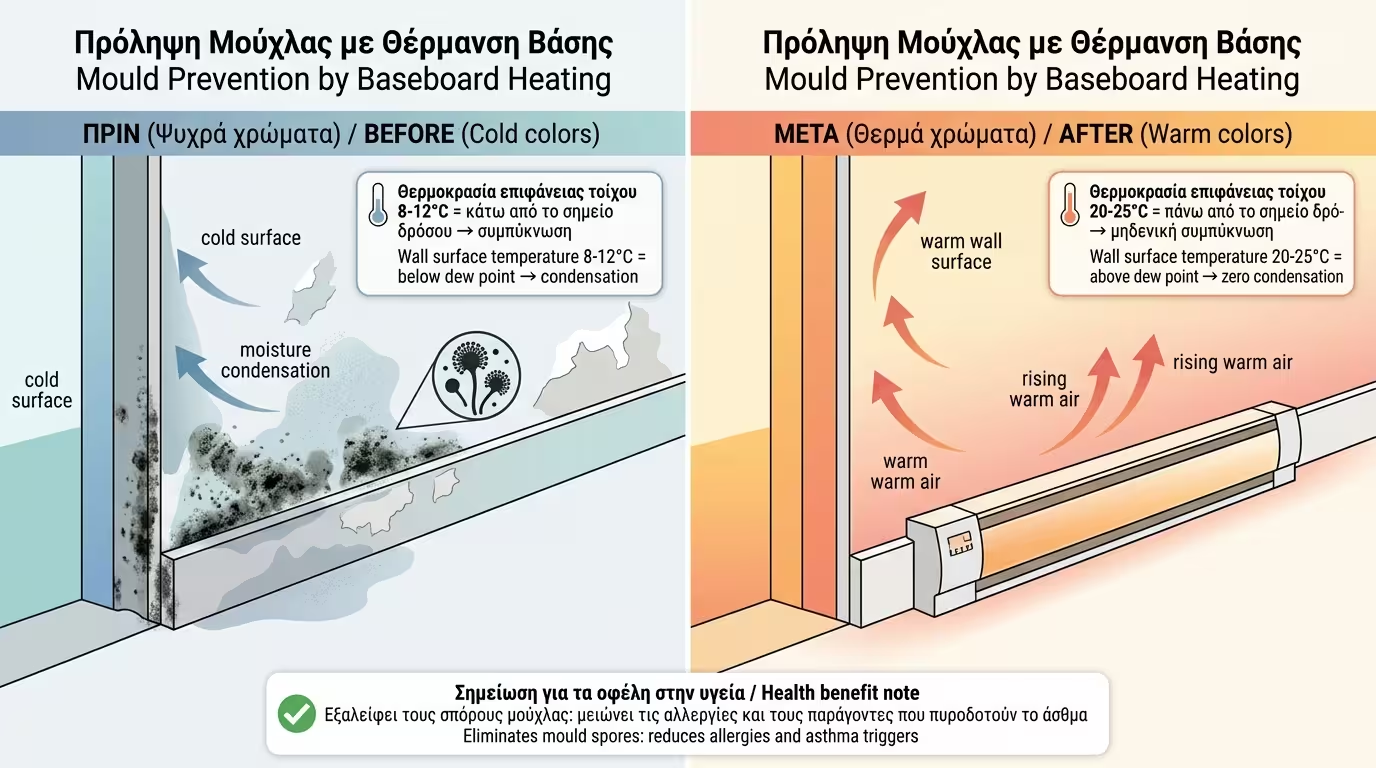
An external wall without (or with poor) insulation is cold at the base. The moist indoor air (cooking, showering, breathing) hits
the cold surface → condenses → mould, damp patches, peeling
paint around the skirting.
🔥 How it stops it
Baseboard heating warms precisely the base of the external wall - the most vulnerable zone. The wall stays warm → no cold surface →
no condensation. Mould disappears.
🏗️ Ideal for renovations
In many old buildings (especially neoclassical), walls are stone or brick without insulation. Underfloor heating does not help the wall base, radiators warm
only one spot. Baseboard heating is the only solution covering the entire "critical zone."
🩺 Health benefits
Mould (Aspergillus, Cladosporium) releases spores that cause allergies, asthma, headaches. By eliminating the root cause
(damp wall), baseboard heating dramatically improves air quality in chronically
humid homes.
4. Where It Does NOT Fit: Limitations & Cost
As elegant as it is, baseboard heating is not for every home. Certain compromises must be accepted or planned for in advance.
🛋️ Furniture & clearance
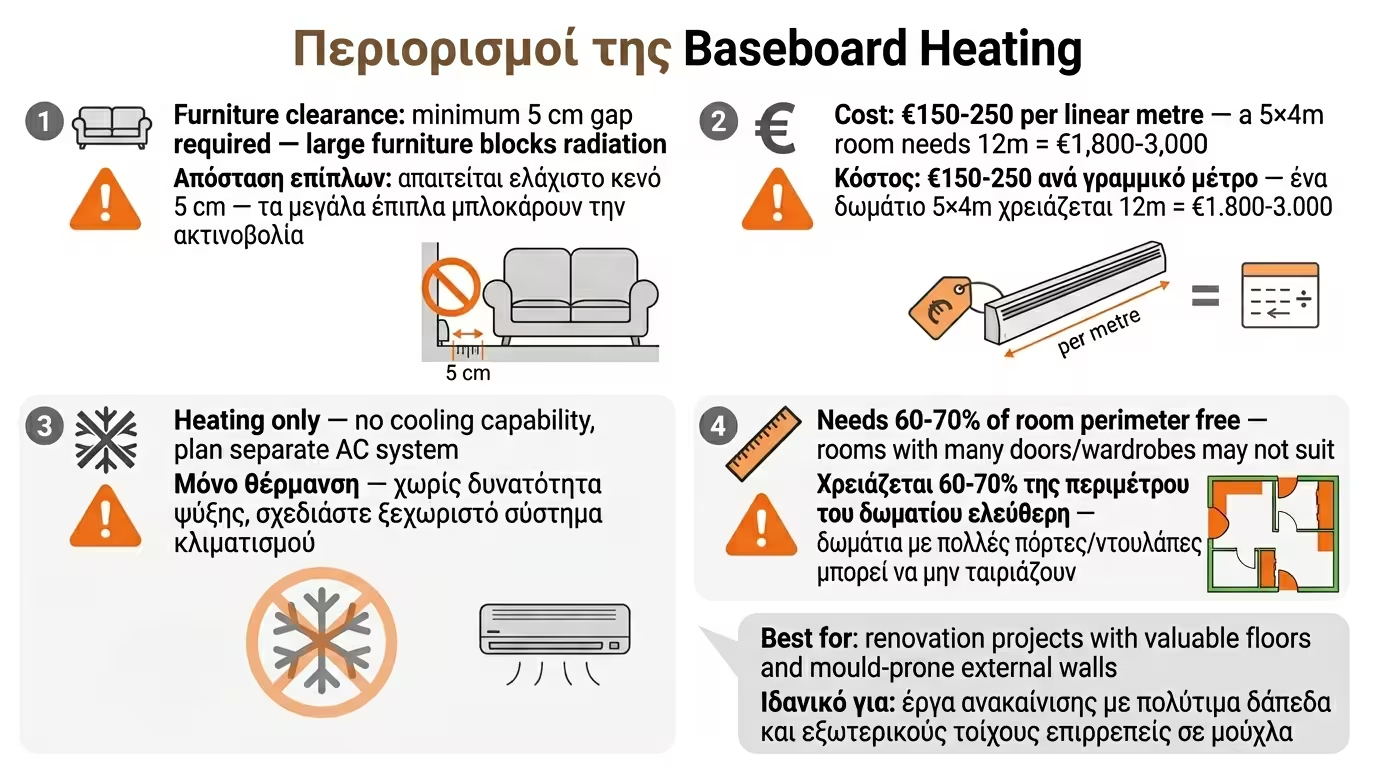
Large furniture (sofa, wardrobe, bookcase) must not "block" the baseboard. At least 5 cm of clearance is needed so warm air can
rise freely. This constrains furniture layout, especially in smaller rooms.
💰 Cost per linear metre
A quality baseboard system (e.g. Radiant-tec, Smith's, Thermaskirt)
costs €150-250/m (materials + installation). For a 5×4
m room needing 12 m of baseboard, that is €1,800-3,000. Comparable to designer radiators but more expensive than standard
steel panels.
❄️ Heating only
Baseboard heating cannot provide cooling. If you
need air conditioning, plan an additional system (split, cassette,
ceiling). For homes with an air-to-water Heat Pump, this is no issue
- heat with baseboard, cool with splits.
📐 Needs clear perimeter
To perform well, baseboard heating must cover at least 60-70% of the total room perimeter. Rooms with many doors or built-in wardrobes block the wall and
reduce the available heating surface.
🏛️ Baseboard heating transforms the wall into a huge, invisible
radiator. Elegant, silent, anti-mould - but it needs clear wall space in
front.