📢 Sound Power (Lw)
The true, absolute noise generated by the machine itself. It does not change whether you place it in an empty room or a furnished one. It is the "raw" truth of the motor - the measurable energy it emits.
You bought the best Heat Pump. The water runs perfectly. The room is cool. But the moment you lie down to sleep, the Fan Coil above your head sounds like a jet turbine preparing for takeoff. Noise is the number 1 complaint.
Let us look at how manufacturers "cook" the numbers in technical brochures and why "Low Speed" is the only truth you should be looking at.
In engineering, noise is measured in two entirely different ways. The confusion between them is the favourite "magic trick" of marketing departments in technical brochures.
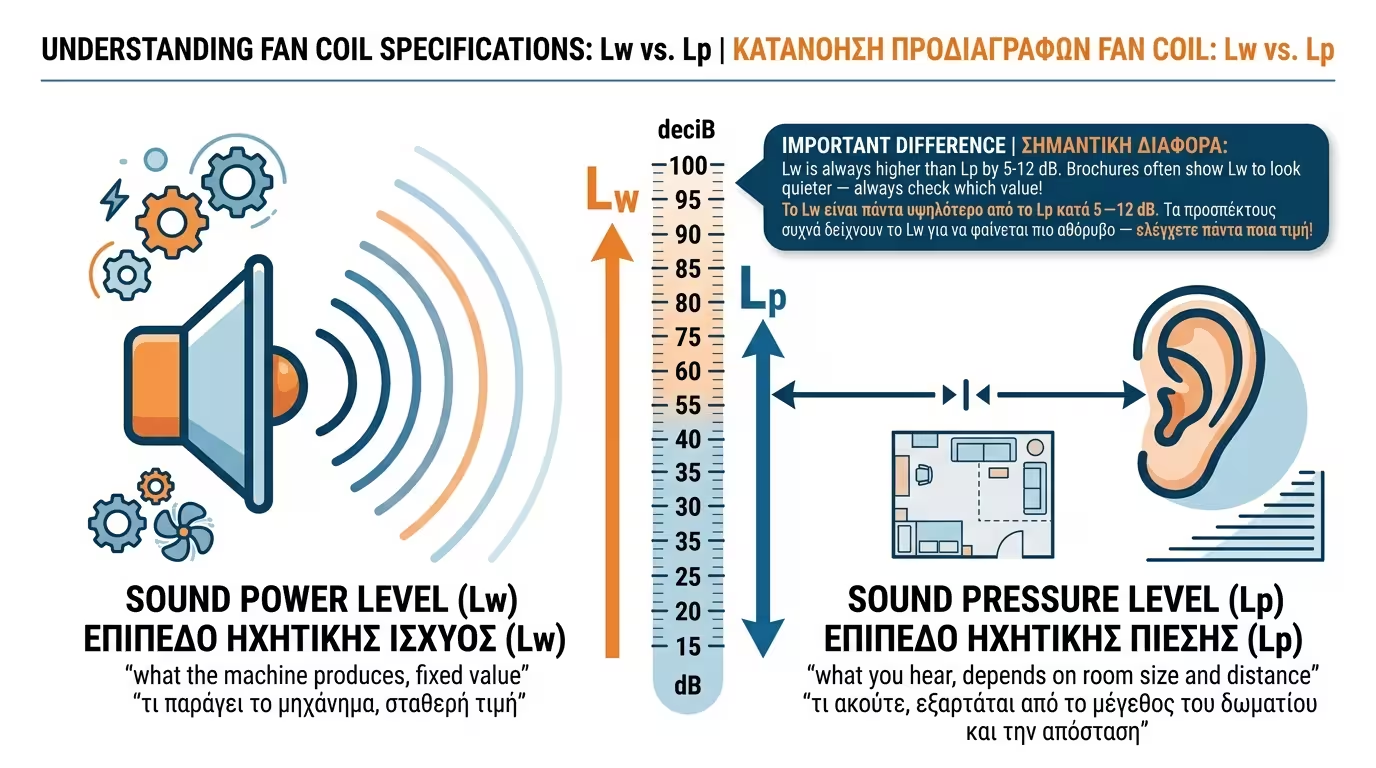
The true, absolute noise generated by the machine itself. It does not change whether you place it in an empty room or a furnished one. It is the "raw" truth of the motor - the measurable energy it emits.
What reaches your ear. It depends on distance, carpets, curtains and furniture (which absorb sound). In an empty room with echo, it sounds louder than in a furnished one.
Many manufacturers print Sound Pressure on the cover (e.g. "Only 21 dB!") measured at 2-3 metres away. In a small bedroom (1 m distance), you will hear +8 to +10 dB more - that is 30 dB!
Always ask the engineer to show you the Sound Power (Lw). It is the only figure that cannot be manipulated by "distance tricks". Compare machines only using this metric.
A traditional Fan Coil has 3 fan speeds: High, Medium and Low. Brochures often show performance at Medium or High speed, to make the unit look powerful.
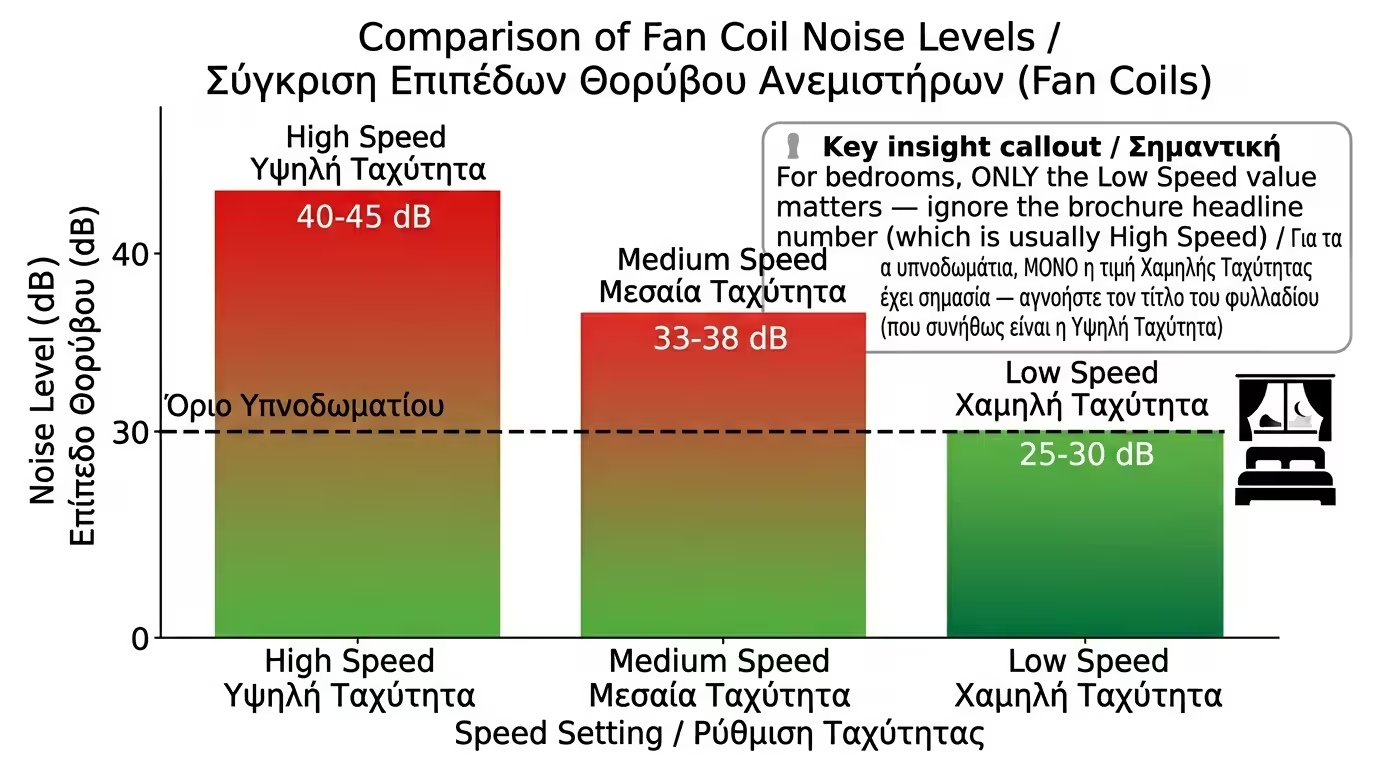
In a bedroom, you will never tolerate Medium or High speed. The air whistles. For 90% of its life in the bedroom, the Fan Coil will be forced to run on Low Speed for peace and quiet.
Check the dB figures only in the "Low Speed" column. Ensure the unit still delivers enough Watts at Low Speed to heat or cool your room adequately.
Many buyers choose an undersized unit that cannot produce enough heat at Low Speed. They are forced to run it on High → noise → cannot sleep. The solution: oversize slightly.
Select a Fan Coil with 20-30% more capacity than you need. This way, at "Low Speed" it will fully cover your demand without ever needing to step up.
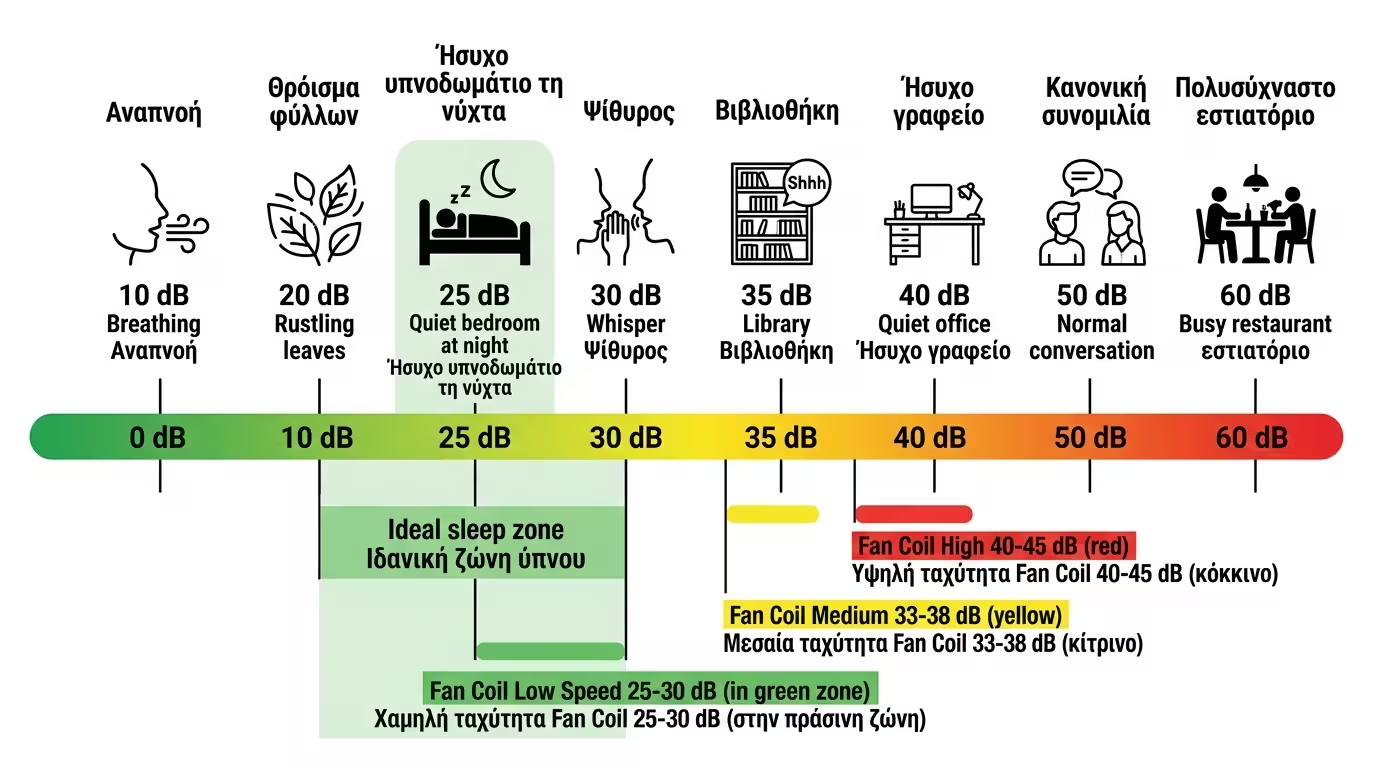
For a frame of reference, here is the noise scale in relation to sleep (Sound Pressure, measured at 1 metre distance):
Rustling leaves. Excellent for sleep. You barely notice it is running. Achieved by top EC motors at minimum speed.
A whisper or a very quiet library. Perfectly acceptable for most bedrooms. This is what most Fan Coils achieve at Low Speed.
Your kitchen refrigerator. Fine for living rooms (with the TV on), but prohibitive for light sleepers. Corresponds to a Fan Coil at Medium speed.
Normal conversation level. Irritating in any space. A Fan Coil at High Speed or an old model with worn bearings. Avoid units approaching these figures.
If you want to forget about noise once and for all, demand a Fan Coil with an EC (Electronically Commutated) Inverter Motor. This technology has completely changed the game.
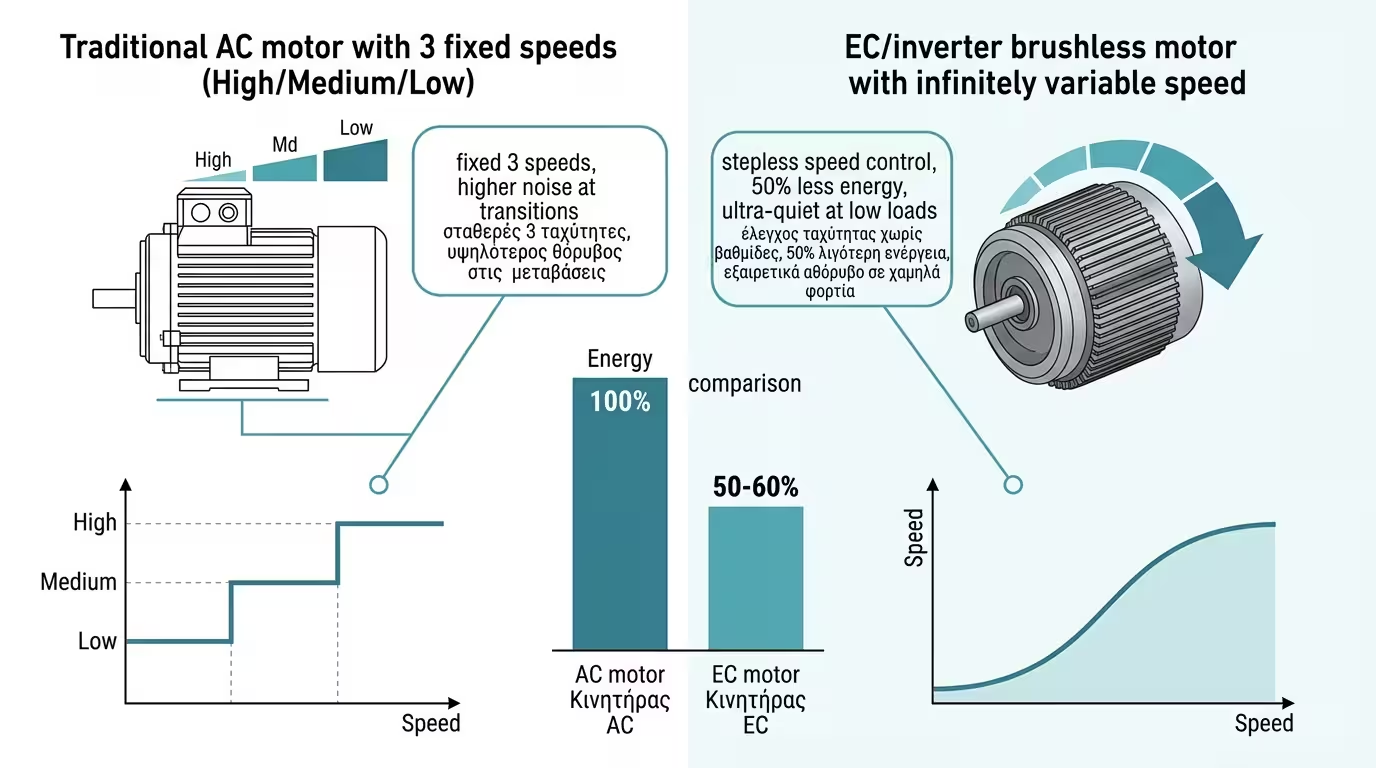
Had 3 fixed "steps" (like an old pedestal fan). If the room needed just a little cooling, the unit would cycle on/off with noticeable noise at each step change.
No fixed steps. It modulates speed continuously and silently (from 1% to 100%), depending on what the thermostat demands. When the room reaches temperature, it turns so slowly that nothing is audible.
The EC motor consumes 50-70% less electricity than its AC equivalent. In 24/7 operation (e.g. a hotel), the savings pay back the cost difference in under 2 years.
In brochures, look for the terms: EC motor, Brushless DC (BLDC), Inverter fan. If it only says "3-speed" or "AC motor", it is old technology. The cost premium is 15-25% but worth every cent.
🤫 Do not trust the big print! Ask for Sound Power (Lw), check only the Low Speed column, and choose an EC Inverter motor. These 3 rules guarantee peaceful sleep.
Return to category.
Go to categoryReturn to the central guide.
Go to guide