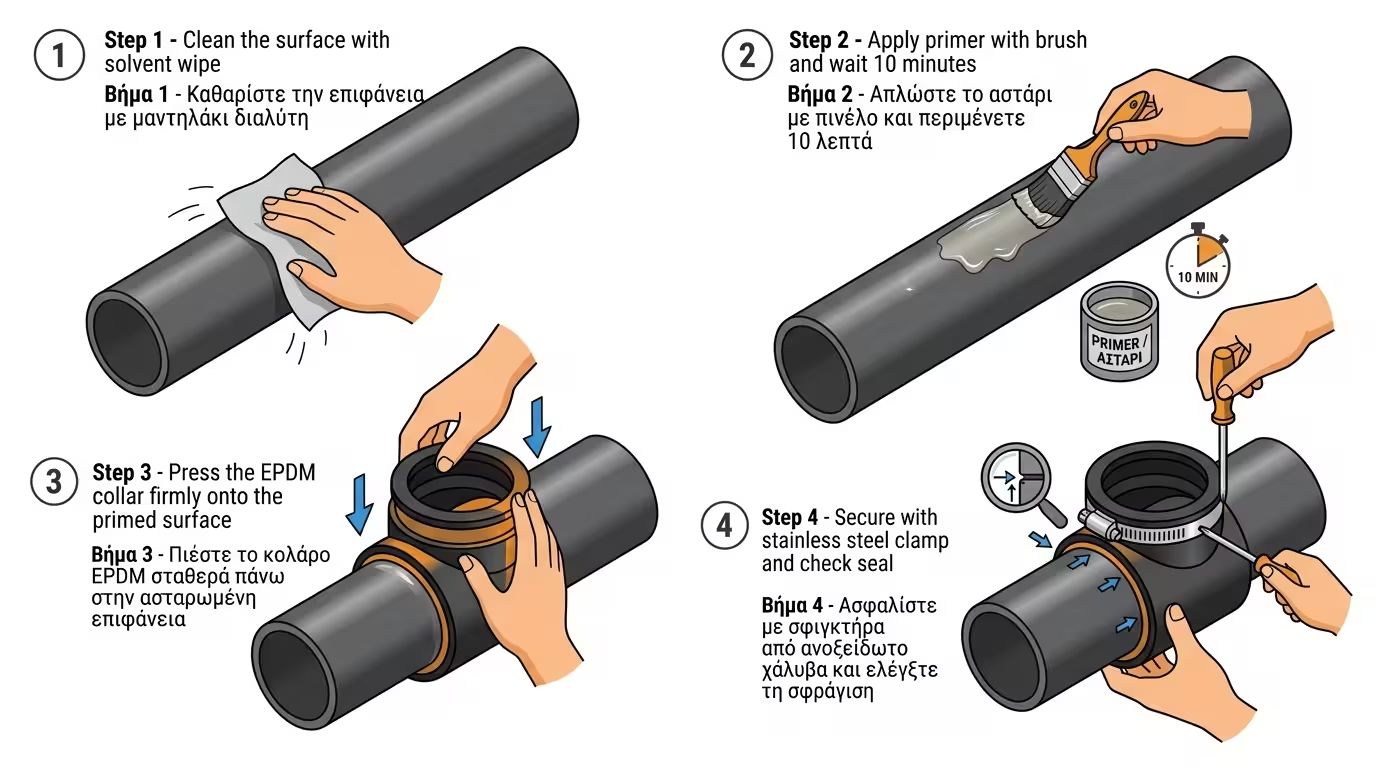
🧪 What is EPDM?
EPDM (Ethylene-Propylene-Diene Monomer) is a synthetic rubber with outstanding resistance to ageing, ultraviolet radiation and extreme temperatures. It is widely used in roofing, automotive gaskets and plumbing installations.
The golden rule of airtightness says that every seal must withstand building and material movement. As we know, hot and cold water pipes expand and contract. If the sealing material around them is rigid (such as cement or cured polyurethane foam), the pipe movement will crack it open.
To solve this problem, engineers turned to specialised, ultra-elastic materials that embrace the pipe and move with it. Let us examine the two essential weapons in the modern installer's arsenal.
If you have one or two individual pipes exiting through the exterior wall (e.g. refrigerant copper lines for the air conditioner or a drainage pipe), the ultimate solution is EPDM grommets.
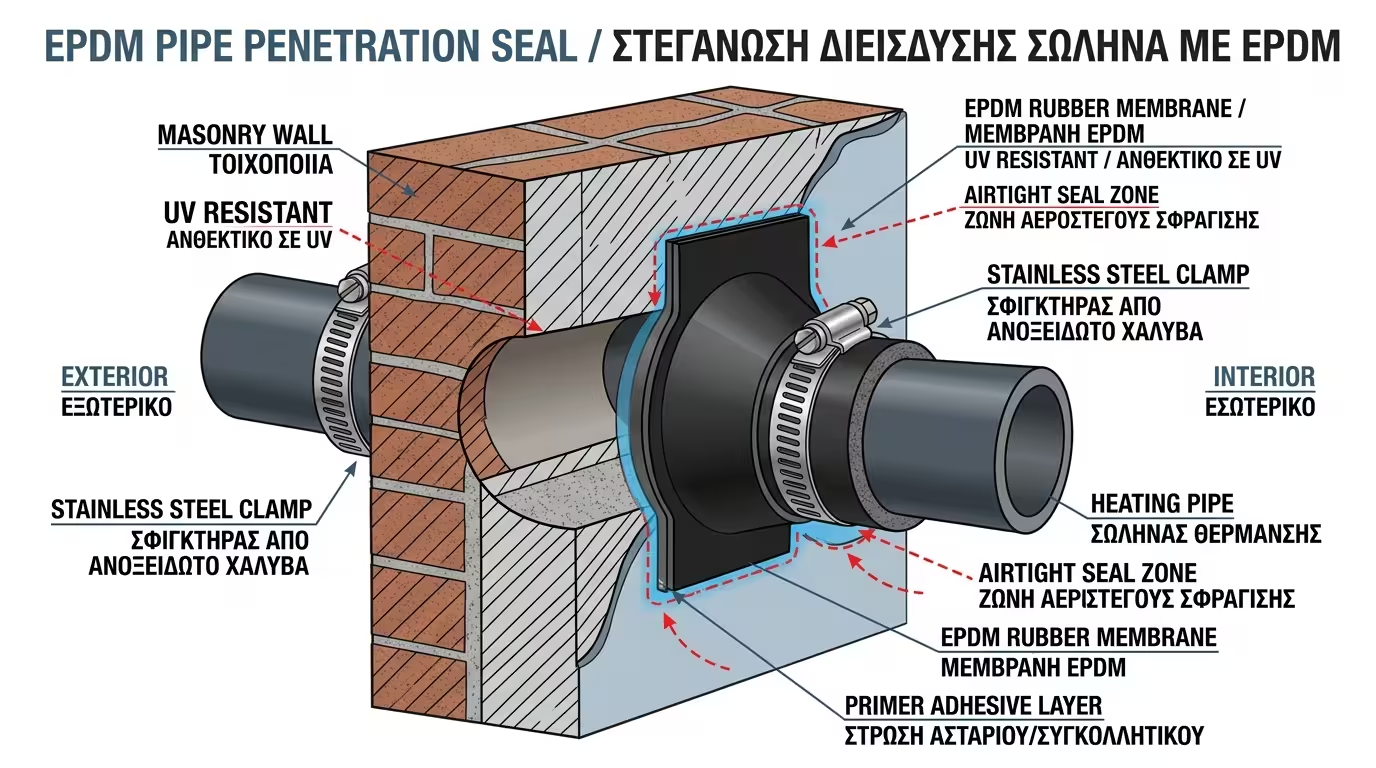
EPDM (Ethylene-Propylene-Diene Monomer) is a synthetic rubber with outstanding resistance to ageing, ultraviolet radiation and extreme temperatures. It is widely used in roofing, automotive gaskets and plumbing installations.
It is a square (or round) self-adhesive patch with a protruding elastic funnel or nipple in the centre. The installer cuts the nipple to the required diameter and pushes the pipe through it in a tight press-fit.
The installer trims the funnel to the exact pipe diameter and pushes the pipe through it (press-fit). The rubber "chokes" the pipe. The flat base of the collar is then bonded to the wall or the building's airtight membrane.
No matter how much the pipe lengthens, shortens or vibrates, the EPDM funnel stretches like an accordion. It never peels off and blocks every cubic centimetre of air from entering the house. Its service life exceeds 50 years.
What happens when you have a cluster of 5-6 small pipes all exiting through a single narrow hole? Individual EPDM collars simply won't fit. The answer lies in specialised acrylic airtightness tapes.
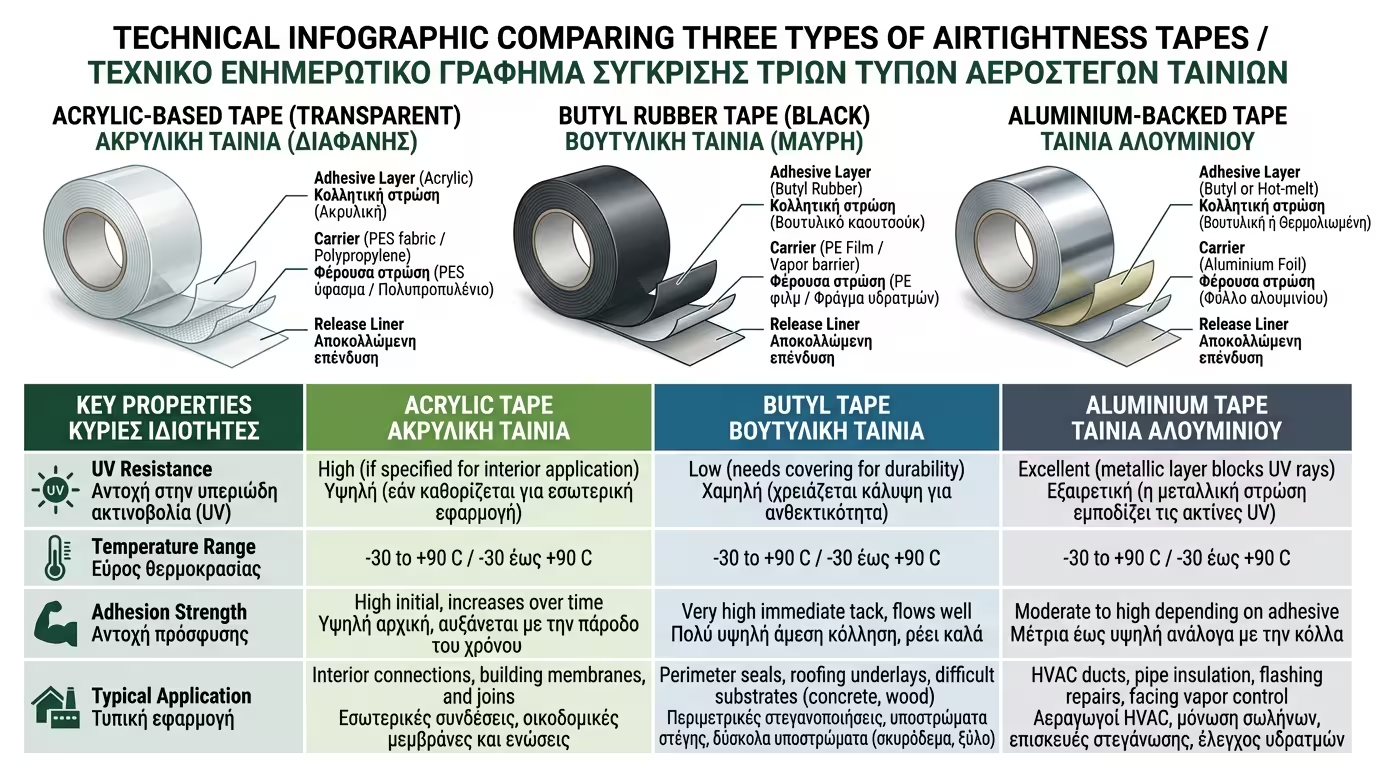
We are not talking about electrical insulating tape or common masking tape. These are engineered tapes (often green or blue) that conceal enormous technology in their adhesive and carrier layers.
Their acrylic adhesive never dries out. Over time it bonds more strongly to the surface, guaranteeing a service life exceeding 50 years. This is a permanent seal that never needs replacement.
A special carrier allows them to stretch and conform to corners and curves without tearing. This is essential because pipes rarely pass through walls in a perfectly straight line.
The installer carefully "dresses" each pipe individually, bonding half the tape to the pipe and the other half to the wall, creating an impenetrable mesh that seals every gap around the pipe cluster.
Even the best materials fail when installed incorrectly. Supervising engineers must enforce three critical rules when applying airtight collars and tapes.
Adhesive does not bond to construction-site dust. Before applying EPDM or tape, the wall and pipe surfaces must be thoroughly cleaned with a cloth or brush. A quick inspection before sealing prevents future failures.
If the wall is made of porous material (e.g. bare concrete, brick or autoclaved aerated concrete), the tape will not bond properly. A specialist liquid primer must be applied first to stabilise and seal the porous surface before bonding.
When applying the tape, do not stretch it tight. Leave a small amount of slack so that when the pipe moves due to thermal expansion, the tape has room to follow the movement without detaching.
Purchasing EPDM collars and airtight tapes for an average house costs perhaps €100 to €200. That is a trivial amount considering it protects a multi-thousand-euro investment -your thermal insulation and heat pump- from uncontrolled air leakage.
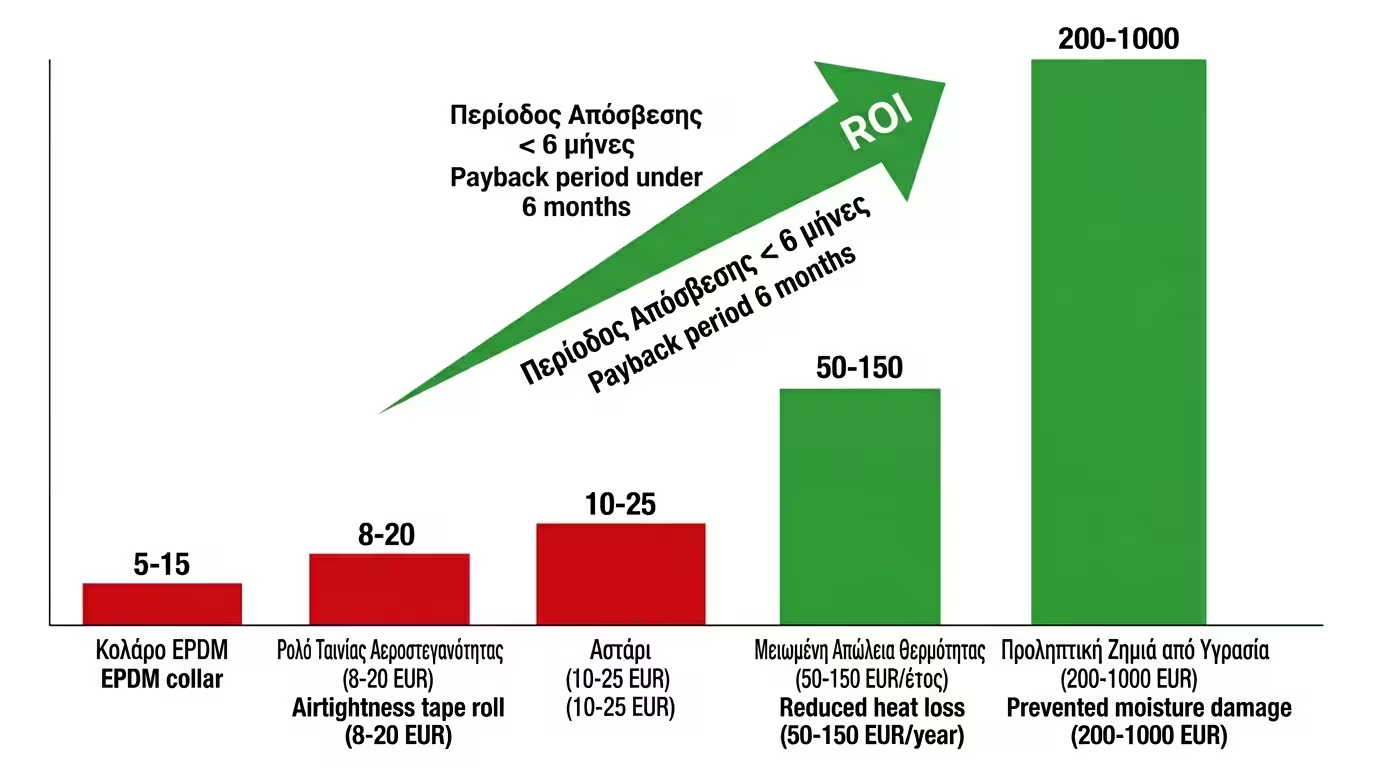
Airtightness materials (collars + tapes + primer) for an average single-family house cost €100-200. Compared with the cost of a heat pump (€5,000-10,000) or external insulation (€8,000-15,000), the outlay is negligible.
Without airtightness, freezing air enters freely through pipe penetrations, cancelling a large portion of your insulation investment. Energy savings can drop by 20-30% due to uncontrolled air leakage alone.
If you are targeting Passive House certification or a high energy rating (n50 ≤ 0.6), using EPDM collars and airtight tapes on every pipe penetration is absolutely mandatory and non-negotiable.
💡 We have sealed the pipe externally. But what if the air decides not to pass through the wall, but instead travels inside the pipe itself, reaching the very heart of your home?
Return to category.
Go to categoryReturn to the central guide.
Go to guide