🔴 The red spiral
Used for hot water pipes (heating). Its corrugated structure makes it extremely resistant to compression from the weight of concrete, while allowing the inner pipe to move freely.
To understand this invisible enemy of airtightness, we need to recall the basic installation rule for plastic pipes (PEX or multilayer), which we discussed in previous articles.
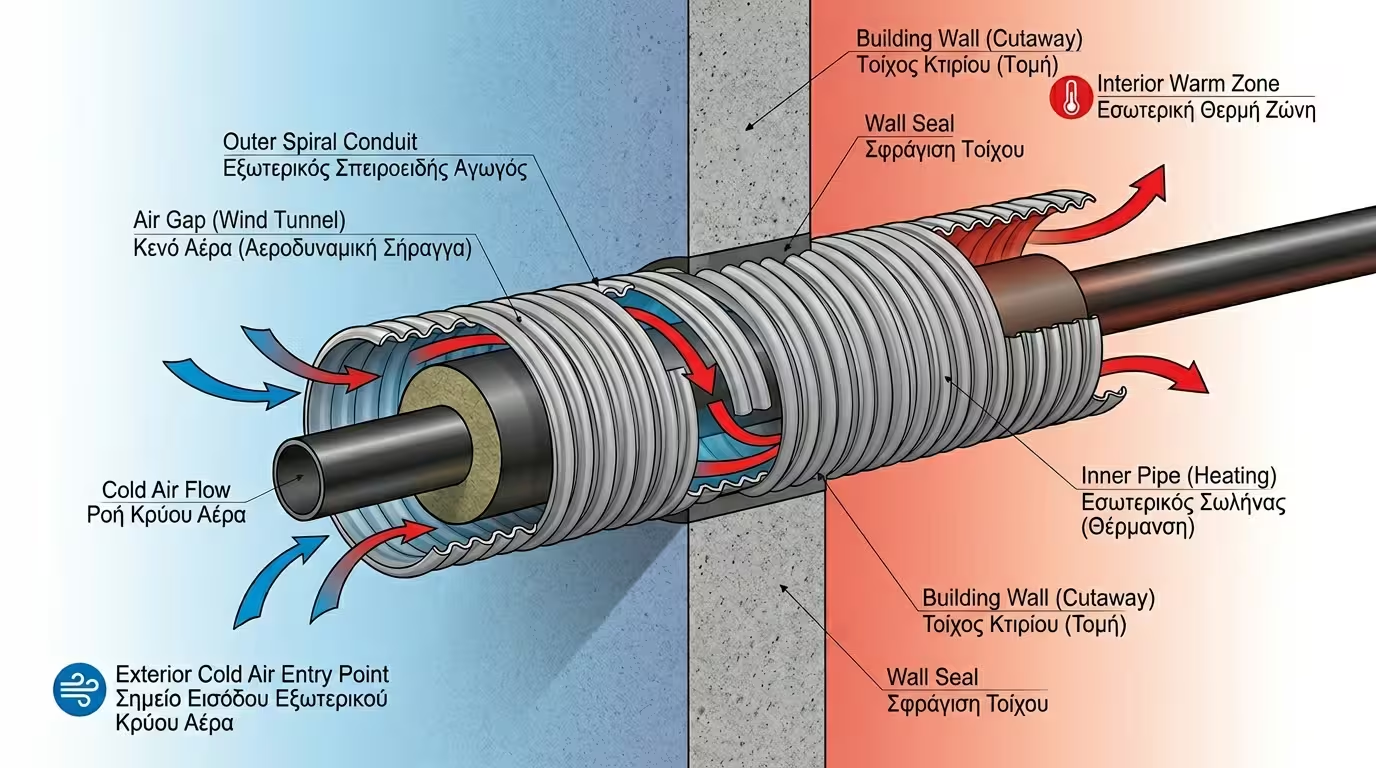
These pipes are never buried "naked" in concrete. They always pass through a protective corrugated sleeve (the familiar red or blue "spiral"). This means we create a pipe inside another pipe. Between the PEX and the spiral, an air gap exists. This gap is essential for thermal expansion, but from an energy standpoint it is a "subway tunnel" for air!
As discussed in the thermal expansion article, PEX pipe is always placed inside a corrugated protective sleeve (spiral). This configuration creates a small but critical air gap between the two, necessary for thermal expansion.
Used for hot water pipes (heating). Its corrugated structure makes it extremely resistant to compression from the weight of concrete, while allowing the inner pipe to move freely.
Used for cold water pipes (cooling or domestic water). The colour coding helps the technician identify pipe runs even after the floor has been closed.
The inner PEX pipe (16-20mm) sits inside the spiral (25-32mm). The diameter difference leaves an air gap of 5 to 8 millimetres on each side. Enough for thermal expansion - but also enough for air to travel.
This gap does not stop at the room. It continues uninterrupted from the balcony (where the heat pump sits) under the entire floor, all the way to the manifold inside the house. A tunnel many metres long, open at both ends.
Consider a typical scenario: your heat pump or solar water heater sits on the balcony or roof. The pipes (with their spirals) start from the outdoor unit, penetrate the exterior wall and travel beneath your floor tiles.
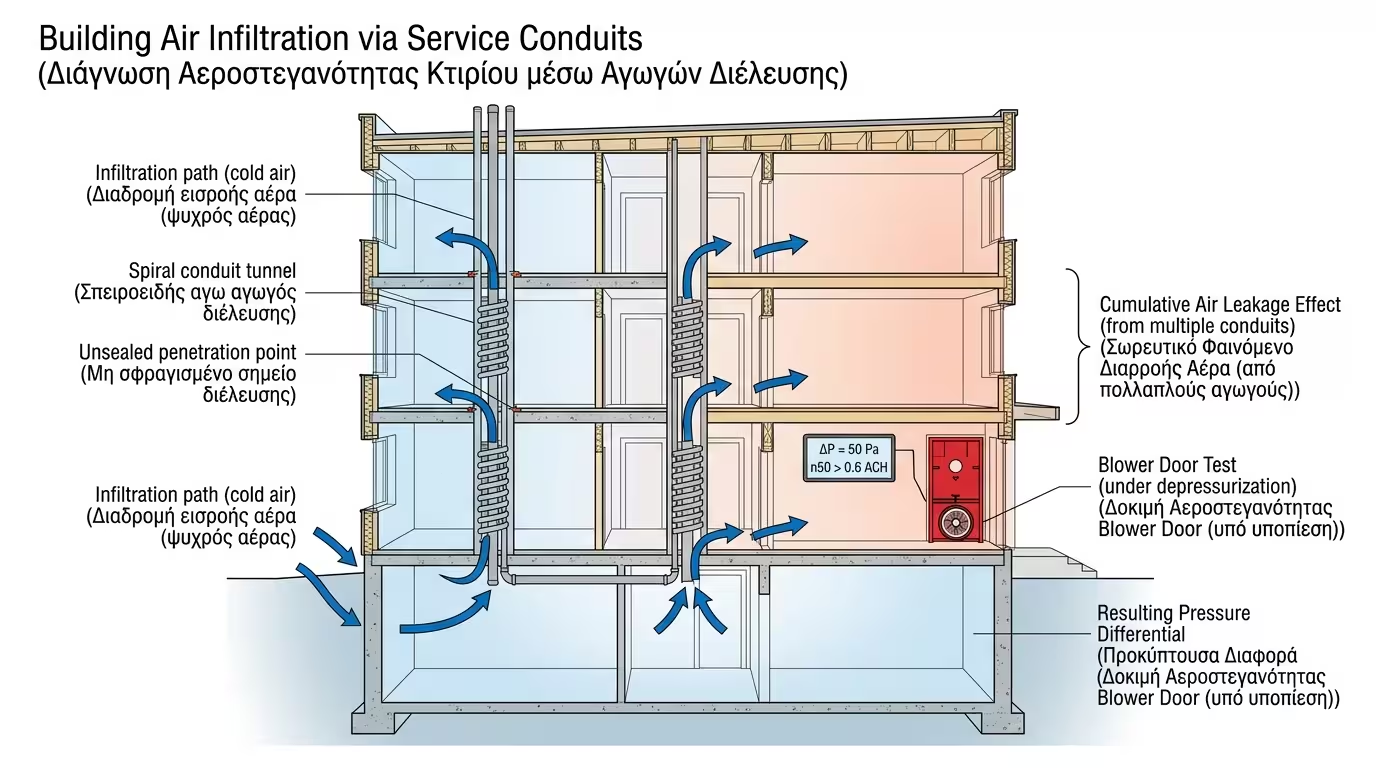
You (very correctly) fit an EPDM collar around the outer spiral and seal the wall penetration perfectly. The airtightness membrane is continuous. From the wall's perspective, the job is flawless.
The air does not try to pass through the sealed wall. It simply finds the outer end of the spiral (where it connects to the heat pump on the balcony), slips into the gap between the spiral and the water pipe, and travels undisturbed.
The air travels beneath your floor, bypassing all the building's insulation, and emerges proudly inside the manifold cabinet! This phenomenon has ruined many Blower Door Tests in high-energy-class buildings.
This phenomenon was named "Blower Door Killer" by passive-house engineers, because it can invalidate a perfectly insulated building due to a gap just a few millimetres wide.
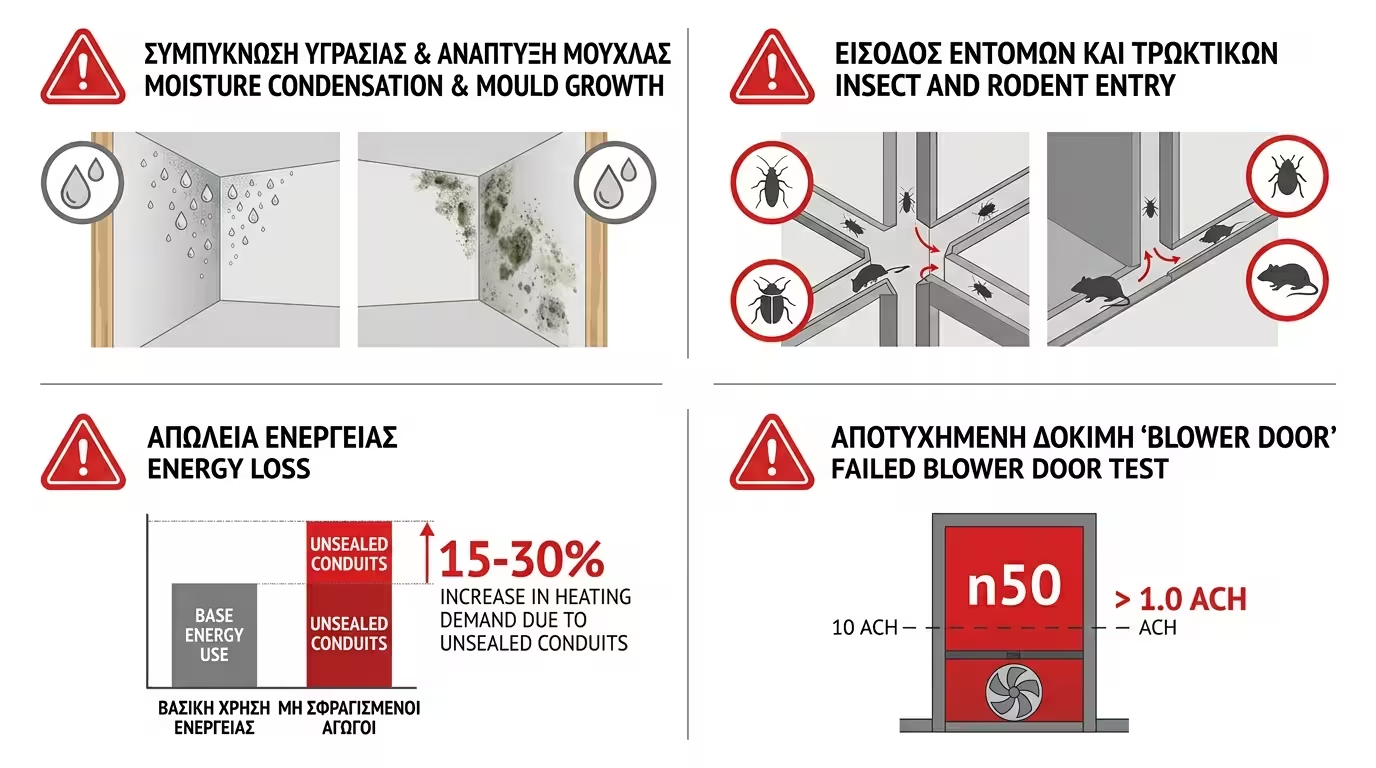
If you think the problem is simply "losing a few points on the test", you are mistaken. This tunnel brings far worse things into the heart of your home.
Freezing air in winter enters directly into the heart of the installation. The heat pump works overtime, consumption skyrockets and the homeowner sees inexplicably high electricity bills.
Humid outdoor air enters the warm house and condenses. You suddenly see water running inside the manifold cabinet with no leak in the fittings! This torments homeowners who believe they have a plumbing problem.
Ants and small crawling insects find the perfect protected "highway" from the garden straight into your living room. The pipe protects them from sun, rain and predators.
The solution is extremely simple and inexpensive, provided the plumber has the know-how to apply it BEFORE closing the cabinets and connections. We must seal the air "ring" (the gap) at the ends of the spiral.
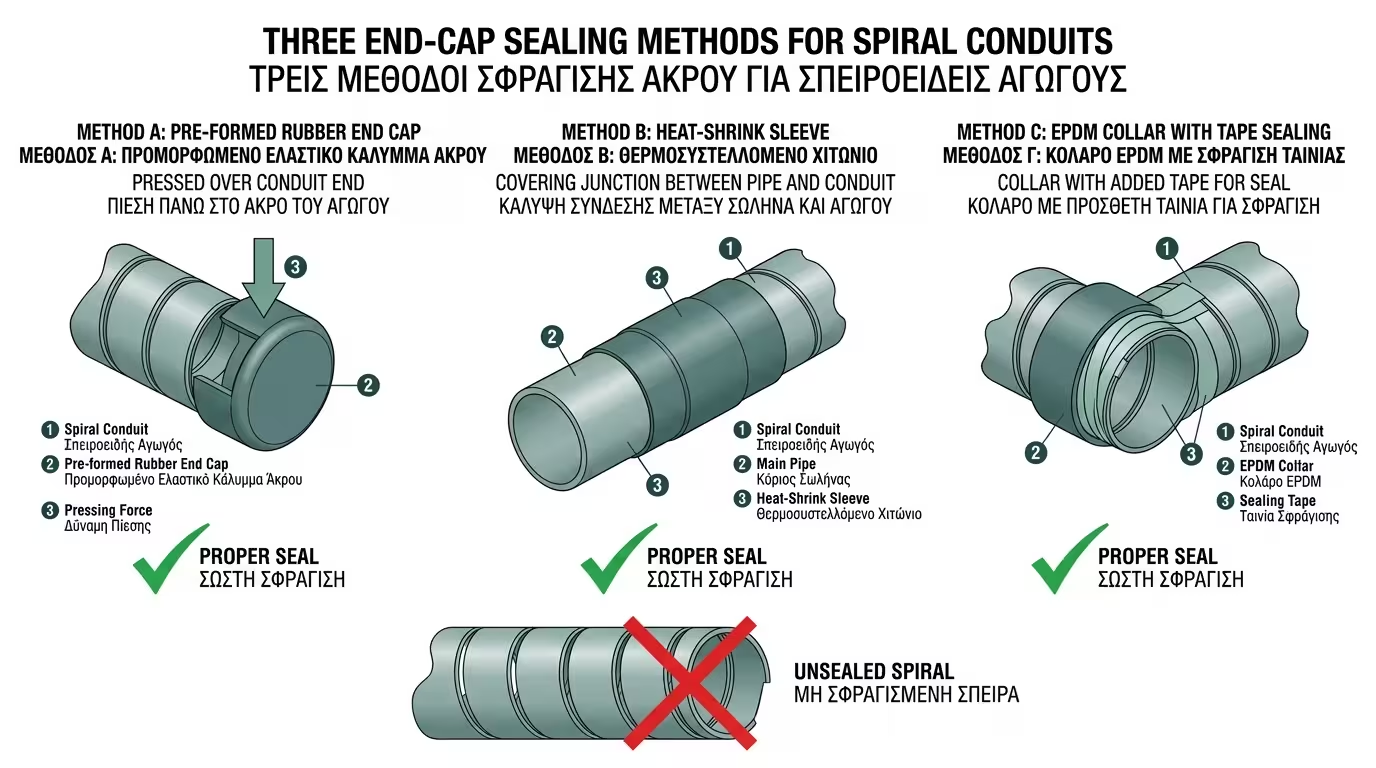
Reputable pipe manufacturers supply special elastic washers (silicone or EPDM rings). These press-fit onto the end of the spiral and tightly embrace the inner pipe, choking the gap.
If ready-made end-caps are not available for the specific diameter, the installer can use a specialised airtight elastomeric sealant (as a mastic or liquid membrane - not bathroom silicone) to fill the gap at the spiral's lip.
At visible points, the specialised stretch airtight tape (discussed in the previous article) can be used to "bind" the spiral's rim to the inner pipe.
Sealing should ideally be done at both ends of the run - outside at the machine and inside at the manifold. Sealing only one end reduces but does not fully eliminate the air leak.
💡 The details make the difference between an average and a top-tier energy building. Leaving spiral sleeves wide open at their ends is like leaving your front door half-open 24 hours a day. Insist on "end-caps" and spare yourself the cold draughts and mysterious moisture.
Return to category.
Go to categoryReturn to the central guide.
Go to guide