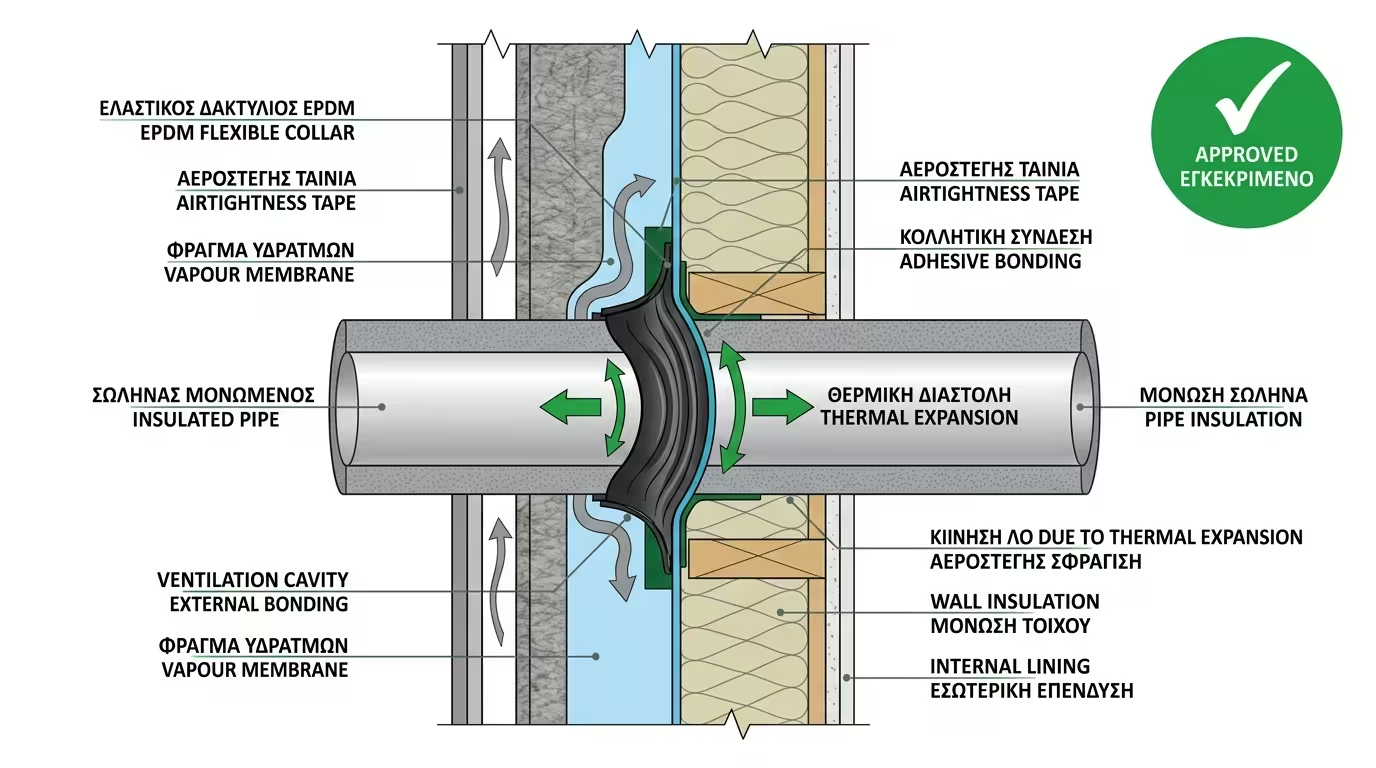
🔴 Heat Pump Copper Lines
The refrigerant lines connecting the outdoor unit to the indoor unit or hydrobox must penetrate the exterior wall.
In modern construction, especially in near-zero energy buildings (nZEB) or Passive Houses, thermal insulation alone is not enough. The building must be completely airtight. No cold air may seep through gaps in winter, nor may the air-conditioned cool air escape in summer.
To certify that a house is truly airtight, engineers subject the structure to the ultimate test: The Blower Door Test.
And this is where every builder's nightmare begins. The house may have the market's finest windows, yet the test fails catastrophically. The culprit? The dozens of holes drilled by plumbers and HVAC technicians to pass their pipes.
Imagine your home's envelope (exterior walls and roof) as a waterproof jacket. For the house to function, a series of networks must pass through this "jacket".
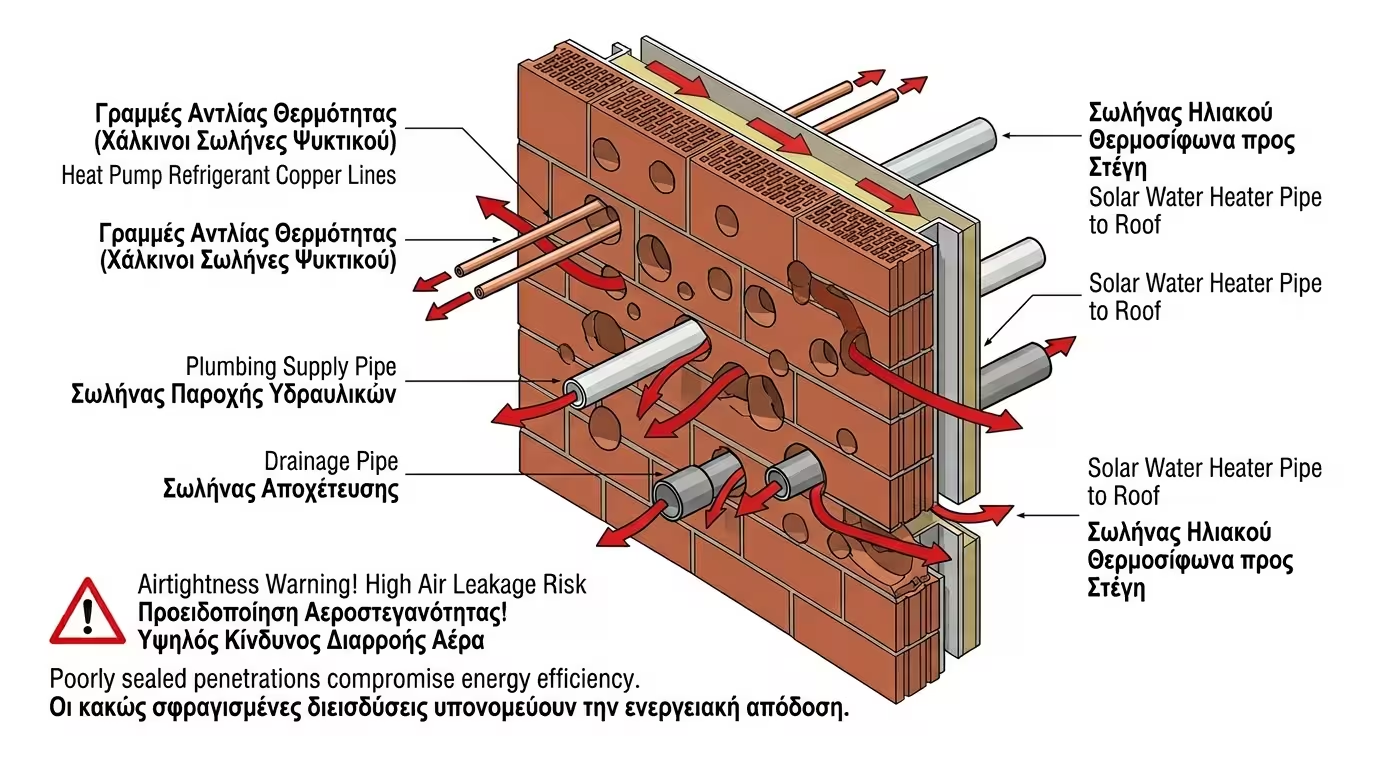
The refrigerant lines connecting the outdoor unit to the indoor unit or hydrobox must penetrate the exterior wall.
The balcony's outdoor tap, drainage and ventilation pipes, solar water heater lines to the rooftop - every single one of these "tears" the waterproof jacket each time.
Every time a tradesperson drills through the exterior wall with a core drill, the "waterproof jacket" is torn. If these holes are not sealed with surgical precision, energy performance nosedives.
The traditional method crews use in Greece to close the hole around a pipe is polyurethane foam (the well-known yellow spray) or simple cement.
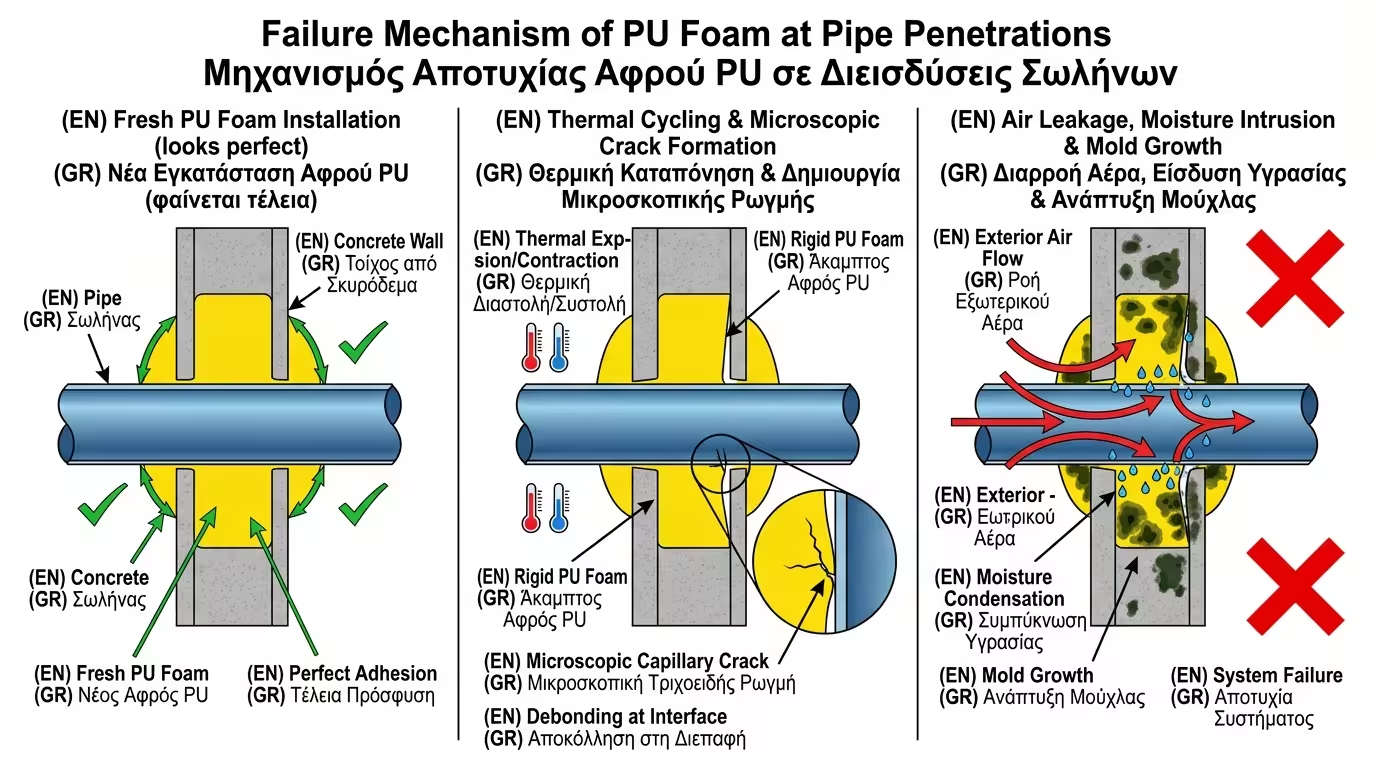
As we discussed in previous articles, pipes carrying hot or cold water expand and contract (lengthen and shorten) continuously. Polyurethane foam, once cured, becomes hard and rigid.
As the pipe moves (or vibrates slightly from the pump), it "detaches" from the hard foam. An invisible, capillary crack forms all around the pipe.
Through this microscopic crack, air begins to flow freely in and out, dragging moisture along which can condense inside the wall, causing mould.
For a house to pass the Blower Door Test with flying colours, the sealing philosophy must change radically. We are not looking for a material that simply "fills" the hole.
The material must be completely flexible, so it follows the pipe's expansion, contraction and vibrations without tearing, for decades.
It must bond airtight both to the pipe (or its insulation) and to the wall or the building's vapour membrane.
It must withstand time, moisture and temperature fluctuations without losing its properties.
The Blower Door Test (airtightness test) is a standardised measurement where a special fan is placed in an exterior doorway and creates a controlled pressure difference (usually 50 Pascal) between the interior and exterior.
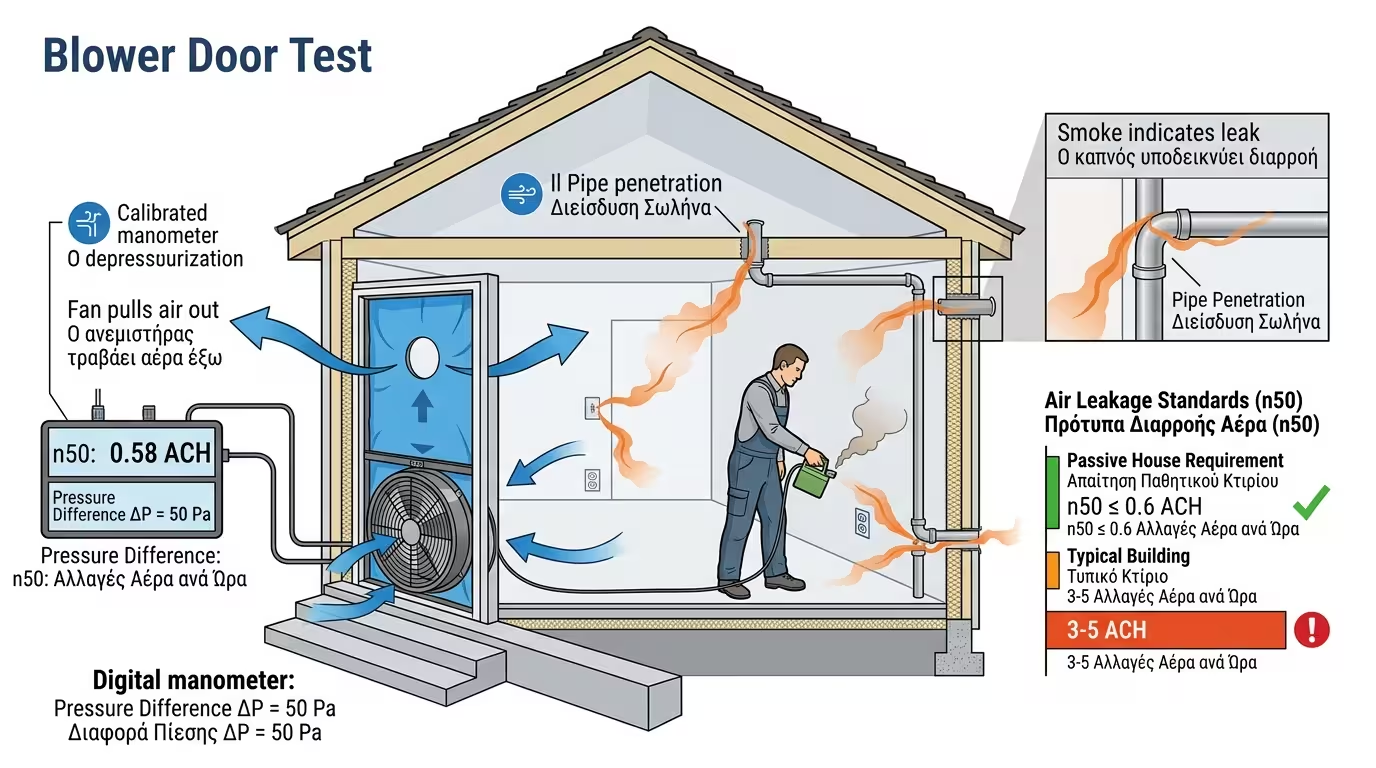
It measures how much air "leaks" into the building per hour relative to its total volume (the n50 value). The lower the value, the more airtight the house. Passive Houses require n50 ≤ 0.6 ACH.
During the test, the technician passes their hand (or uses smoke generators) around every pipe penetration, every window and every crack. Every whistle of air is a failure that must be corrected.
The Blower Door Test does not forgive sloppiness. Every pipe penetration through the exterior envelope must be treated as a potential threat to the home's energy performance. Using simple foam or filler belongs to the past.
What are the "magic" elastic materials that certified installers use to achieve the perfect seal? In the next article: Airtight Collars (EPDM) and Sealing Tapes - the expert installer's secret to ensuring the heat pump installation does not leak air.
Return to category.
Go to categoryReturn to the central guide.
Go to guide