🔇 How it works
Sound (air vibration) hits the porous walls (mineral wool) and converts acoustic energy into heat. The air exits unchanged - the noise stays behind. Typical attenuation: 15-30 dB depending on length and design.
Ducted air-conditioning solves the temperature problem - but creates a new one: noise. The unit's fan, vibrating duct walls, air whistling through bends: all these travel through the ductwork into every room of the building.
The solution isn't to "turn the volume down". The solution involves three specialised techniques: sound attenuators (silencers), internal acoustic lining of ducts, and anti-vibration connectors between unit and ductwork.
A sound attenuator looks like a section of duct - but inside it hides panels of sound-absorbing material (usually mineral wool clad with perforated sheet metal). Air passes between the panels, and noise gets "soaked up" by the acoustic walls.
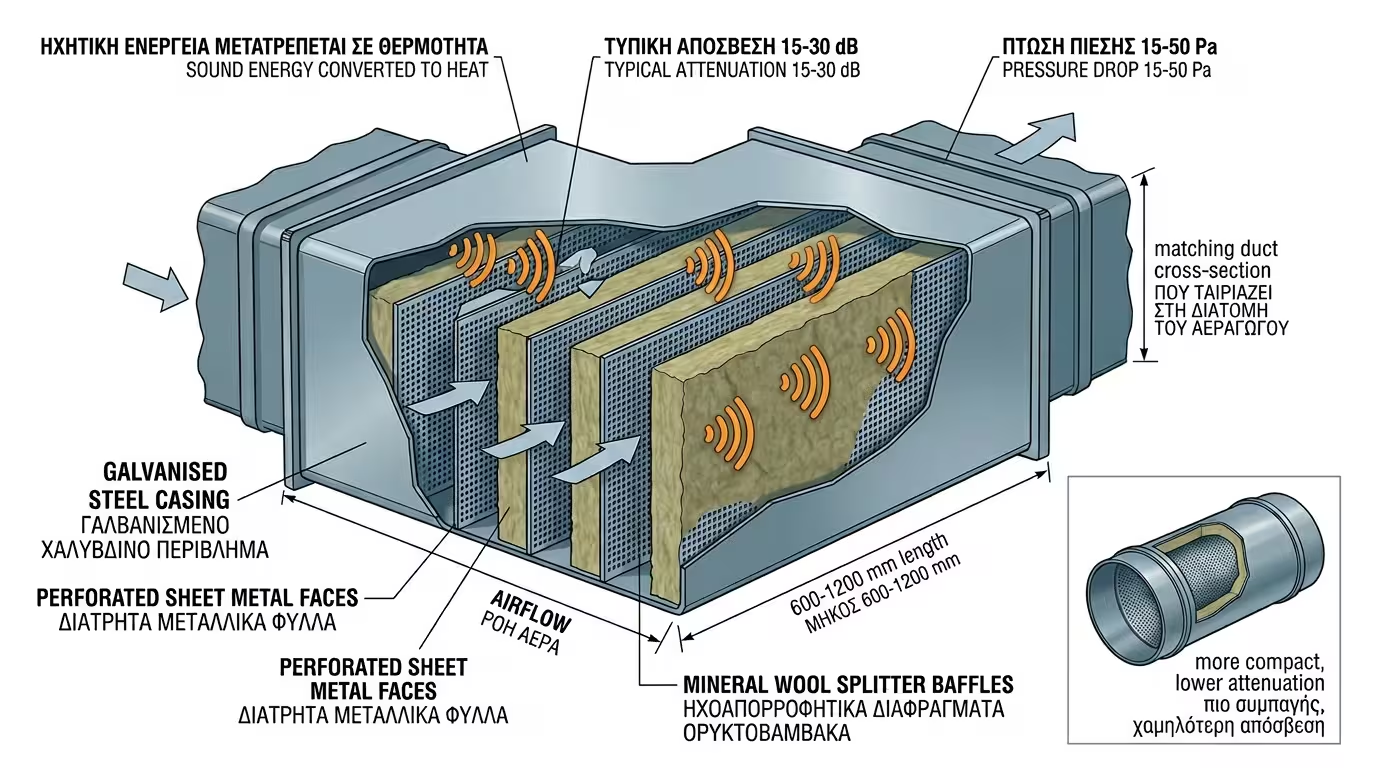
Sound (air vibration) hits the porous walls (mineral wool) and converts acoustic energy into heat. The air exits unchanged - the noise stays behind. Typical attenuation: 15-30 dB depending on length and design.
Immediately after the discharge (outlet) of the unit, where noise is at its peak. In some installations a second attenuator on the return side is added if the return duct path passes close to bedrooms.
Sound attenuators consume space (60-120 cm in length) and create pressure drop (15-50 Pa). The designer must account for this in the available fan static pressure budget - otherwise airflow in the duct network will be choked.
Splitter attenuators (with internal baffles) are used in rectangular ducts for large commercial projects. Cylindrical units fit into round ducts in residential systems - more compact but with somewhat lower attenuation performance.
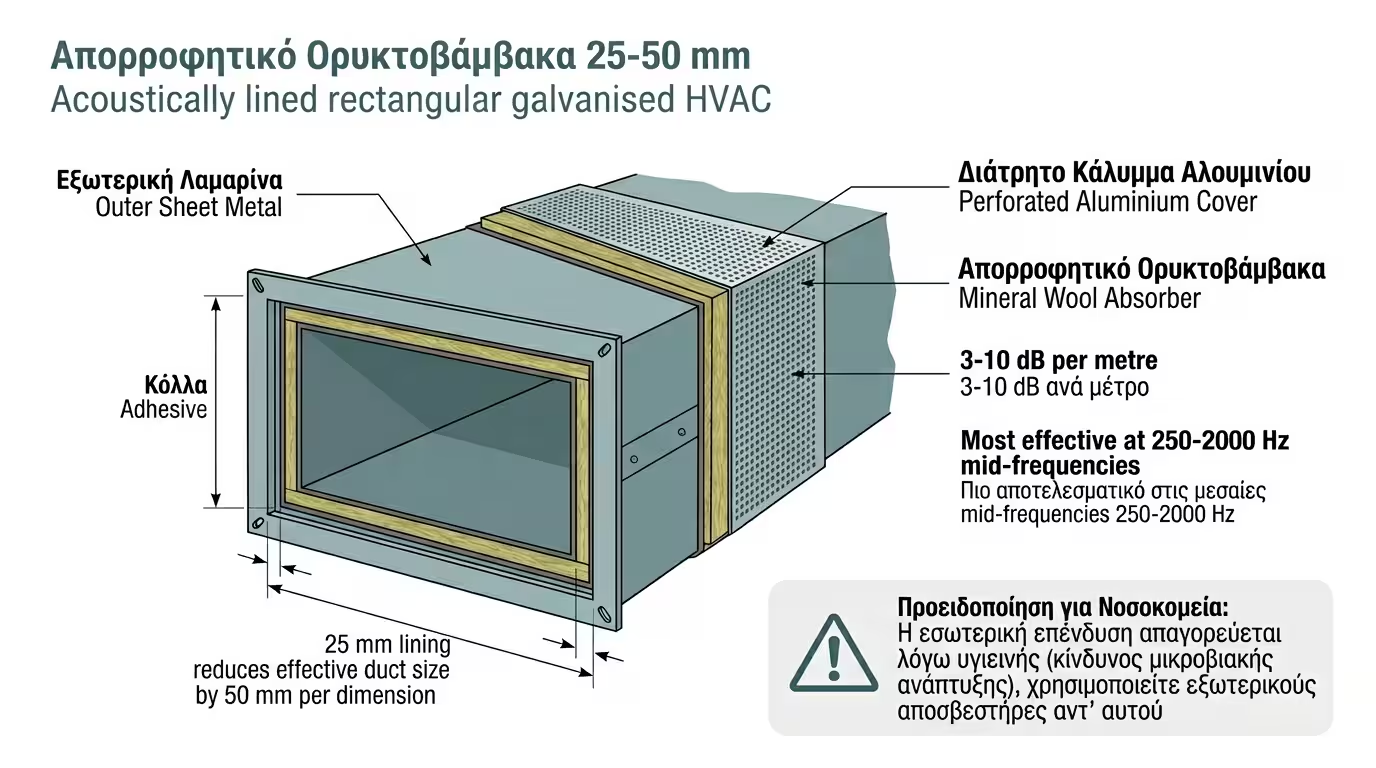
In certain installations, instead of fitting a separate attenuator, we line the interior of the duct with sound-absorbing material (a thin layer of mineral wool or special foam). This is known as Acoustic Lining.
The absorptive material (25-50 mm thick) is glued or mechanically pinned to the inner duct walls. It is covered with a perforated aluminium sheet to prevent fibres from being stripped by the airflow.
Acoustic lining reduces noise by 3-10 dB per metre of duct - particularly effective at mid-frequencies (250-2000 Hz), which are the most irritating in residential environments.
Internal lining eats into the duct - 25 mm on each side means losing 50 mm from each dimension. The designer must upsize the duct accordingly so that air velocity stays within acceptable limits.
In hospitals and food-processing plants, internal lining is forbidden (risk of microbial growth). In those cases we use external attenuators only, with smooth internal stainless-steel duct surfaces.
The unit's fan vibrates with every rotation. If the metal duct is bolted directly to the unit, those vibrations "travel" through the entire network - heard in every room as a low-frequency persistent "hum".
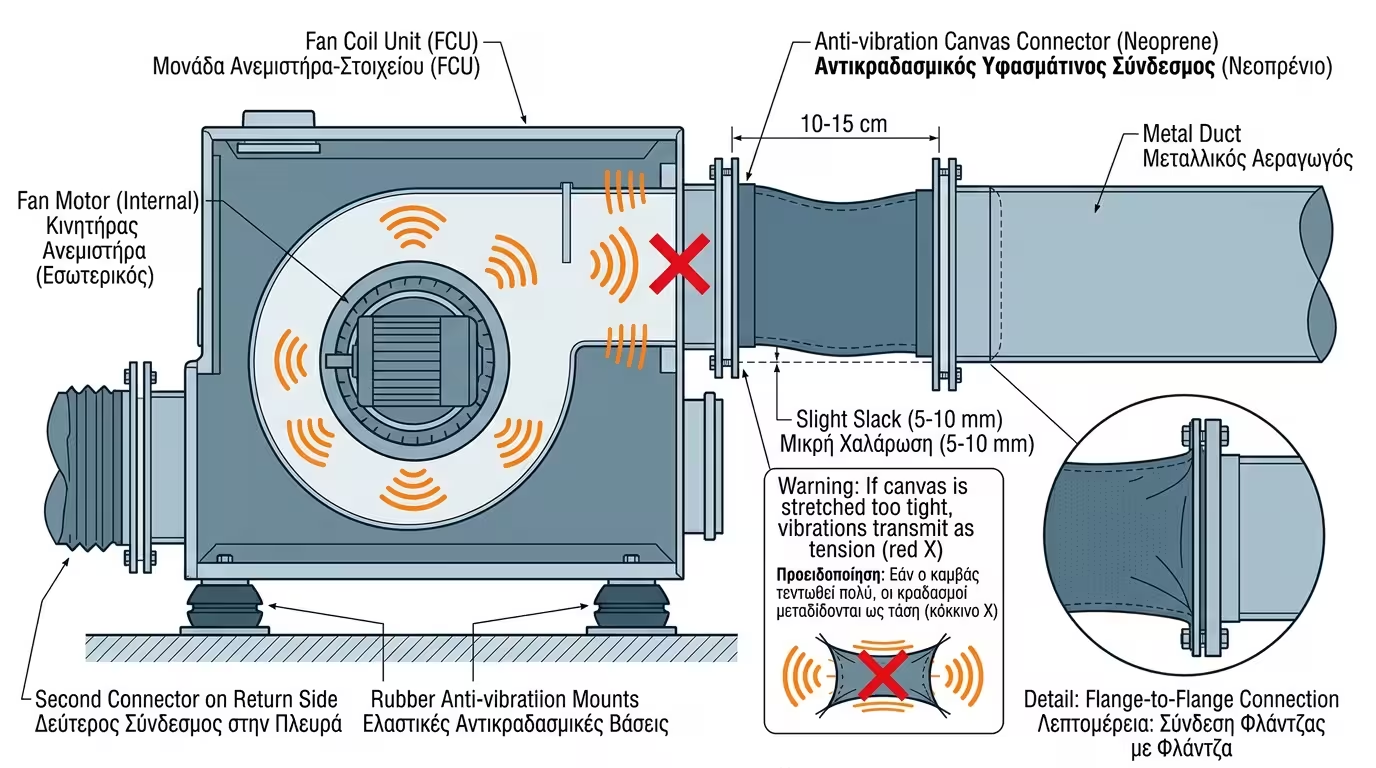
A soft piece of canvas (fabric or neoprene), 10-15 cm wide, inserted between the unit's flange and the duct's flange. It acts like a "seismic joint" - breaking the rigid mechanical connection.
We install an anti-vibration connector on both the supply and the return sides of the unit. Vibration can travel from either direction - it must be "cut" in both paths.
The canvas must have a slight slack. If stretched tight, it transmits vibrations as tension rather than absorbing them. Ideally leave 5-10 mm of slack after connection.
Beyond the canvas connector, the unit itself should sit on rubber mounts or an independent anti-vibration plinth. Otherwise vibration travels through the floor or masonry, bypassing the connector entirely.
Each type of space has different noise limits. The design engineer must select the right sound-control components so that noise at diffusers doesn't exceed the acceptable levels.
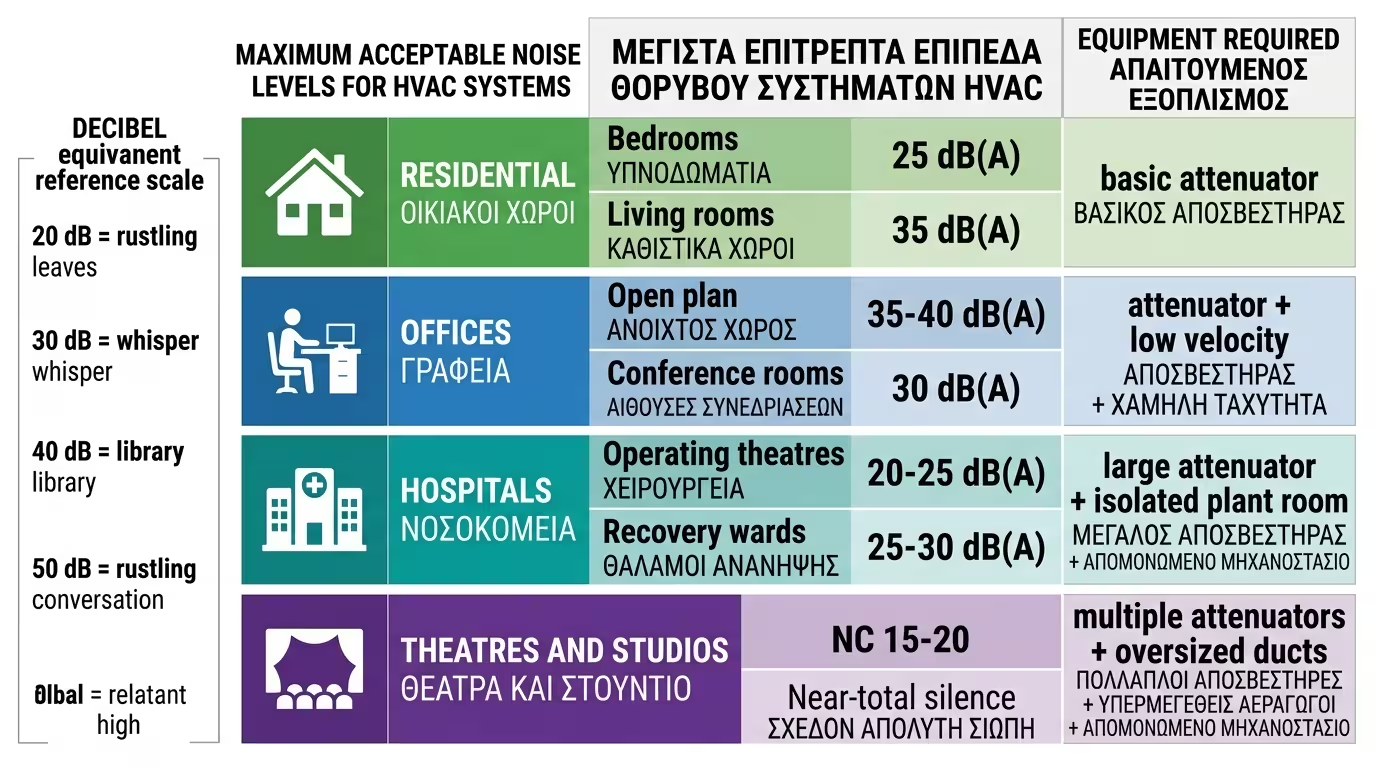
Bedrooms require noise below 25 dB(A) - practically inaudible. Living rooms tolerate up to 35 dB(A) thanks to ambient background noise from TVs and kitchens. The right attenuator plus low duct velocities achieve these levels.
In open-plan offices, the "base noise" (conversations, phones) is already 45-50 dB(A). HVAC just needs to stay below 40 dB(A). In conference rooms, the target drops to 30 dB(A) maximum.
Operating theatres, recovery wards and ICUs demand exceptionally low noise (20-25 dB(A)). This requires large attenuators, low air velocities, and plant rooms positioned far from patient areas.
The most demanding environments. They require NC 15-20 (near-total silence). Multiple attenuators in series, oversized ducts, anti-vibration bases and isolated mechanical rooms are all essential.
💡 Noise is not "normal" in a properly designed HVAC system. With the right attenuator, anti-vibration connector and correct air velocity, the only sound you'll hear is your own peace and quiet.
Return to category.
Go to categoryReturn to the central guide.
Go to guide