💡 Old consumption
The classic 3-speed circulator consumes 60-100 W continuously. Over 5,000 hours/year = 300-500 kWh/year. At €0.20/kWh that means €60-100 just for the circulator!
The circulator pump is the "heart" of every closed heating or cooling circuit. It is the small pump that pushes hot (or cold) water from the boiler or heat pump to the radiators, fan-coils or underfloor heating pipes.
For decades, circulators were simple motors with 3 fixed speeds (I-II-III). Homeowners forgot them on "III" and they consumed power day and night, even when demand was minimal. Like driving your car permanently at 5,000 RPM, even when going round the block.
An old 3-speed circulator consumes 60-100 Watts continuously throughout the heating season (October to April). It runs 5,000+ hours per year like a marathon runner. A modern inverter averages just 5-15 Watts during operation.
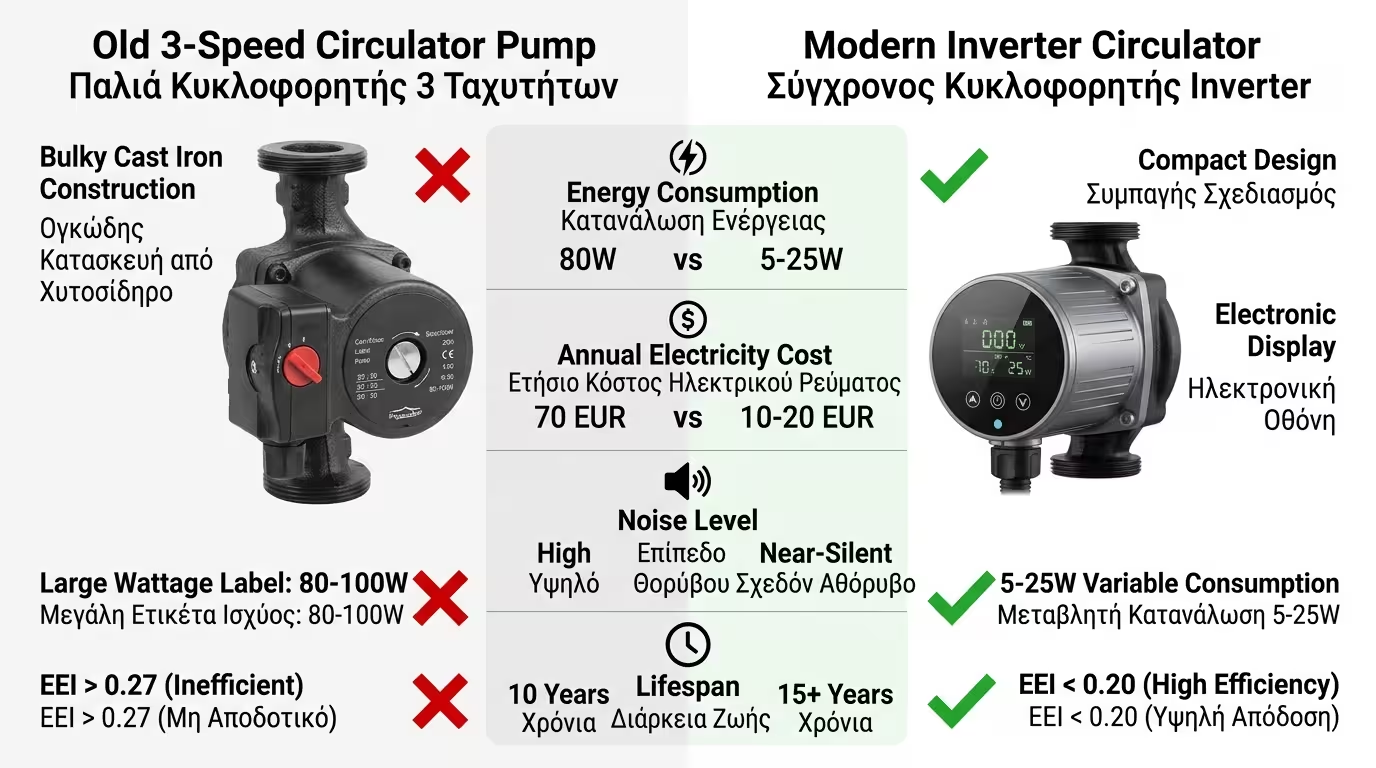
The classic 3-speed circulator consumes 60-100 W continuously. Over 5,000 hours/year = 300-500 kWh/year. At €0.20/kWh that means €60-100 just for the circulator!
The modern inverter automatically reduces speed. Average consumption 5-15 W. Over 5,000 hours = 25-75 kWh/year. Savings of up to 90% compared with the old pump!
A house may have 2-3 circulators (heating, domestic hot water, solar). If all are old, the consumption black hole reaches €200-300 per year. Replacing them pays for itself in 2-3 years.
The inverter is not simply "a motor with a dial" but a small electronic brain. It senses the system's needs in real time and automatically adjusts motor speed.
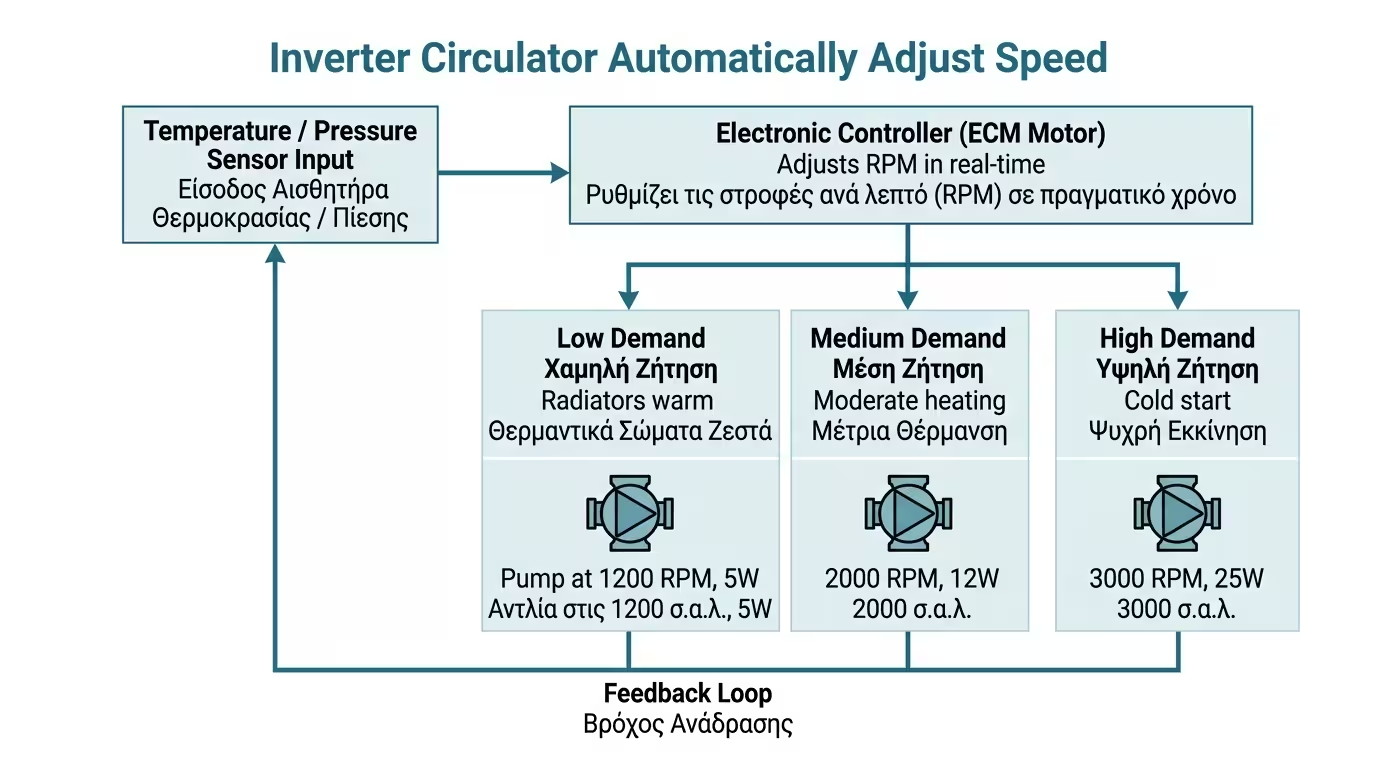
In constant-pressure mode, the circulator maintains a fixed differential pressure (Δp) regardless of flow. Ideal for small radiator systems with thermostatic radiator valves.
Proportional mode reduces pressure as demand drops. Ideal for large systems (apartment buildings, underfloor heating) where flow varies dramatically. The most energy-efficient option.
Inverters use permanent-magnet motors (ECM technology) that produce minimal noise. No more monotonous "humming" audible through the wall every night.
Many models automatically detect that demand drops at night and reduce speed to the minimum. Without any programming, they save even more energy during sleeping hours.
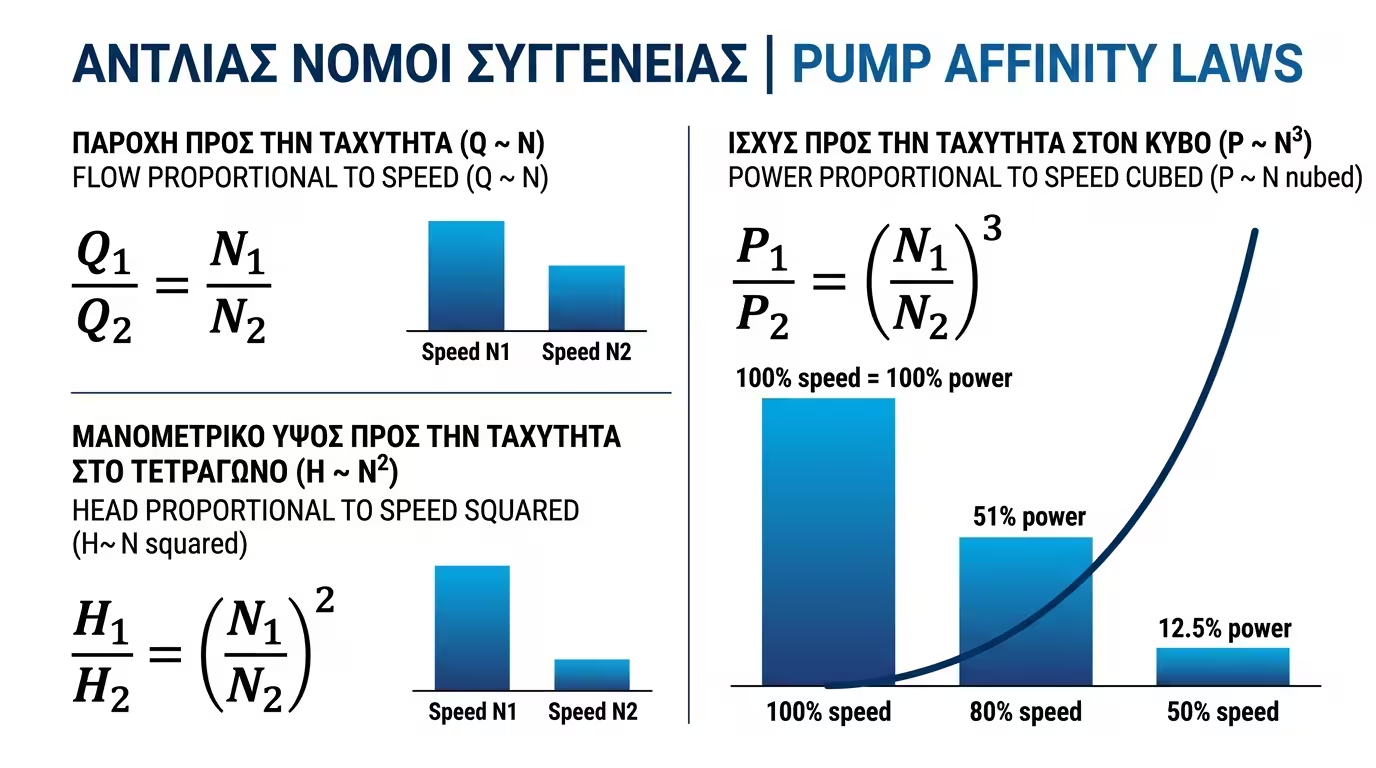
The savings are not linear. You do not save 50% by halving the speed. You save far more! Physics explains why through 3 fundamental laws.
Flow (litres/hour) changes linearly with speed. Halve the speed, halve the flow. This is intuitive and straightforward.
Pressure changes with the square of speed. Half speed → only 25% pressure. Things are already not a simple proportion.
Electricity consumption changes with the cube of speed! Half speed → only 12.5% consumption! This law explains why inverters save 80-90%.
At 70% load (typical operation) the circulator runs at ~70% speed. Consumption: 0.7³ = 0.34 = 34% of maximum. From 80W it drops to 27W. At 50% load: 0.5³ = 12.5% = just 10W!
Since 2015, the European ErP (Energy-related Products) regulation banned the sale of old, energy-hungry circulators. This means every new circulator you buy today is mandatorily an inverter.
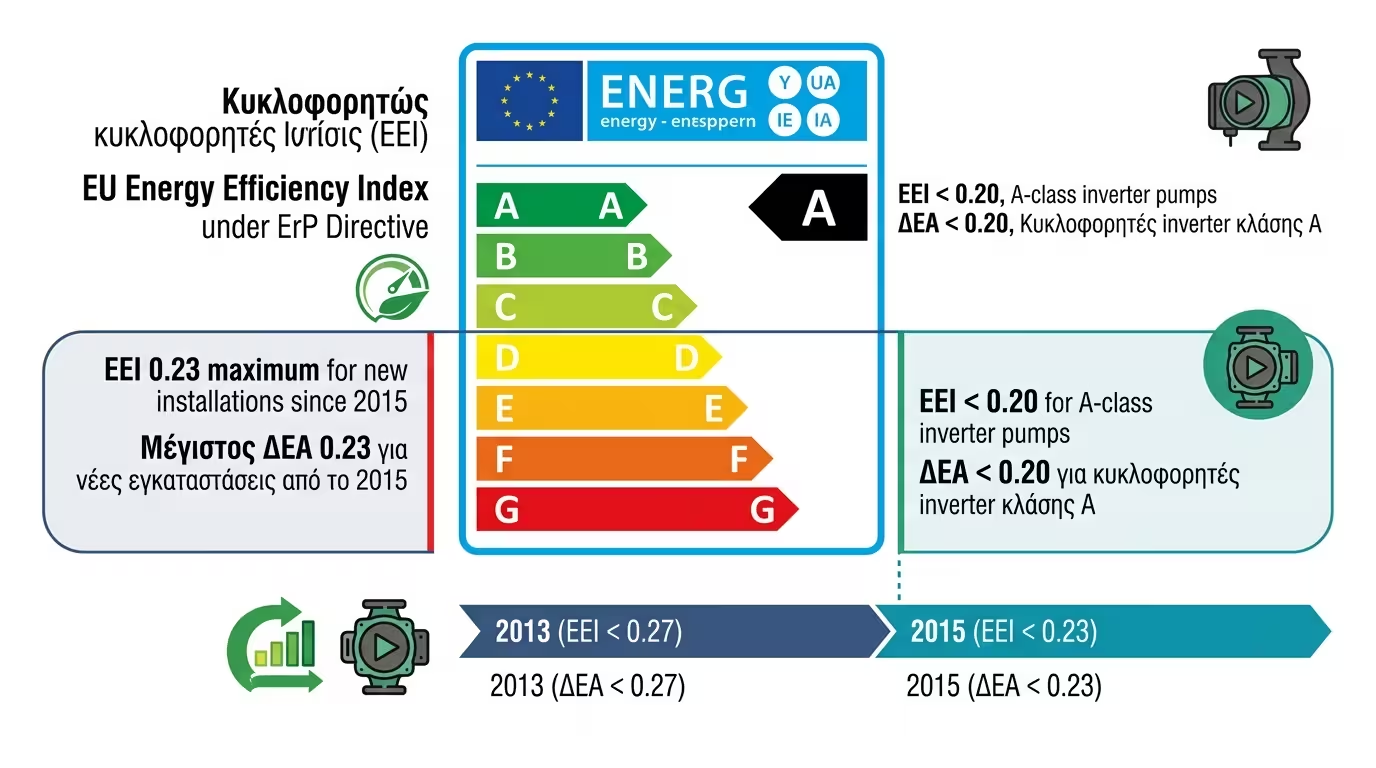
The EEI (Energy Efficiency Index) is the key number. The lower, the better. Top inverters have EEI ≤ 0.20. The ErP regulation requires EEI ≤ 0.23.
The circulator must be selected based on flow rate (m³/h) and head (m) of the system. An oversized circulator wastes energy, even if it is an inverter.
Modern inverters are designed with identical connection dimensions (180mm) to old models, so they can be swapped without any pipework changes. A genuine "plug-and-play" upgrade.
An inverter circulator costs €150-300. With savings of €50-80/year in electricity per pump, the purchase pays for itself in 2-4 years.
💡 If your circulator has three speeds I-II-III, replace it yesterday. It is perhaps the easiest change in your heating system, and payback is guaranteed within 2-3 years. Like switching from incandescent bulbs to LED.
Return to category.
Go to categoryReturn to the central guide.
Go to guide