🧪 How it forms
Steel radiators, pipework and fittings develop electrochemical corrosion when in contact with water containing oxygen. The result: black magnetic particles that continuously break loose.
Inside every closed heating or cooling circuit, an invisible "cocktail" of enemies circulates alongside the water: black sludge (magnetite), rust, microscopic air bubbles, and suspended particles. These enemies block, corrode and shorten the life of every component.
Magnetic filters and deaerators are the two "weapons" that protect your equipment - and in many cases they are a mandatory warranty requirement for heat pumps.
Black sludge is not "dirt" from the mains supply. It is produced inside the circuit itself by a reaction between water, iron, and dissolved oxygen. Its chemical name is magnetite (Fe₃O₄) and it is magnetic.
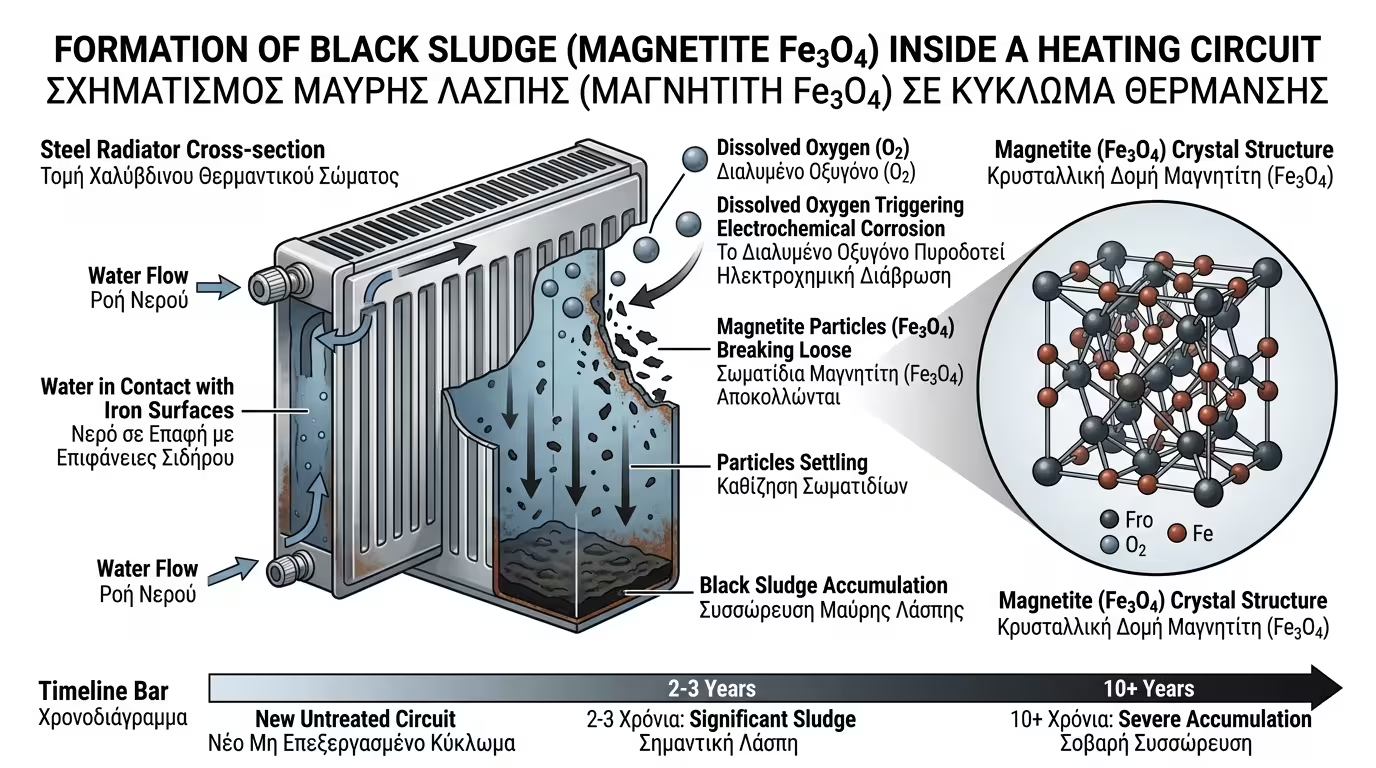
Steel radiators, pipework and fittings develop electrochemical corrosion when in contact with water containing oxygen. The result: black magnetic particles that continuously break loose.
Sludge settles at low points (bottom of radiators, T-pipe junctions), blocks narrow pipes, and jams valves. In underfloor heating, it can block entire loops.
Sludge wears out circulator mechanical seals, blocks plate heat exchangers, and reduces flow. In heat pumps, the damage can reach thousands of euros.
In a new circuit without chemical treatment, significant sludge appears within 2-3 years. In older circuits (10+ years), the situation can be dramatic.
The magnetic filter (or dirt separator) is installed on the return pipe, before the boiler or heat pump. Inside it sits a powerful magnet bar (usually neodymium) that "attracts" the magnetic particles.
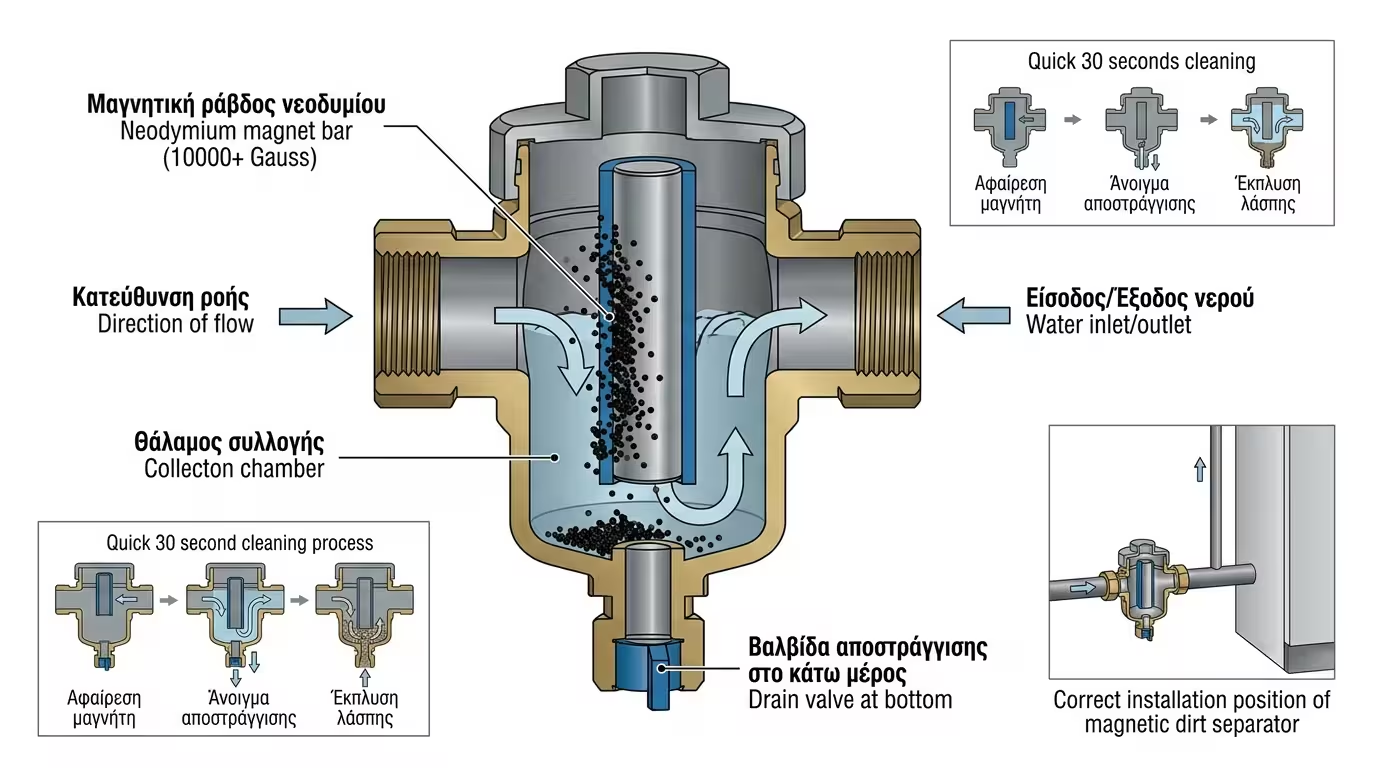
Neodymium magnets produce a strong field ≥ 10,000 Gauss. As water flows through the filter, iron particles "stick" to the magnet while clean water continues circulation.
Modern magnetic filters feature a drain valve at the bottom. The technician removes the magnet, opens the valve, and the sludge flushes out in 30 seconds without dismantling anything.
Always on the return pipe, immediately before the boiler/heat pump, so it filters sludge before it enters the precious heat exchanger. Placing it on the flow pipe is incorrect.
A quality magnetic filter costs €80-200. A heat pump heat exchanger costs €800-2,000. The risk calculation is clear and leaves no room for doubt.
Dissolved air in circuit water is invisible, but it silently destroys. It feeds corrosion, creates "gurgling" noises in radiators, and reduces heat transfer efficiency.
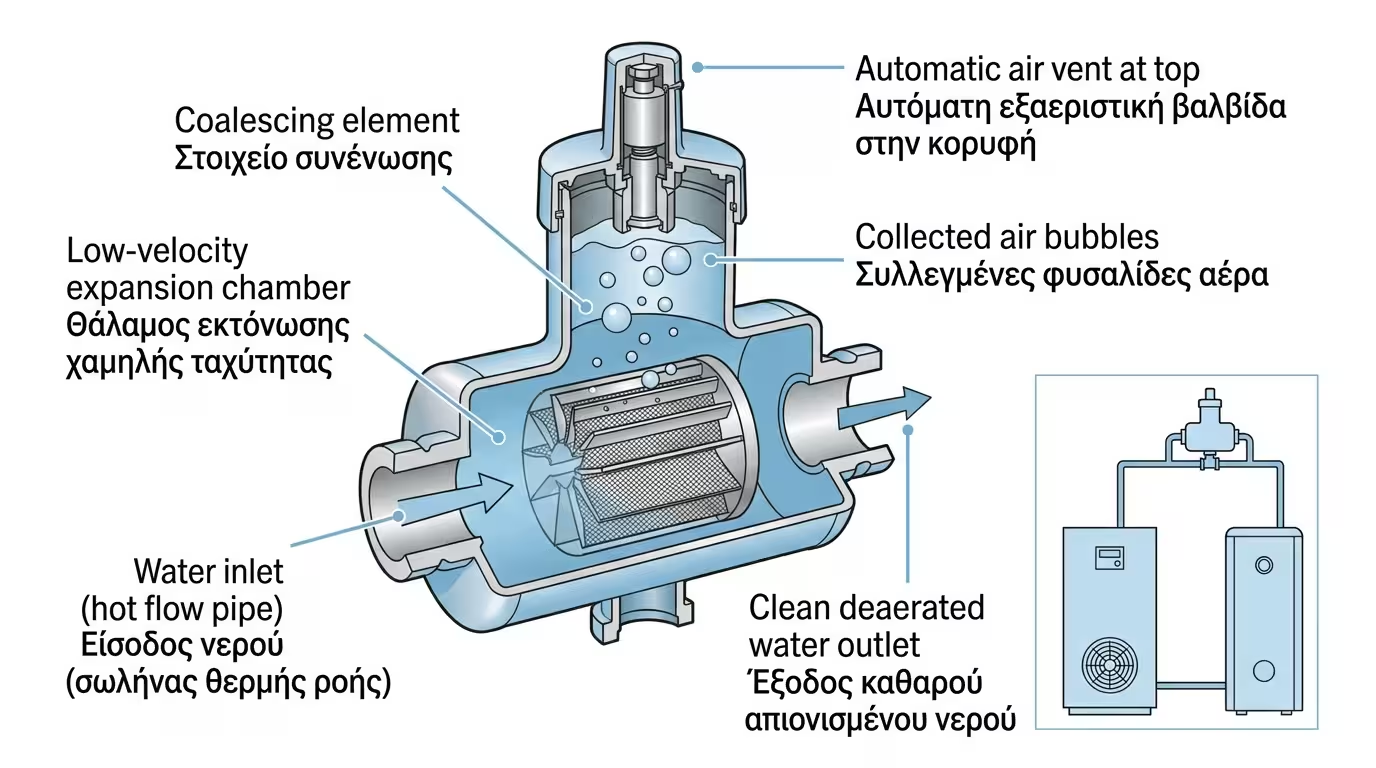
The deaerator creates a low-velocity zone in the circuit. There, micro-bubbles dissolved in the water gather on special metal "vanes", merge together, and rise to the top where they are automatically expelled.
Trapped air in a radiator creates the familiar "gurgling" and "knocking" sounds. A properly installed deaerator eliminates these noises permanently.
Air in water reduces thermal conductivity. Deaerated water transfers heat far more efficiently. Result: faster heating and lower energy consumption.
The deaerator is installed on the flow pipe (hot water), at the highest point after the boiler or heat pump. There, temperature is at its maximum, so air release is also maximised.
Almost every major heat pump manufacturer (Daikin, Mitsubishi, Vaillant, Bosch, LG) explicitly states in their installation manuals that the warranty is void without a magnetic filter.
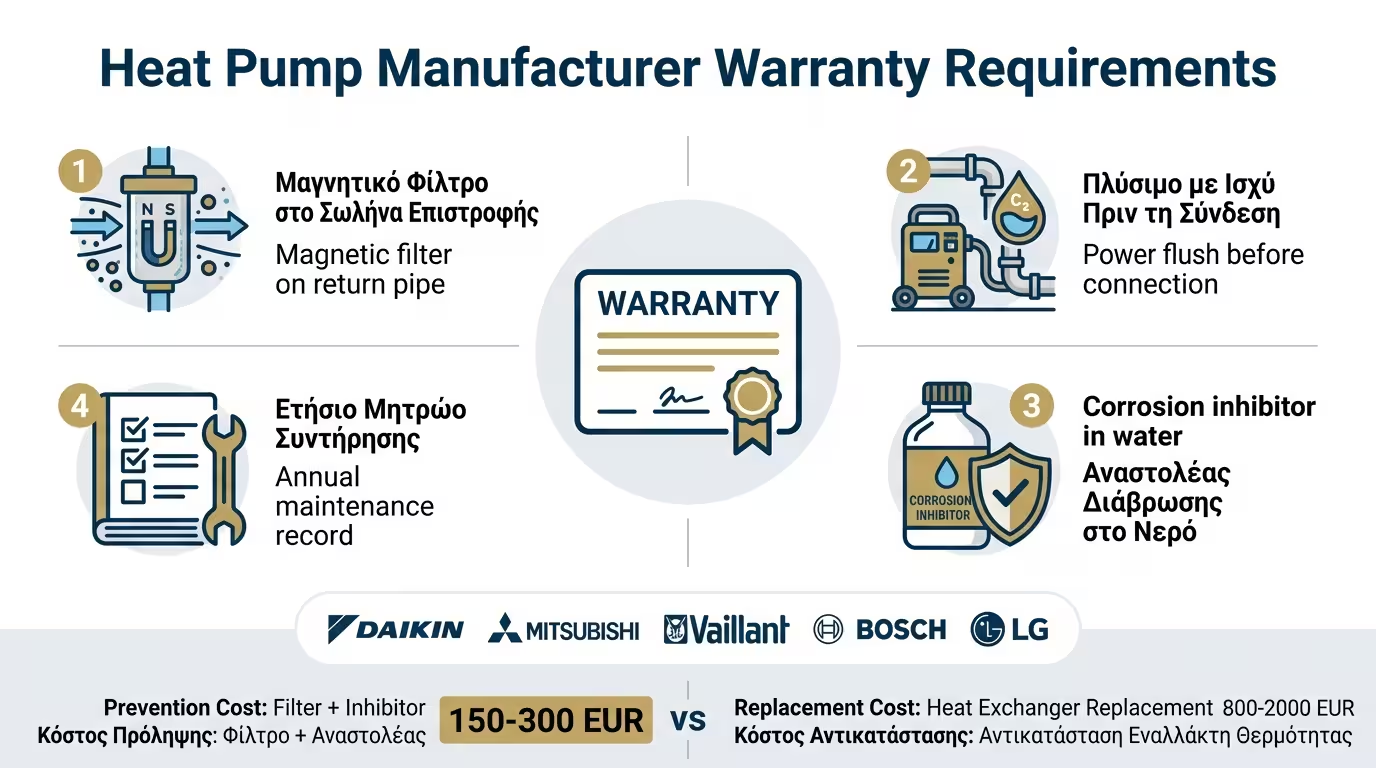
Manufacturers require: a magnetic filter, chemical cleaning (power flush) before connection, and a corrosion inhibitor in the water. Without these, the warranty is voided.
A heat pump costs €5,000-15,000. If the heat exchanger blocks due to sludge and the manufacturer refuses the warranty, the repair cost falls entirely on the owner.
In older circuits, before connecting a new heat pump, a chemical clean (power flush) must be performed. Special chemicals circulate through the system dissolving sludge, which is then flushed out. Afterwards, a magnetic filter and inhibitor are installed.
1) Power flush before connection, 2) Magnetic filter on the return, 3) Deaerator on the flow, 4) Corrosion inhibitor in the water. These four steps ensure warranty validity and long equipment life.
💡 A magnetic filter + deaerator cost €150-300 together. A heat pump heat exchanger costs €800-2,000. Anyone who does the maths understands that "saving" by skipping the filter is an illusion.
Return to category.
Go to categoryReturn to the central guide.
Go to guide