🛡️ The Protective "Corrugated Sleeve"
Water pipes (PEX or Multilayer) are strictly forbidden from touching the concrete bare. They must always run inside a corrugated protective sleeve (red for hot, blue for cold). This sleeve does three things:
Mapping the piping in a new building (or a major renovation) is like designing the traffic plan of a large city. Water (plumbing, heating, drainage) must travel from the central boiler room or manifold to every room - quickly, safely and… completely invisibly.
Incorrect routing does not simply create aesthetic issues. It can damage the structural frame (the reinforced concrete), cause water pressure drops, or create potentially lethal hazards if it crosses electrical wiring incorrectly.
Let us look at the 3 main "routes" engineers use to conceal networks and the non-negotiable installation rules.
The most common path for radiator, underfloor heating and plumbing pipes is on the concrete slab, before the insulating lightweight concrete fill (or screed) and tiles are laid.
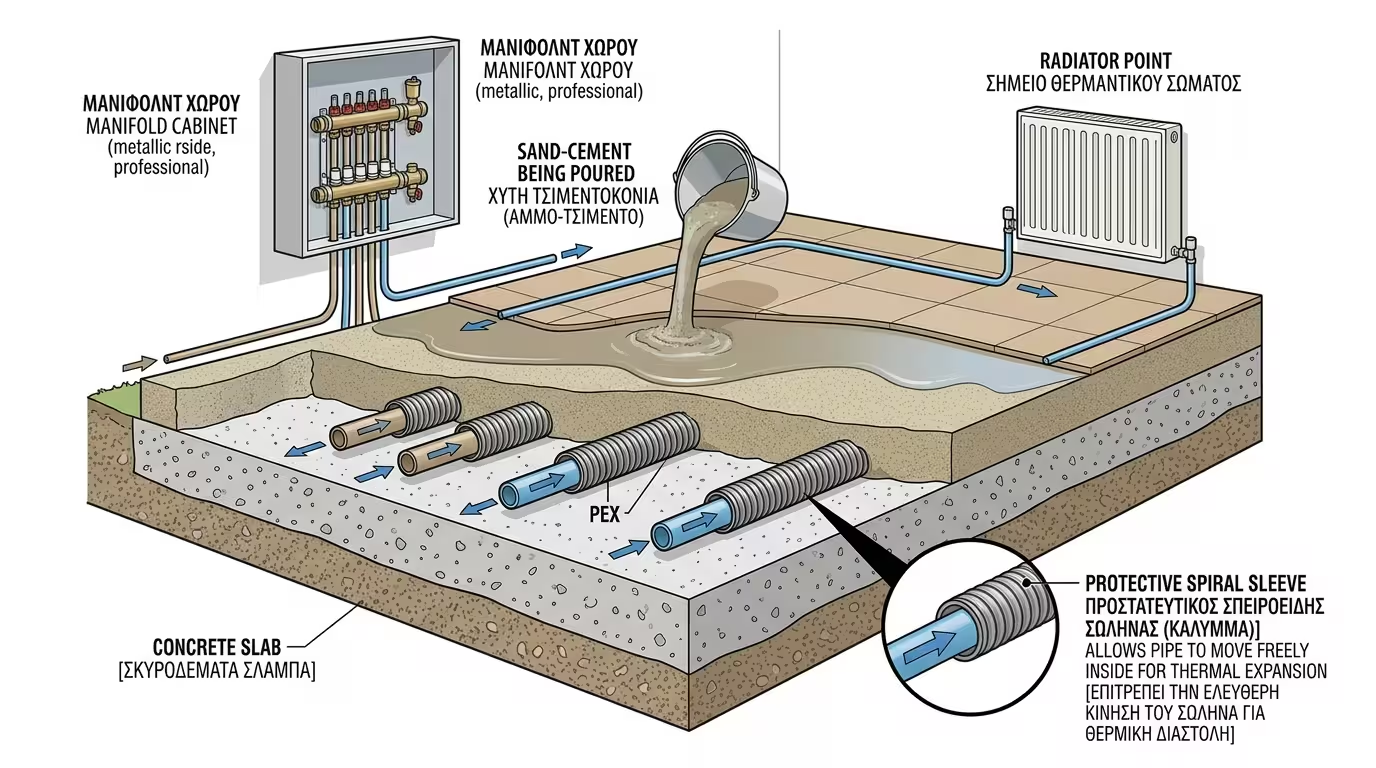
Water pipes (PEX or Multilayer) are strictly forbidden from touching the concrete bare. They must always run inside a corrugated protective sleeve (red for hot, blue for cold). This sleeve does three things:
It protects the pipe from gravel and shovels during the concrete pour, preventing accidental puncture or crushing.
It creates an air gap that allows the pipe to expand ("stretch") when hot water flows through, without breaking its supports inside the concrete.
It theoretically allows the pipe to be replaced if punctured, by pulling it through. In practice, however, this requires a great deal of luck, especially over long runs.
Pipes must run parallel or perpendicular to walls. Arbitrary diagonals ("taking a shortcut through the middle of the living room") make future detection impossible. If you ever need to drill the floor to fix a door stopper, you risk puncturing the pipe.
In modern homes and office buildings that use concealed fan coils or ventilation systems (HRV/ERV), the floor alone is not enough. Here, the pipes "fly" and hide inside the plasterboard ceiling.
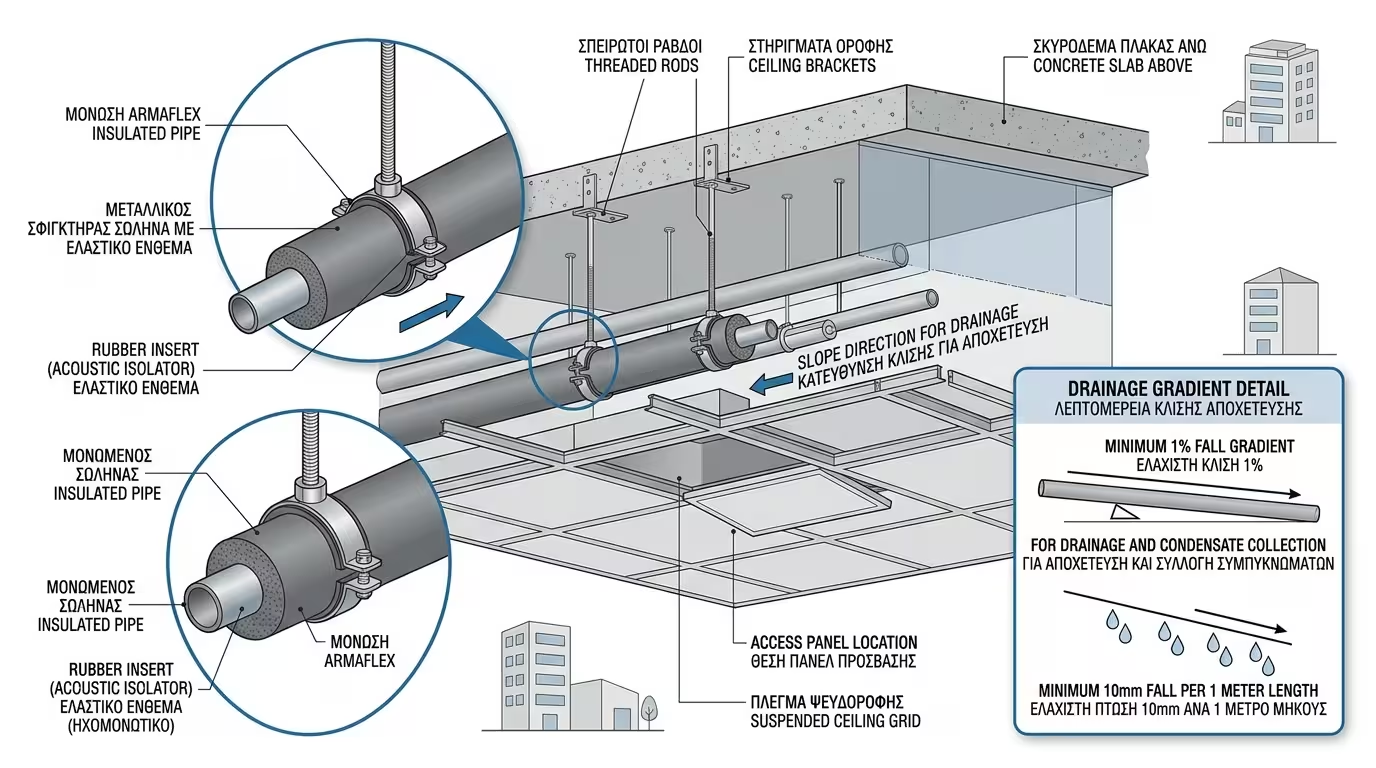
Pipes full of water are extremely heavy. They must be supported with metal hangers (rubber-lined clamps) on the ceiling slab, every 1 to 1.5 metres, to prevent sagging and vibration.
As we discussed in the previous article, if a chilled-water pipe in the false ceiling is not insulated perfectly with Armaflex, the "sweat" (condensation) will destroy the plasterboard and breed mould.
Pipes must maintain a slight gradient to prevent air becoming trapped at high points. Trapped air (bubbles) blocks water circulation, creates noise and reduces system efficiency.
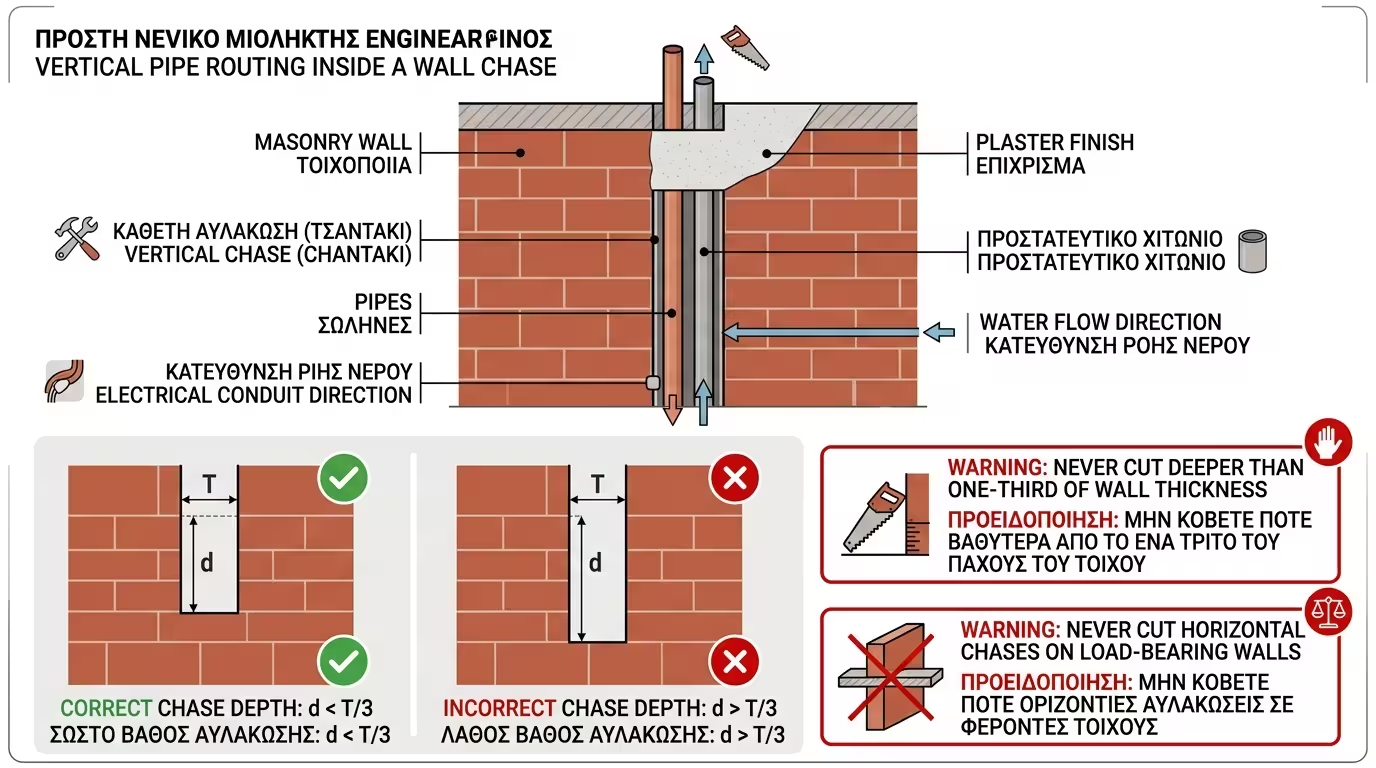
To bring water up from the floor to the sink or shower tap, the plumber must chase (cut a channel into) the wall.
The plumber may chase brickwork, but is strictly forbidden from cutting deep into ("wounding") the reinforced concrete columns and beams of the building, especially horizontally. If the reinforcing bars of a column are cut to pass a pipe, the entire house's earthquake resistance is compromised!
Wall chases must be strictly vertical from floor level up to the tap. This way, you know in the future that "above or below the tap, I must not hammer a nail for a picture frame because a pipe runs there".
On the floor of a new home, water pipes will inevitably cross paths with electrical conduits. Strict safety rules apply here.
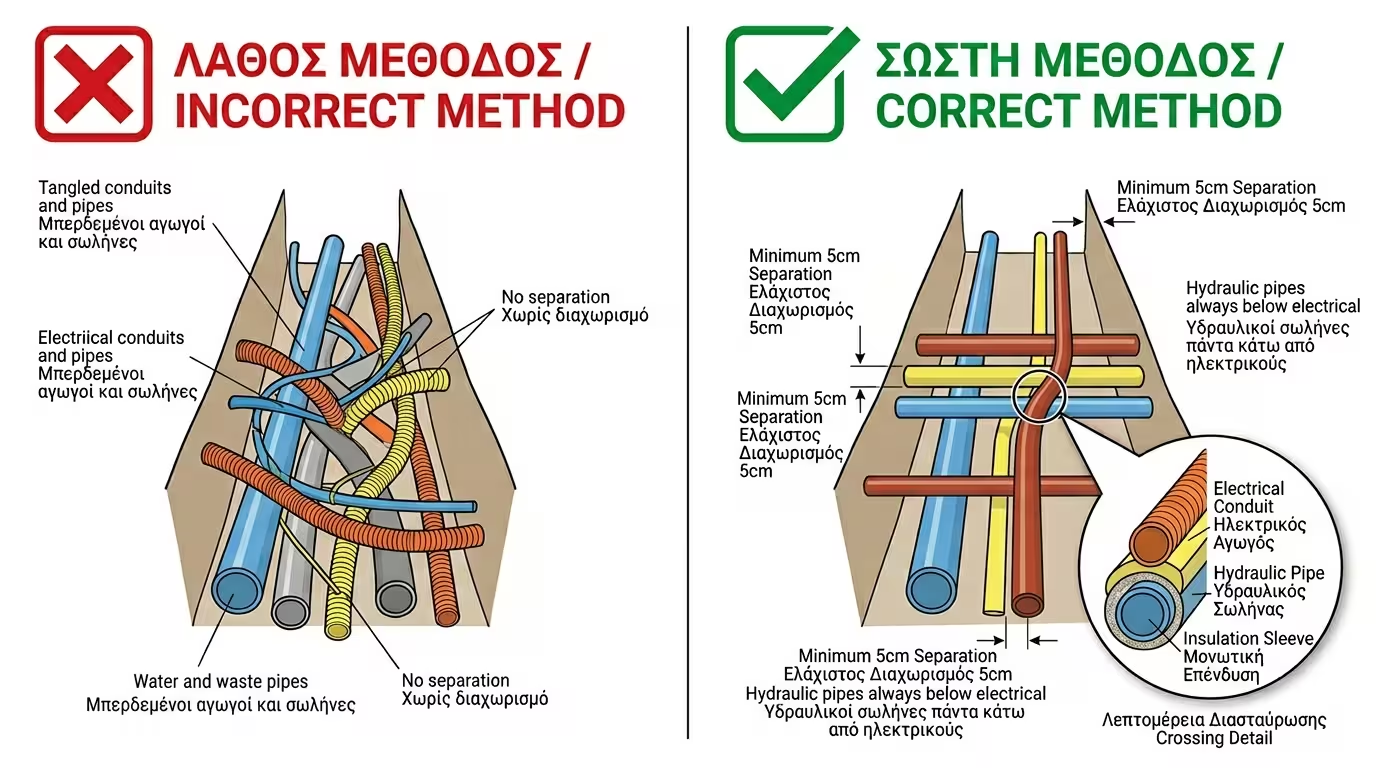
When water and power conduits must cross on the floor (one above the other), the water pipe must pass underneath. If a leak ever occurs, the water flows downward (gravity) and does not pool on the electrical cables.
If they run parallel in the same wall, they must maintain a clearance of at least 10–15 centimetres between them.
It is strictly forbidden for water or drainage pipes to run directly above or directly behind the main electrical distribution board. If even a single drop reaches the circuit breakers, the fire or electrocution risk is enormous.
Pipe routing is the invisible "backbone" of the house. Do not let work crews cut random shortcuts. Make sure to take plenty of photographs of all floors and walls BEFORE concrete is poured and plaster is applied. This "photographic archive" will prove invaluable in the future.
Now that we have routed the pipes, we reach the most critical moment of the installation: How do we join them without worrying about leaks? Get ready for the next article: Pipe Connections (Press-fit, Brazing, Compression). What are the techniques and why are "concealed" joints under the floor considered a plumbing crime?
Return to category.
Go to categoryReturn to the central guide.
Go to guide