Diffusers, Grilles & Registers: How to deliver air without uncomfortable drafts

At the end of every duct run, where the plasterboard ceiling is pierced for air to exit, we install a "diffuser". Many homeowners assume it's just a decorative cover. In reality, it's a critically important aerodynamic component.

The diffuser's job is to take the air arriving at speed and spread it evenly throughout the room, without uncomfortable drafts hitting the occupants. In this guide we explain how it all works.

1. The terminology: Throw, Drop & Spread

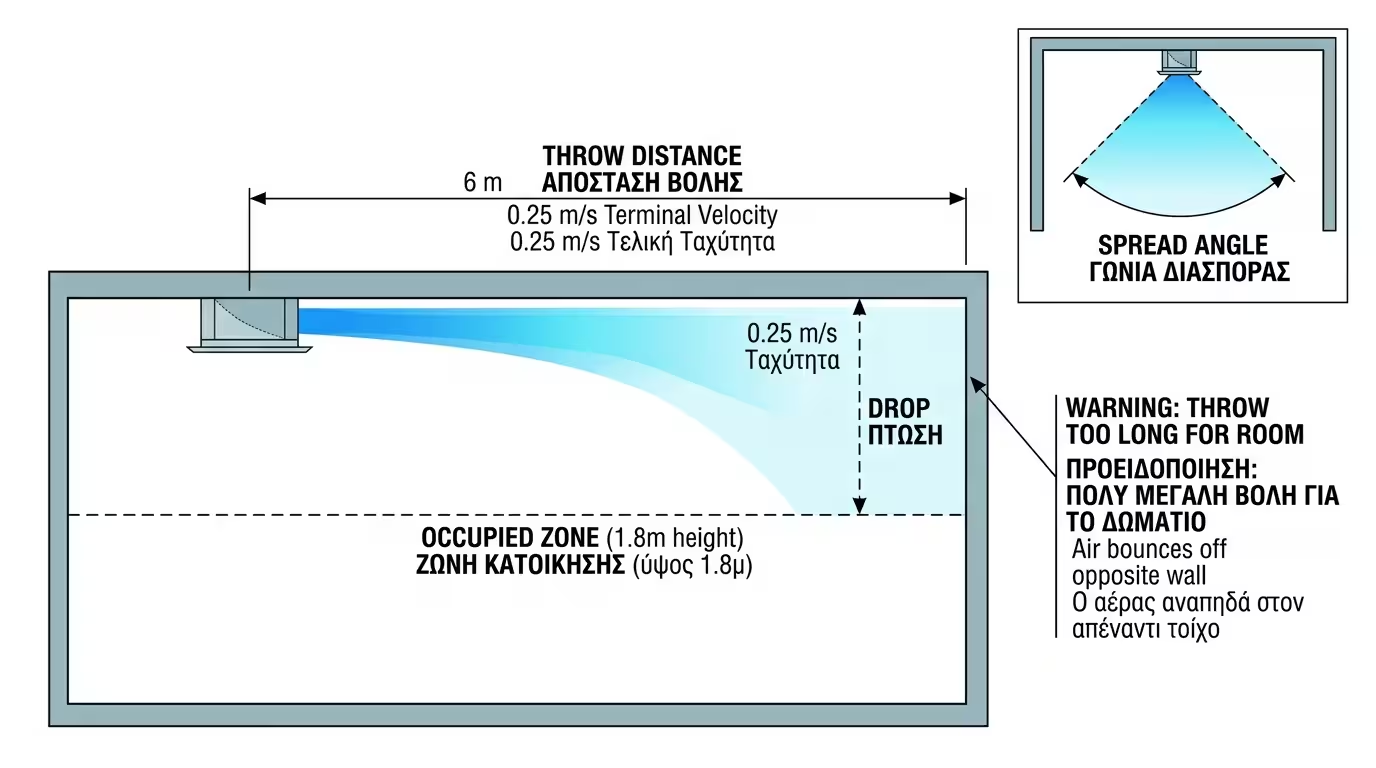
In every diffuser catalogue, next to each model you'll see three critical terms that determine whether the installation will succeed or fail. These are Throw, Drop and Spread.

Diffuser throw, drop and spread diagram - HVAC air distribution

🎯 Throw

The horizontal distance the air travels from the diffuser until its velocity drops to 0.25 m/s (virtually imperceptible). If you install a diffuser with a 6-metre throw in a 3-metre room, the air will "slam" against the opposite wall and bounce back like a hurricane.
⬇️ Drop

Cold air is heavy. As it exits the diffuser, it simultaneously "falls" towards the floor. Drop tells us how quickly it descends. If you sit directly beneath the drop point, you'll feel a permanent, unpleasant cold blast on your head.

🌀 Spread

How wide the air "fans out" left and right, like a hand fan. Greater spread means air covers a larger area of the room - ideal for large living rooms or waiting areas.

⚖️ Correct matching

The engineer must match the diffuser's throw to the room dimensions. Too much throw = uncomfortable drafts. Too little = "dead zones" with no cooling in the corners.

2. The Coanda Effect: How air "sticks" to the ceiling

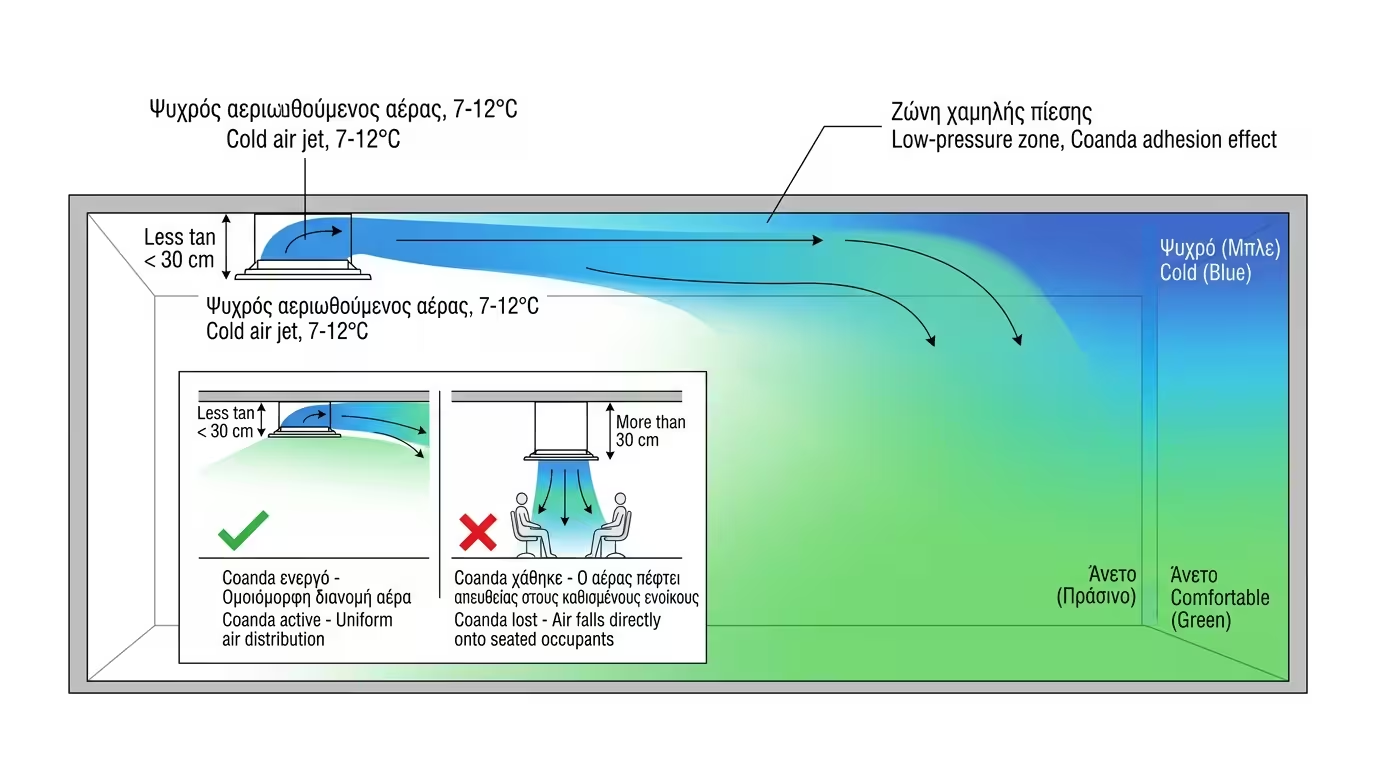
Coanda effect - cold air hugging ceiling surface in HVAC cooling

This is the greatest "trick" in air conditioning. When we place a diffuser high on the wall or ceiling, the air tends to "stick" to the ceiling surface thanks to the Coanda Effect. It travels invisibly above the occupants' heads.

🧲 How it works

As air runs close to the ceiling, it creates a small low-pressure zone between the jet and the surface. This suction "pulls" the air towards the ceiling, keeping it attached up high for several metres before it drops naturally.

❄️ Ideal for cooling

The chilled air "travels" invisibly above heads, spreads across the entire room, and then gently "rains" coolness downward evenly - without blasting anyone directly in the face.

📐 Distance from ceiling

For Coanda to activate, the diffuser must be less than 30 cm from the ceiling. If placed lower, the air doesn't "catch" the ceiling and falls straight down onto seated occupants.

🔄 Heating vs Cooling

In heating mode, warm air rises naturally (buoyancy). In cooling mode, heavy cold air must be kept up high via Coanda - otherwise it "crashes down like a waterfall" right onto you.

3. Diffuser types: Grilles, Ceiling Diffusers & Linear Slots

Depending on room type, aesthetic requirements and mounting position (wall or ceiling), we choose between three main categories of diffusers. Each has its own strengths and ideal applications.

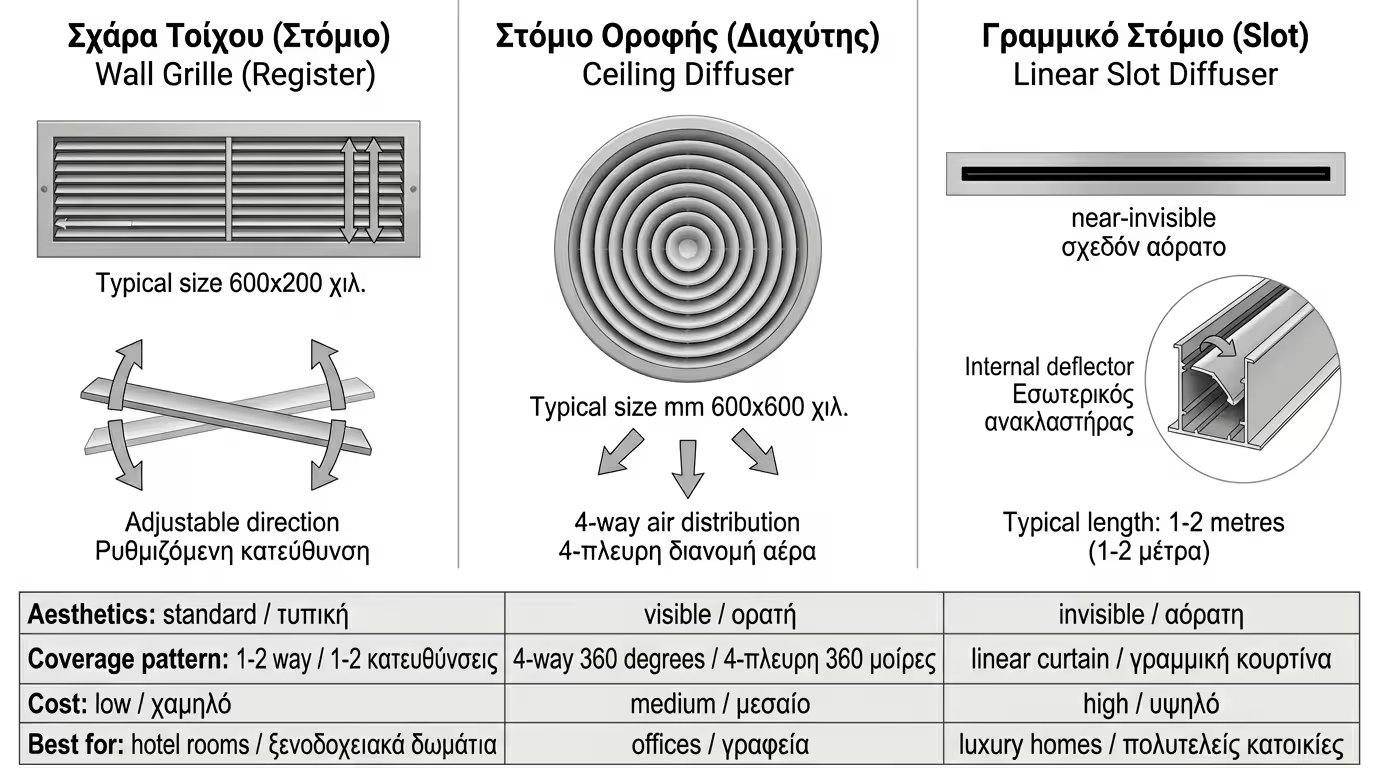
Types of HVAC diffusers - wall grilles, ceiling diffusers, linear slots

🔲 Wall Grilles (Registers)

The classic rectangular diffusers with horizontal and vertical louver blades. Mounted high on walls (above doors or on plasterboard bulkheads). You can adjust the blades by hand to direct air exactly where you want it (e.g., upward in summer for Coanda attachment).

🔵 Ceiling Diffusers

Square or circular units with concentric rings found in office and retail ceilings. They throw air evenly in 4 directions simultaneously (like an umbrella) - the best choice for uniform distribution in square-shaped spaces.

✨ Linear Slots

The ultimate trend in luxury homes and boutique hotels. Narrow, long black slits running along the plasterboard - almost invisible. Internally they contain special deflectors that "break" the airflow, creating a perfect "air curtain" in front of windows.

📊 Type comparison

Grilles = adjustable, affordable, ideal for hotel rooms. Ceiling diffusers = 360° coverage, ideal for offices. Slots = invisible, premium aesthetic but higher cost. The right choice depends on the space.

4. Warning: Air short-circuit - The classic mistake

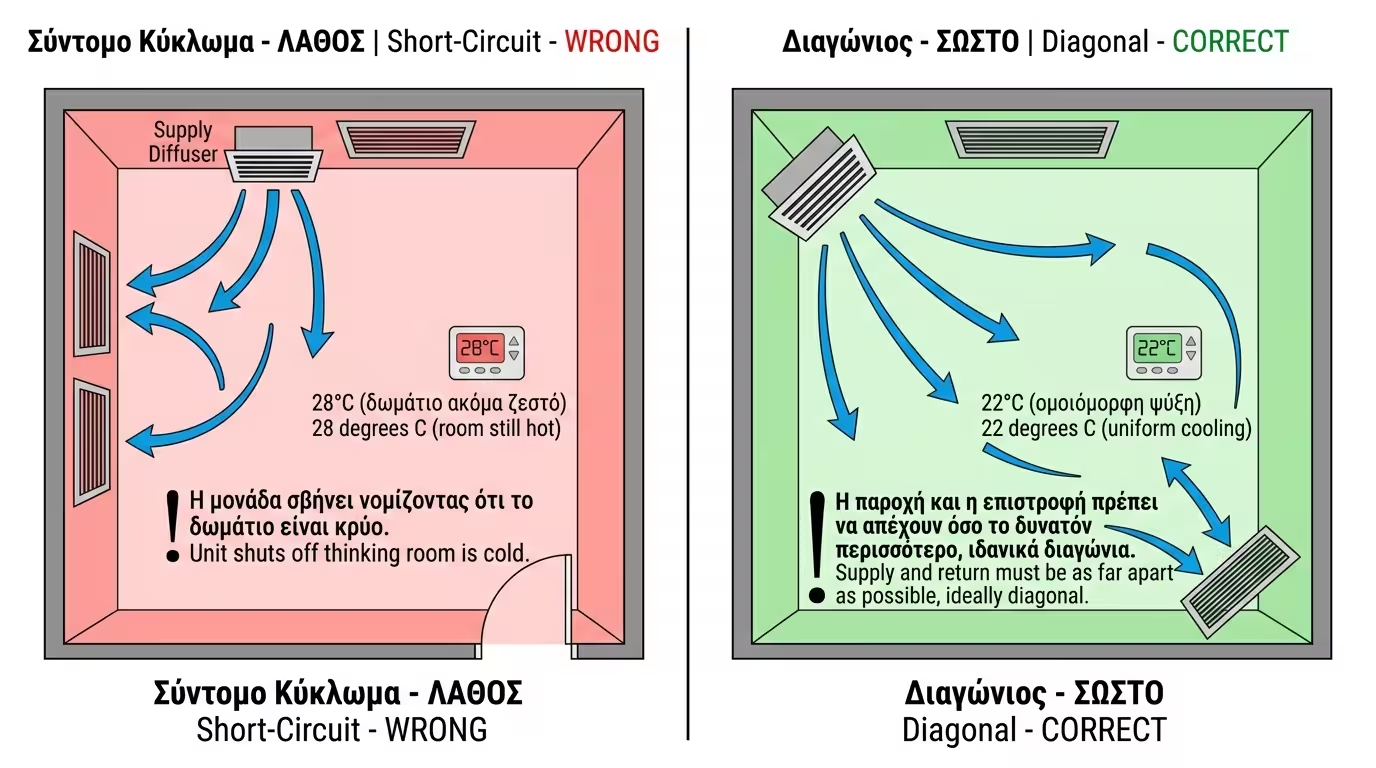
The air that the unit pushes into the room (Supply) must be sucked back from somewhere (Return). If the two diffusers are placed right next to each other, the result is catastrophic.

Air short-circuit error - supply and return diffusers too close together

🔄 What is short-circuiting?

The unit blows chilled air, sucks it straight back (because the openings are side by side), thinks the room is cold - and shuts off! Meanwhile the room hasn't actually cooled by a single degree.

📏 The diagonal rule

Supply and return must be placed as far apart as possible (ideally diagonally across the room). This forces the air to "sweep" the entire space before returning to the unit.

🔇 Return grilles

Return grilles are usually simple louvered panels without adjustable blades. Suction has no throw - it simply draws air from nearby. That's why they can be larger but simpler in construction.

💡 Essential tip

Don't let the installer place supply and return on the same side of the room. Ask to see the layout drawing. An expensive VAM or Fan Coil system will be hated if it blasts freezing air directly onto the sofa where you sit.

💡 The diffuser is the final "ambassador" of the installation. Study the throw, exploit Coanda, and place supply-return at opposite ends. Draft-free comfort is worth the attention.

Related Articles

Preview