Pipe Connections (Press-Fit, Brazing, Compression): How We Join
Networks and the "Crime" of Concealed Joints
The quality of a plumbing installation is not judged by expensive
materials, but by the hands of the craftsman who connects them. Until
a few years ago, the plumber's work was more art than science. Today,
technology has entered the game to eliminate human
error.
Depending on the material you chose (Copper, PEX or Multilayer), the
method used to join the fittings changes radically. Let us look at the
three dominant techniques.
1. Brazing / Soldering: The Traditional Copper Method
When working with copper pipes, the only truly professional and
permanent solution (especially in boiler rooms) is thermal brazing
(soft or hard soldering, depending on the temperatures involved).
🔥 How It Works
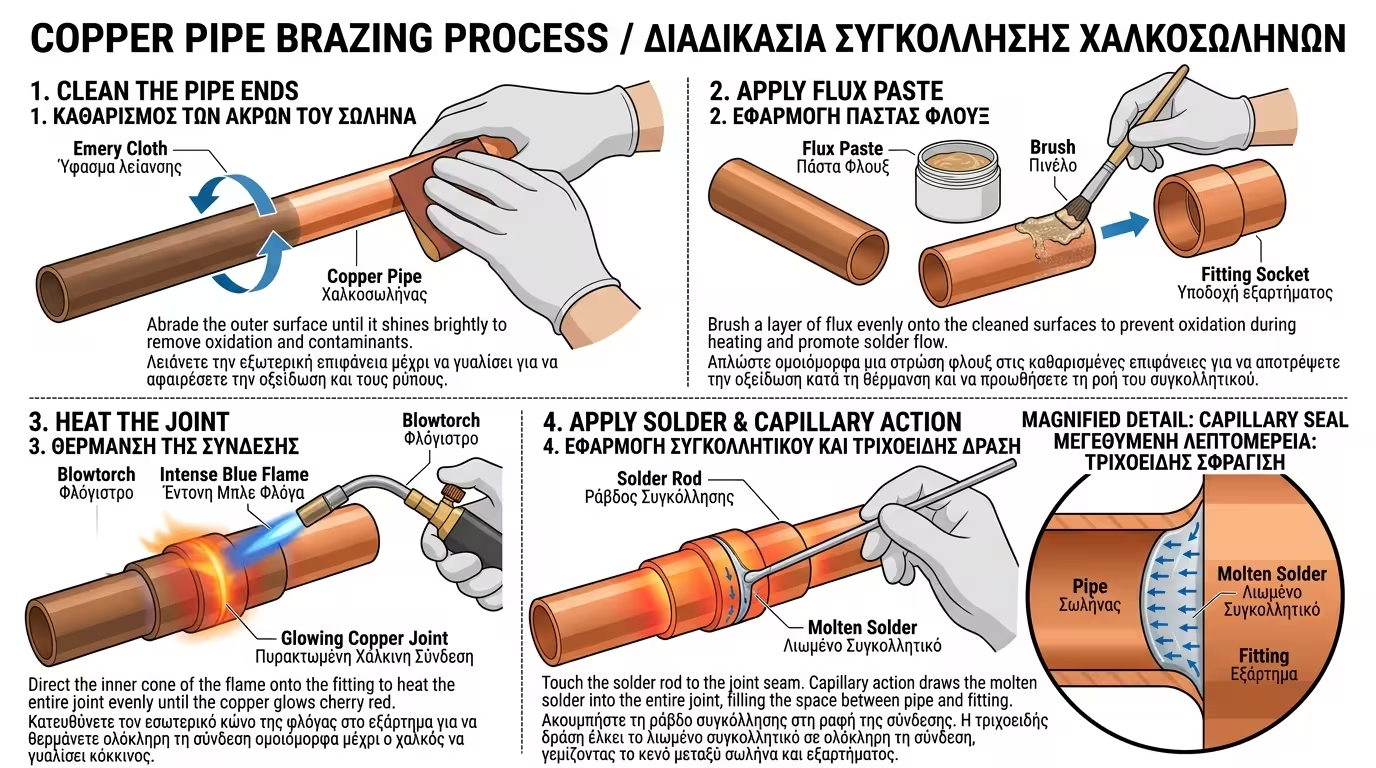
The plumber cleans the pipe ends perfectly, applies a special paste
(flux), inserts the pipe into the fitting and heats both with a
blowtorch. Once the copper glows, a solder rod
(tin or silver alloy) is touched to the joint. The molten metal is
instantly "sucked" into the gap by capillary action, sealing the
connection.
✅ The Great Advantage
It creates a molecular, unbreakable bond. The
fitting and pipe essentially become a single piece of metal. The
profile remains slim and unobtrusive.
⚠️ The "Trap"
It depends 100% on the plumber's skill. If the
pipe is not heated evenly, or the surface is not cleaned properly,
the solder will have "pores" (voids) and will start weeping after
a few years. Also, using an open flame inside a house (near wood
or insulation) requires extreme caution.
2. Mechanical Compression: The Old "Screw-on" Fittings
When plastic pipes (PEX) first entered homes, brazing was impossible.
This is where mechanical compression fittings took over.
🔧 How It Works
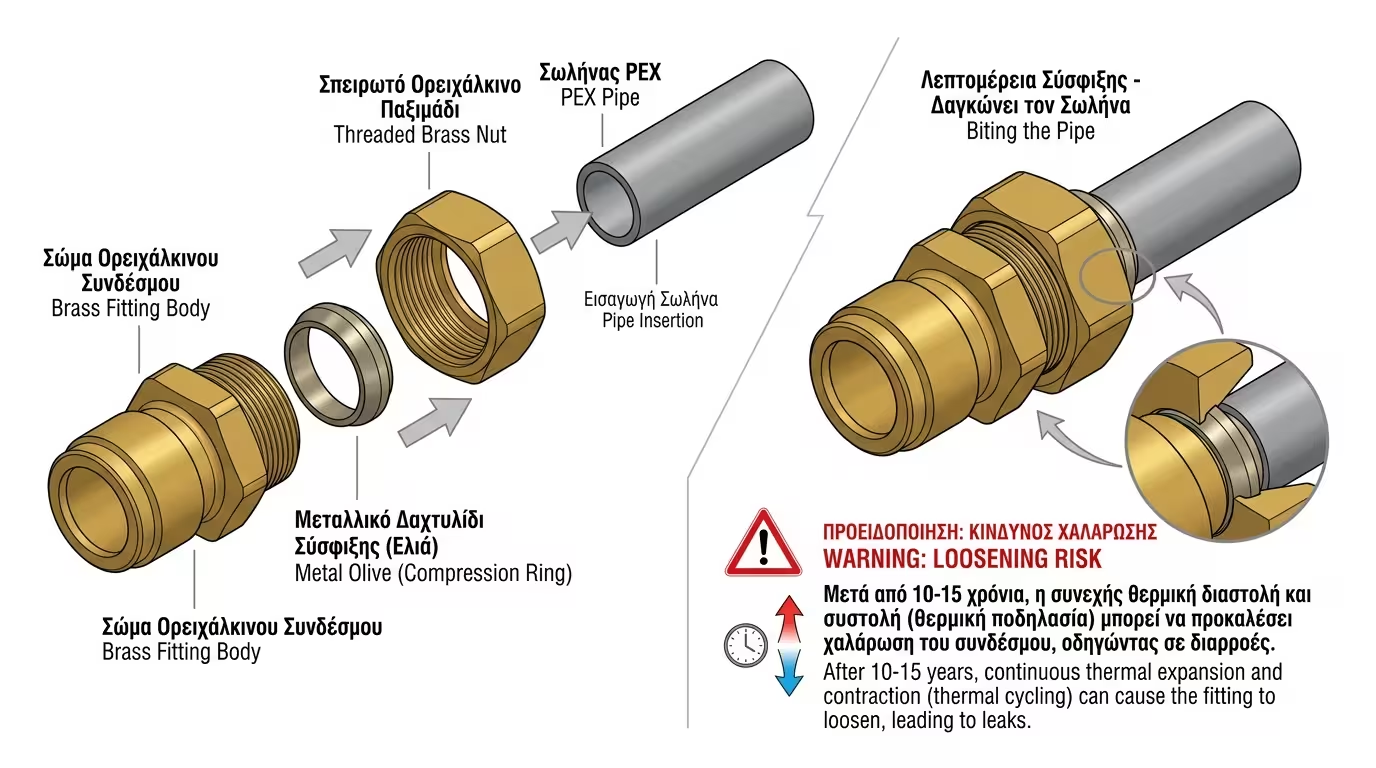
A nut and a cut metal ring (olive) are slipped around the pipe.
Then the nut is tightened onto the fitting (with a wrench). As you
tighten, the ring "grips" and bites into the plastic
pipe, locking it in place.
✅ The Great Advantage
It is a clean process. No fire, no electricity, and most
importantly: if you make a mistake, you can simply unscrew and
redo it.
⚠️ The "Trap"
Plastic pipes continuously expand and contract with hot and cold
water. After many years (10–15), this constant movement can cause
the nut to "loosen" slightly. If not re-tightened, it will drip.
For this reason, screw-type compression is now considered
outdated for serious installations.
3. Press-Fit Fittings: The Modern Standard
This is the ultimate engineering evolution, now used extensively with
Multilayer pipe and also with Copper (on large projects).
🔧 How It Works
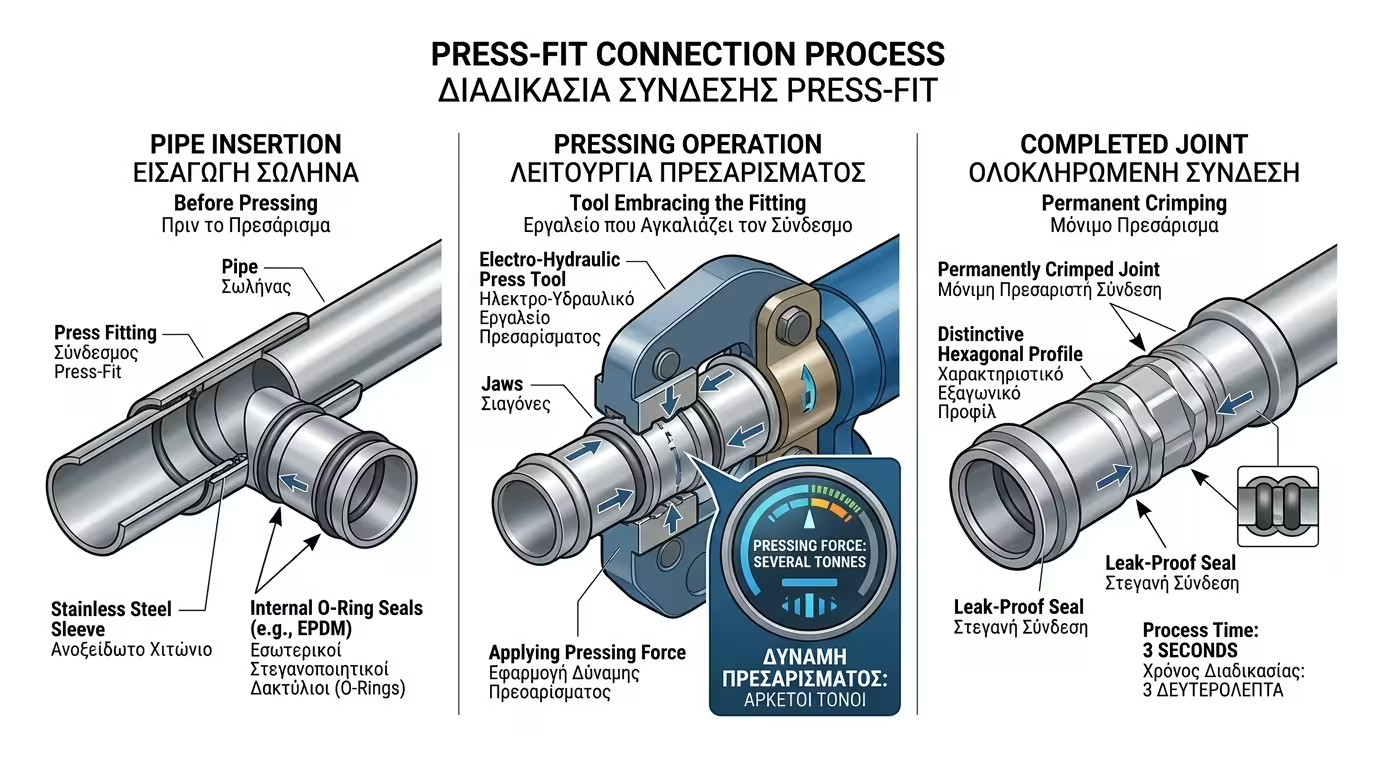
The pipe is inserted into a special fitting that has internal
sealing rings (O-Rings) and an external stainless steel sleeve.
The plumber uses a heavy, electro-hydraulic press
tool. The jaws of the press embrace the fitting and
crush it with a force of several tonnes.
✅ The Great Advantage
It eliminates human error. When the press
"closes", the tool gives a distinctive "click". The joint is
sealed perfectly, with mathematical precision, in 3 seconds. It
never loosens and withstands enormous pressures.
⚠️ The "Trap"
Once pressed, it cannot be undone. If the plumber
makes a measurement error, the fitting must be cut out, discarded
(they are expensive) and replaced with a new one. Also, the press
tool costs thousands of euros, so only well-equipped crews have
one.
4. The Non-Negotiable Rule: NO Concealed Joints Under the Floor!
Regardless of whether your plumber has golden hands for brazing or
owns the most expensive press on the market, there is one rule that
must NEVER be violated in a modern building.
⚠️ It is strictly forbidden for ANY pipe joint (tee,
elbow, coupler) to be buried under floor tiles or concrete.
❌ The Old Method
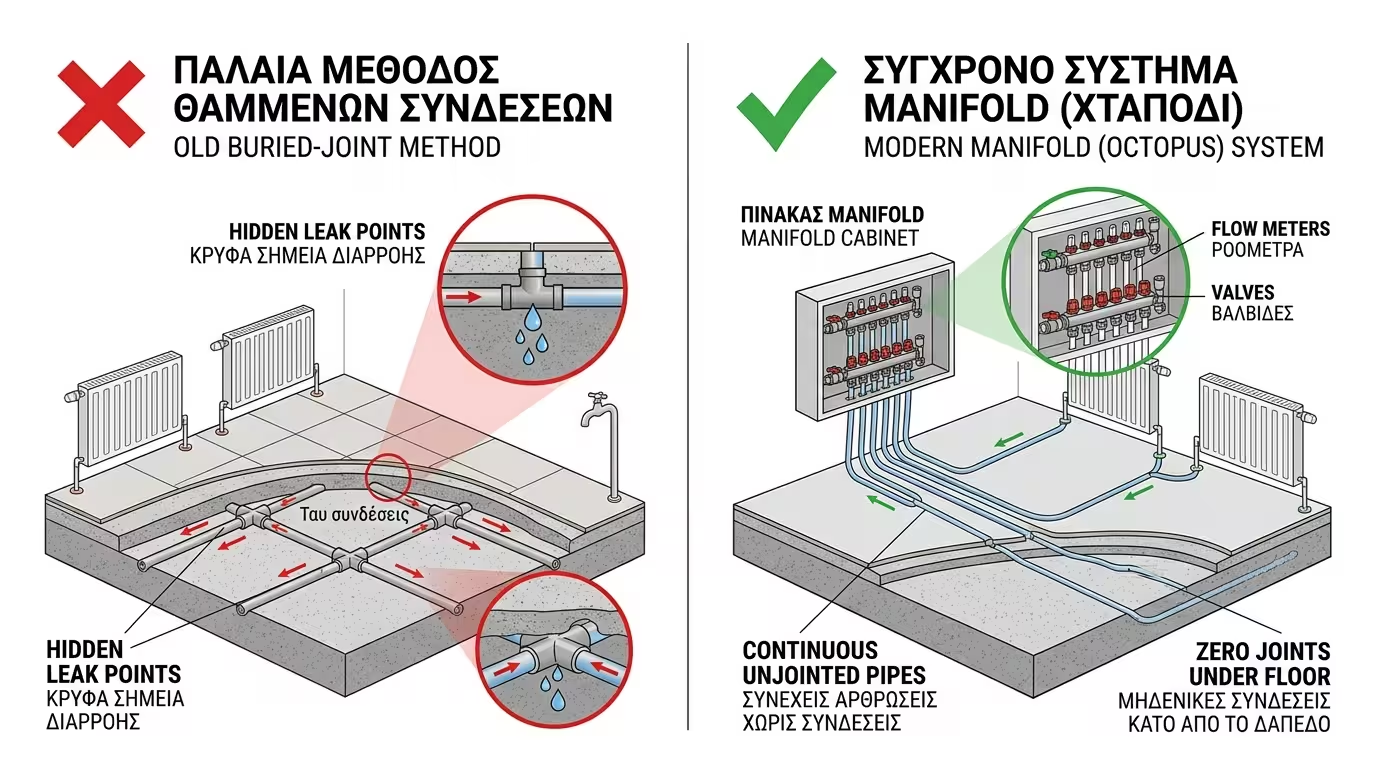
In the past (mainly with old iron pipes), plumbers would run a
central pipe in the hallway floor, add a Tee under the tiles, and
branch one leg to the living room and one to the bedroom.
💣 Why It Is a "Crime"
Every joint, however perfect, has a probability (even 0.1%) of
failing in the future. It could be a strong earthquake, a
defective O-ring, or water hammer. If the joint is under the
parquet or tiles, you will not notice until damp ruins the walls.
Repair means demolishing floors, breaking concrete, dust
and enormous expense.
✅ The Modern Solution: The "Octopus"
Modern plumbing demands a Central Manifold
(Collector) system. A manifold is placed in a wall
cabinet. From there, a single, continuous pipe (with absolutely no
joints) runs directly to the radiator or tap.
🔍 Where Will the Leak Happen?
If a leak ever occurs, it will happen either at the manifold
cabinet or at the radiator valve. Both points are visible
and 100% accessible. Your floor remains safe forever.
5. Summary: Perfect Connections, Zero Worry
📋 What to Remember
Choose press-fit fittings (for plastic/multilayer) or brazed joints
(for copper) at all visible and accessible points. However,
anything buried under your feet must be strictly a single
continuous length of pipe. Always request a manifold
(octopus) system for maximum safety.
➡️ Next Step
Now that everything is connected (at the manifolds and emitters),
how do we know we have not made a mistake before pouring the
concrete and hiding everything? Get ready for the next article:
Pressure Testing (Network Pressurisation) – The
step-by-step leak-checking procedure that every homeowner and
supervising engineer MUST demand before the
concrete is poured!