🟤 Copper
A 10-metre pipe with ΔT = 50°C → elongates just 8 millimetres. Negligible, easily absorbed.
In physics, the rule is universal: When a material is heated, it grows (expands). In heating and domestic hot water (DHW) installations, pipes undergo enormous temperature changes. A pipe installed in winter at 10°C is suddenly asked to carry 70°C water. This 60-degree difference forces it to "lengthen".
If that pipe is bolted tightly to the wall or wedged inside concrete, it has no room to lengthen. The force that develops is terrifying. The result: the pipe buckles violently (forms "bellies"), tears supports from the wall, or breaks at its joints.
Let us see how we predict this behaviour and how we design networks that "breathe" freely.
To understand the scale of the problem, engineers use the elongation formula: ΔL = α × L × ΔT, where α is the coefficient of linear expansion, L the original length (metres) and ΔT the temperature difference.
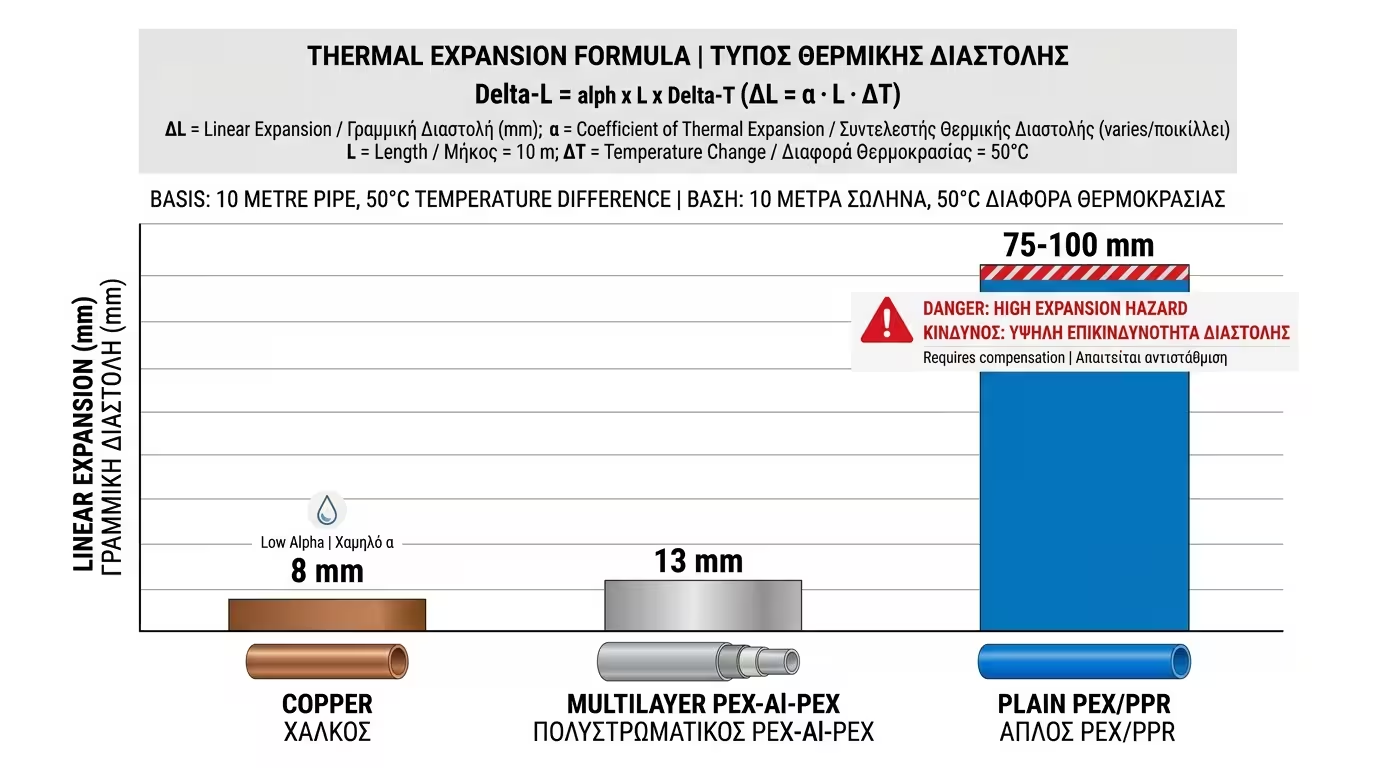
A 10-metre pipe with ΔT = 50°C → elongates just 8 millimetres. Negligible, easily absorbed.
Same pipe → elongates about 13 millimetres. The internal aluminium layer restrains it significantly.
Same pipe → elongates by 75 to 100 millimetres (up to 10 cm)! A plastic pipe without expansion provision is a ticking time bomb.
When pipes are laid on the slab before concreting, we use the corrugated protective sleeve trick (as we saw in Article 3).
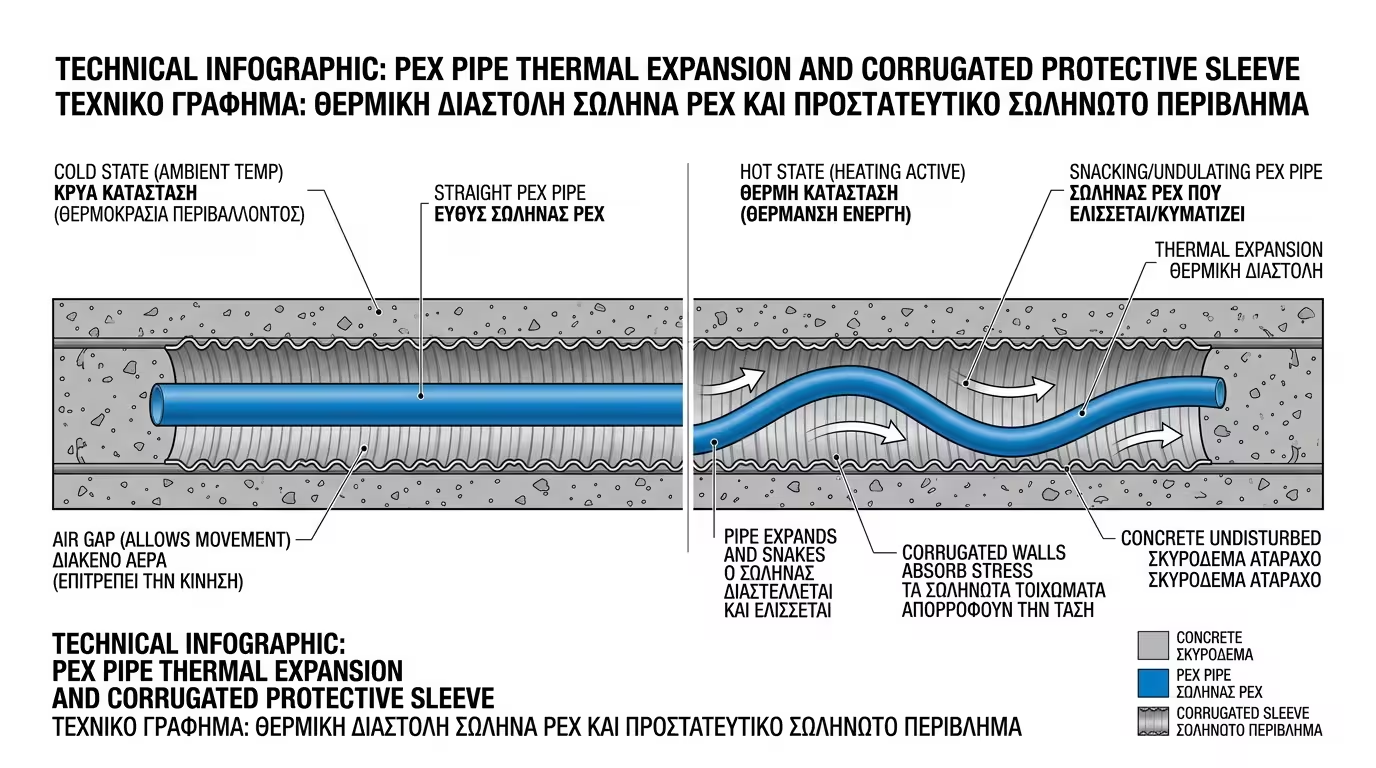
The plastic pipe runs inside a wider, corrugated sleeve. When the concrete is poured and cures, it encases the outer sleeve, turning it to stone.
The water pipe inside the sleeve has plenty of air and space around it! When hot water flows, the pipe simply "snakes" (folds slightly) within the empty space of the sleeve, without pushing against the concrete. The floor remains 100% safe.
The major issue arises on long, straight runs that are visible (e.g. pipes running along a garage ceiling or in a vertical apartment block riser shaft). Here, the science of support is everything.
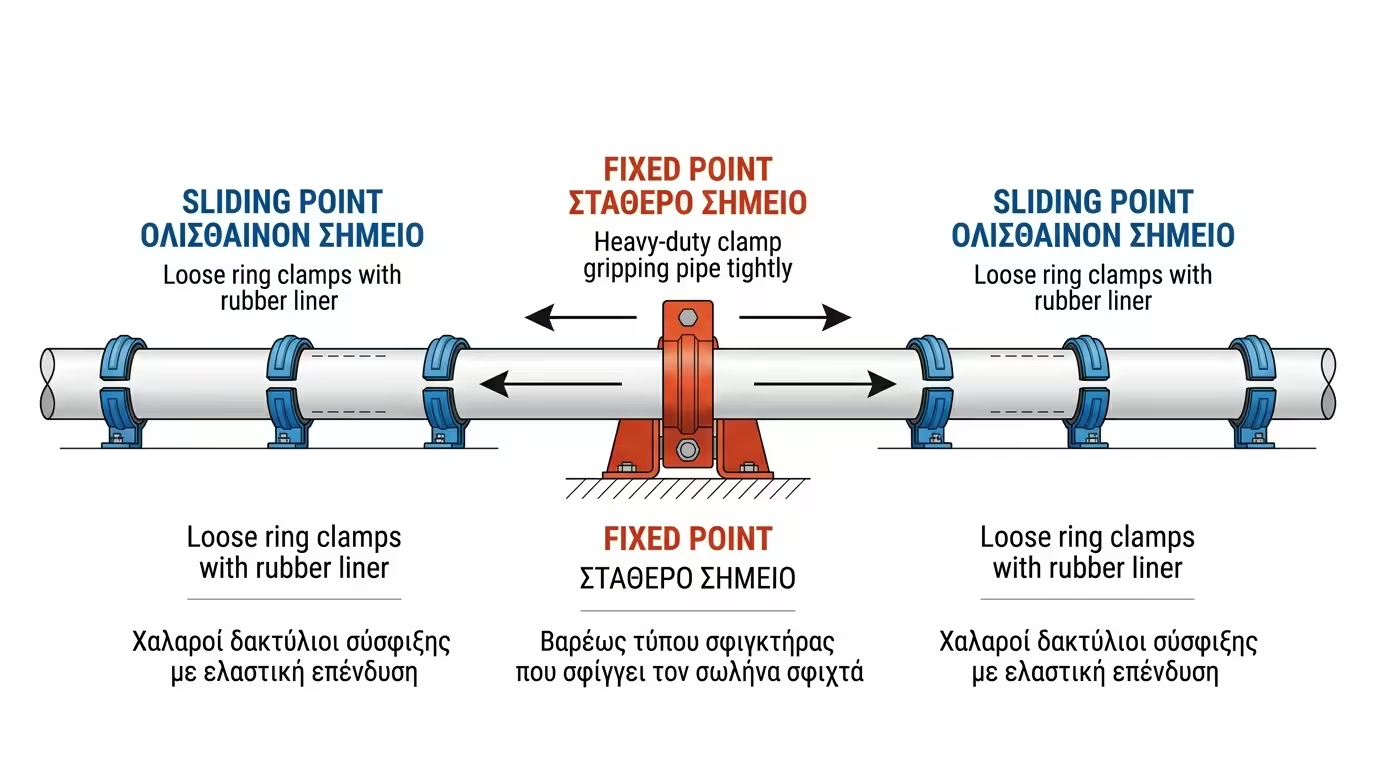
Heavy-duty supports that "bite" the pipe and prevent it from moving even a millimetre. They are placed strategically at the midpoint of a run, forcing expansion to split left and right, protecting sensitive equipment (such as pumps and valves) from being "pulled".
These are the majority of the network's supports. They hold the pipe off the ground to prevent sagging, but leave it free to slide back and forth within the rubber-lined clamp, allowing it to elongate freely.
The plumber does not simply bolt clamps to the wall. They must design a "choreography" of movements: which point is fixed, which slides, and where the expansion force "exits". Without proper planning, pipes will buckle violently.
If we have a massive 30-metre straight run in a basement, letting the pipe slide is not enough. It would end up puncturing the opposite wall! Here we intervene by "breaking" the straight line.
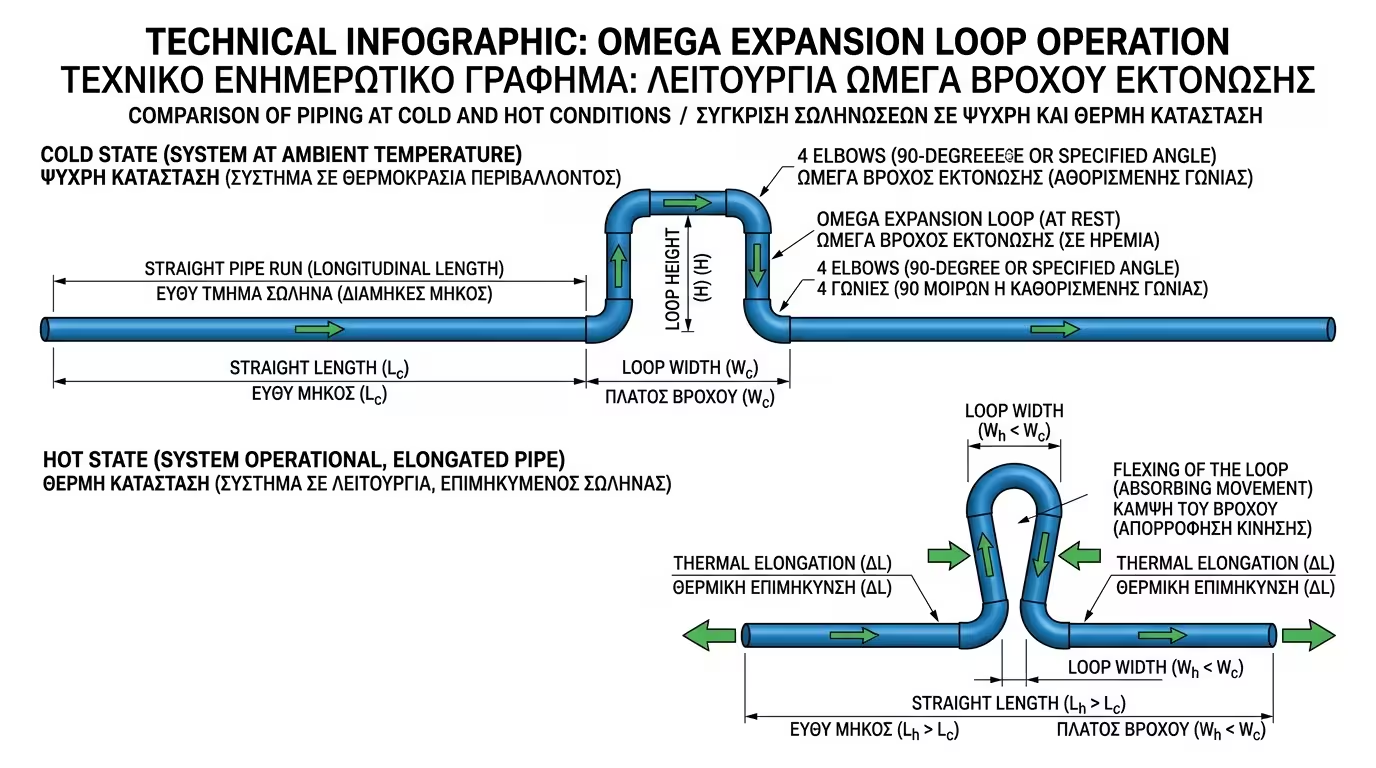
Engineers build a geometric "detour" in the shape of the letter Ω (Omega) or a Π (Pi), using 4 elbows. When the two long straights elongate (due to hot water), they "push" the vertical sections. The Ω shape acts like a spring: it flexes, absorbs all kinetic energy, and once the water cools, returns to its original position.
It is the safest, cheapest and most natural solution for industrial (and residential) installations. No special fittings needed - just 4 elbows and a piece of pipe.
In very tight spaces where an Omega loop cannot be built, Expansion Joints / Bellows are used. These are special "accordion"-like fittings made of stainless steel or rubber, inserted inline and compressed to absorb the expansion.
Thermal expansion is not "poor workmanship" - it is a law of nature. The poor workmanship is not giving it room to release. When you see plastic pipes that have buckled unsightly in a boiler room, you now know that the installer "forgot" to calculate the correct fixed and sliding points.
Now that we have covered the mechanical behaviour of pipes, it is time to tackle a new, modern "nightmare" for engineers: airtightness. New, energy-efficient houses must not "leak" any air at all. But if we have drilled through walls at 50 points for pipes, how do we seal those holes? In the final article: Pipe Penetrations & Blower Door Test.
Return to category.
Go to categoryReturn to the central guide.
Go to guide