🛡️ Unmatched Durability
A properly installed copper pipe can easily last 50+ years. It withstands enormous pressures and extreme temperatures (from frost to superheated steam).
You are at the construction or major renovation stage of your home. The plumber arrives and asks the million-dollar question: "What pipes shall we run? Copper to keep your mind at ease, or plastic to keep the cost down?"
This decision is perhaps the most critical you will ever make for your home. The reason is simple: pipes are buried under concrete, tiles and walls. If the boiler breaks down, you replace it in a day. But if a pipe bursts under the living room parquet, the damage (and the demolition) is a nightmare.
Let us set aside industry myths. Modern mechanical engineering has evolved. Let us put the 3 dominant piping materials - Copper, PEX and Multilayer - under the microscope so you can see what you are really paying for and which one suits where.
Copper is the traditional, "heavy-duty" material of plumbing installations. It has been used for decades and has proven its worth over time. A properly installed copper pipe can easily last 50+ years, withstanding enormous pressures and extreme temperatures.
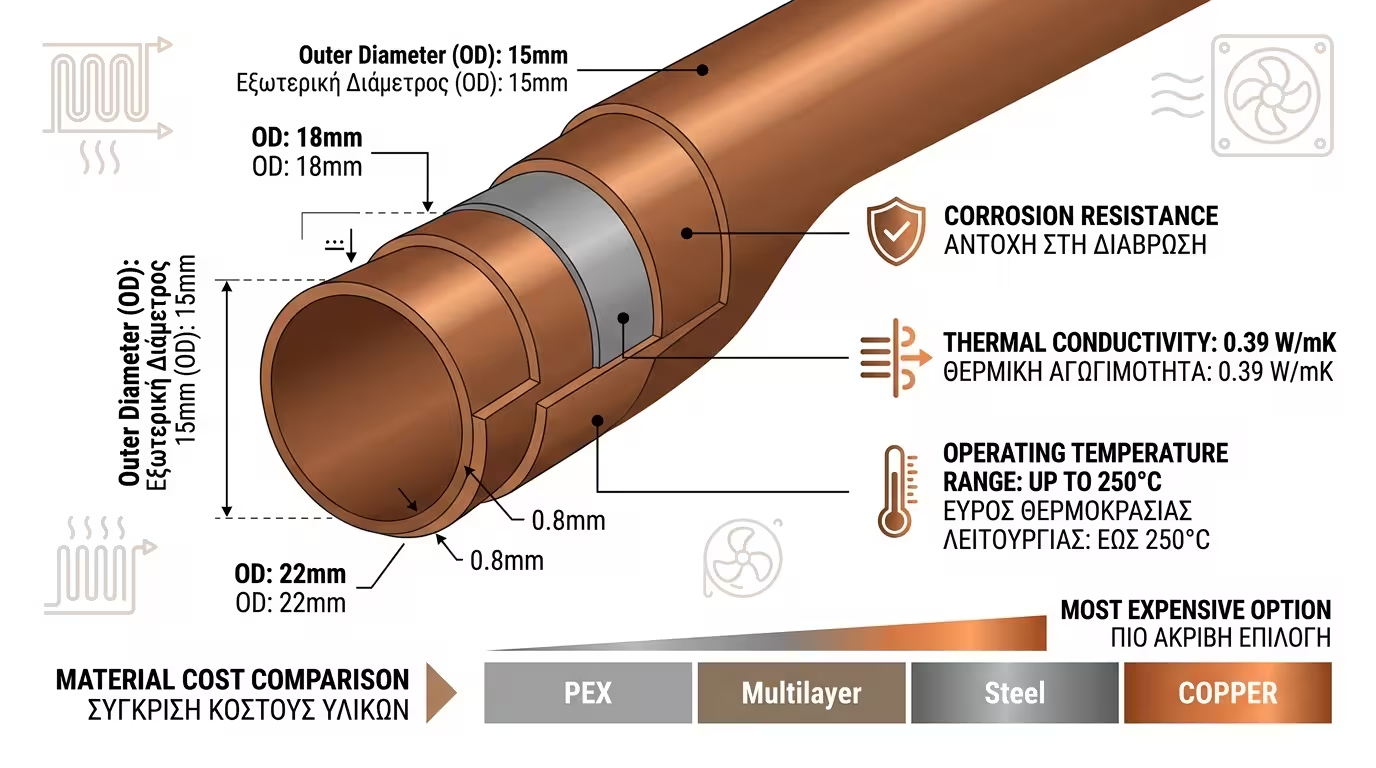
A properly installed copper pipe can easily last 50+ years. It withstands enormous pressures and extreme temperatures (from frost to superheated steam).
When hot water flows through copper, it barely elongates (barely expands) at all, unlike plastics which twist like snakes.
Copper naturally kills bacteria (such as Legionella), which is why it is considered the top material for drinking water.
It is by far the most expensive material, and its price fluctuates according to the global metals exchange.
It requires brazing with a torch at fittings (elbows, tees). This means many man-hours and depends entirely on the plumber's "craft". If the braze is not done properly, it will leak.
If copper comes into contact with other metals (e.g. iron) inside the heating network, it corrodes and develops pinholes (electrolysis phenomenon).
PEX (Cross-linked Polyethylene) is the material that changed the plumbing landscape, making installations fast and affordable. The pipe comes in large coils and the plumber needs no elbows - he simply bends it!
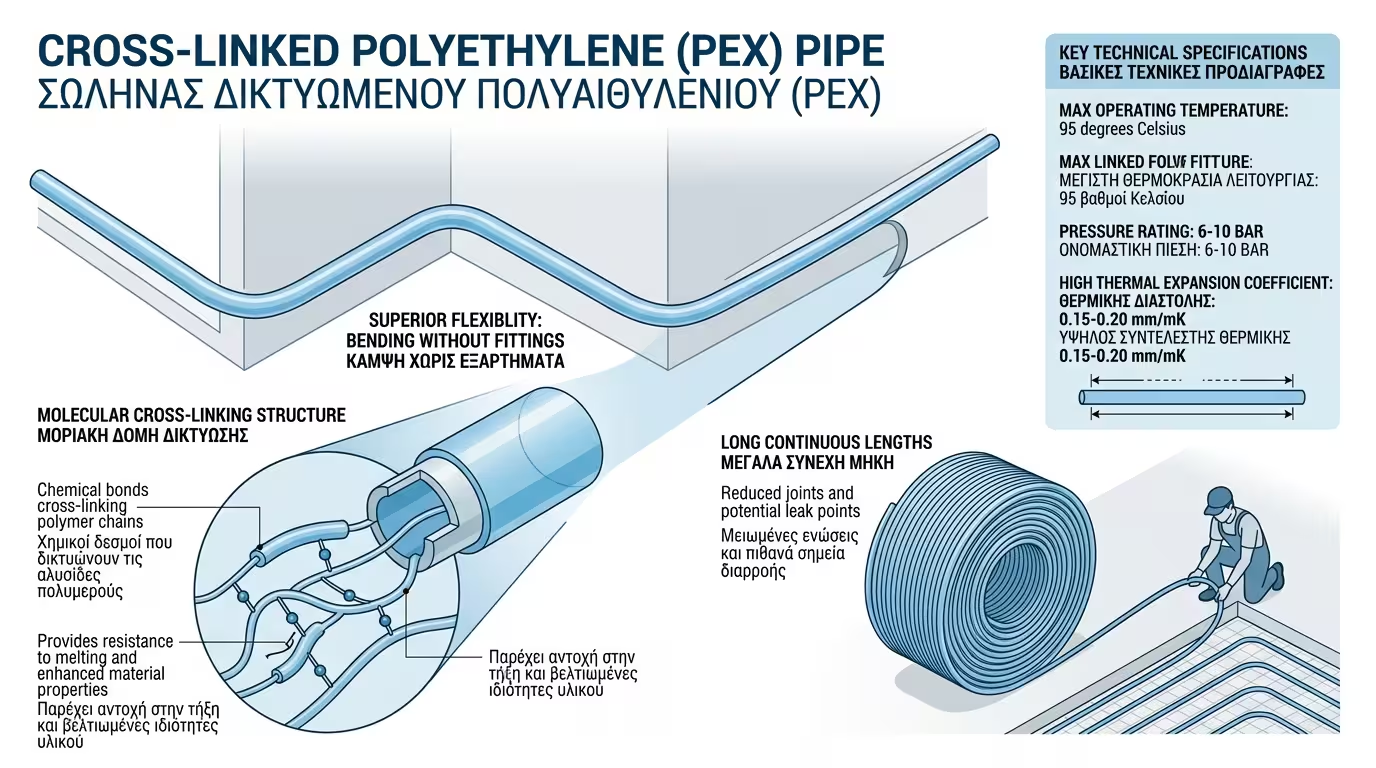
It comes in large coils. The plumber does not need an "elbow" to turn the pipe; he simply bends it! This means zero joints under the floor, hence zero risk of leakage.
No matter how hard the water is in your area, PEX will never develop limescale internally and is not at risk from electrolysis.
The material itself is very inexpensive and installation labour hours are minimal. It is the most economical solution for new installations.
If you run hot water through a 10-metre PEX pipe, it can elongate by as much as 15 centimetres! If it has no room to relieve the stress, it will buckle and "snap" its supports.
Plain PEX allows microscopic oxygen molecules to pass through its walls. In heating circuits (radiators / underfloor) this is catastrophic because the oxygen corrodes the boiler! You must buy PEX with an Oxygen Barrier (EVOH).
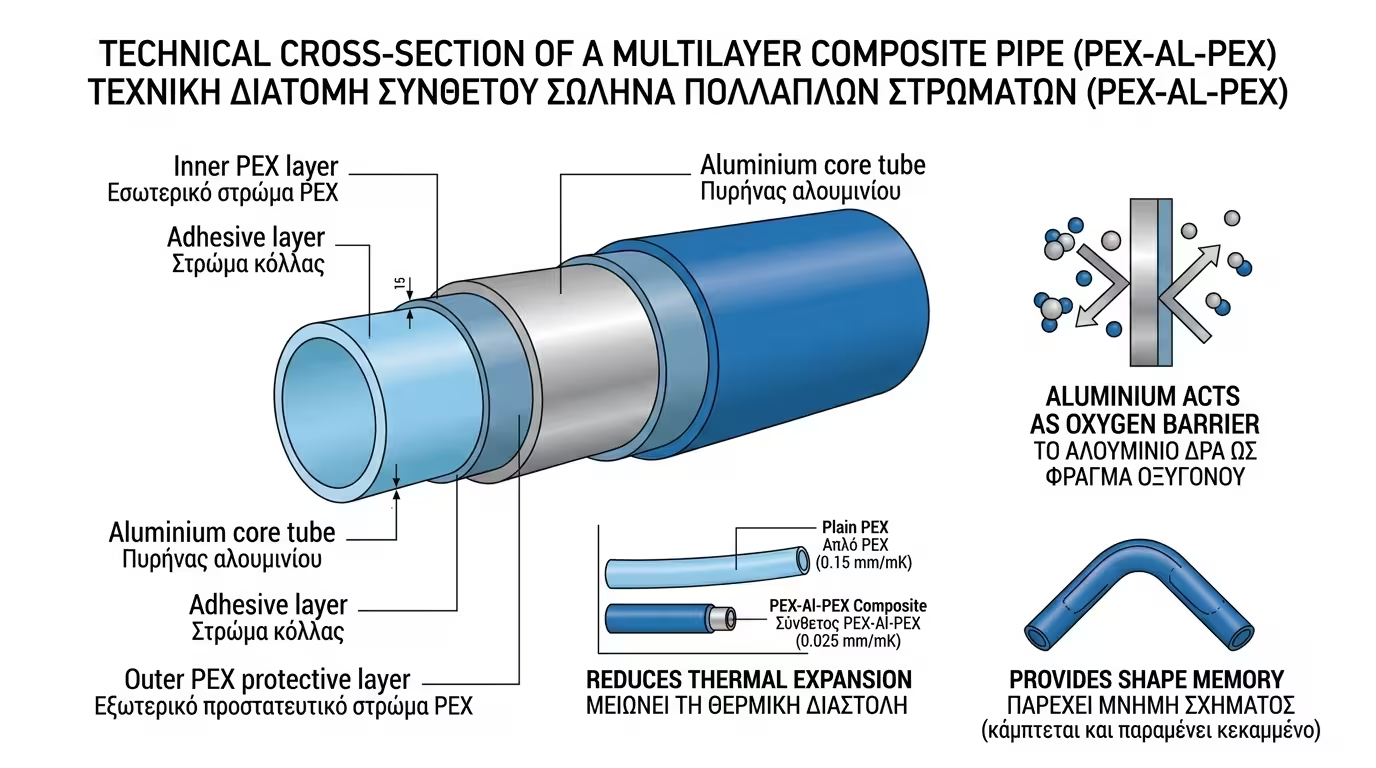
Engineers wanted a material that combines the strength of metal with the flexibility of plastic. And they built it. The multilayer pipe is a "sandwich": it has plastic (PEX) on the inside and outside, and in the middle an aluminium core.
Unlike plain PEX which behaves like a rubber hose and tends to spring back, if you bend a multilayer pipe to 90 degrees it stays there. This allows perfectly neat, "level" installations.
The aluminium layer does not allow a single oxygen molecule to pass, making it ideal for heating circuits.
The aluminium restrains the plastic, reducing thermal expansion to copper-like levels!
It is connected with mechanical crimping (press fittings) that seal with tremendous force, eliminating the human error factor of brazing.
While the pipe itself is reasonably priced, the brass press tees and elbows are quite expensive.
The installer must own an expensive electric press tool and special calibration (reaming) tools to install it correctly.
As engineers, our advice is not to pick "one material for everything" but to combine them smartly depending on the application and installation location.
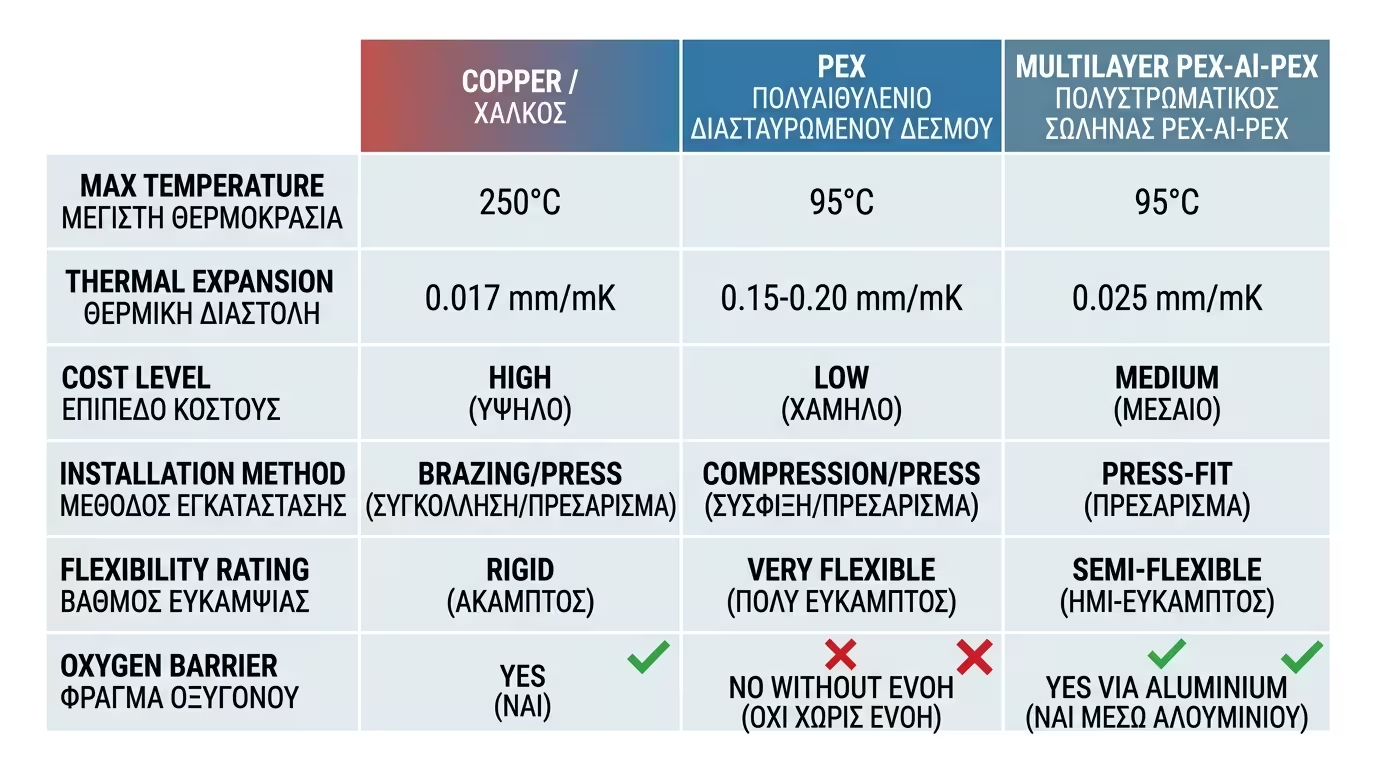
| Characteristic | Copper | PEX | Multilayer |
|---|---|---|---|
| Initial Cost | High | Low | Medium |
| Durability | Excellent (50+ yrs) | Very Good (30+ yrs) | Excellent (50+ yrs) |
| Ease of Installation | Difficult (Brazing) | Very Easy | Easy (Press-fit) |
| Thermal Expansion | Very Low | High | Low |
| Corrosion Risk | Yes (Electrolysis) | No | No |
Use exclusively PEX with an oxygen barrier or Multilayer. They come in single-length coils. Run the pipe from the manifold straight to the radiator with absolutely NO joints under the floor.
Where pipes are visible, exposed to sun, subject to impact or supporting heavy fittings (circulators, valves), Copper is the absolute must. Multilayer is also a good alternative if you want fast work without torches.
Copper is the most hygienic choice (though expensive). Multilayer (certified for potable water) is now winning the largest market share in new constructions thanks to its excellent quality-to-price ratio.
💡 Now that we have chosen the pipe material, there is something equally important that must "dress" this pipe. If we get it wrong, we will lose money every day and our walls will fill with mould from moisture.
Return to category.
Go to categoryReturn to the central guide.
Go to guide