💥 The shockwave
The water's kinetic energy is instantly converted into a shockwave of enormous pressure. It strikes the valve that just closed and "bounces" back through the pipe at the speed of sound.
Have you ever abruptly closed a tap or heard a loud "BANG" inside the wall when the washing machine finishes filling, accompanied by the pipes trembling?
That noise is not normal. It is called Water Hammer. Many homeowners assume it is just "air in the system", but the truth is exactly the opposite. It is pure physics and, left untreated, it can blow your plumbing installation apart.
Water has substantial mass and is an incompressible fluid: it cannot be squeezed to reduce its volume. Imagine it as a fully loaded train racing at high speed inside your pipes. When you abruptly close the tap, it is as if the train slams into a concrete wall!
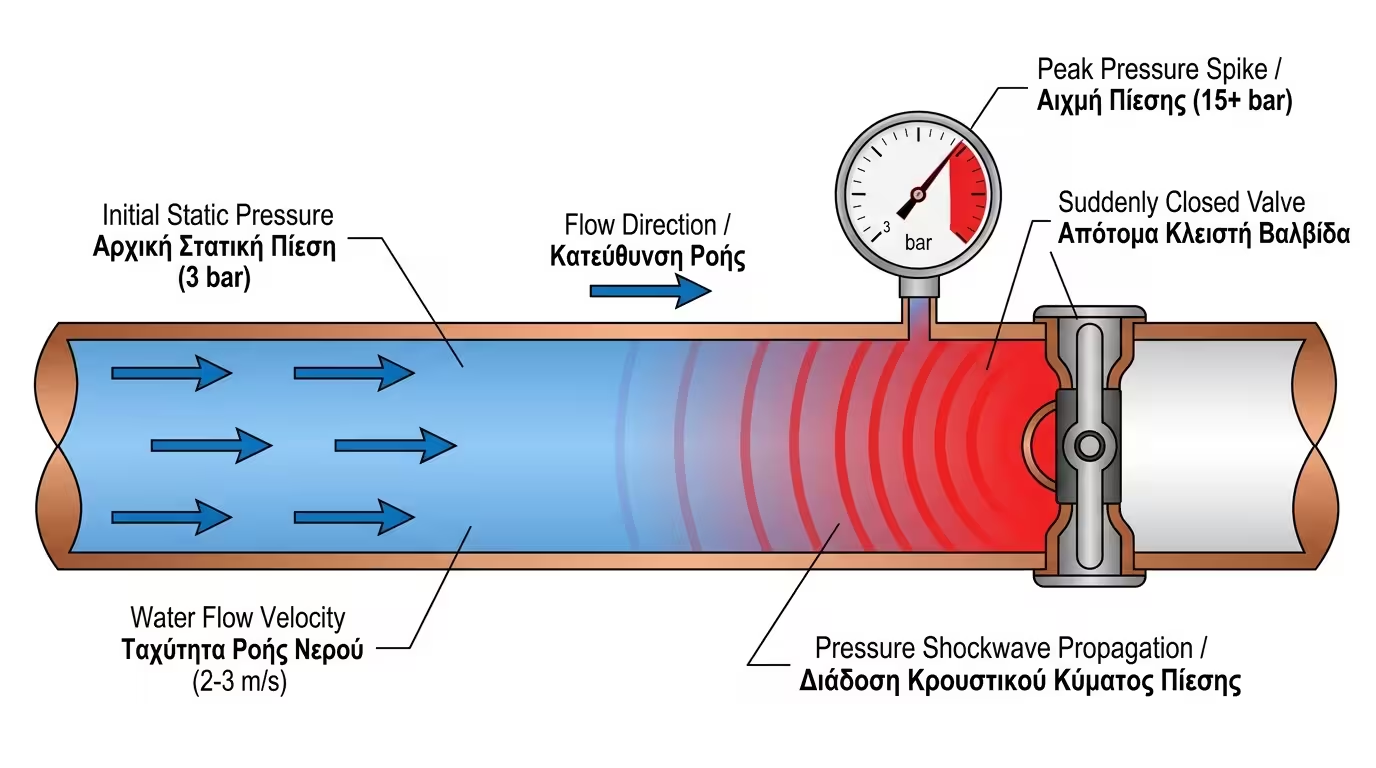
The water's kinetic energy is instantly converted into a shockwave of enormous pressure. It strikes the valve that just closed and "bounces" back through the pipe at the speed of sound.
The shockwave travels back and forth, causing the pipe to vibrate violently and bang against its supports. This creates the characteristic "BANG" sound you hear through the walls.
Water hammer creates instantaneous pressures that can reach 20, 30 or even 40 bar! Domestic pipes are designed to withstand at most 10 bar. Such a shock exceeds their design limits by 3-4 times.
The main causes are: abruptly closing a single-lever mixer tap, the electromagnetic valve of a washing machine snapping shut, and excessively high mains pressure (above 5 bar) which dramatically amplifies the shockwave.
Continuous daily hammering from these shockwaves causes damage that costs significant money and disruption. The most common consequences form a triple threat.
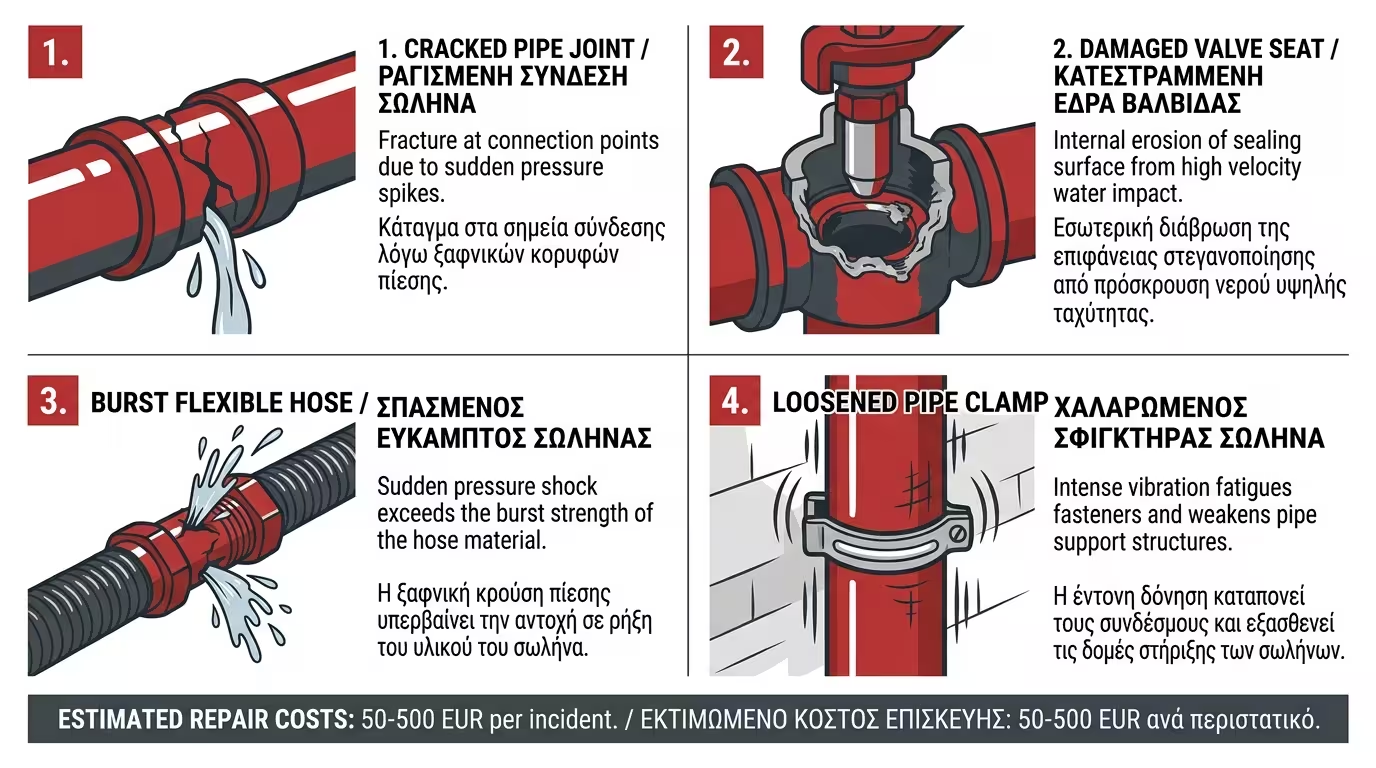
The O-rings inside press-fit fittings gradually degrade, while threaded compression joints loosen. They begin dripping imperceptibly under the floor, causing hidden water damage over time.
If the pipe is old or plastic and regularly receives this shock, it will eventually tear. Elbows and T-joints are the most vulnerable points due to the change in flow direction.
The shockwave destroys water heater valves, the heat exchanger in wall-mounted gas boilers, and the plate heat exchanger in your heat pump. Each failure costs hundreds of euros to repair.
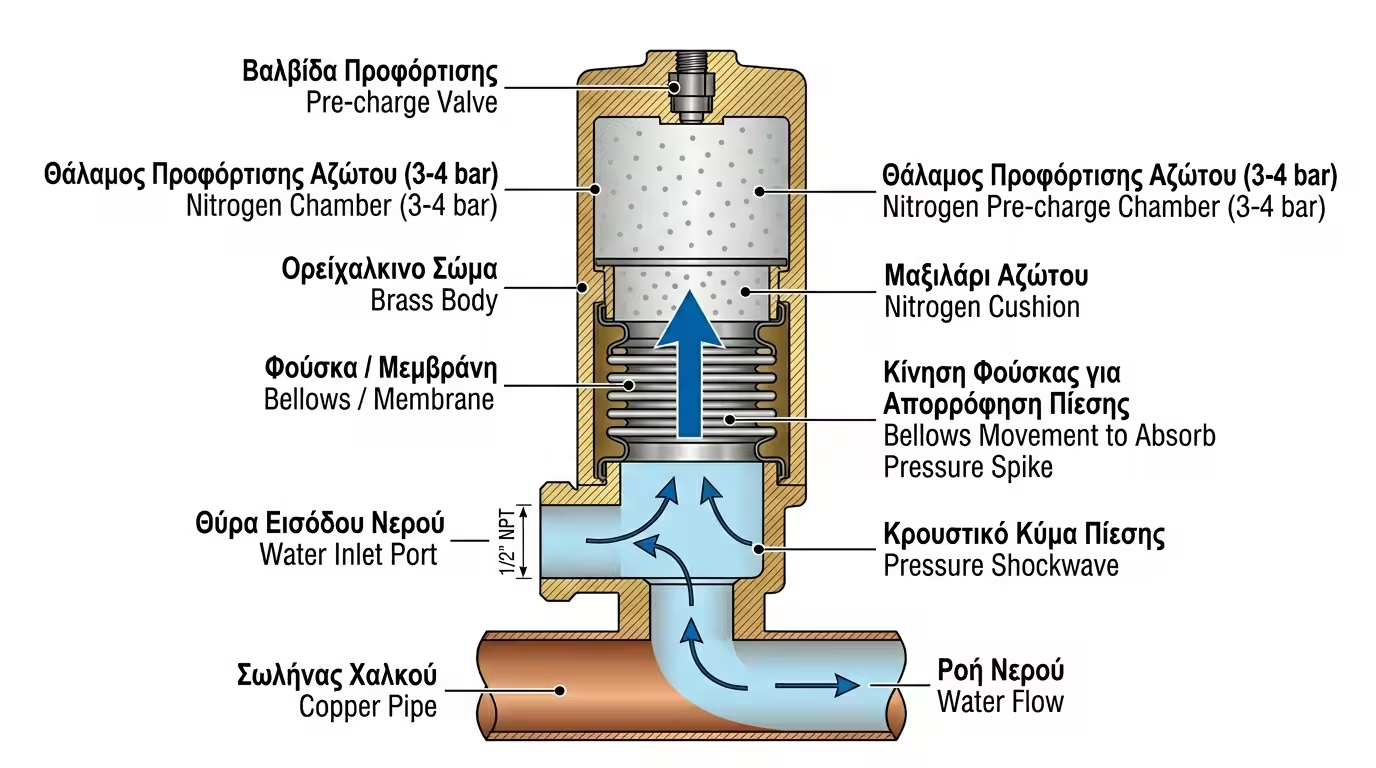
This is the definitive cure. An arrestor is a small, brass cylindrical device that screws onto the pipe, as close as possible to the appliance causing the problem.
Inside, it contains a piston and a chamber filled with compressed air or nitrogen. Unlike water, air is compressible! When the shockwave hits, it pushes the piston, and the air absorbs all the shock.
It works exactly like a car's suspension hitting a pothole. Instead of the rim cracking, the shock absorber absorbs the impact. The system calms down instantly, without bangs or noise.
It screws into a tee fitting, as close as possible to the offending appliance (e.g. behind the washing machine, next to the water heater, or on the main supply pipe).
Much of the noise also comes from the pipe banging against walls. Metal pipe clips with internal EPDM rubber lining eliminate vibration transmission to the building structure.
Water hammer is far more violent when the mains water pressure is excessively high (above 5 bar). Installing a Pressure Reducing Valve at the main supply regulates the pressure to a safe level.
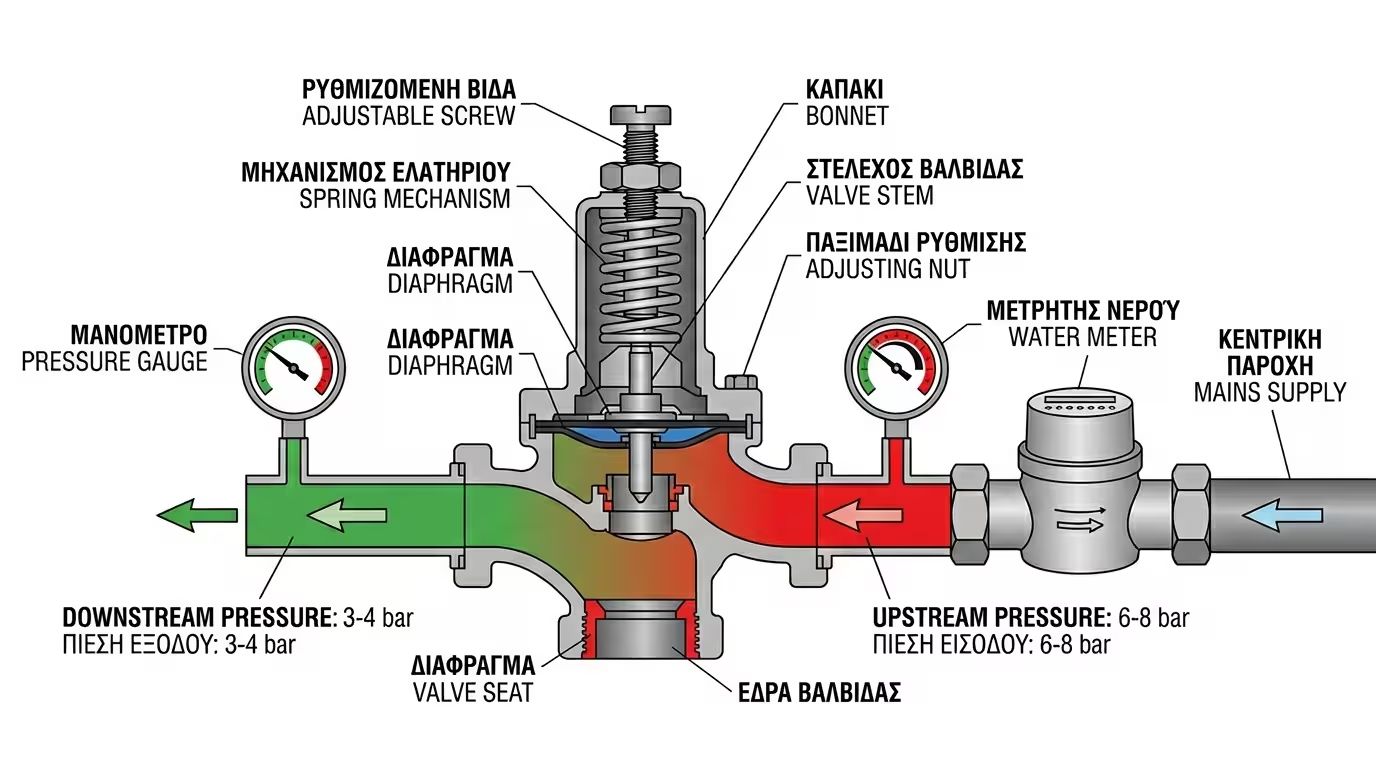
The PRV (Pressure Reducing Valve) is installed at the house's main supply, next to the water meter. It regulates the pressure to 3 to 4 bar, a safe level for all appliances and fittings.
Lower pressure = lower water velocity = less kinetic energy. This means the shockwave becomes much smaller. Often, pressure reduction alone is sufficient to eliminate the noise entirely.
Beyond hammering, excessive pressure stresses the seals of all taps, washing machine solenoids and electromagnetic valves. A PRV extends the lifespan of every plumbing component in your home.
💡 If you hear "BANG" sounds in the walls, do not ignore them. It is your installation crying for help. A pressure reducing valve and one or two water hammer arrestors cost very little, but will save your pipes from certain failure.
Return to category.
Go to categoryReturn to the central guide.
Go to guide