Wood Primers: Which and When? The Ultimate Selection Guide

The secret to a professional, durable result isn't hidden in the expensive topcoat - it's in the proper preparation. And the heart of preparation is the wood primer.

1. What Is a Wood Primer and When Is It ABSOLUTELY Necessary?

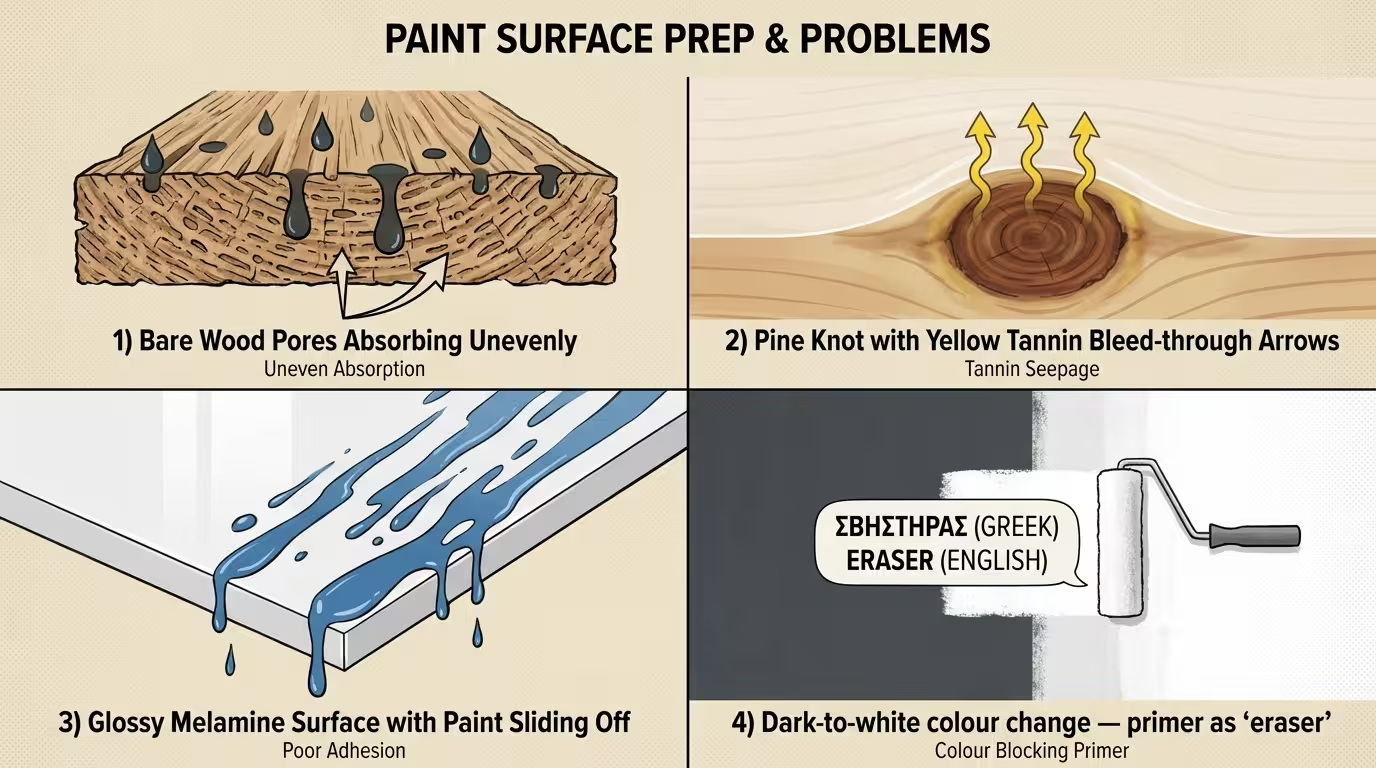
4 scenarios infographic: bare wood (pores), pine tannins (yellow stains), glossy melamine, drastic colour change (greek and english)

A primer isn't just thinned-down paint. It's a specialised material designed to act as a "double-sided adhesive" and insulating barrier. Its use is mandatory in the following scenarios:

🪵 Penetration & Mechanical Anchoring

Natural wood is highly porous. Solvent-based primers have a smaller molecular resin size, allowing for deeper penetration into the wood fibers. The primer fills the pores and creates a structural "anchor" for the topcoat, preventing uneven absorption.
🟡 Chemical Isolation of Tannins

Pine, oak, and mahogany contain water-soluble tannins. Specialty Stain-blockers contain reactive pigments that chemically bind with tannins, making them insoluble and preventing their migration (bleed-through) to the final coat.

✨ Glossy / "Difficult" Surfaces (Melamine/Lacquer)

Glossy polyurethane-coated surfaces or melamine have no micropores for adhesion. A strong bonding primer is required here.

🔄 Drastic Colour Change

Converting a dark bookcase (e.g. wenge) to white? A white primer "erases" the dark base, saving you 4-5 coats of expensive topcoat.

2. When CAN You Skip the Primer?

There are practical exceptions to the rule. You can skip priming if:

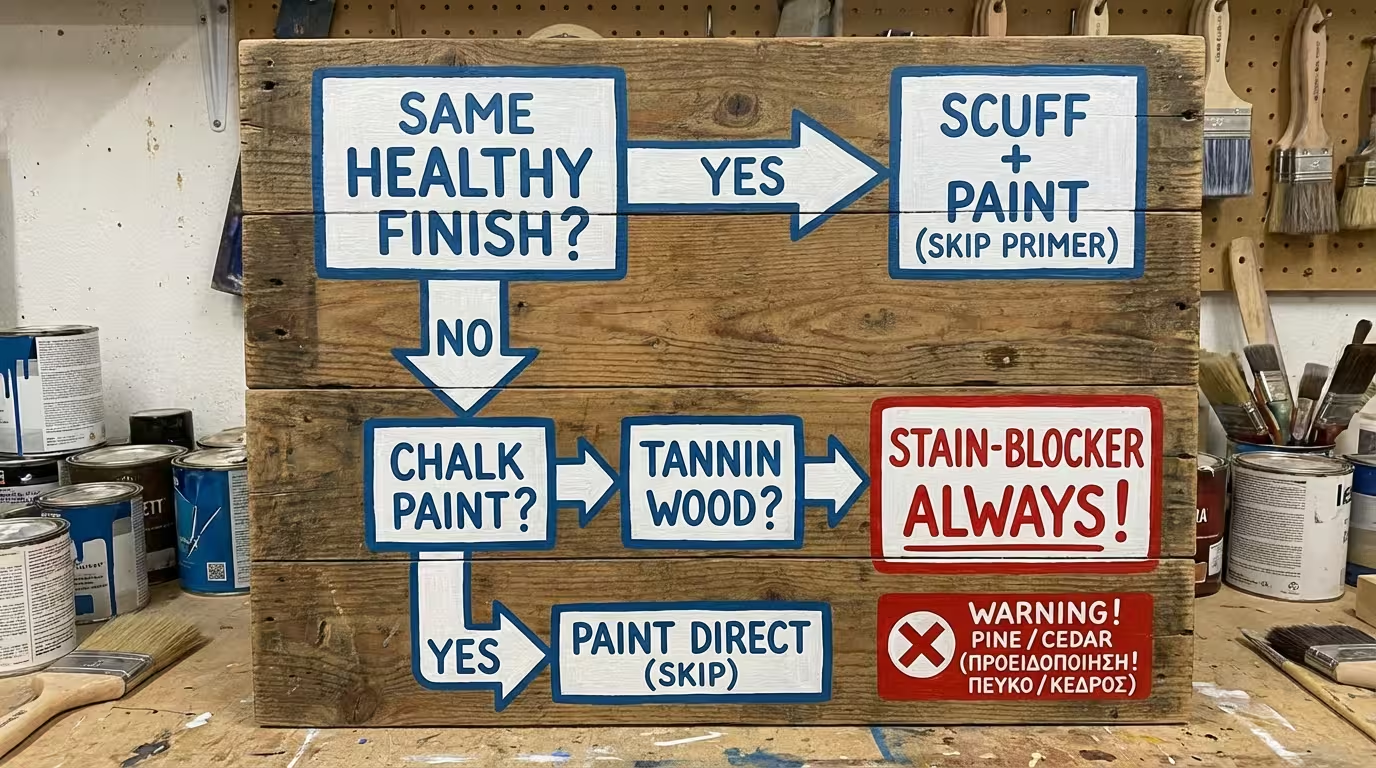
Same, Healthy Finish: If the furniture is already painted with a matte/satin finish, isn't peeling anywhere, and the new shade is similar (e.g. light grey → white), a good wash and light scuff-sanding is enough.

Chalk Paints: Their formulation allows adhesion to almost any surface without preparation. Exception: if the wood bleeds tannins, a stain-blocking primer remains always necessary, even under chalk paint.

Infographic: same healthy finish → scuff enough. Chalk Paint → grips without primer (unless tannins!) (greek and english)

3. Buying Guide: 3 Primer Types

At the paint shop you'll hear various terms. The choice depends on the problem you need to solve:

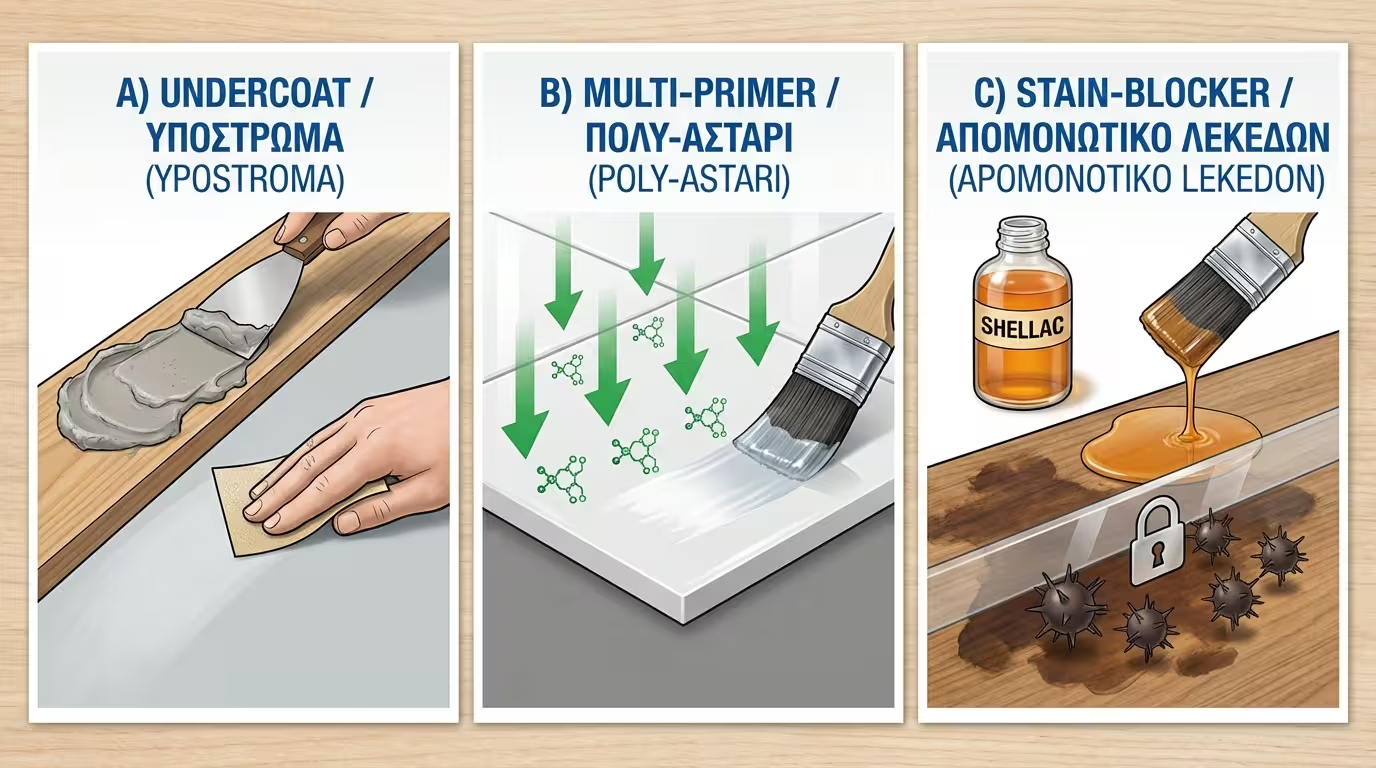
Infographic: A) Undercoat (filling canvas, water/solvent), B) Multi-Primer (chemical bond), C) Stain-Blocker (shellac, tannins) (greek and english)

🎨 A. Undercoat

The filling "canvas": thick, high-coverage. Fills wood grain and pores of wood or MDF. Sands easily to a glass-smooth surface. Water-based (odourless, 1-2h dry, won't yellow) or Solvent-based (fuller body, better moisture barrier for exteriors).

🔗 B. Multi-Primer (Bonding Primer)

For surfaces that feel like glass: melamine, coated MDF, old glossy oil paints. Works literally like "glue", creating a chemical bond with the smooth substrate.

🛡️ C. Stain-Blocker

For resinous pine, nicotine stains. Top choice: Shellac primers - permanently lock every odour and tannin. Modern acrylic options (Vivedur Block, Smaltox Hydro) perform excellently without the strong smell.

4. Technical Corner: For Professionals & Engineers

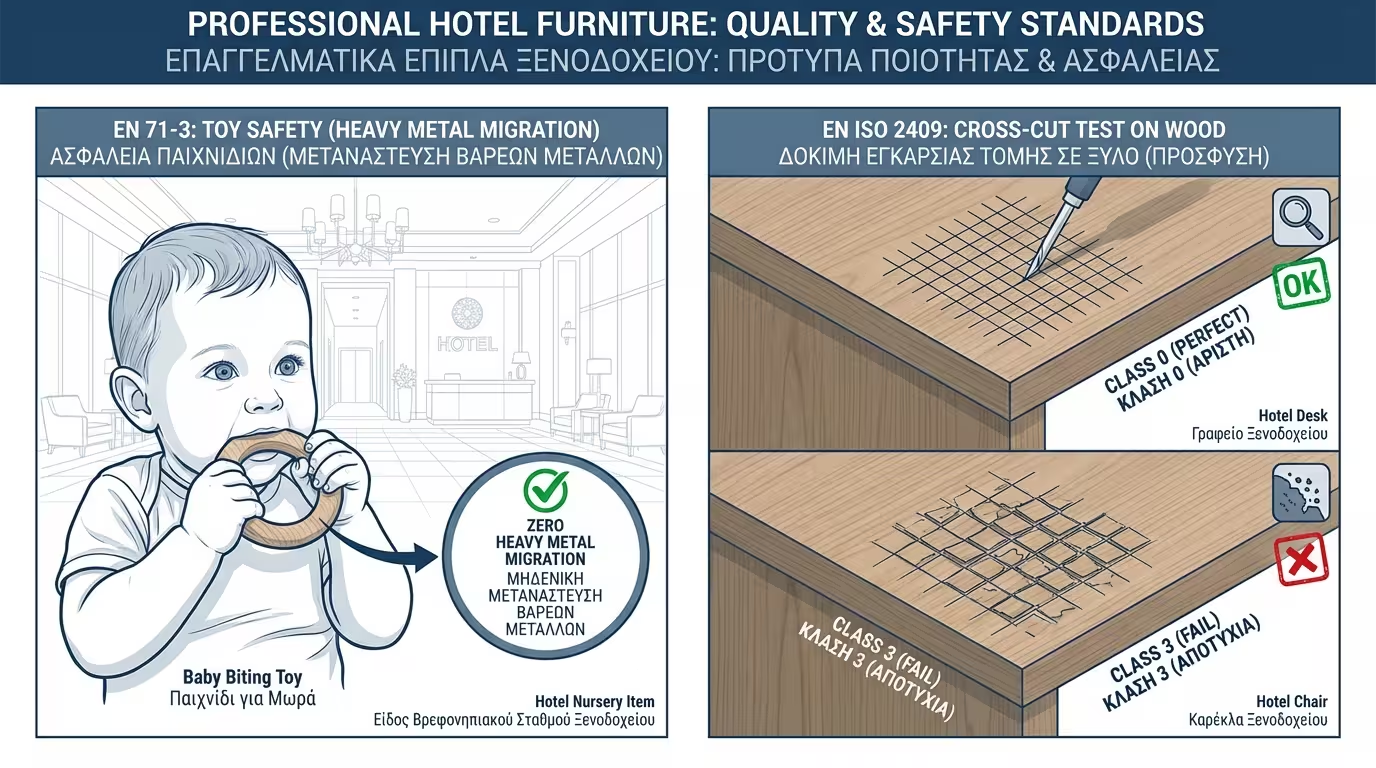
Infographic: tannin bleed-through mechanism, EN 71-3 children's furniture, EN ISO 2409 cross-cut test Class 0-1 (greek and english)

For those writing specifications for public or large private projects:

🧪 Chelation Mechanism

Tannins migrate via osmosis. High-performance water-based stain-blockers use pigments that "trap" tannin molecules through chelation, converting them into stable, opaque complexes that cannot penetrate the paint film.

👶 EN 71-3 (Children's Furniture)

For wooden toys, cots or nursery furniture, both primer and topcoat must carry EN 71-3 certification - zero migration of toxic heavy metals (cadmium, lead etc.).

🔬 EN ISO 2409 (Cross-Cut Test)

In professional renovations (e.g. hotel furniture), bonding primer adhesion is assessed via the cross-hatch test. A successful system (primer + topcoat) must achieve Class 0 (no detachment) or at most Class 1.

💡 Don't view primer as a "waste of money". It's the foundation of your work. Undercoat for bare wood, Stain-Blocker for pine resin, Multi-Primer for melamine. Proper preparation means a paint job that lasts decades.

Related Articles

Preview