
Paints for Building Facades
Return to category.
Go to categoryHow Water Enters Masonry Without Cracks , and How It Is Addressed
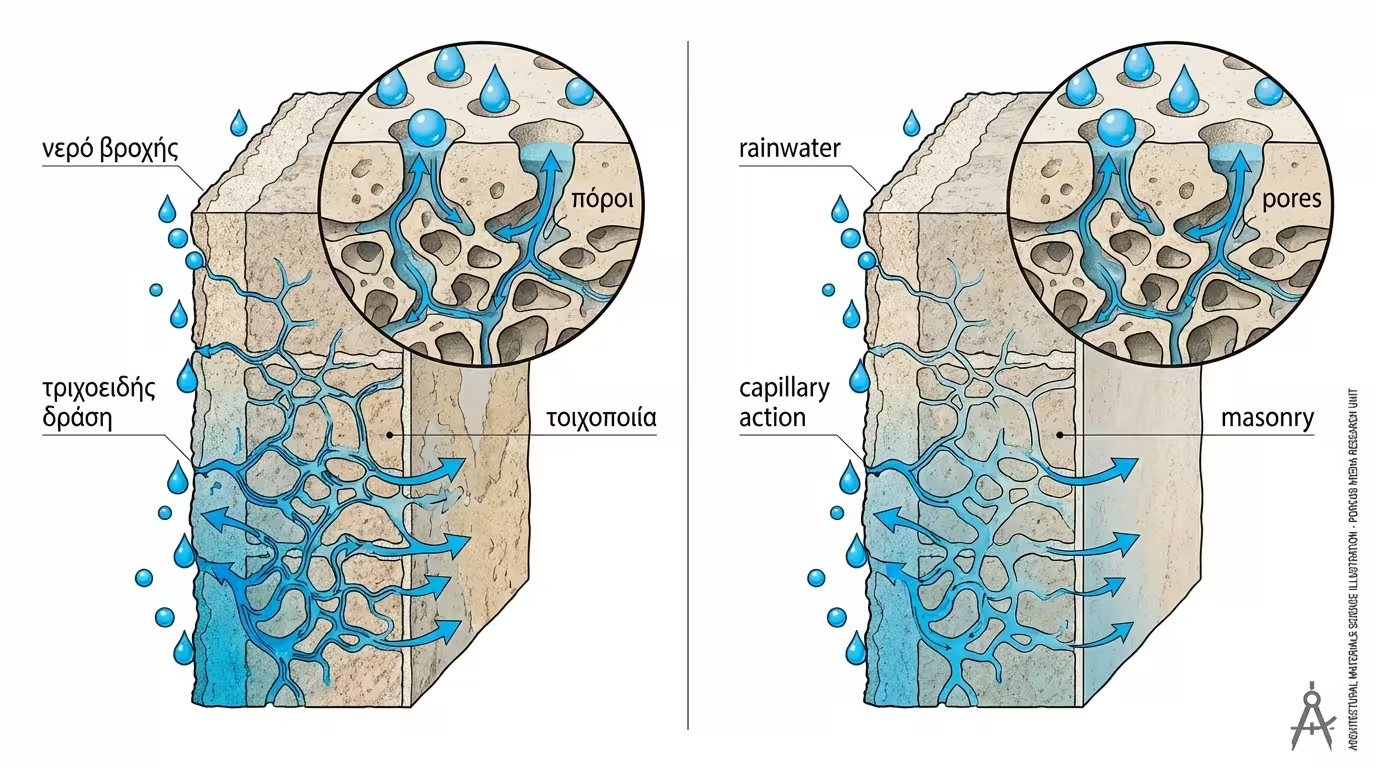
It is a common misconception: "since the wall has no cracks, water cannot enter." In reality, even seemingly intact plaster or concrete absorbs water. The mechanism is called capillary absorption and it is one of the main ways exterior facades deteriorate , especially in buildings with porous materials or aged render.
To understand why paint plays a role, we first need to understand what exactly happens at a microscopic level inside the wall.
Building materials , plaster, concrete, brick , are not solid. Under magnification, they are riddled with microscopic pores: channels less than a millimetre in diameter. When the exterior surface gets wet (rain, humidity, washing), water enters these channels without any external pressure , solely due to natural forces (surface tension and contact angle).
The process is slow but continuous. With every rainfall, a few more millimetres of water enter the mass of the wall. Then it needs to dry out , but if the next rain comes before evaporation is complete, moisture accumulates. Over time, the masonry becomes permanently damp.
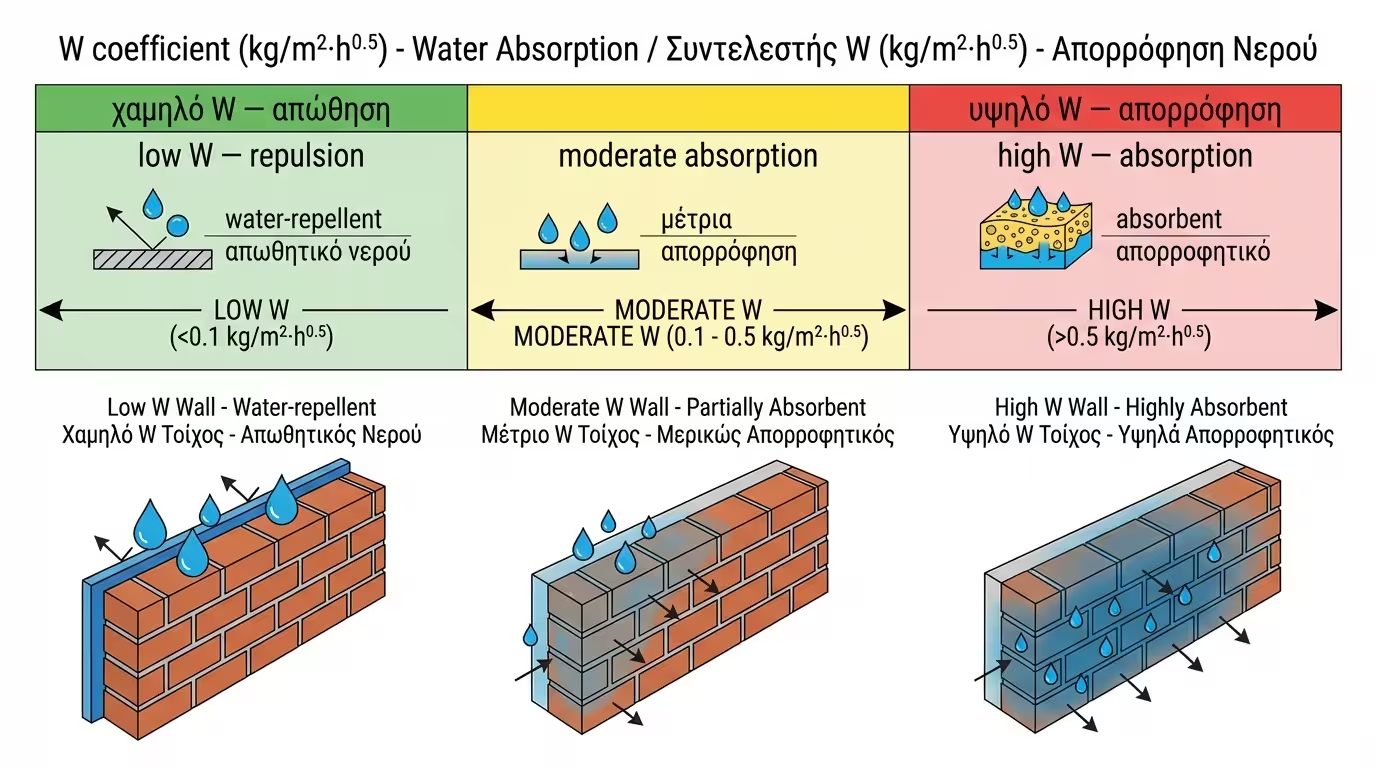
Science measures a material's tendency to absorb water through capillary action using the W coefficient (kg/m²·h0.5). A material or paint system with a low W absorbs very little water , the surface "pushes" droplets away instead of soaking them up. Conversely, a high W means water is "drawn" in like a sponge.
On exterior facades, the technical goal is clear: we need a paint system with low W (does not absorb water) and simultaneously low Sd (allows water vapour to escape). If both are satisfied, the masonry is protected without trapping moisture. If only one is met, the problems simply shift.
Think of the wall as a lung: it must "breathe" (low Sd), but it must not "drink water" (low W). A Gore-Tex jacket does exactly this , and the right paint works on the same principle.
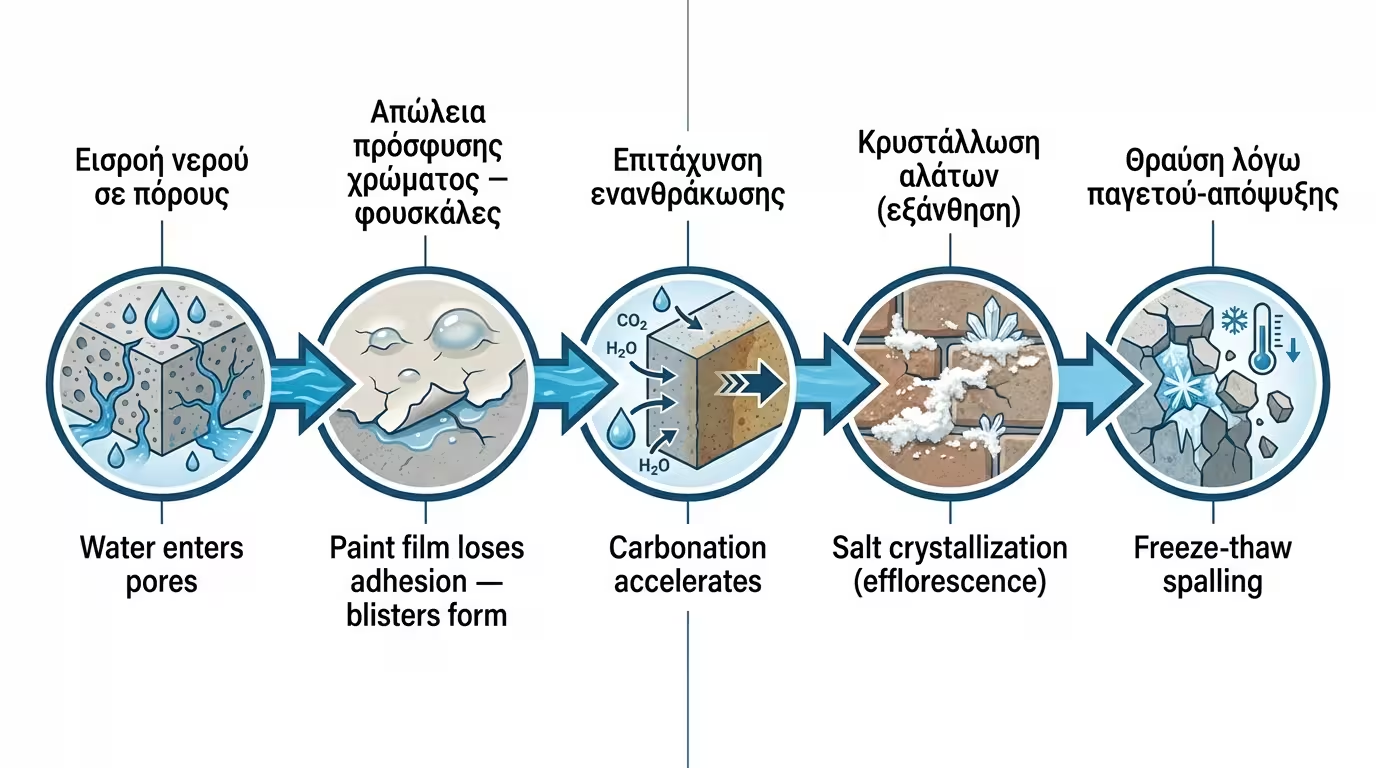
Persistent moisture inside the wall does not only cause aesthetic problems , it triggers a chain of damage. First, the paint itself breaks down: the film loses adhesion, blisters appear, the surface fades prematurely. This is visible.
Behind this, more serious processes occur: moisture accelerates carbonation of the concrete (which depends directly on the presence of water). At the base of the wall or at joints, efflorescence appears , white crystalline salts carried to the surface by water. In cold climates, trapped moisture can freeze , and ice, as it expands, breaks the plaster from within.
Capillary absorption, therefore, does not only damage the paint. It damages the entire building material , plaster, concrete, reinforcement , if left untreated.
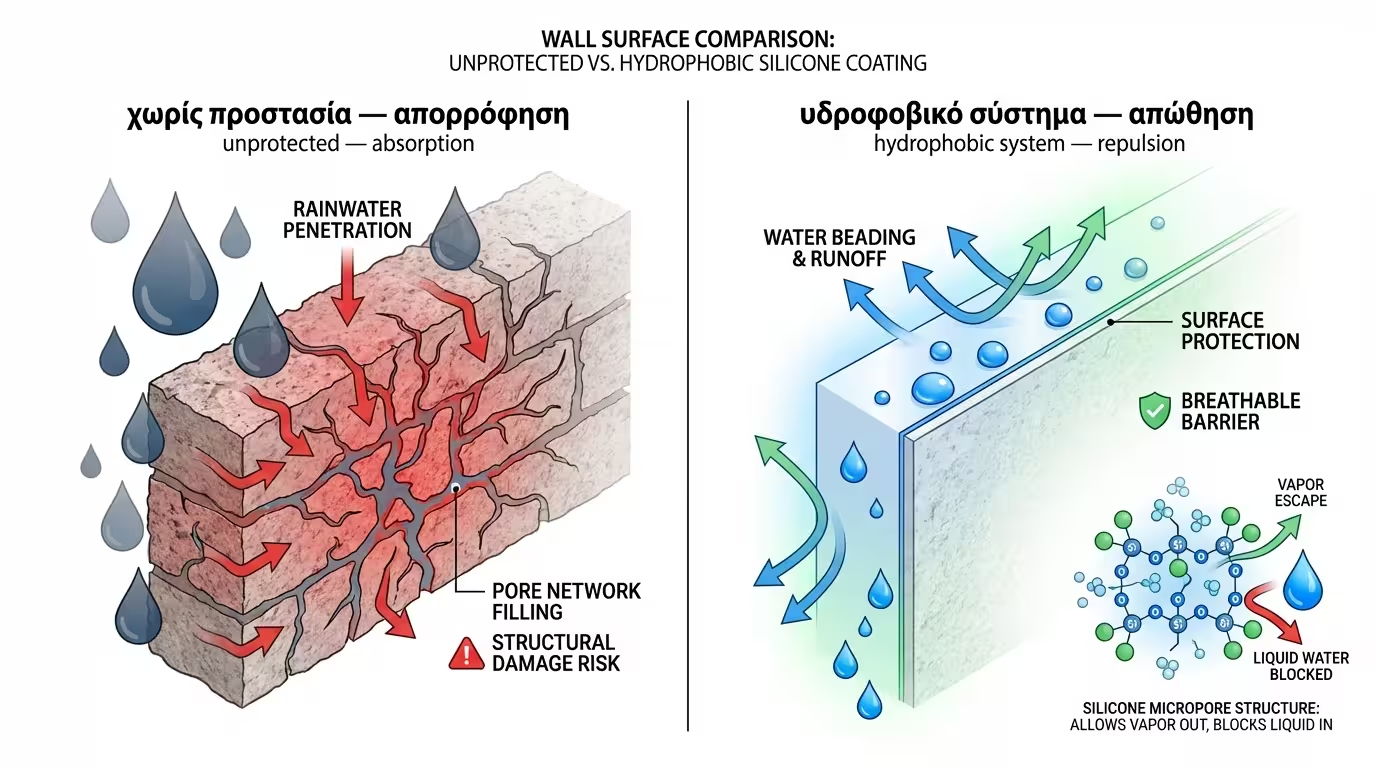
Modern silicone-based and hydrophobic paint systems fundamentally change the behaviour of the exterior surface. Instead of allowing water to "enter", they create a low-energy surface , similar to that of a lotus leaf , where droplets roll off instead of being absorbed.
The chemistry behind this is based on silicone molecules embedded in the resin. These create micropores large enough for water vapour (water molecules in gas phase) to pass through, but small enough to prevent liquid water droplets from penetrating. This dual mechanism - hydrophobicity without blocking vapour , is why silicone-based paints are considered the top choice for exposed facades.
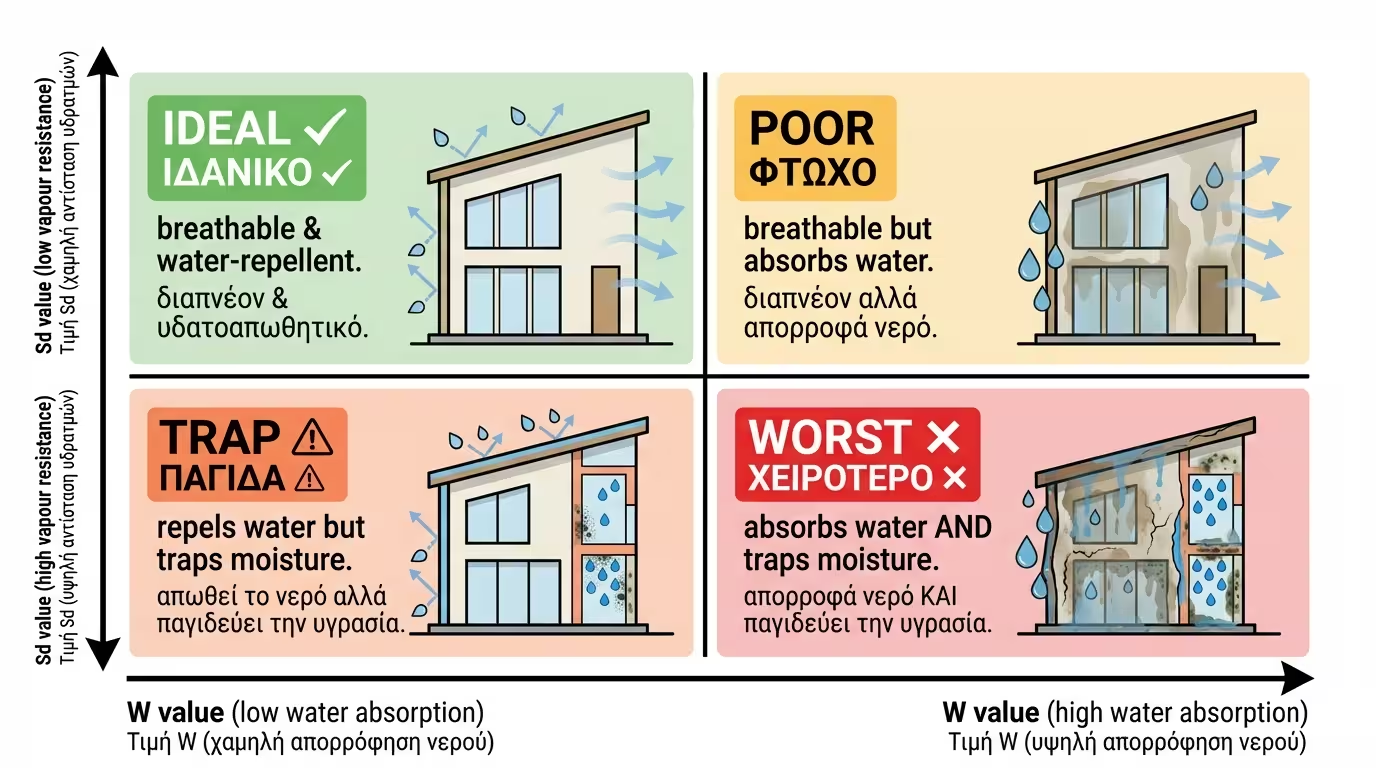
It is not enough for a system to repel rain. If it simultaneously "seals" the wall and does not allow water vapour to escape (high Sd), it creates a different form of entrapment. Moisture already present inside the wall , from construction, past rain, or interior use , cannot evaporate.
This explains why some buildings develop blisters just 1–2 years after painting, despite using "expensive" paint. The problem was not the price but the inappropriate W/Sd balance , low W but high Sd, meaning rain does not enter but moisture cannot escape.
The ideal exterior paint must do two opposite things: repel liquid water but allow water vapour to pass through. This is not self-evident , and not all systems deliver it.
On every exterior facade, water repellency offers an advantage. But there are cases where it becomes a necessity , not merely an upgrade.
In coastal areas, permanent humidity and salt-laden air dramatically increase capillary absorption. On north-facing exposed facades , those that never see sunlight in winter , evaporation is slow and moisture persists. In buildings with porous render or aged plaster, the material's structure "draws" water in like a sponge.
In these cases, choosing a simple acrylic without hydrophobic properties means the wall will become saturated , and the paint will begin to fail well before its expected lifespan.
The long-term protection of an exterior facade does not depend solely on the colour or the brand. It depends on three technical parameters that must be satisfied simultaneously: low W (low capillary absorption), low Sd (high breathability), and sufficient film thickness (complete pore coverage).
Choosing a paint system is not a matter of shade , it is a matter of the physical behaviour of materials. And that physics does not change depending on the brand or the price.
Return to category.
Go to categoryReturn to the central guide.
Go to guide