What Happens Beneath the Plaster , and Why Paint Can Make a Difference
The invisible problem in aging buildings
In a 30-year-old apartment building, the visible damage , faded walls,
plaster cracks, moisture stains , is often just the tip of the iceberg.
Behind these traces lies a slow, steady chemical process occurring
centimeters deep: the carbonation of concrete.
It has no smell, no sound, no visible sign , but if it reaches the
reinforcement, it can jeopardize the structural integrity of the entire
building. External paint, in this context, is not just an aesthetic
upgrade , it can act as a barrier to delay the process.
How carbonation works
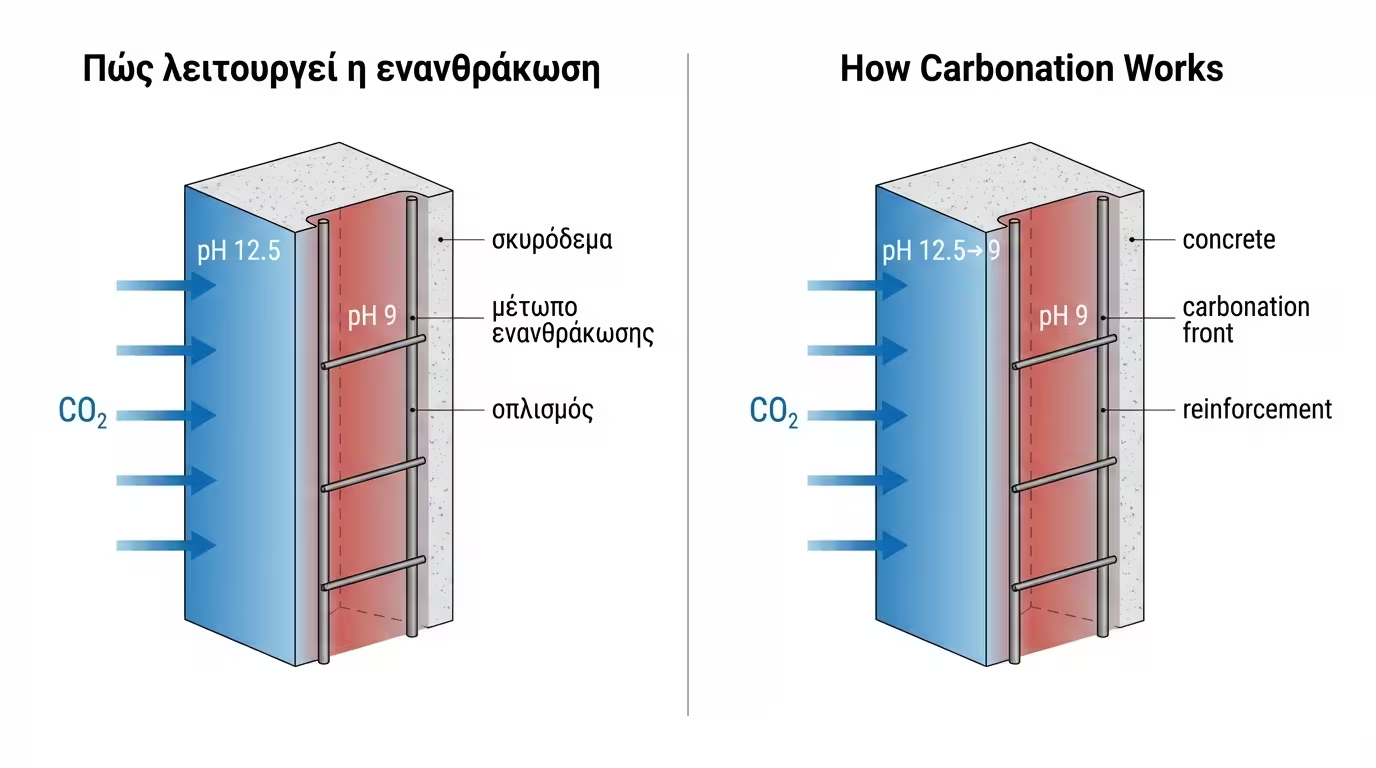
When concrete is freshly poured and removed from formwork, it has a
very high pH , around 12.5–13. This alkaline environment creates a
"passive" oxide film around the steel reinforcement, protecting it
from rust. Like an invisible anti-corrosion shell.
Over the years, however, atmospheric CO₂ gradually penetrates the
pores of the concrete. There it reacts chemically with calcium
hydroxide (Ca(OH)₂) to produce calcium carbonate (CaCO₃). This
reaction gradually lowers the pH. The "carbonation front" advances
inward , millimeter by millimeter, year after year.
When the pH in the reinforcement zone drops below ~9, the protective
film collapses. The steel begins to rust , and this rust does not stop
on its own.
What happens when reinforcement starts to corrode
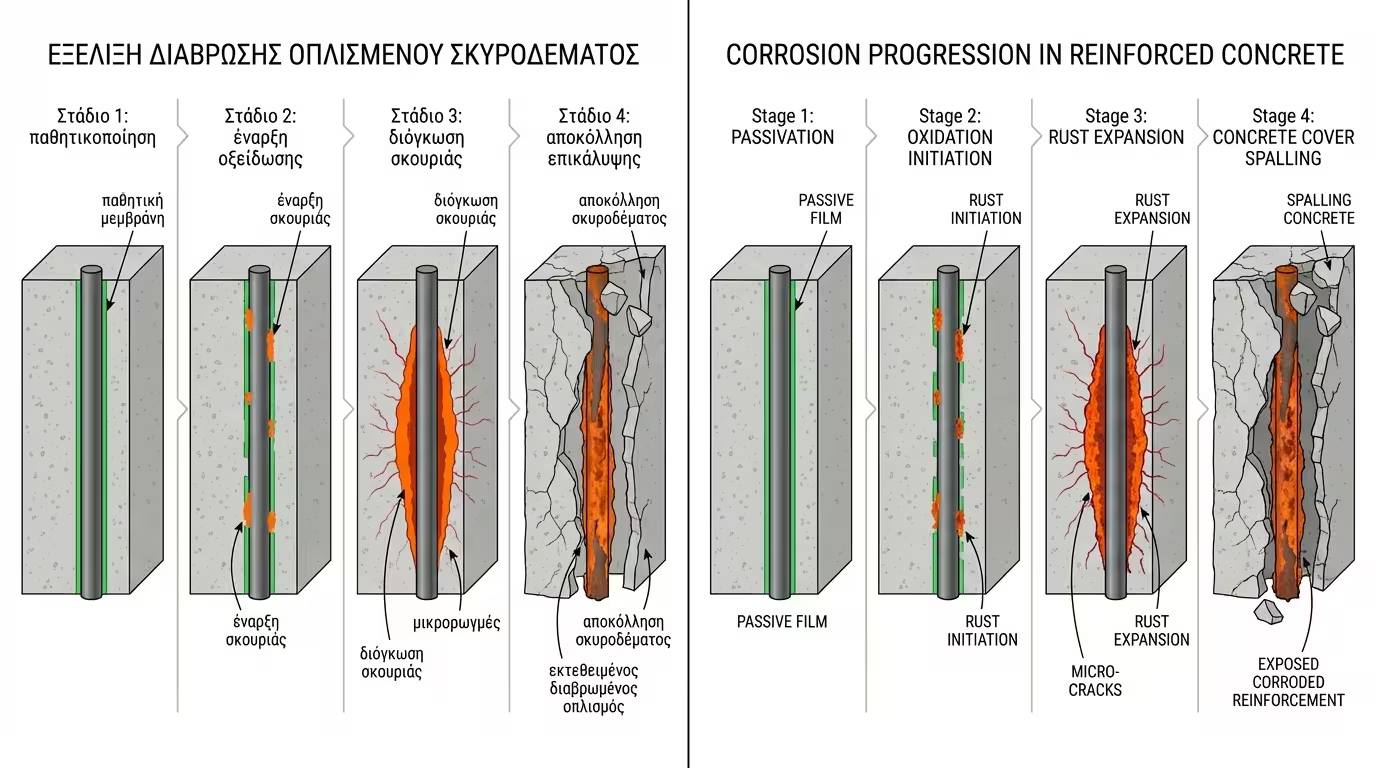
Rust (iron oxides) is not just a stain. It has a particularly
dangerous property: its volume is up to
6 times larger than the original steel. This expansion
creates enormous internal pressures within the concrete.
Initially, micro-cracks appear on the surface, easily ignored.
Gradually, the concrete cover "breaks" , and in some cases pieces fall
off, exposing the corroded reinforcement. This is not a "paint
problem" or a "plaster problem" , it is a structural problem that requires engineering assessment.
The visible signs , brown stains on the surface, swollen plaster
around beams, exposed rebar at balcony corners , mean the damage is
already underway. They cannot be "fixed" with a coat of paint.
How paint can slow the process
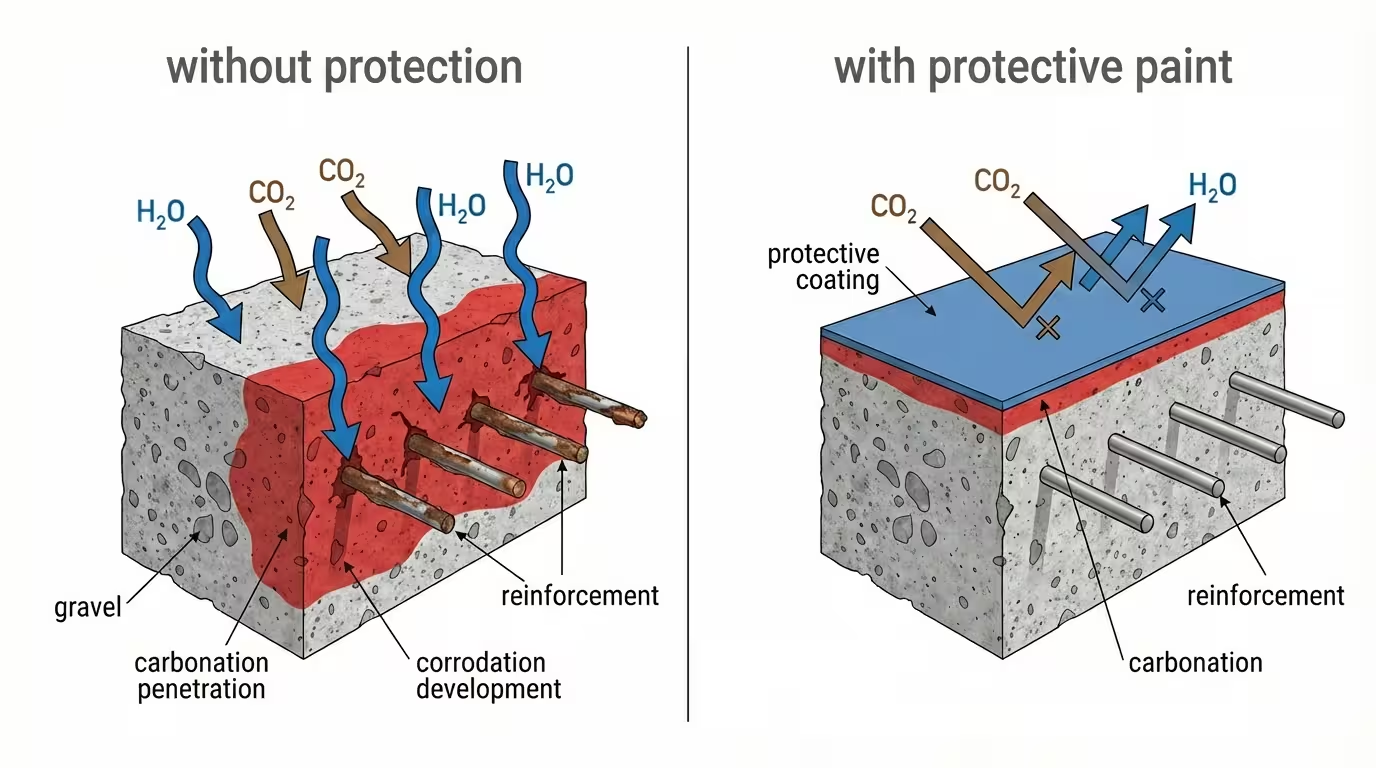
Paint does not stop carbonation , but it can
significantly slow it down, provided it is applied
before the damage reaches the reinforcement. It works as a dual
barrier:
CO₂ barrier
The resin structure creates a film that partially blocks the
diffusion of carbon dioxide into the concrete. This slowdown can
add years of life to the reinforcement , especially if the
carbonation front is still far from the steel. Effectiveness
depends on the resin type and, above all, the film thickness.
Water barrier
Moisture is the catalyst for corrosion. Without moisture, even at
low pH, steel does not actively corrode. A water-repellent system
contributes indirectly to protection by keeping the concrete mass
drier.
What accelerates , or slows , carbonation
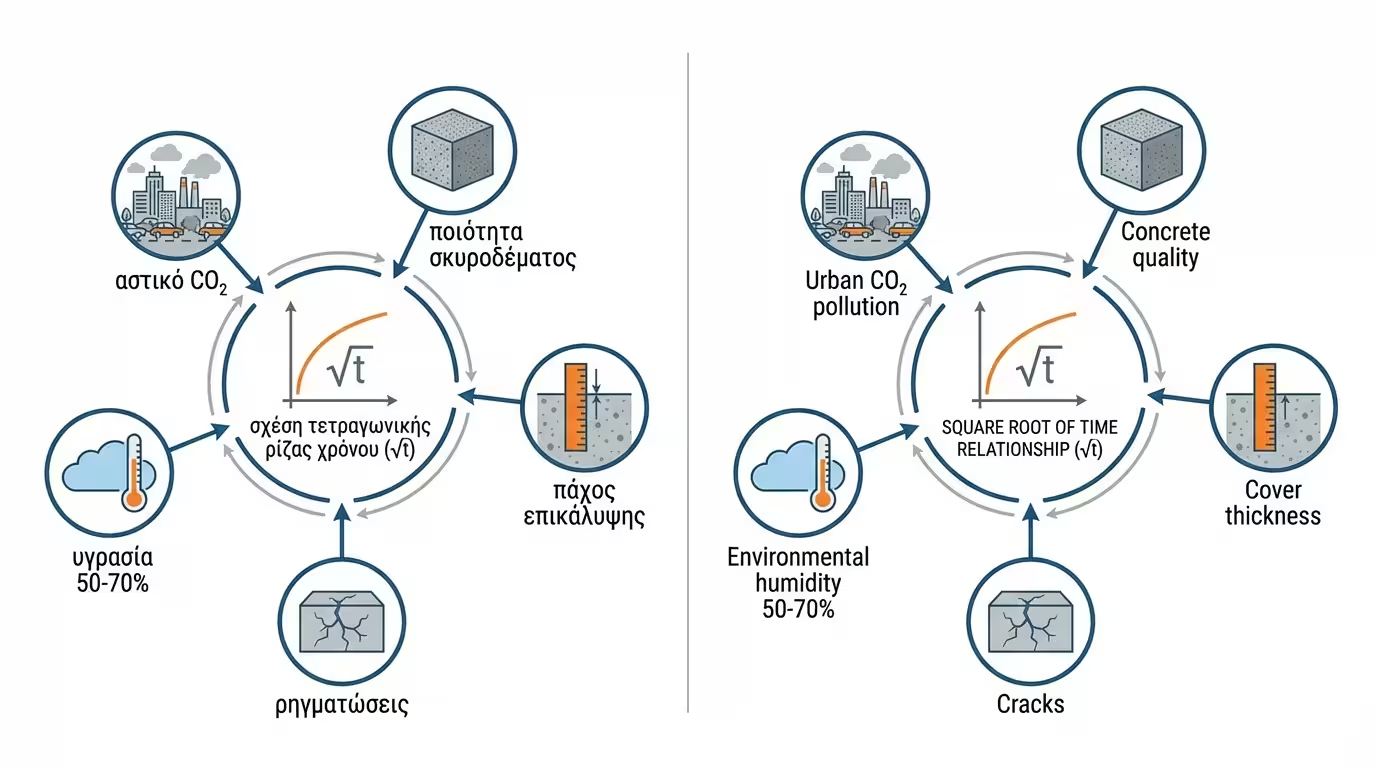
The rate of carbonation is not constant. It depends on interacting
factors , some controllable, some not.
Concrete quality is the most important factor: dense concrete
with a low water/cement ratio resists much longer. Unfortunately, in constructions
of the '70s–'90s the quality was not always high.
Cover thickness (the distance from the surface to the first
reinforcement) plays a decisive role. Current regulations require at least
25–30 mm, but in older buildings we often find 10–15 mm , inadequate in
urban environments.
Ambient humidity has an inverse effect: the maximum carbonation
rate occurs at 50–70% relative humidity , typical of the Greek climate.
And in urban centres, the increased CO₂ concentration
from traffic further accelerates the process.
Carbonation progresses proportionally to the square root of time (√t). This means that external protection in a building's early years has
disproportionately high value , while delaying repairs costs
exponentially more.
Which coating systems offer the best protection
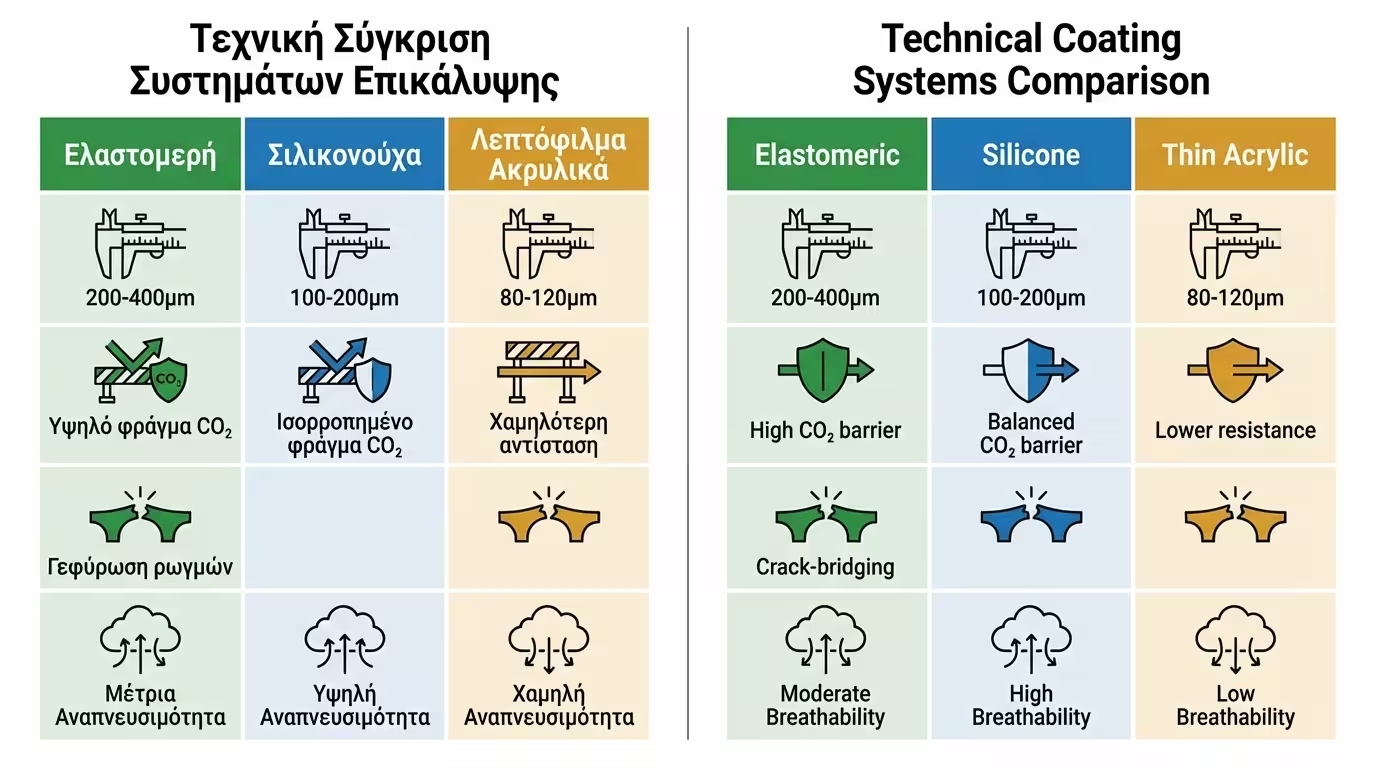
Not all paints work equally as a CO₂ barrier. Elastomeric systems , due to their greater film thickness (200–400 μm) , create a thicker
barrier and bridge micro-cracks. This means fewer openings through which
CO₂ can penetrate.
Silicone-based paints offer a different advantage: excellent
balance between CO₂ barrier and breathability. This is important because
a system that completely blocks diffusion may trap moisture , which, as
we saw, accelerates corrosion.
Conversely, simple thin-film acrylics (80–120 μm) offer
less resistance to CO₂ diffusion. In buildings where carbonation is already
approaching the reinforcement, this difference can translate into years
of service life.
When paint is not enough
If carbonation has already reached the reinforcement and corrosion is
underway, paint alone solves nothing. The signs are clear: exposed
rebar, disintegrated concrete, crumbled cover.
In this case, the proper approach includes: removal of damaged concrete,
cleaning the reinforcement of rust, application of anti-corrosion
protection, restoration with specialized repair mortars, and finally application of a protective coating system.
The order of work is critical , painting over a damaged substrate does
not hide the problem, it merely delays its reappearance slightly.
Conclusion
Carbonation is not theory , it is a reality that affects every building
with a reinforced concrete structure. The right façade paint, if applied
in time and with technical criteria, can add years of life to the
reinforcement.
The choice of system is not just aesthetic. In a 30-year-old building,
it can be part of the
strategy for protecting the structural frame. And that
is not solved by a nice colour shade , it is solved by the right
chemistry, the right thickness, and the right timing.