
Paints for Building Facades
Return to category.
Go to categoryWhy "Two Coats" Says Nothing About Real Durability
Every painting quote says "two coats of paint." It sounds simple - but it says nothing meaningful. Two coats can mean 80 micrometres of dry film or 300, depending on the product, the application method, the resin, and even the operator.
The critical number is not "how many coats" - it is DFT (Dry Film Thickness), that is, the thickness of the dry film left on the wall after the paint dries. This thickness, measured in micrometres (μm), determines how many years the paint will actually withstand UV, rain, thermal stress, and pollution.
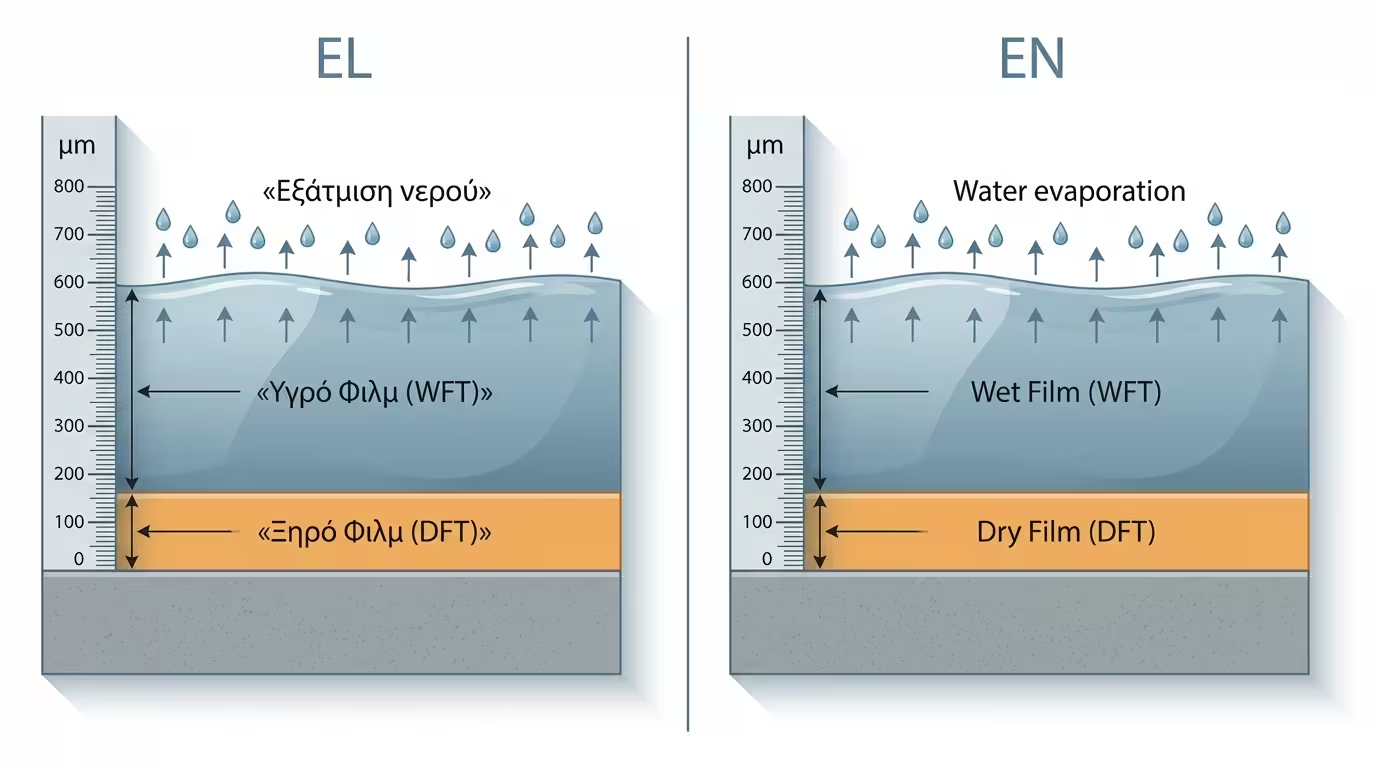
When a coat of paint is applied, not all of it stays on the wall. A significant part - the water or solvent - evaporates. What remains is the resin, the fillers, and the pigments: the protective film. This film, and only this film, is what stands between the masonry and the environment.
Think of it like a raincoat: it doesn't matter how much fabric there was originally - what matters is how thick the waterproof layer actually covering you is. If it's too thin, you'll get soaked. If it's absurdly thick, it will become rigid and tear. The "sweet spot" is what the manufacturer defines as the optimal DFT.
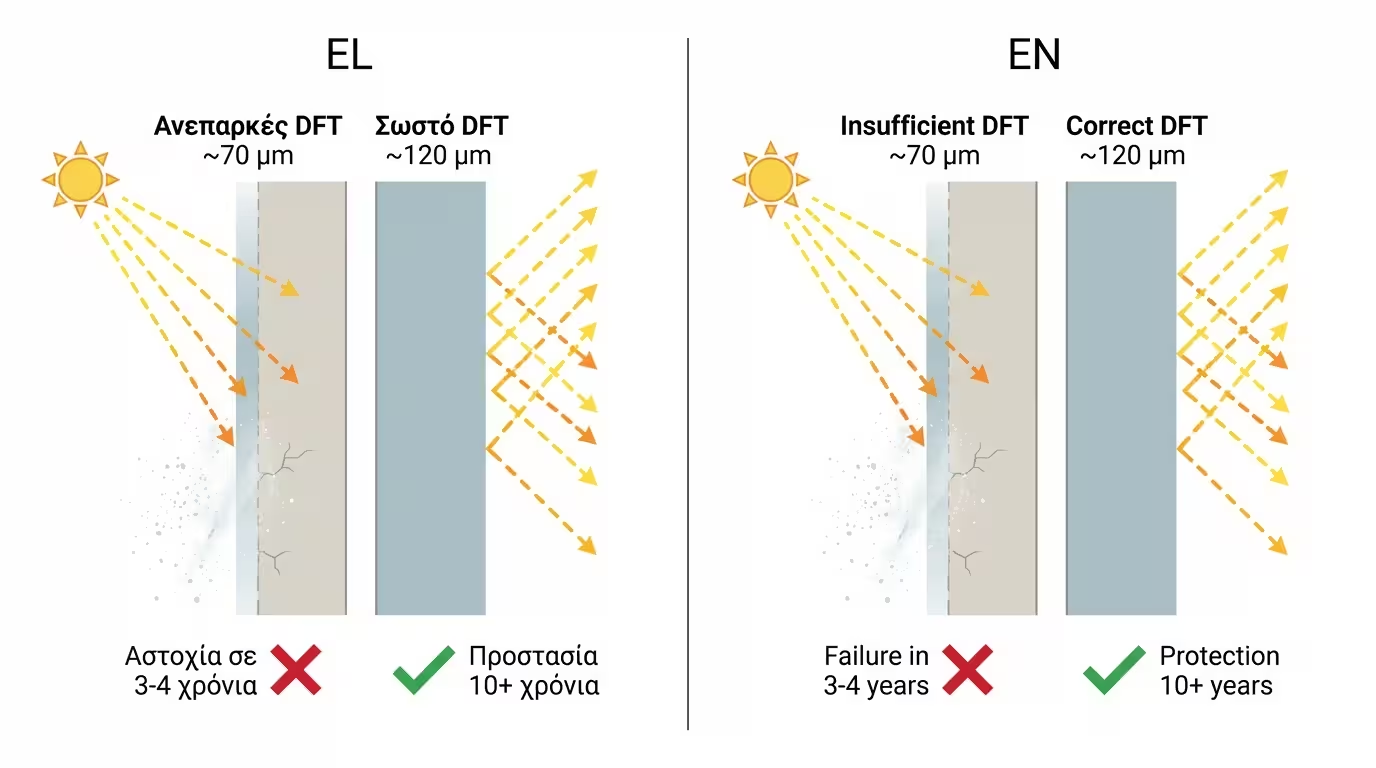
An insufficient film thickness doesn't show immediately. In the first year after painting, everything looks fine. The difference appears in the 2nd–3rd year, when degradation begins: the film cannot protect the resin from UV radiation. The colour fades, the surface begins to powder (chalking), and moisture resistance drops rapidly.
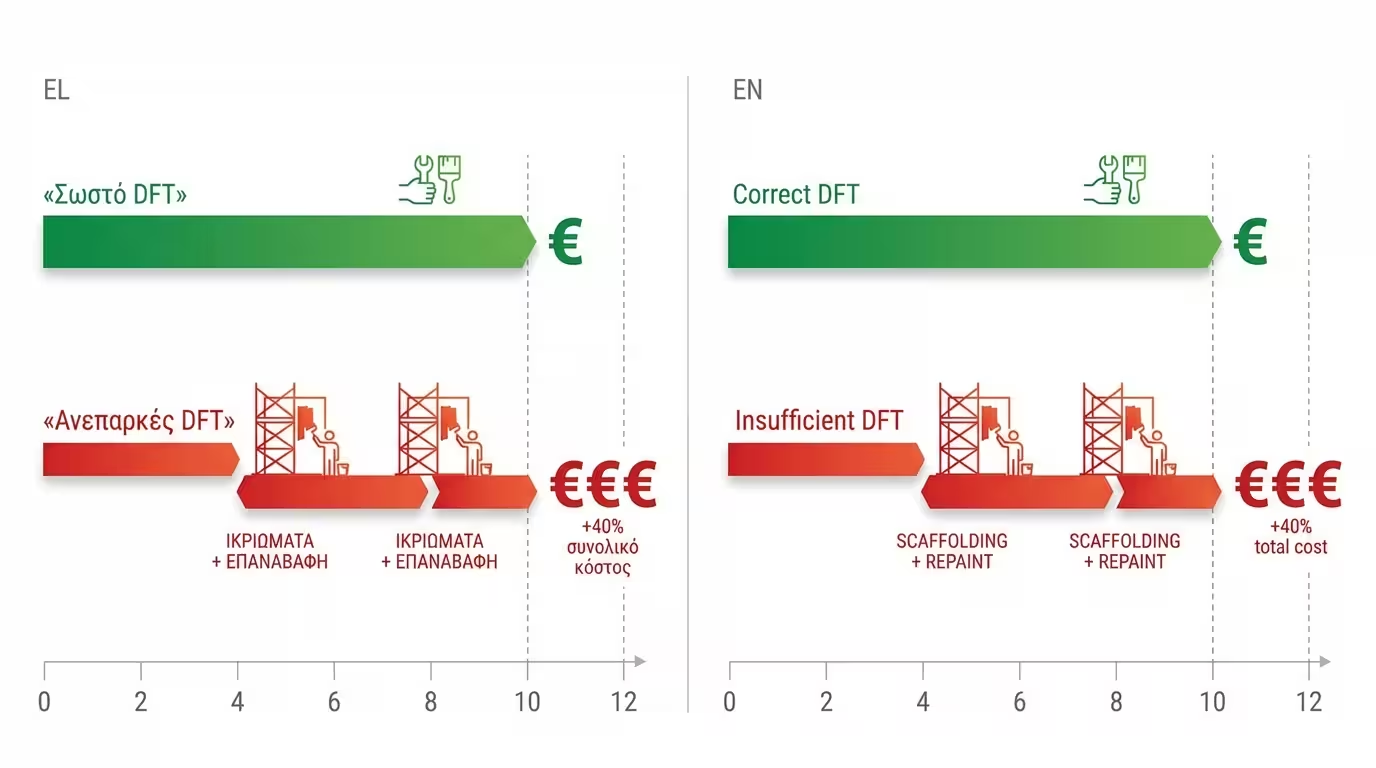
In essence, a film that is 20–30% thinner than recommended can reduce the service life by half. That means: instead of repainting at 10 years, repainting at 4–5 - with fresh costs for scaffolding, primers, and labour.
The reaction of some contractors - "let's put extra on, just to be safe" - can create equally serious problems. An excessively thick film doesn't cure uniformly: the outer surface dries first while the interior remains soft. This difference creates internal stresses.
The result? Micro-cracking (crazing) that resembles a spider web, reduced adhesion because the paint "weighs down" without proper anchorage, or even delamination of large fragments. These failures are wrongly attributed to "bad paint" - when in reality they are caused by the application.
No system benefits from "extra paint." Every paint has an optimal DFT range - and correct application aims precisely there, neither above nor below.
Every type of coating system has different thickness specifications, and every thickness corresponds to a different expected service life. These are not estimates - they are laboratory data based on accelerated weathering tests.
| Coating system | Typical DFT | Expected lifespan | Typical scenario |
|---|---|---|---|
| Basic acrylic | 80–120 μm | 5–7 years | Budget solution, mild north-facing facades |
| Silicone-based | 100–150 μm | 8–12 years | Exposed facades, coastal zones |
| Elastomeric | 200–400 μm | 10–15 years | Cracked substrates, high thermal stress |
The arithmetic is unforgiving: if a silicone system is applied "stretched" (i.e. 70 μm instead of 120 μm), the service life can drop to 4 years. If in 4 years you repaint the entire building (scaffolding, labour, materials), the "savings" from the cheaper application evaporate - and you end up paying double.
The first requirement is simple: follow the manufacturer's coverage specifications. Every technical data sheet states a ratio of m²/litre per coat. If a paint covers 8 m²/litre and the facade is 400 m², you need 50 litres per coat. If the contractor manages 65 m² per coat, something is wrong.
The second factor is application uniformity. An operator who "stretches" the paint in certain zones (e.g. high up on the scaffolding, in corners) creates thin zones that will fail first. Using airless spray instead of roller ensures more uniform distribution - especially on large surfaces.
"Two coats" doesn't automatically mean correct thickness. The number of coats guarantees nothing - what matters is the final material consumption per square metre and its uniform distribution.
Yes. Portable DFT gauges (dry film thickness gauges) can measure film thickness in seconds without damaging the surface. On large projects, DFT measurement can be requested as part of quality control - it is a practice that has been standard in industrial projects for decades.
In residential buildings it is not as common, but if a building management committee wants guarantees, it can include it in the contract. This gives the contractor an incentive to apply properly - because they know it will be measured.
The lifespan of a paint job depends not only on the brand or the type. It depends on film thickness, the method of application, and compliance with the manufacturer's specifications.
DFT is not a "technical detail for engineers" - it is the number that determines whether the paint you paid for will last 10 years or 4. The question "how many coats?" must be replaced with: "how many micrometres?".
Return to category.
Go to categoryReturn to the central guide.
Go to guide