① Sd = μ × d
The calculation is the product of two quantities: μ (dimensionless vapour-resistance factor of the material) and d (physical thickness of the layer in metres).
How the Sd coefficient governs wall moisture, which paints truly "breathe," and which interior–exterior combinations are correct or catastrophic
In modern building physics, "breathability" does not mean the wall allows air to pass freely. It refers to the microscopic diffusion of water molecules in vapour phase through a solid material's pore network, driven by the difference in vapour pressure across its two faces.
The Sd coefficient (Equivalent Air Layer Thickness) is measured in metres (m) and expresses the thickness of a theoretical, still air layer that would present the same resistance to water vapour. The lower the value, the more easily the material "breathes."
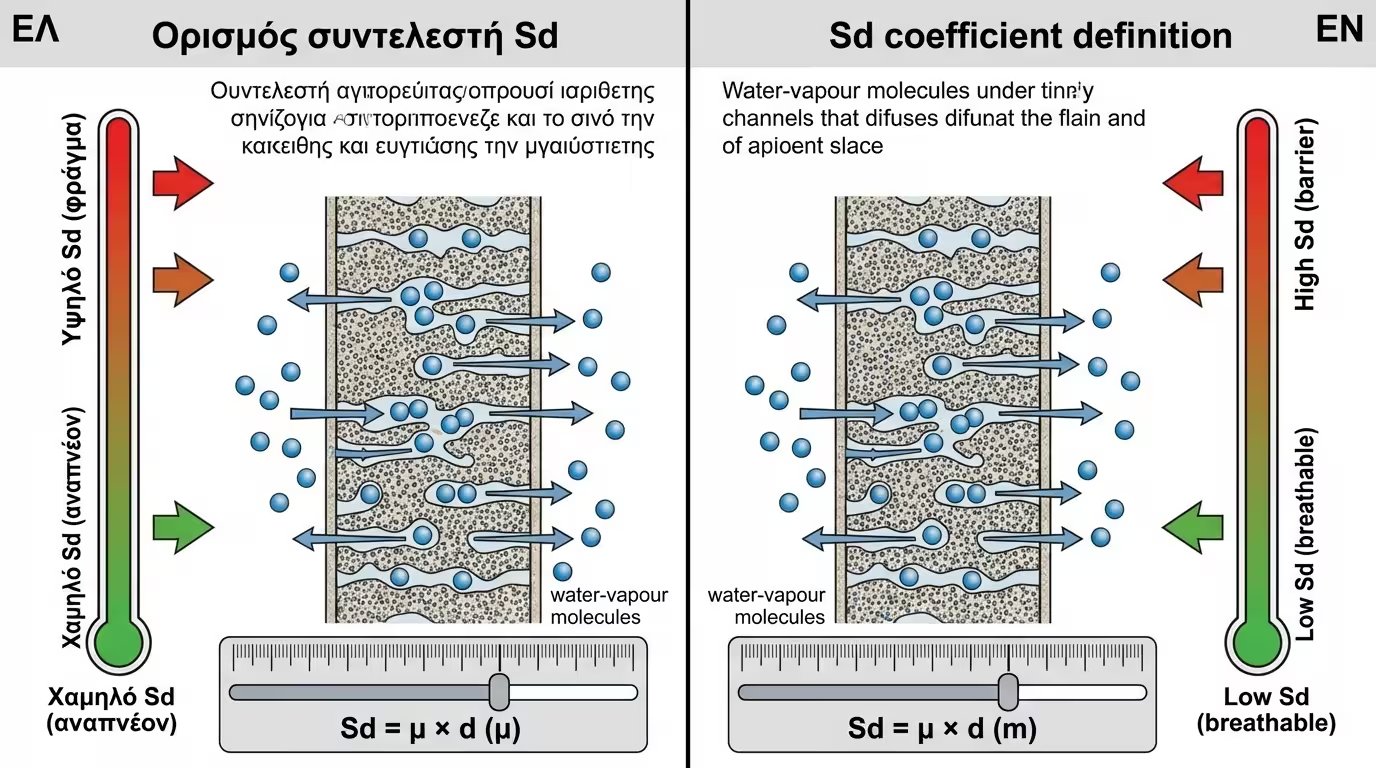
The calculation is the product of two quantities: μ (dimensionless vapour-resistance factor of the material) and d (physical thickness of the layer in metres).
Even an extremely breathable paint, when applied in multiple thick coats, linearly multiplies its Sd and turns into a vapour barrier.
A paint with Sd = 0.5 m presents resistance equal to half a metre of still air. A silicate paint can achieve Sd ≈ 0.01 m.
"Breathability" should not be confused with air permeability (air leakage). A wall can be airtight and breathable at the same time.
Sd is not a marketing advantage - it is the physical link between a paint's chemistry and the building's longevity.
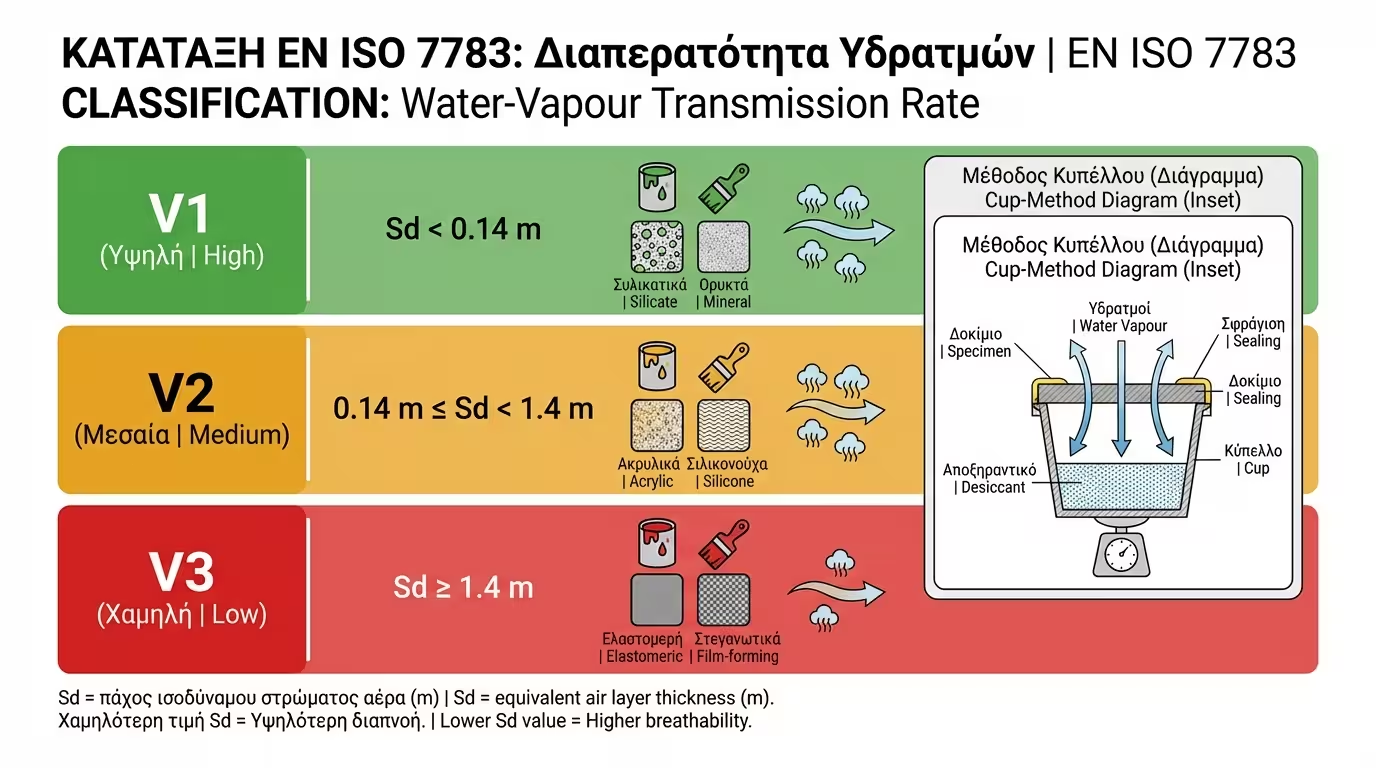
The cup method specified in EN ISO 7783:2018 measures the rate of water-vapour transmission through a standardised porous substrate. The results divide coatings into three strictly defined categories.
| Category | Sd (m) | Designation | Typical Materials |
|---|---|---|---|
| V1 | < 0.14 | High breathability | Silicate, lime, clay, silicone-resin exterior |
| V2 | 0.14 – 1.4 | Medium breathability | Acrylic emulsion, quality PVA, vinyl |
| V3 | > 1.4 | Low / Barrier | Elastomeric, epoxy, oil-based, polyurethane |
Applications demanding extreme moisture management - such as heritage building restoration - mandate exclusively V1 coatings.
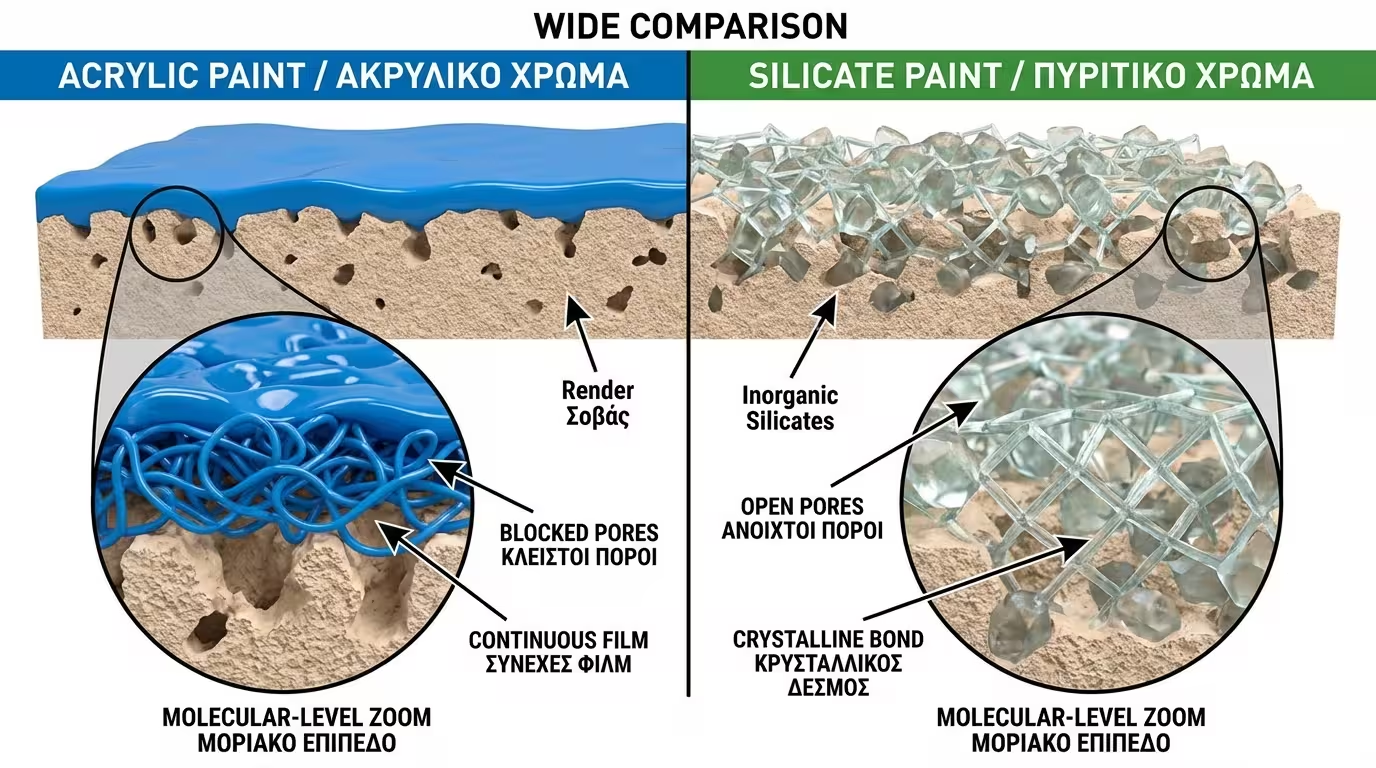
A paint's ability to "breathe" depends on the molecular structure of its binder. Acrylic and vinyl (plastic) paints form an elastic film over the wall - highly washable but with a high Sd. Mineral silicate paints bond chemically with the substrate through silicification, leaving pores open.
Creates a continuous plastic film. Withstands scrubbing, but blocks pores - high Sd. Trapped moisture can lead to blistering and peeling.
Potassium silicate (waterglass) forms crystalline bonds with the render - it becomes one body with the wall. Pores remain intact, Sd close to 0.01 m.
A microporous matrix with billions of nanopores: water droplets cannot enter (hydrophobia), while vapour escapes freely. Sd ≈ 0.01–0.04 m.
Clay or lime paints achieve Sd ≈ 0.02 m, but their use is limited due to lower mechanical durability.
The right chemistry alone is not enough: if applied in thick coats, even a silicate paint can turn into a vapour barrier.
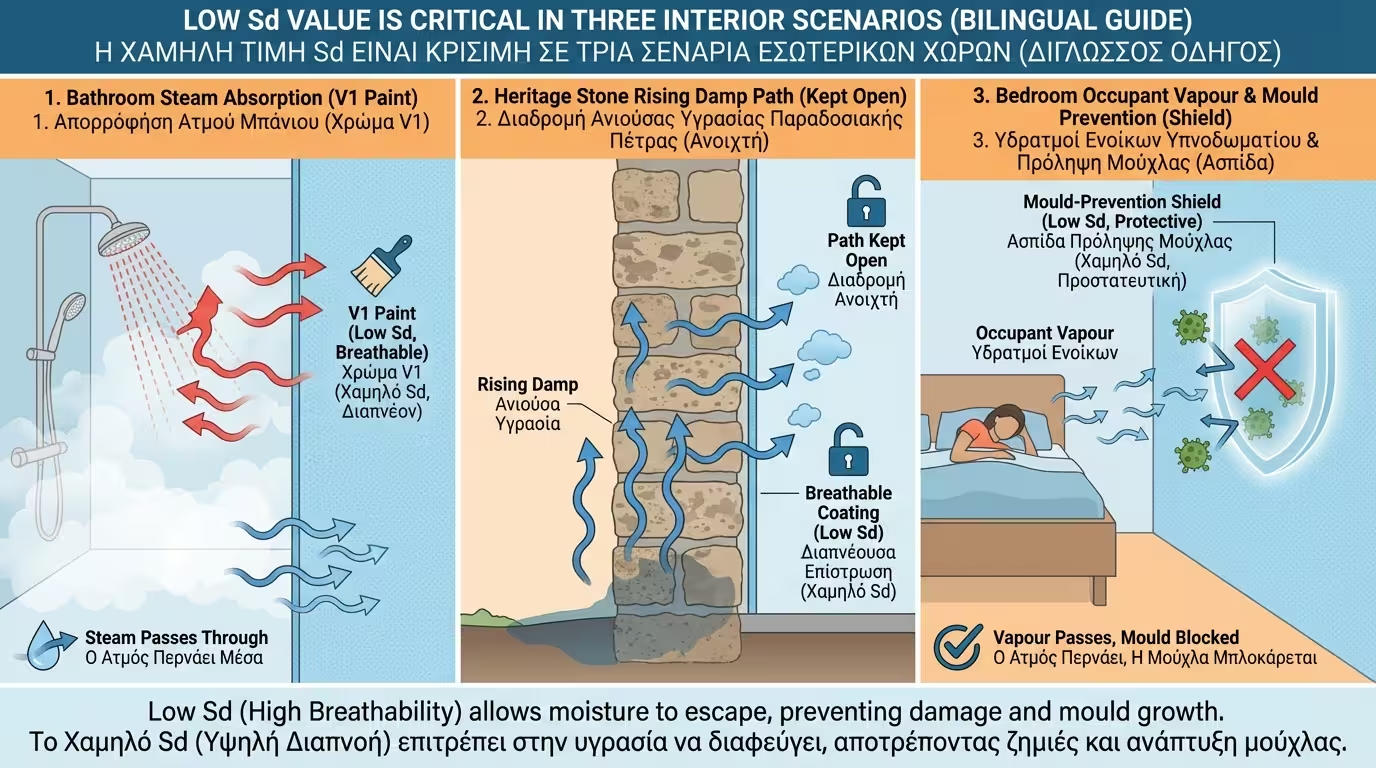
The belief that "breathable" paints are only relevant for exterior facades is incorrect. Proper use of ultra-low Sd paints indoors is a critical factor for air quality and the long-term health of the building.
V1 paint on walls - and especially ceilings - allows the render to act as a "hygroscopic buffer": it absorbs moisture at peak times and releases it gradually.
Buildings without a DPC in the foundations rely on continuous moisture flow. An impermeable acrylic "chokes" this function and causes salt efflorescence.
A couple releases >1 L of water vapour per night. With airtight windows, high-breathability (+ low VOC) paints reduce mould risk and improve indoor air quality.
If relative humidity exceeds 70–80 % during painting, drying rate drops exponentially - particles fail to coalesce properly and the final Sd is distorted.
In bathrooms, kitchens and ground-contact rooms, an impermeable paint creates a permanently damp film - an ideal substrate for mould.
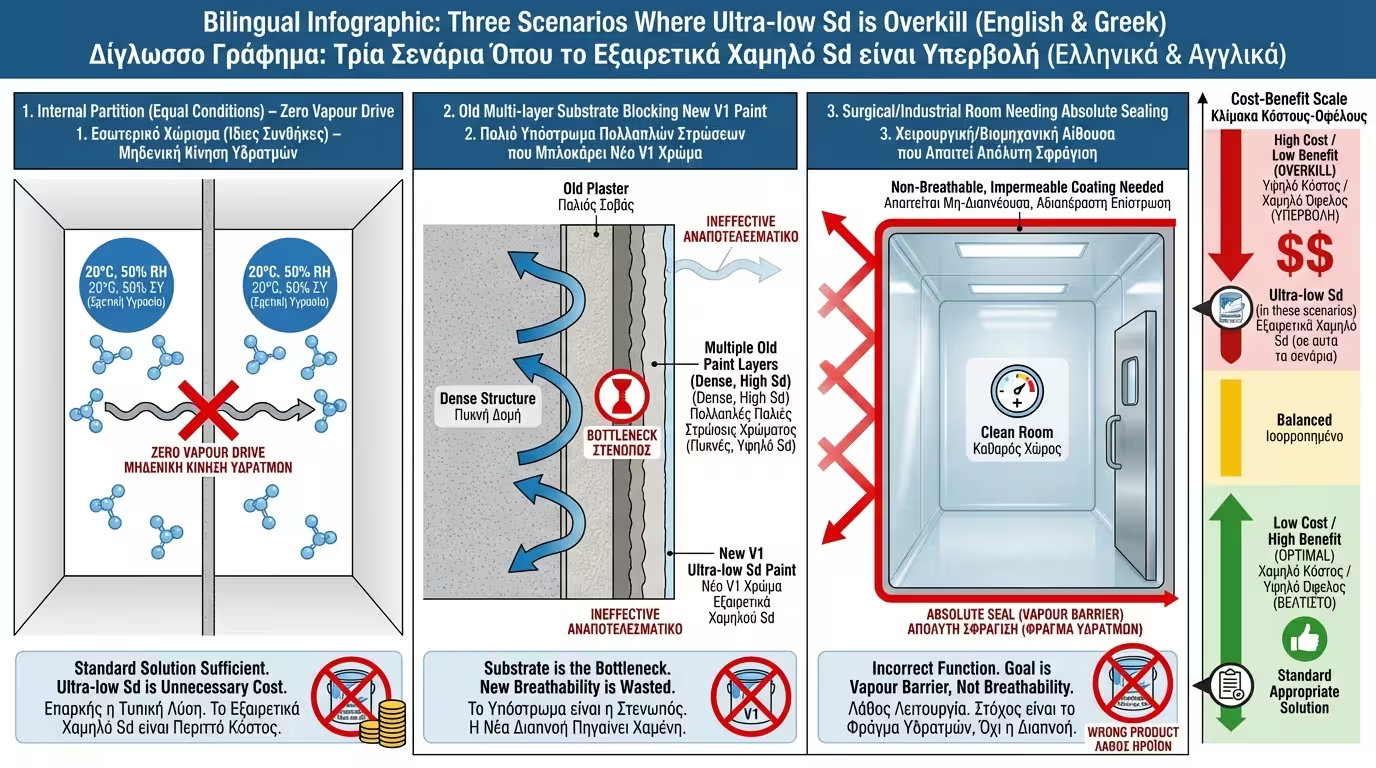
The market promotes breathability as a panacea, but from a strict engineering perspective there are clear cases where the cost of a premium mineral paint offers no measurable return.
The decision for a "breathable" paint is not taken dogmatically - only where the building's physics demand it.
If two rooms share the same conditions (e.g. 21 °C, 50 % RH), the vapour-pressure differential is zero - no vapour drive exists. A quality V2 acrylic suffices.
Multiple old paint layers form a barrier (e.g. Sd > 2 m). A new V1 silicate sits on a sealed base - without stripping the old coats, its breathability is wasted.
Operating theatres, abattoirs, commercial kitchens: the goal is not vapour circulation but absolute sealing. A breathable coating would harbour microbes in its pores.
V1 silicate paints cost several times more than a quality V2 acrylic. Without genuine hygrothermal stress, the investment is unjustified.
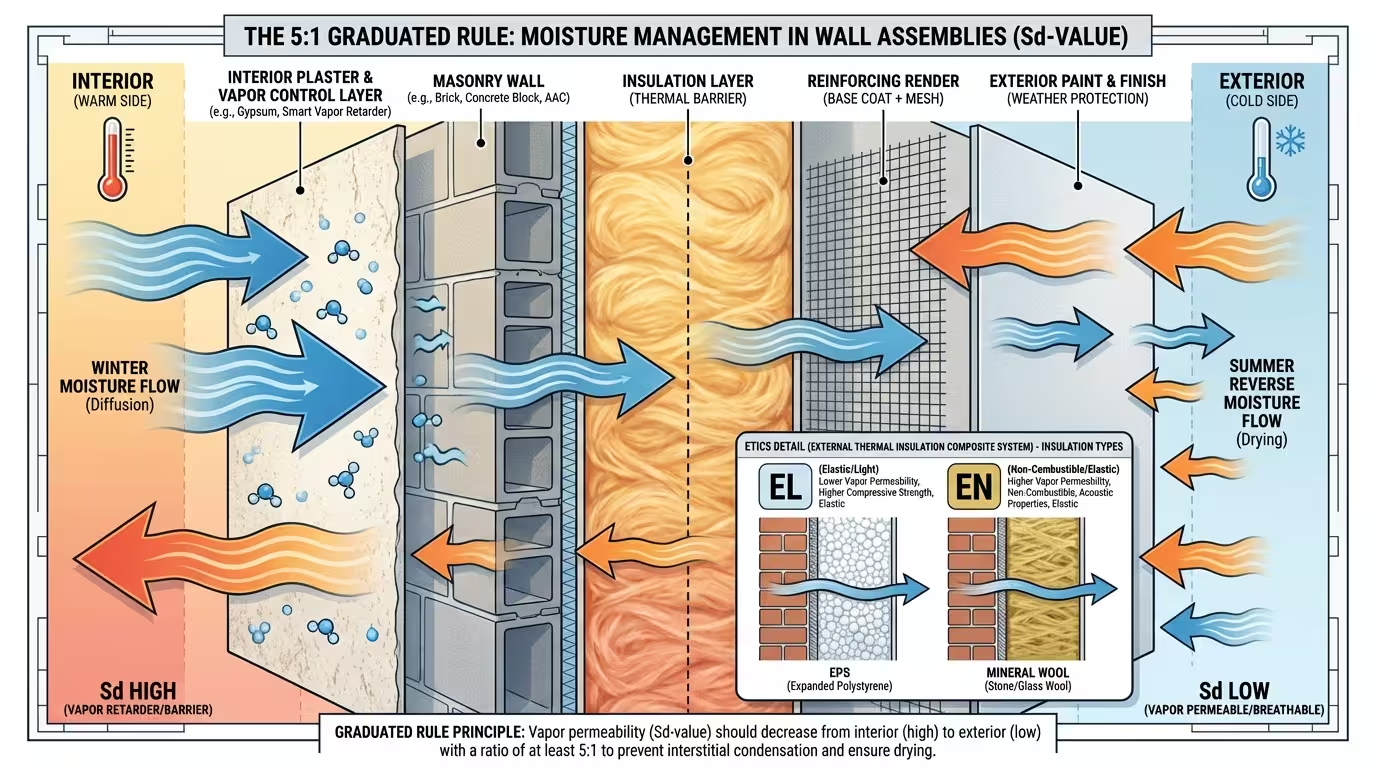
A masonry wall is not an impervious boundary; it functions as a dynamic hydraulic system. Water vapour always moves from the warm, humid side towards the cold side. In winter, this vapour drive runs from inside to outside. If the exterior coating is impermeable, moisture condenses within the wall.
Diffusion resistance (Sd) must decrease progressively from the warm interior face to the cold exterior - ideally in a 5 : 1 ratio.
In Greece, summer air-conditioning cools indoor air while outdoor temperatures and humidity are high - the flow reverses.
An interior vapour barrier (Sd > 1,000 m) - suitable in Scandinavia - becomes catastrophic in the Greek climate: summer moisture gets trapped behind the plaster.
Interior: mild retarders (Sd 0.2–1.5 m). Exterior: exclusively V1 (Sd < 0.14 m). Never use an absolute barrier on envelope walls.
| Insulation | μ of insulator | Final paint / render | Conclusion |
|---|---|---|---|
| EPS / XPS | 25–200 | Silicone-resin helps (hydrophobia) but does not materially improve overall breathability | Breathability limited by the insulation |
| Mineral wool | ≈ 1 | Silicone-resin / silicate V1 mandatory | Acrylic seals the fibres - catastrophic |
In the Mediterranean climate, masonry must accommodate both the winter flow (inside → outside) and the summer reverse flow (outside → inside).
Translating the laws of thermodynamics into practical material choices separates durable structures from those that deteriorate rapidly. The right Sd balance between interior and exterior coatings determines everything.
There are no "good" or "bad" paints - only correctly or incorrectly engineered hygrothermal systems.
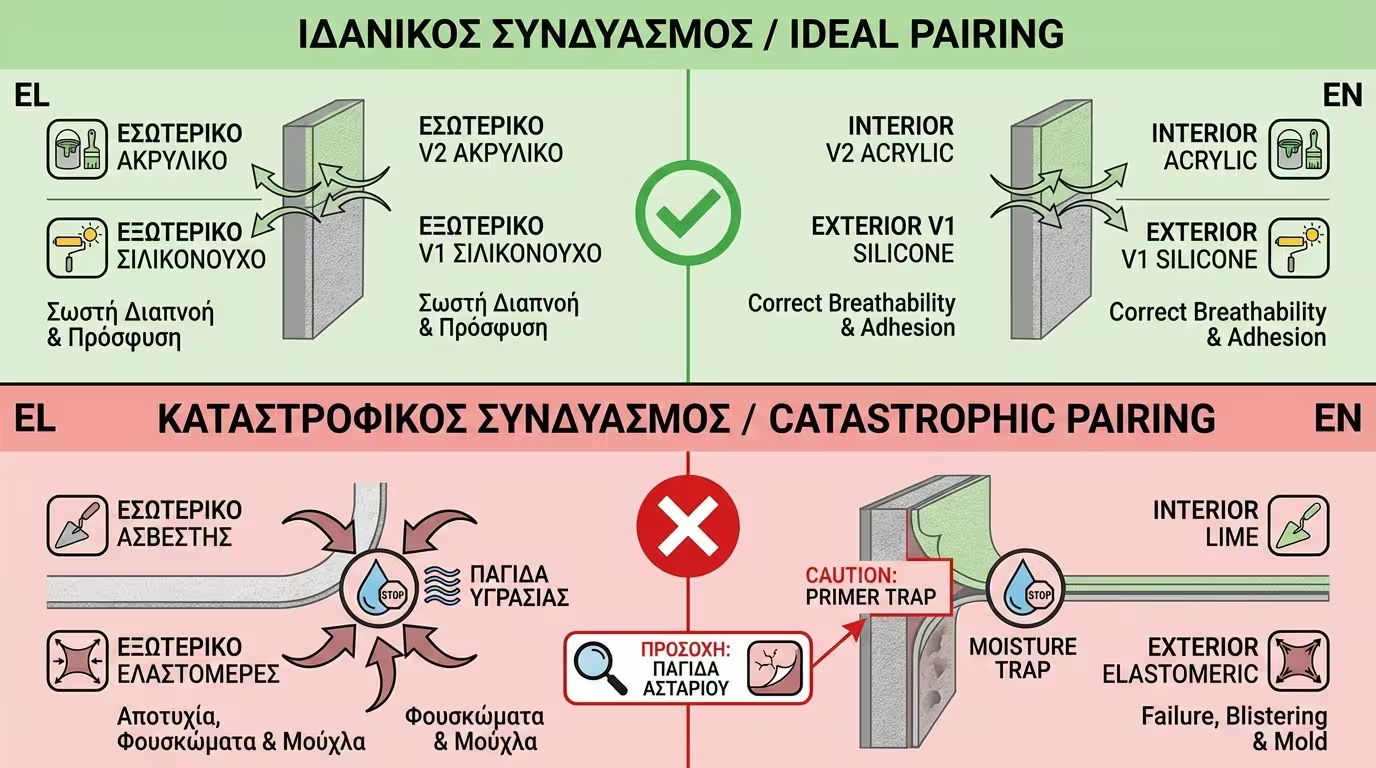
Interior: acrylic V2 (Sd 0.15–0.50 m), a mild retarder. Exterior: silicone-resin / silicate V1 (Sd < 0.05 m), no plastic film. Result: flawless operation.
Interior: natural clay / lime (Sd < 0.02 m) - moisture floods into the wall. Exterior: elastomeric acrylic (Sd > 1.5 m) - moisture gets trapped → blistering, peeling, crumbling render.
Even if the topcoat is V1, an impermeable acrylic primer (Sd ≈ 0.8 m) cancels out the breathability: Sdtotal ≈ Σ(Sd of layers). The primer must belong to the same chemical system.
Interior paints serve as "smart moisture controllers." Exterior paints serve as "safety valves" for release. Never the reverse.
The Sd coefficient is not just a marketing buzzword. It is the non-negotiable physical link bridging polymer chemistry with building sustainability. In high-humidity spaces and traditional structures without modern barriers, extreme breathability is vital. In internal partitions without hygrothermal load, pursuing zero Sd is an expensive over-specification.
In the Mediterranean climate, interior paints must act as mild retarders, while exterior coatings must remain strictly breathable. And always, the choice of primer must be an organic part of the same chemical system.
Return to category.
Go to categoryReturn to the central guide.
Go to guide