
🌲 Pine
Choose it for budget-friendly builds, making sure to use wood conditioner before staining.
Why does a piece of pine produce ugly blotches when stained, while oak beautifully highlights its grain? We decode the three most popular woods.
Pine is the most common "softwood" (conifer/gymnosperm). It grows fast, is affordable, lightweight and extremely easy to work with. However, staining it hides a major trap.
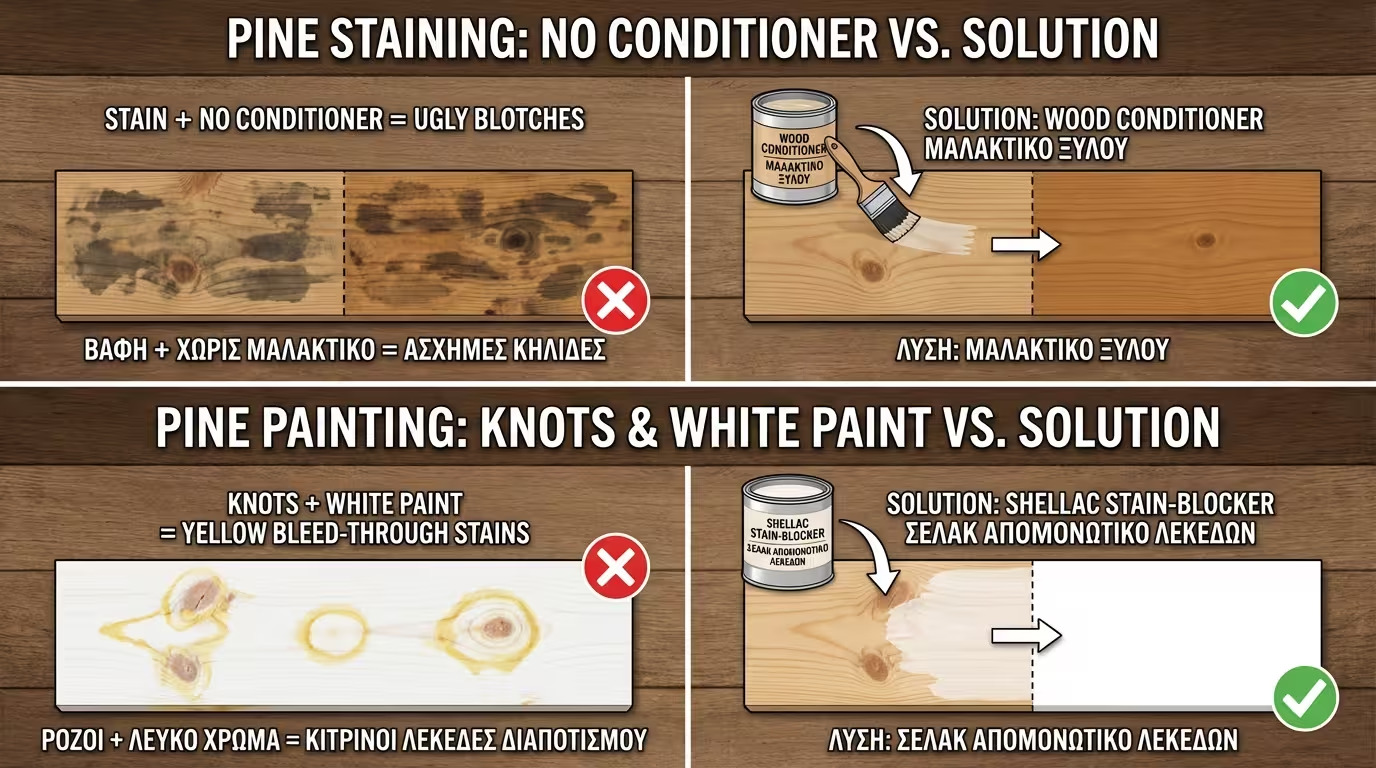
Colour Behaviour (Blotchiness): Pine has highly uneven density (alternating between soft spring wood and harder autumn wood). When you try to change its shade with a liquid stain or penetrating varnish, the soft areas absorb the material like a sponge while the hard areas don't. The result is a "dirty" finish with intense, ugly blotches (blotchiness).
🛠️ The DIY Solution: Before applying colour, it is mandatory to treat pine with a Wood Conditioner (pre-stain sealer). This material partially fills the most absorbent pores, allowing the final stain to spread absolutely uniformly.
⚠️ Watch the Knots: Pine features resin canals. If you paint it with white enamel, the resin (terpenes) from the knots will "bleed through" and create yellow stains, even years later. A strong stain-blocking primer is always required, ideally shellac-based, which acts as the only absolute molecular barrier for resins.
Oak is the benchmark hardwood. It is exceptionally resistant to scratches, wear and moisture, which is why it dominates hardwood flooring (parquet) and luxury furniture.
Behaviour (Open-Grain): Unlike pine, oak has large, visible pores (vessels) on its surface. In White Oak, these vessels are plugged with tyloses, crystalline structures that make it waterproof (which is why it's used for barrels). In Red Oak, the pores remain open like straws, absorbing stain deeply and dramatically highlighting the "grain patterns" that everyone loves.
The Finishing Trap: If you try to apply a gloss polyurethane varnish or lacquer hoping for a mirror-smooth surface, you'll be disappointed. The varnish will "sink" into the pores, leaving microscopic pits.
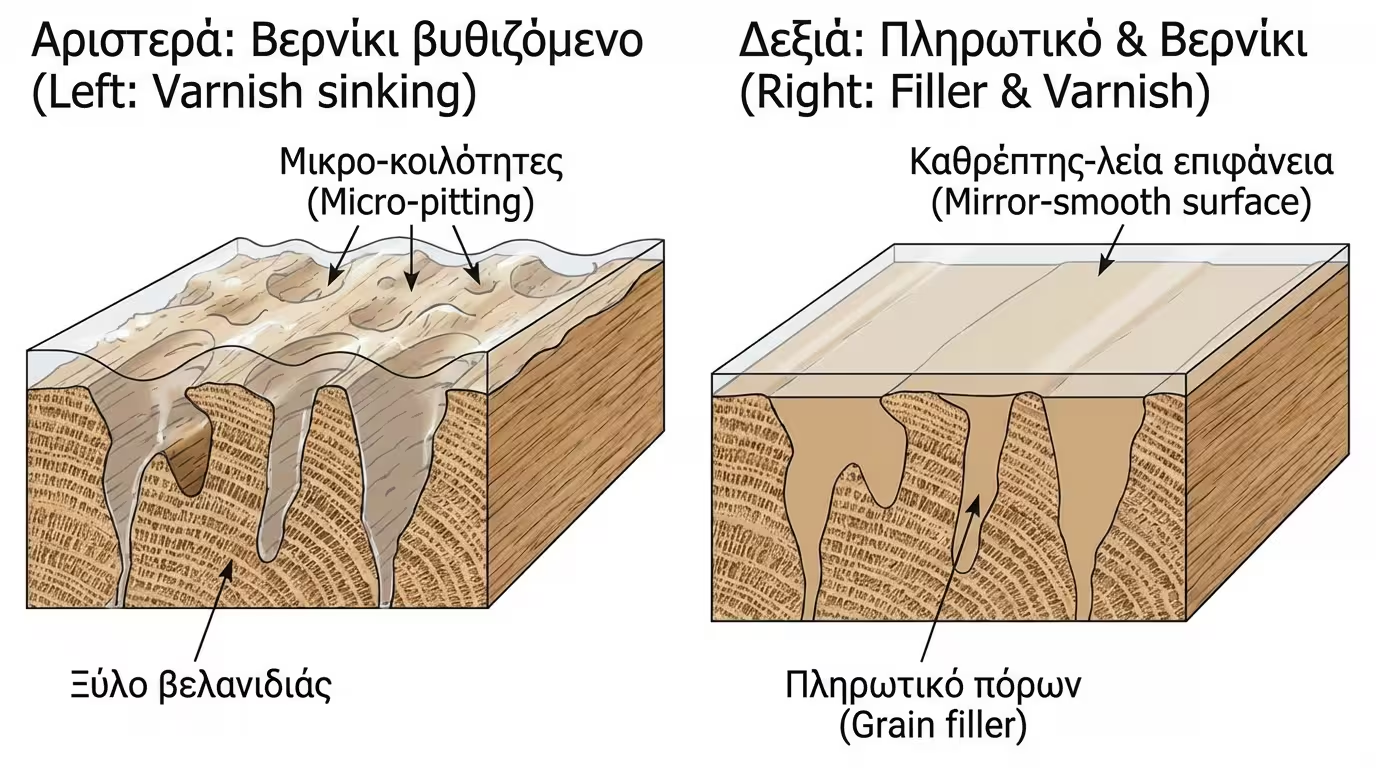
🛠️ The Professional Solution: To achieve a perfectly smooth (closed) surface on oak, you absolutely must first apply a Grain Filler. This filler seals the cavities before the final varnish is applied.
Beech is an exceptionally hard, heavy and strong wood, with a light pink-beige colour. It is famous for its ability to bend (using steam), which is why it is widely used in curved chairs, staircases and children's furniture.
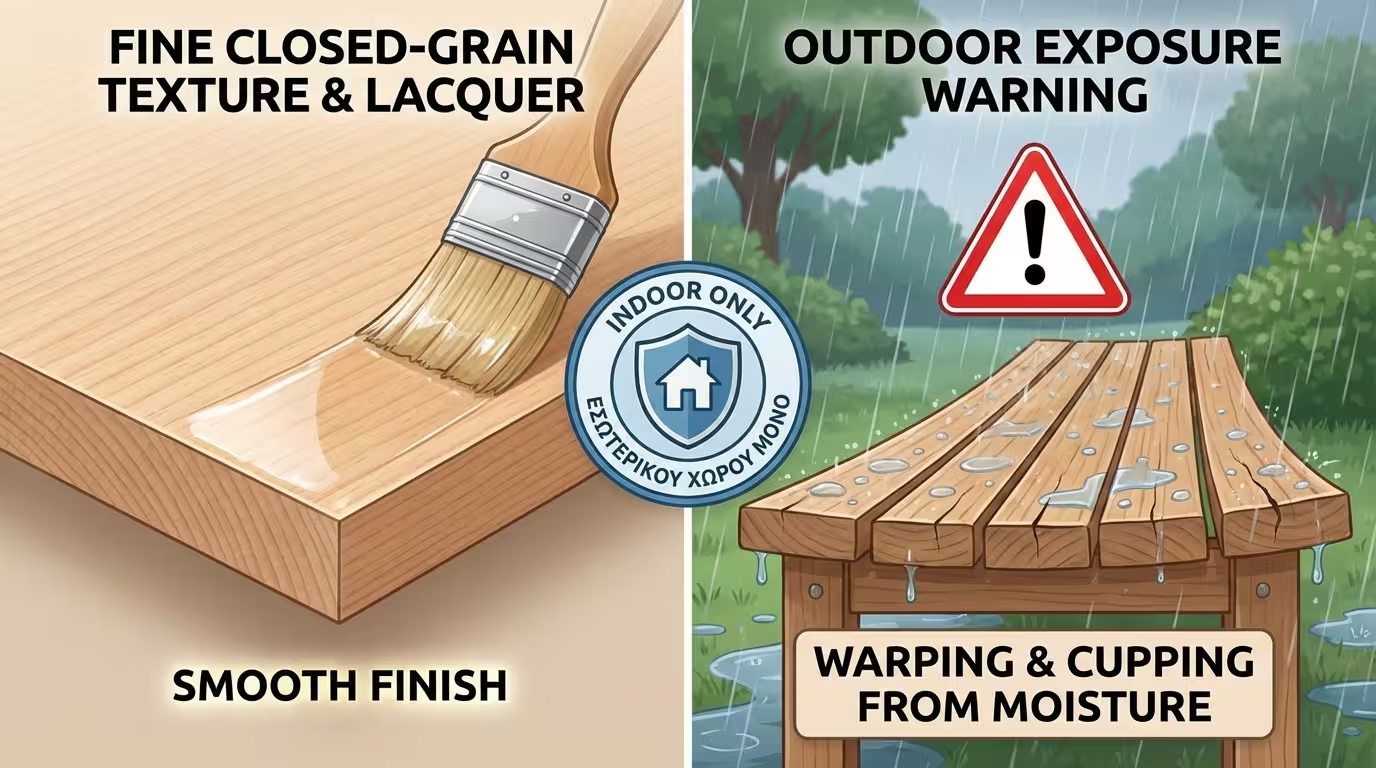
Behaviour (Closed-Grain): Beech is a "closed-grain" wood with a very fine, tight texture. It doesn't have the enormous pores of oak. This means it accepts varnishes and paints exceptionally smoothly. If you want to paint furniture with lacquer or enamel, beech (like maple) will give you a perfect, smooth surface without needing grain filler.
⚠️ The Achilles' Heel (Moisture): Beech's major weakness is its sensitivity to moisture. It is highly hygroscopic, with a high coefficient of shrinkage/expansion. Rapid drying can lead to "cell collapse," meaning the timber can warp or deform severely if exposed to outdoor fluctuations. For this reason, it is intended and strictly recommended for indoor furniture and applications.
For professionals, the distinction between these three woods is not based solely on experience, but on strict structural and botanical characteristics:
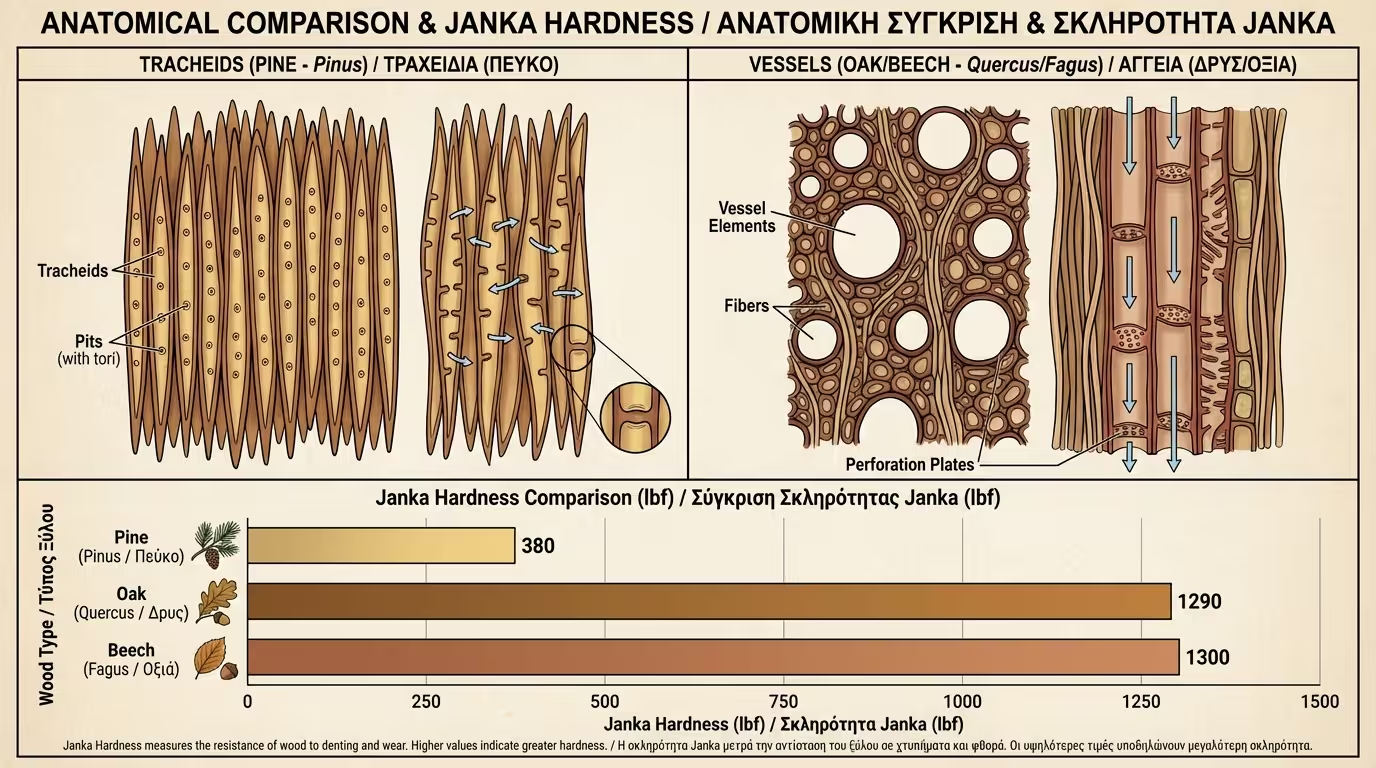
Anatomy (Tracheids vs Vessels): The difference between "softwood" (pine) and "hardwood" (oak, beech) is biological. Pine (gymnosperm) transports water via elongated cells called tracheids, giving it a simpler cellular structure. In contrast, broadleaf trees (angiosperms) like oak possess specialised "vessels". When the wood is cut, these vessels create the visible porosity on the surface that dictates the finishing technique.
Janka Hardness Scale: The mechanical durability of flooring is measured using the Janka test (the force required to embed a steel ball into the wood). White Pine has a hardness rating of just 380 lbf, making it unsuitable for high-traffic flooring as it dents easily. In contrast, Red Oak reaches 1,290 lbf and Beech 1,300 lbf, offering industrial resistance to impact and wear.
Choose it for budget-friendly builds, making sure to use wood conditioner before staining.
Choose it for durable flooring and traditional furniture, using grain filler if you want a glass-smooth finish.
Trust it for durable indoor furniture that accepts any opaque finish (lacquer) flawlessly - but always protect it from moisture.
Return to category.
Go to categoryReturn to the central guide.
Go to guide