
1. Where exactly?
Is the failure localised or widespread? If it appears only around beams, the cause is likely thermal. If across the entire north facade, rain may be to blame. If only at the base, rising damp could be the issue.
Identify What Went Wrong , Before You Pay to Have the Same Mistake Repeated
When an exterior facade coating starts deteriorating prematurely, the first reaction is usually: "the paint is bad." The second: "the contractor is to blame." In reality, paint failure is almost always the result of a combination of factors , and a proper assessment before repainting can save thousands of euros.
Failure analysis is a systematic methodology that has been used in industry for decades. On building facades, it can be applied informally but effectively , as long as you know what you are looking at.
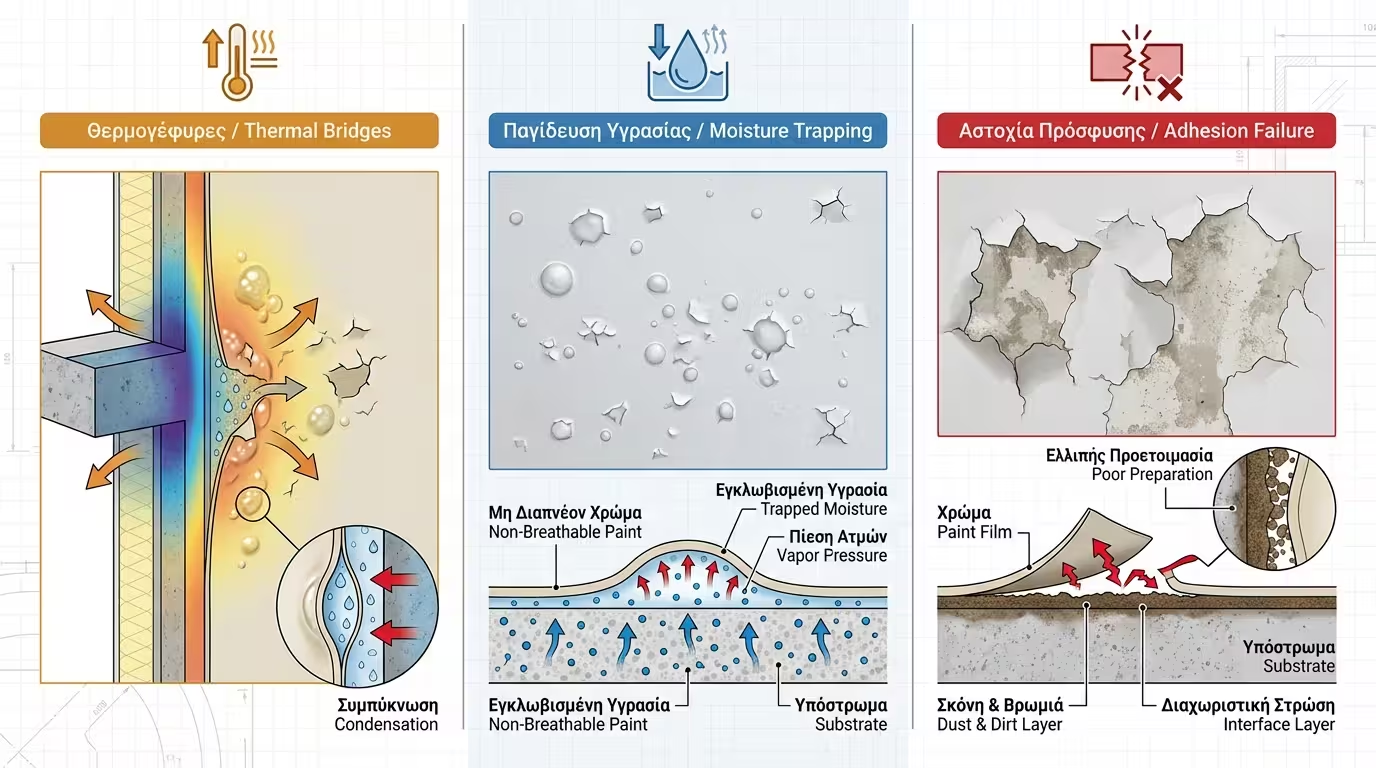
Blistering and peeling (flaking) are the most common failures on building facades , and the ones that catch the eye immediately. But their appearance does not mean "bad paint." It means something specific went wrong, and diagnosis starts with where exactly the problem appears.
If blisters appear near beams, columns or balcony corners, the most likely cause is thermal bridges , points where the building's structural frame creates cold zones that promote vapor condensation beneath the paint film. Moisture pushes the film from inside and creates bubbles.
If blistering is scattered across large areas, the cause is likely an unsuitable coating system , specifically, a non-breathable system over damp masonry. The paint acted like a "bag" , trapping moisture inside.
If peeling occurs in sheets or large flakes that come off like skin, there is most likely an adhesion problem , paint applied over dust, contaminants, or a previous film that was not properly primed.
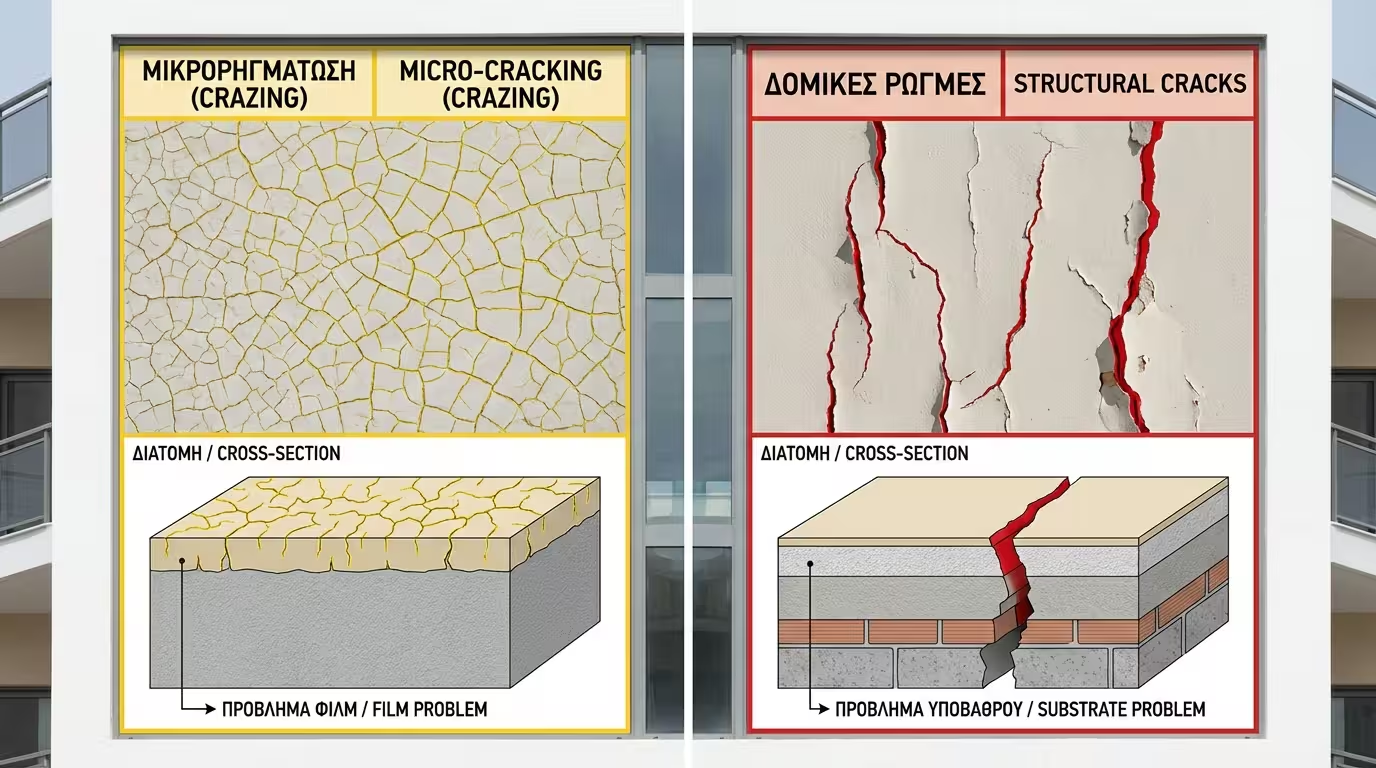
Not all cracks are the same. Proper assessment distinguishes two fundamentally different categories , and the treatment is entirely different.
Crazing , a network of fine cracks resembling a spider web , indicates a problem with the film: excessive thickness, uneven curing, or application in high temperatures causing the paint to dry too quickly. These cracks rarely reach the substrate , they are superficial but degrade aesthetics and reduce functional lifespan.
Structural cracking , straight, deep, often vertical or diagonal , does not concern the paint. It concerns the wall beneath it. It may be caused by thermal expansion, seismic movement, or structural issues. The paint simply "followed" the crack , it did not cause it. In this case, repainting without addressing the cause will lead to a new crack in exactly the same spot.
A crack in the paint is not always a paint problem. Often it is a symptom of a deeper issue , and the paint simply "reveals" what is happening underneath.
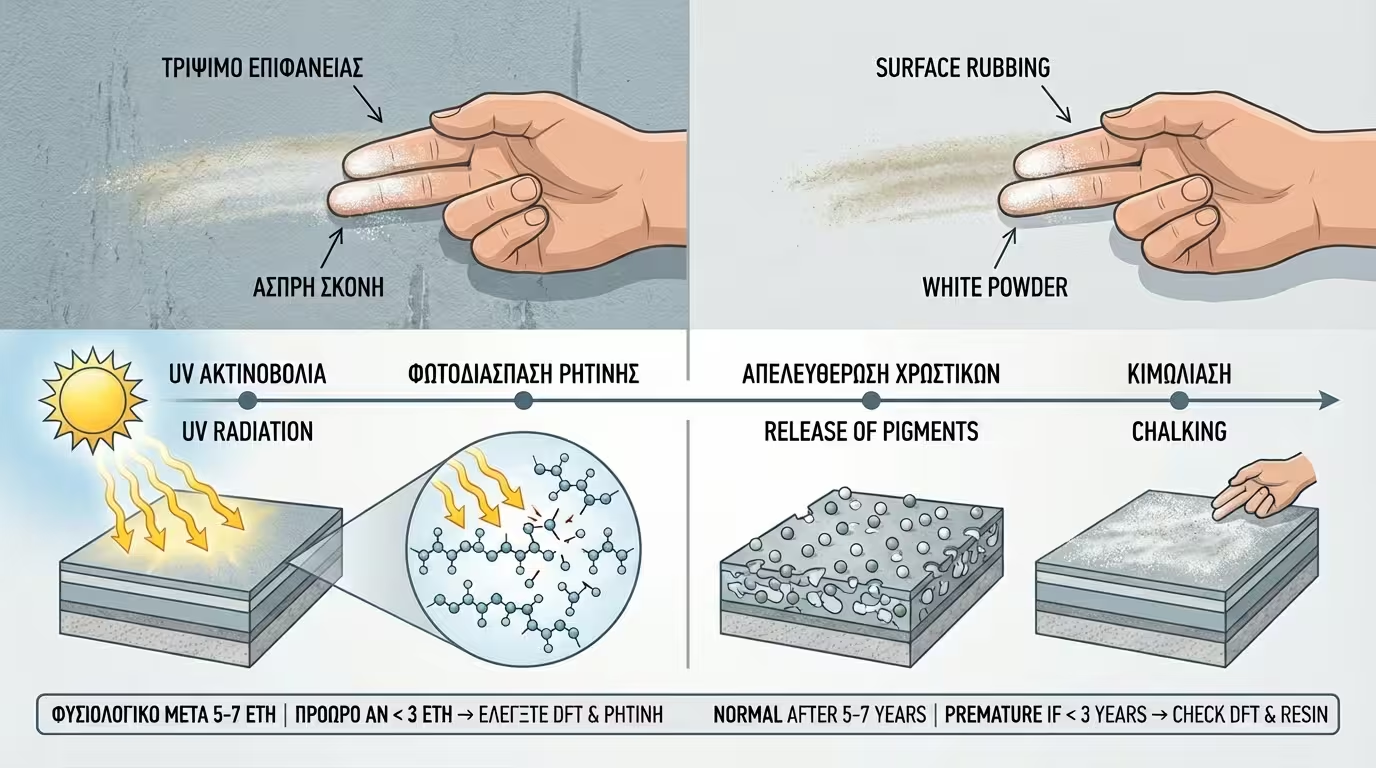
If you run your hand over the painted facade of a building and a fine powder remains on your fingers, this is called chalking. It is not dirt , it is resin decomposition due to UV radiation.
On west-facing and south-facing facades, solar radiation is extremely intense. Over time, resin molecules break down (photodegradation) and release pigments , which appear as powder on the surface. The paint did not "fade" , the resin decomposed.
Chalking is normal to some degree, especially in budget acrylics after 5–7 years. But if it appears within 2–3 years, it points to something specific: insufficient film thickness (low DFT, the resin was not enough to withstand exposure), low resin quality, or application in extreme temperatures.
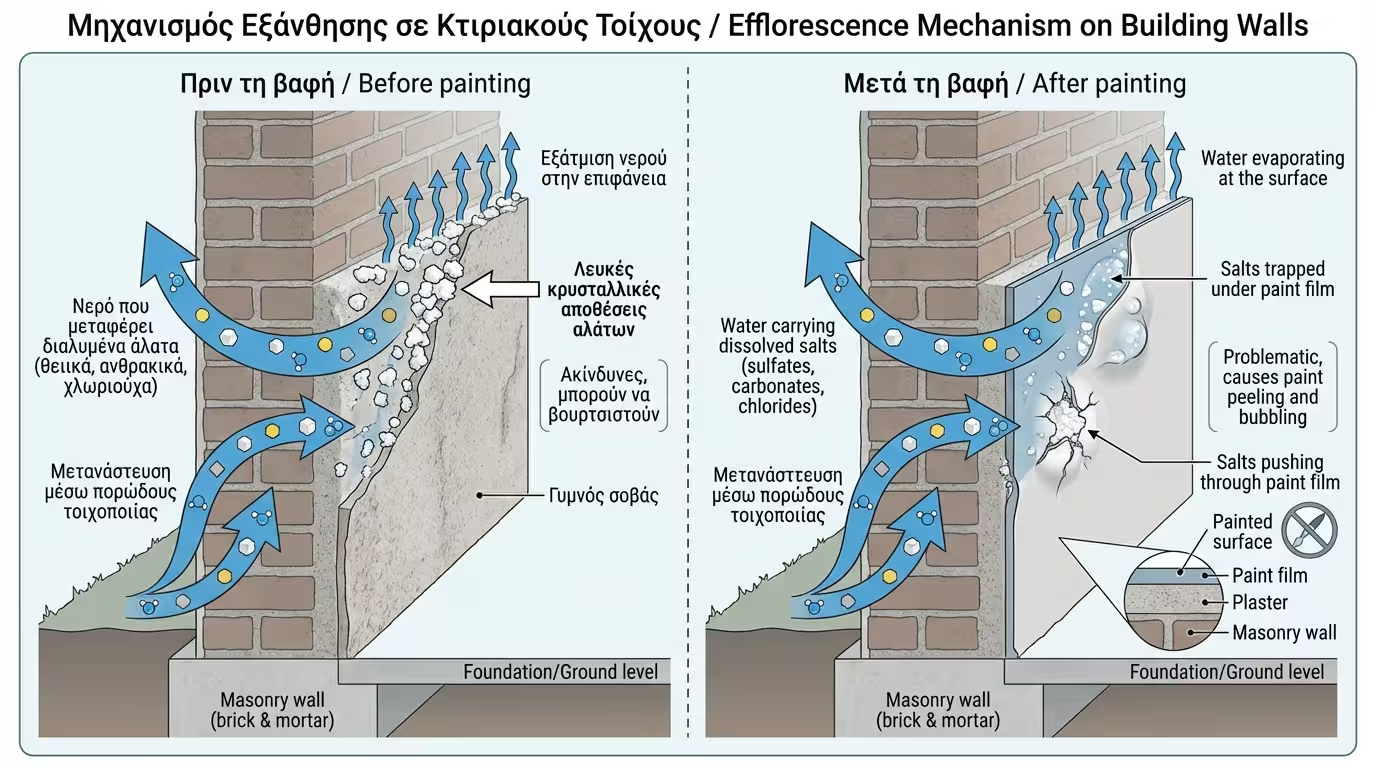
Efflorescence appears as white, crystalline deposits on the surface , mainly on walls with brick or freshly applied render. These are soluble salts (sulphates, carbonates, chlorides) that are carried to the surface by water during evaporation. Think of them as the "residue" that water leaves behind as it escapes.
If they appear before painting, on fresh render, they are often harmless , provided they are mechanically removed and the render is allowed to cure before painting. If they appear after painting, beneath or within the film, they indicate that the masonry continues to transport moisture , the paint did not "create" them, but may have "locked" them inside if it was non-breathable.
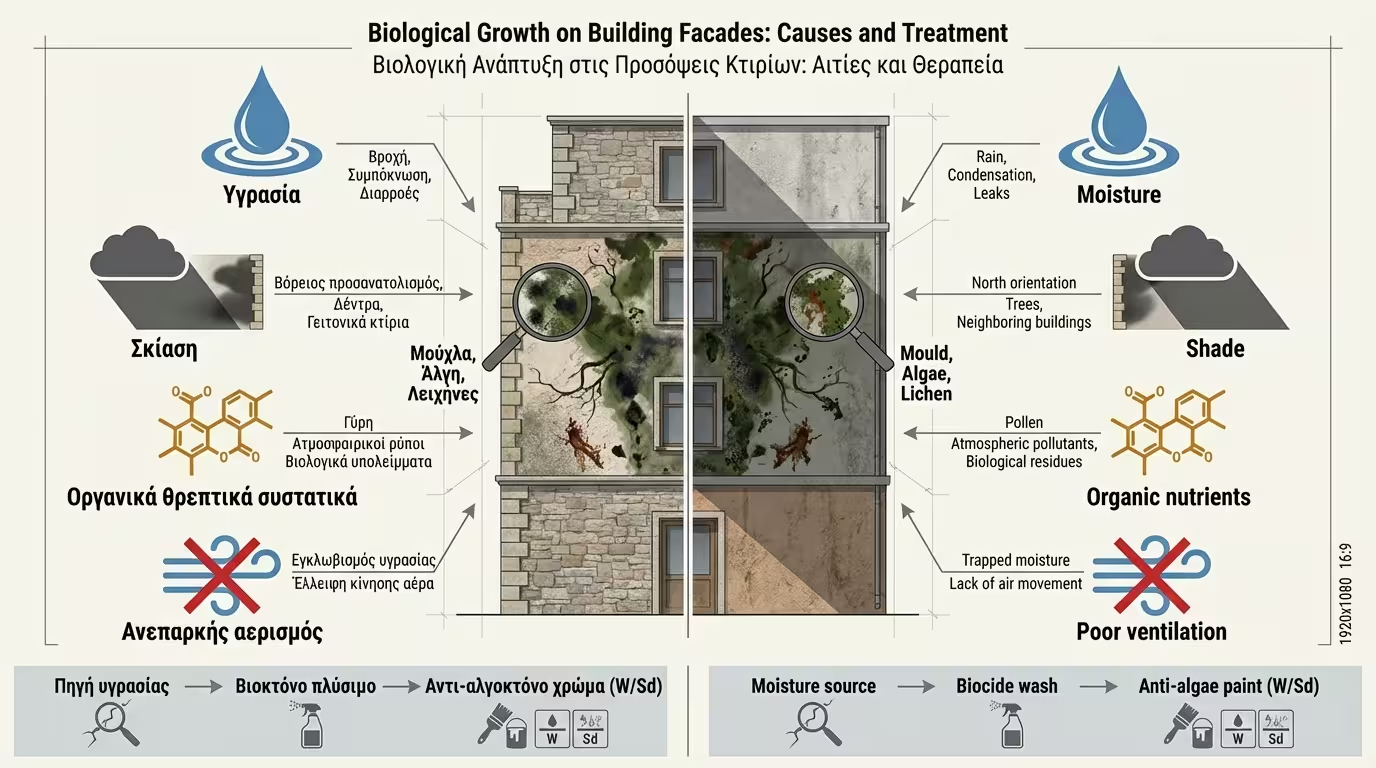
Black or dark green stains on shaded north-facing elevations are not "pollution" , they are biological growth: fungi, algae, lichens. These microorganisms thrive where there is moisture, shade, and organic food. Certain paint resins (especially cellulose-based or plant-derived) can literally feed the mold.
The solution is not simply "wash and repaint." If the cause is persistent moisture (e.g. broken pipe, inadequate drainage, thermal bridges), the mold will reappear. The correct approach includes: identifying and addressing the moisture source, biocidal washing, and applying paint with anti-algal additives and proper W/Sd balance.
Before deciding what to do with a deteriorated facade, it is worth spending 30 minutes on an on-site inspection. You do not need a laboratory , just a list of questions:
Is the failure localised or widespread? If it appears only around beams, the cause is likely thermal. If across the entire north facade, rain may be to blame. If only at the base, rising damp could be the issue.
Blistering indicates moisture pressure. Peeling indicates adhesion failure. Cracking indicates substrate movement or excessive DFT. Chalking indicates UV degradation. Each "symptom" points to a different "disease."
If the paint failed within 1–2 years, the problem is almost certainly application or substrate. If after 7–8 years, it may be normal wear or insufficient thickness.
The most expensive paint job is not the first one , it is the one that has to be redone after 3 years because it failed. Scaffolding, pavement closures, tenant disruption, labour costs , all are paid again. If the new paint is applied over the same problem (e.g. moisture without treatment, unsuitable system), it will fail again , perhaps even faster.
Proper diagnosis before repainting costs nothing , unless we consider "cost" the 30 minutes of observation and a conversation with the contractor. Conversely, a wrong diagnosis costs the entire new paint job.
Every paint failure tells a story. Blistering, cracking, chalking, efflorescence, mold , these are not "bad luck" or "bad paint." They are the result of measurable factors that can be identified and prevented.
Failure analysis does not require a laboratory , it requires observation, knowledge, and honesty. If a contractor cannot explain why the previous paint job failed, how can they ensure the new one will succeed?
Return to category.
Go to categoryReturn to the central guide.
Go to guide