Spreading Rate
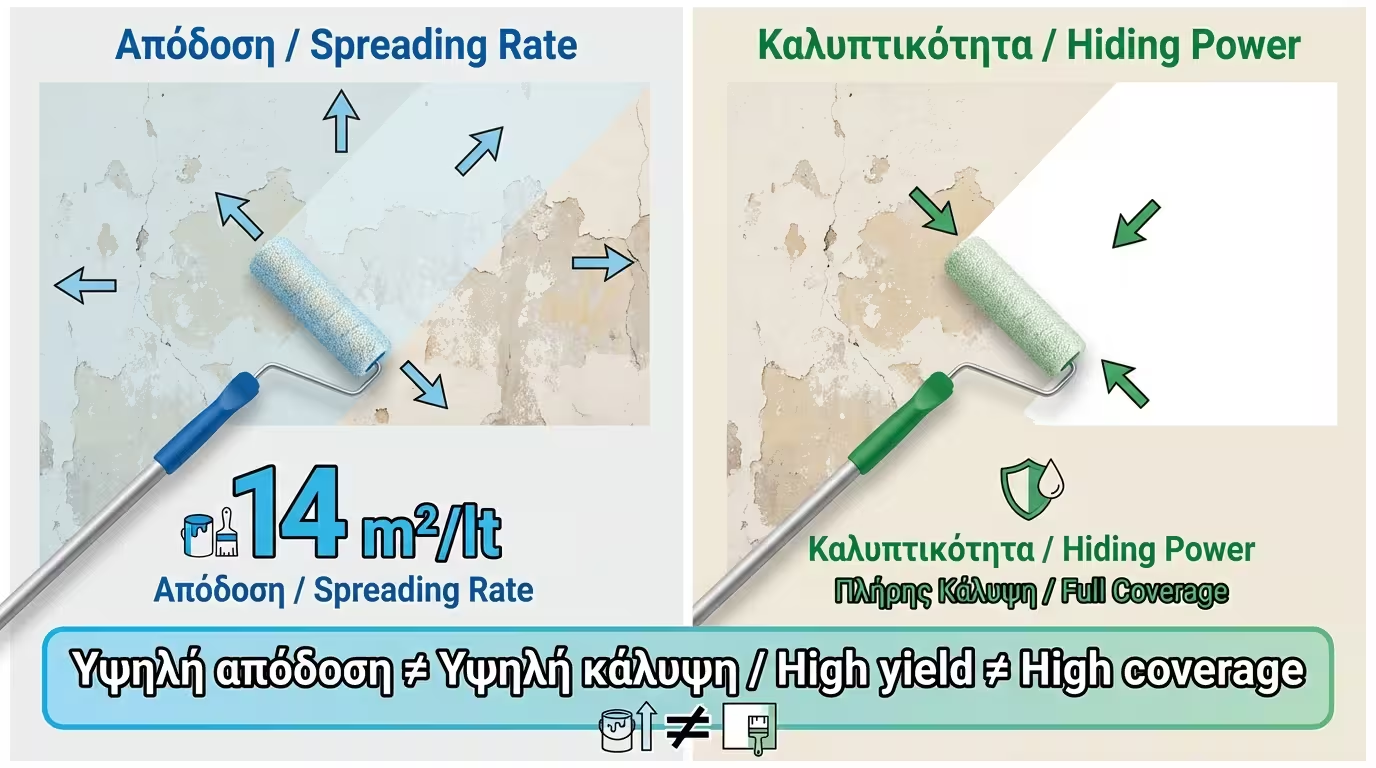
Measured in m²/lt. It tells you how much surface area a single litre of paint can "wet" in one pass. A thinned-down paint can have huge spreading rate - but that doesn't mean it actually hides the old wall.
The tin says "12–14 m²/lt." You buy exactly that many litres - and then discover the paint runs out far too early. Why? Because that number is the theoretical yield under ideal laboratory conditions. Real consumption on your wall is an entirely different story. Let's see how to read the numbers correctly, what actually drives consumption, and how to buy without surprises.
These two terms are often used interchangeably, but they mean entirely different things:
Measured in m²/lt. It tells you how much surface area a single litre of paint can "wet" in one pass. A thinned-down paint can have huge spreading rate - but that doesn't mean it actually hides the old wall.
This measures how effectively the paint conceals the underlying colour without leaving shadows. A paint with high hiding power needs fewer coats - and therefore fewer litres and labour hours.
Don't be fooled: a cheap paint may "spread" across many square metres (high yield) but need 4 coats to cover the old stain (low hiding power). In the end, you spend more money and time.
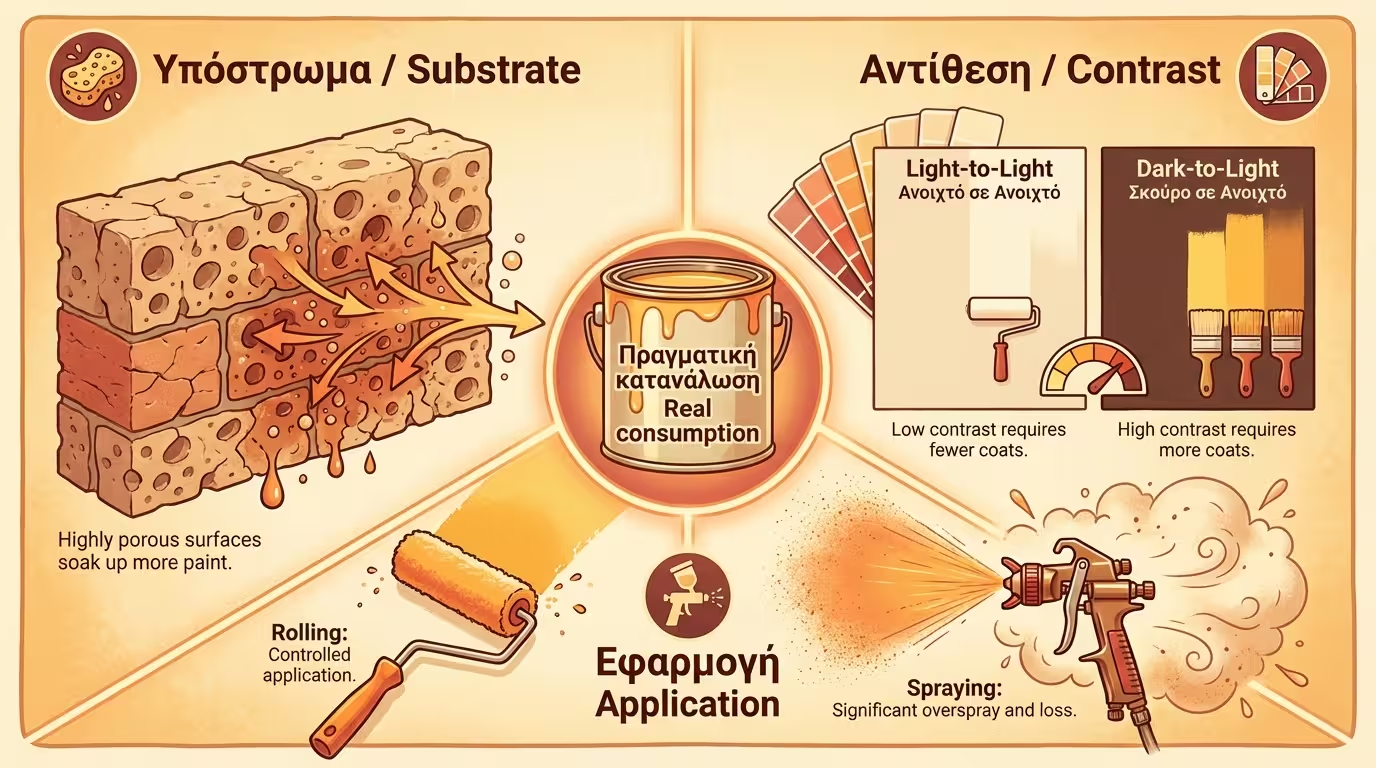
The theoretical yield on the tin is measured under perfect conditions. In practice, three factors change the number dramatically:
Fresh plaster or filled plasterboard absorbs the paint's resin. Without a proper primer, actual yield can drop to half.
Painting white over light grey needs 2 coats. Painting white over vivid red may need 4 or more. Even if per-coat yield stays constant, total consumption skyrockets.
Roller and brush transfer nearly all paint to the wall. An airless sprayer creates overspray and consumes 20–30 % more material - though it covers three times the area in the same time.
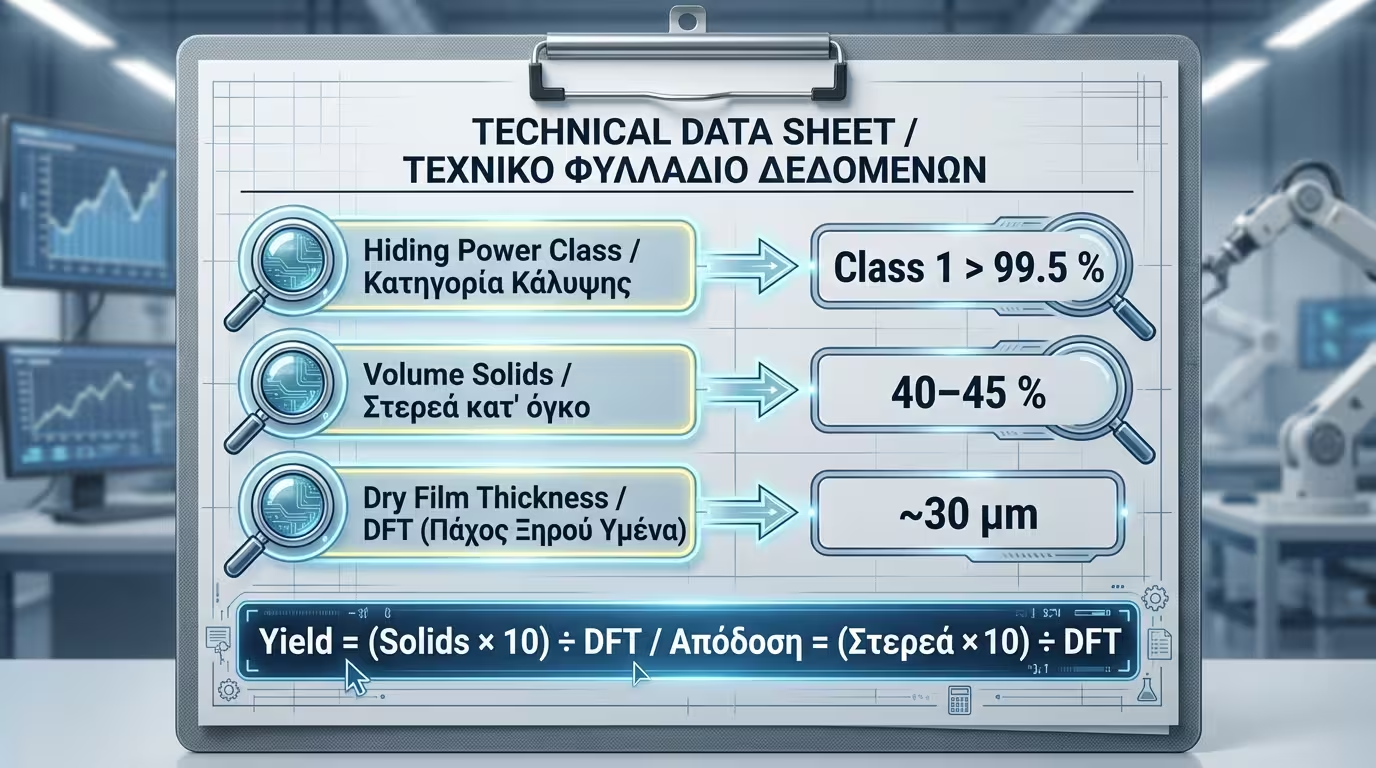
To avoid buying blind, look for three critical numbers in the manufacturer's Technical Data Sheet (TDS):
| TDS item | What it shows | What to look for |
|---|---|---|
| Hiding Power Class (EN 13300) | How effectively the paint covers the old base | Class 1 (Contrast ratio > 99.5 %) - covers in 1–2 coats |
| Volume Solids (%) | How much "real material" stays on the wall after drying | 40–45 % for quality emulsion - higher is better |
| Dry Film Thickness (DFT) | Minimum µm per coat for the promised coverage | Typically ~30 µm - over-loading the roller drives yield down |
The golden equation: Yield = (% Volume Solids × 10) ÷ DFT. Use this formula to verify whether the theoretical yield on the tin is realistic.
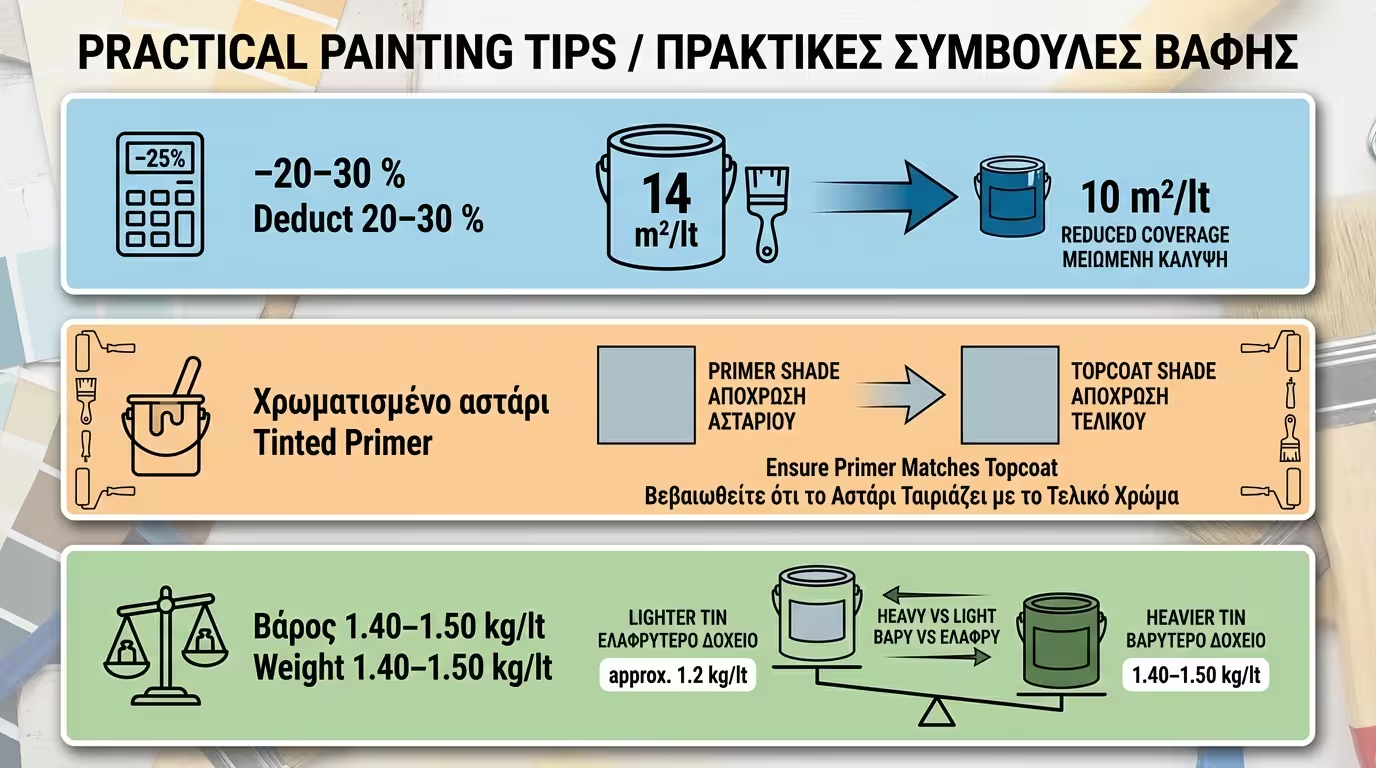
Many budget paints don't list a Hiding Power Class or Volume Solids on their data sheet. In that case, use three practical rules:
Deduct 20–30 % from the theoretical yield. If the tin says 14 m²/lt, plan your purchase at 10 m²/lt so you don't run short mid-project.
For drastic colour changes, have the primer tinted close to the final shade. It's cheaper and lets the expensive topcoat achieve full coverage with fewer coats.
A practical quality indicator: top white paints weigh 1.40–1.50 kg/lt thanks to high titanium-dioxide content. A "light" tin usually means less actual material.
Paint selection isn't about price per litre - it's about cost per finished square metre. A pricier paint with high hiding power (Class 1) and high volume solids almost always costs less in the end, because it needs fewer litres and saves valuable labour hours.
Learn to read the TDS, apply the "minus 20 %" rule, and invest in proper primer. These three simple practices will save you money and headaches on every renovation.
Return to category.
Go to categoryReturn to the central guide.
Go to guide