🧪 Tannic Acid
Reacts with Haematite (Fe₂O₃) to create Ferric Tannate. This is a blue-black, insoluble polymer that seals the metal's pores, cutting off oxygen ingress.
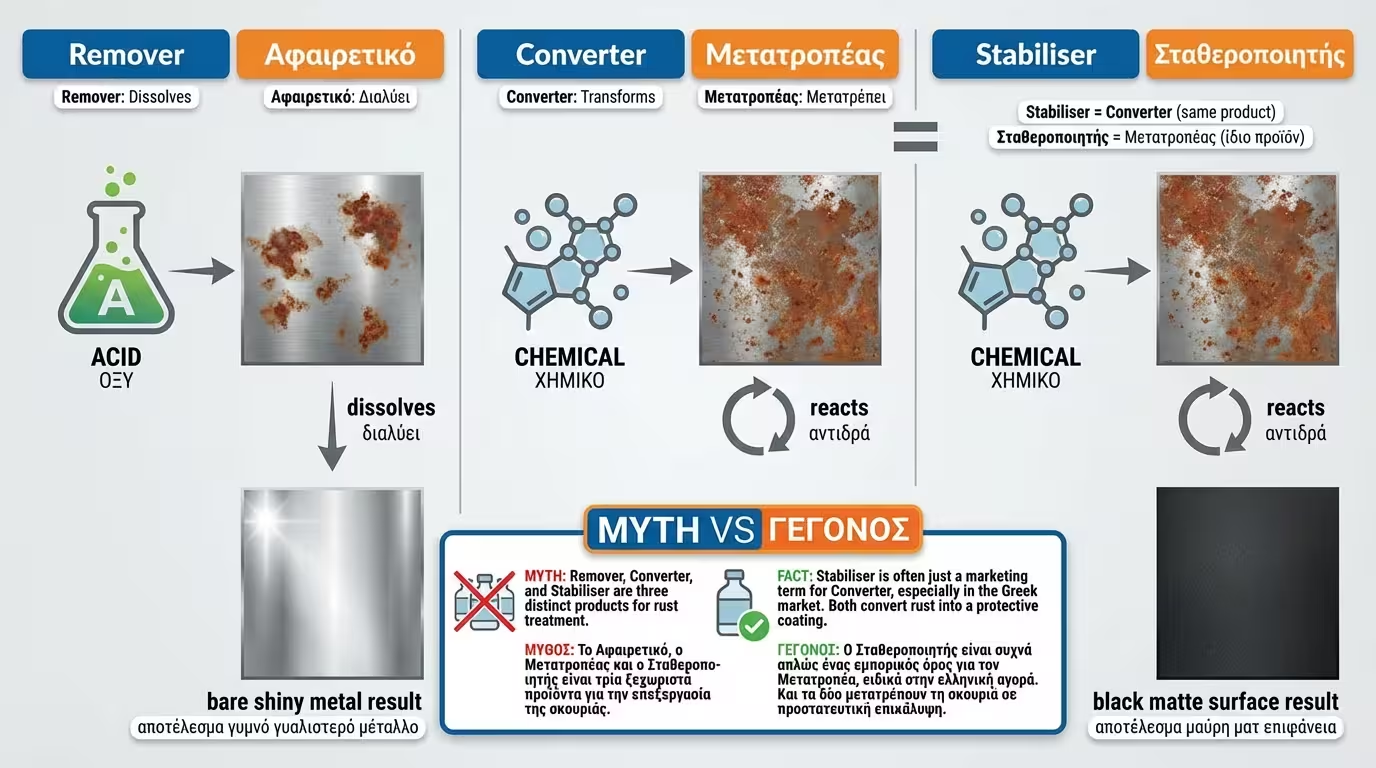
Rust converters are not "magic" products, but advanced chemical systems that transform unstable iron oxides into inert organometallic compounds. Understanding their chemistry is critical for avoiding structural failures.
The action of a high-quality converter is based on two parallel chemical mechanisms that neutralise oxidation at its source.
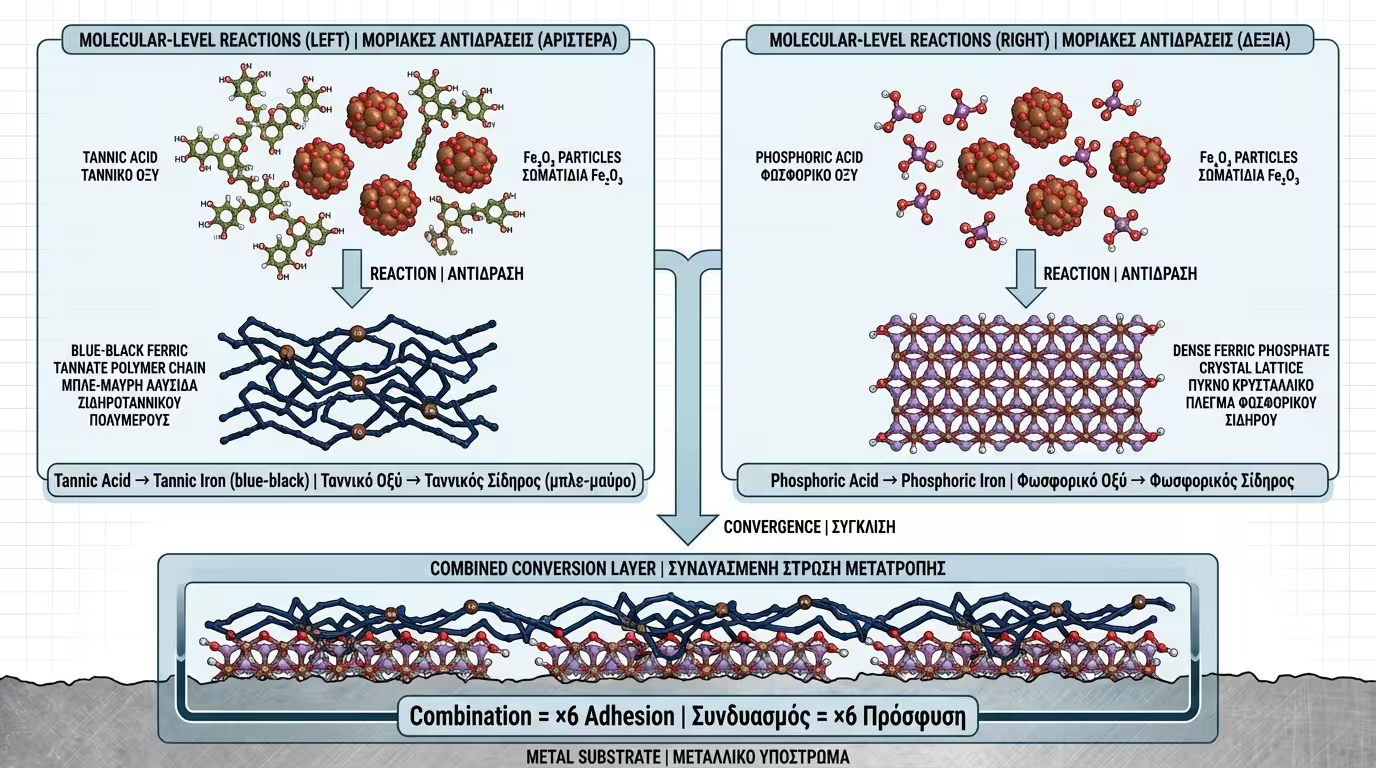
Reacts with Haematite (Fe₂O₃) to create Ferric Tannate. This is a blue-black, insoluble polymer that seals the metal's pores, cutting off oxygen ingress.
Phosphoric acid aids in penetrating deeper rust layers, partially converting them into Ferric Phosphate. This layer provides excellent passivation to the underlying sound metal.
Modern converters contain acrylic or epoxy resins that encapsulate the reaction product, creating a stable primer-film ready for top-coating.
Despite their convenience, converters have clear technical limitations defined by international standards (e.g., ISO 12944).
In heavy infrastructure (bridges, buildings), a converter is not a substitute for sandblasting (Sa 2.5). Rust beneath the conversion layer may remain active if its thickness exceeds 10-20μm.
Converters require rust to react. On clean metal, the product simply dries on the surface without providing adhesion, risking future delamination.
Converter failure is almost always due to improper preparation or missing the "reaction window."
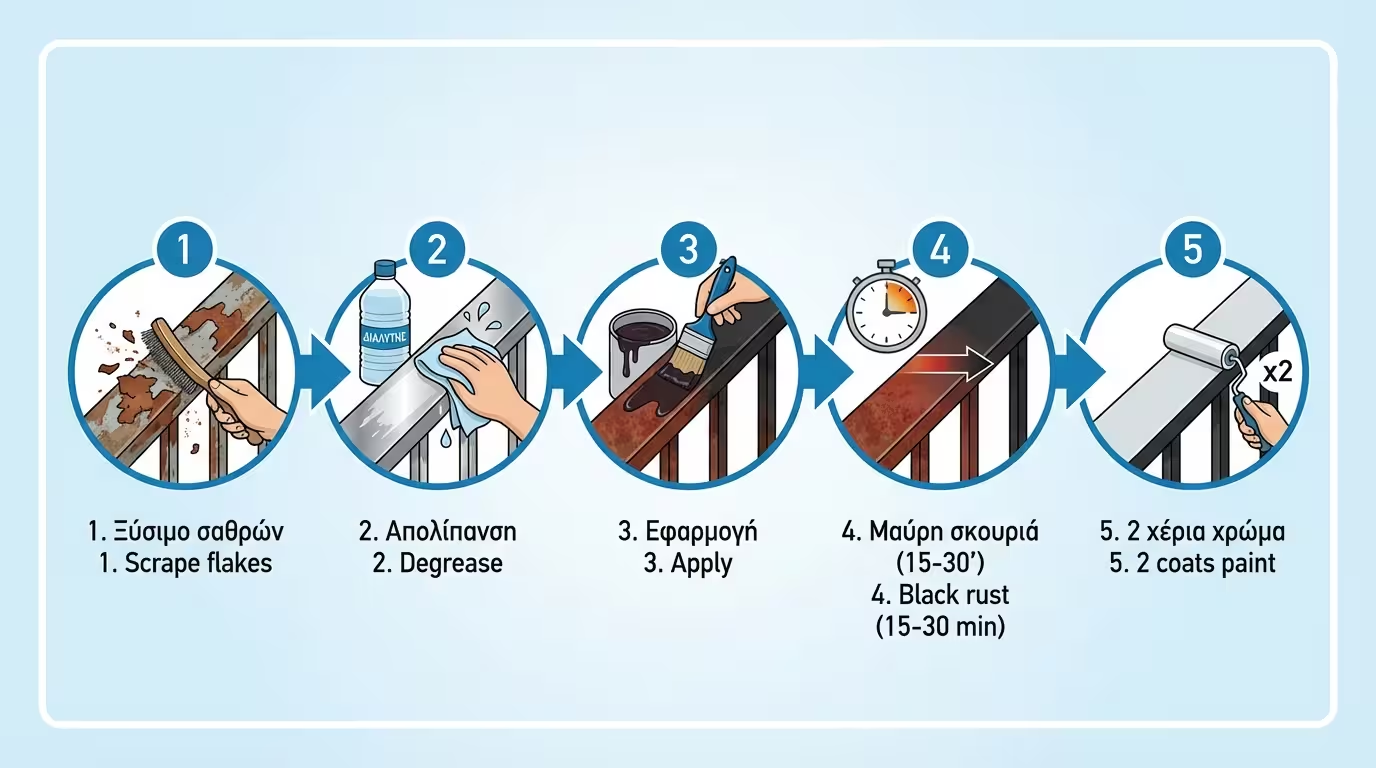
Remove loose rust and old paint. The converter must contact a stable, compact rust layer for optimal bonding.
Never dip your brush back into the bottle. Even a tiny trace of rust will activate the entire batch, rendering it useless for future use.
The reaction is successful when the surface becomes uniform and jet black. If brown spots remain, a second coat is mandatory (wet-on-wet or after 20 mins).
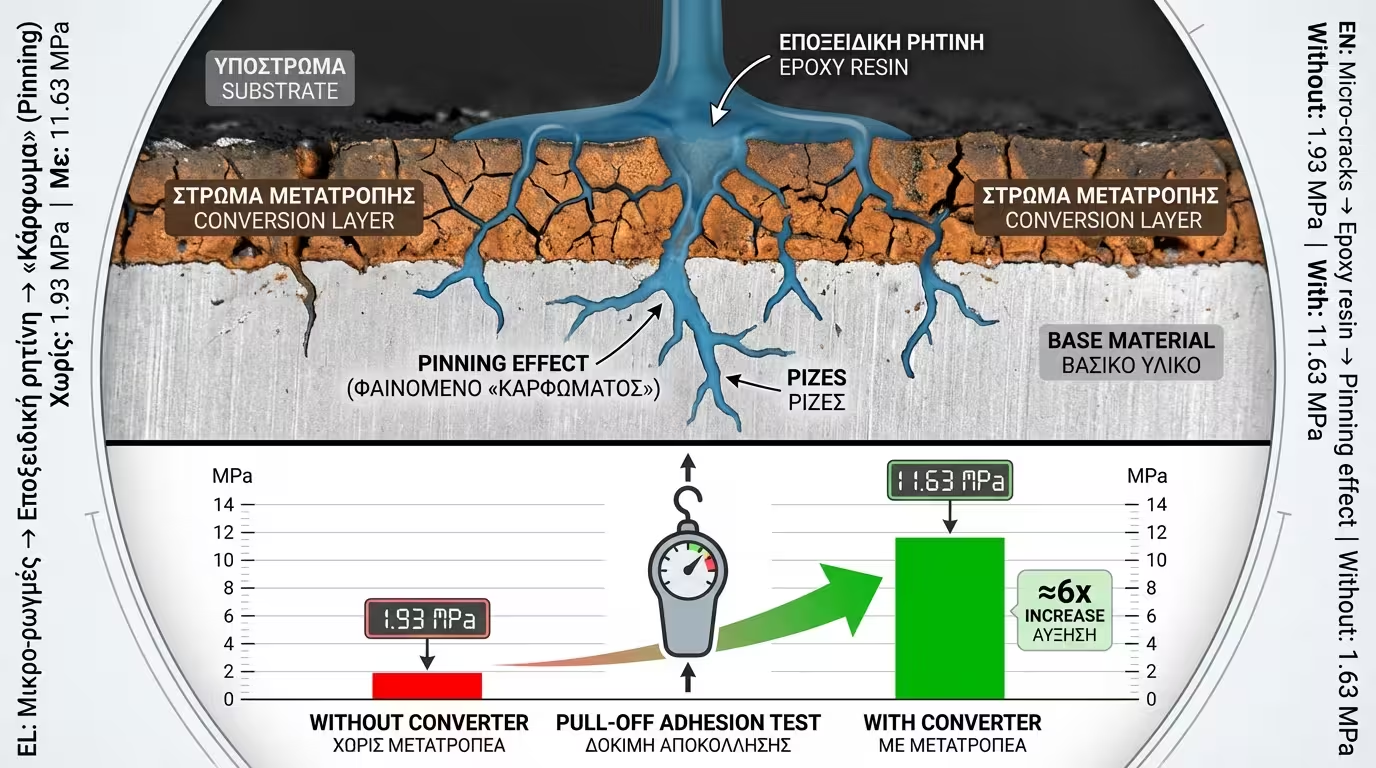
Why do converters increase durability? They create a layer with micro-cracks (penetration paths).
When applying the next layer (e.g., Epoxy or Enamel), the resin flows into these cracks, creating the Pinning Effect. Adhesion jumps from 2 MPa to over 11 MPa, ensuring the paint never peels from the rust.
Return to category.
Go to categoryReturn to the central guide.
Go to guide