💎 Surface Wetting & Flow
Organic solvents have low surface tension, allowing the paint to "wet" the metal substrate perfectly and penetrate micro-fissures. This ensures superior Leveling with zero brush marks.
The choice between aqueous and solvent-borne systems is no longer a matter of tradition, but of technical specification. Modern chemistry allows for water-based performance even in C4/C5 industrial environments.
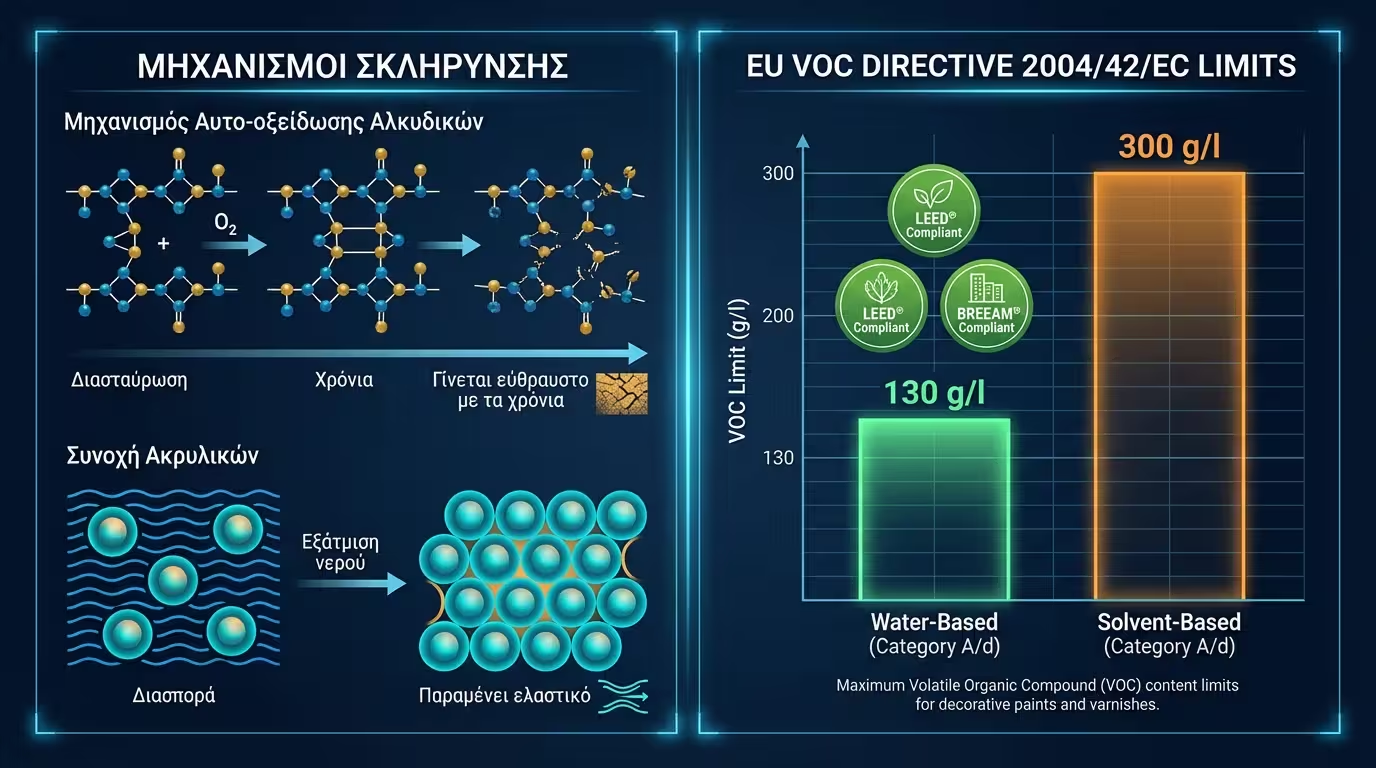
Traditional alkyd enamels consist of resins dissolved in organic solvents. Curing is achieved via auto-oxidation (oxidative curing), where unsaturated fatty acids react with atmospheric oxygen to form a cross-linked 3D network.
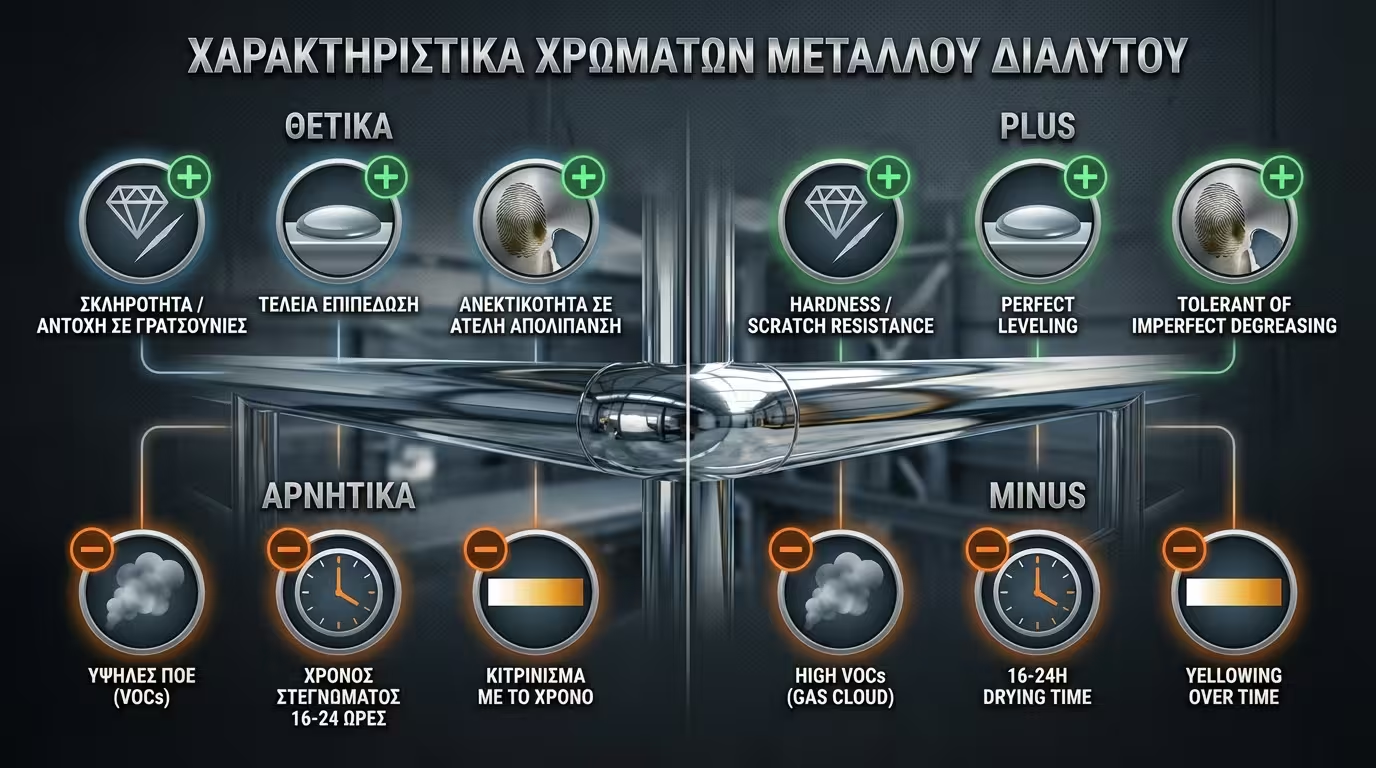
Organic solvents have low surface tension, allowing the paint to "wet" the metal substrate perfectly and penetrate micro-fissures. This ensures superior Leveling with zero brush marks.
Due to the nature of alkyd bonds, the film tends to yellow chemically, especially in interiors lacking UV radiation (dark yellowing) or in the presence of ammonia.
In water-based paints, resin particles are held in dispersion. Film formation occurs through Coalescence. As water evaporates, particles are forced together, merging into a continuous, elastic membrane.
Acrylic resins are aliphatic by nature, meaning they do not absorb UV radiation and do not yellow. They maintain gloss and colour integrity for twice as long as alkyds.
The film remains thermoplastic and flexible, allowing the system to follow the linear expansion of steel without cracking-a common failure in aged oil-based enamels.
European Directive 2004/42/EC drastically limits VOCs (Volatile Organic Compounds). For metal surfaces, limits are stricter for water-borne (130g/l) versus solvent-borne (300g/l), driving the adoption of "green" technologies.
Transitioning from solvent to water requires attention to the interface. Water has high surface tension and cannot "wet" a glossy, oily surface without proper preparation.
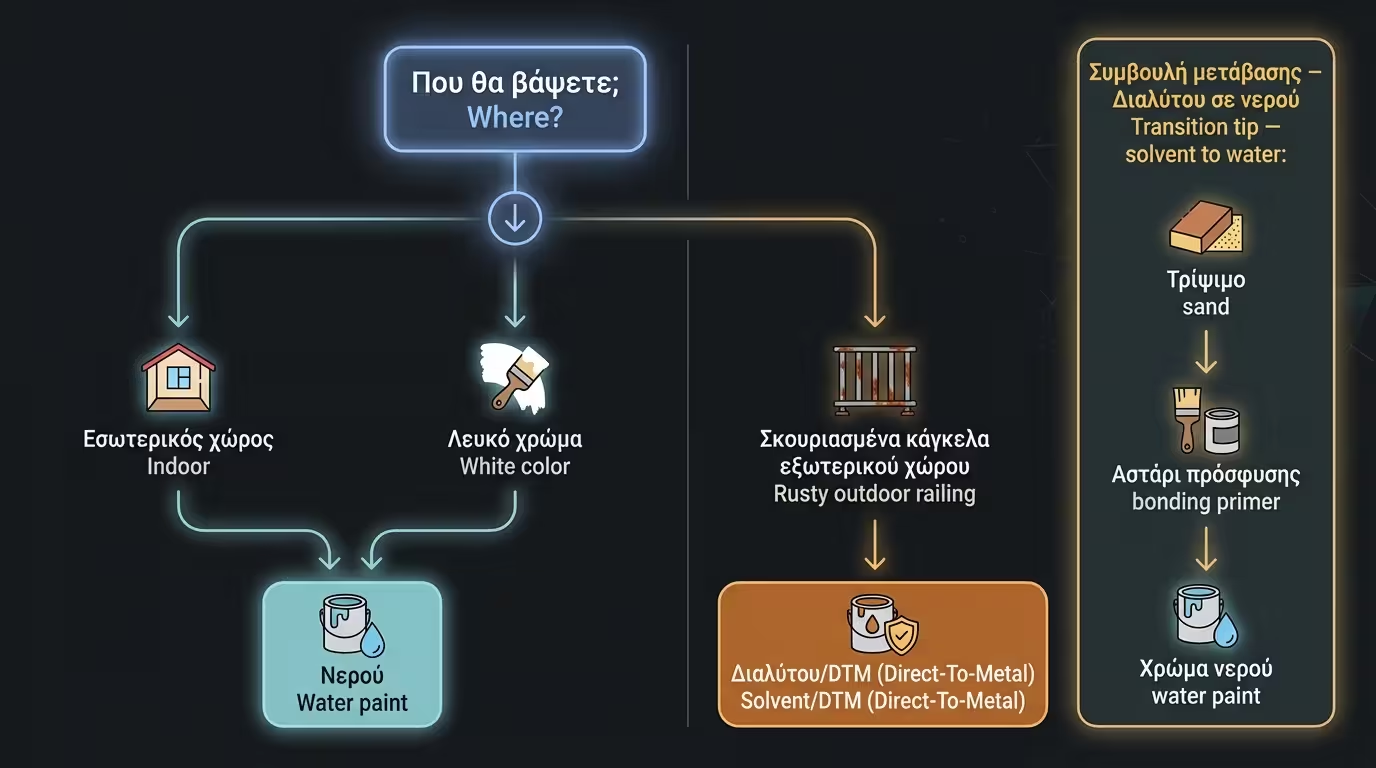
Applying water-borne paint to bare metal causes Flash Rust. The use of primers with anti-corrosive pigments that "passivate" the surface before the topcoat is mandatory.
In professional applications, two-component (2K) water-based polyurethanes are used, combining low odour with the hardness and chemical resistance of industrial systems.
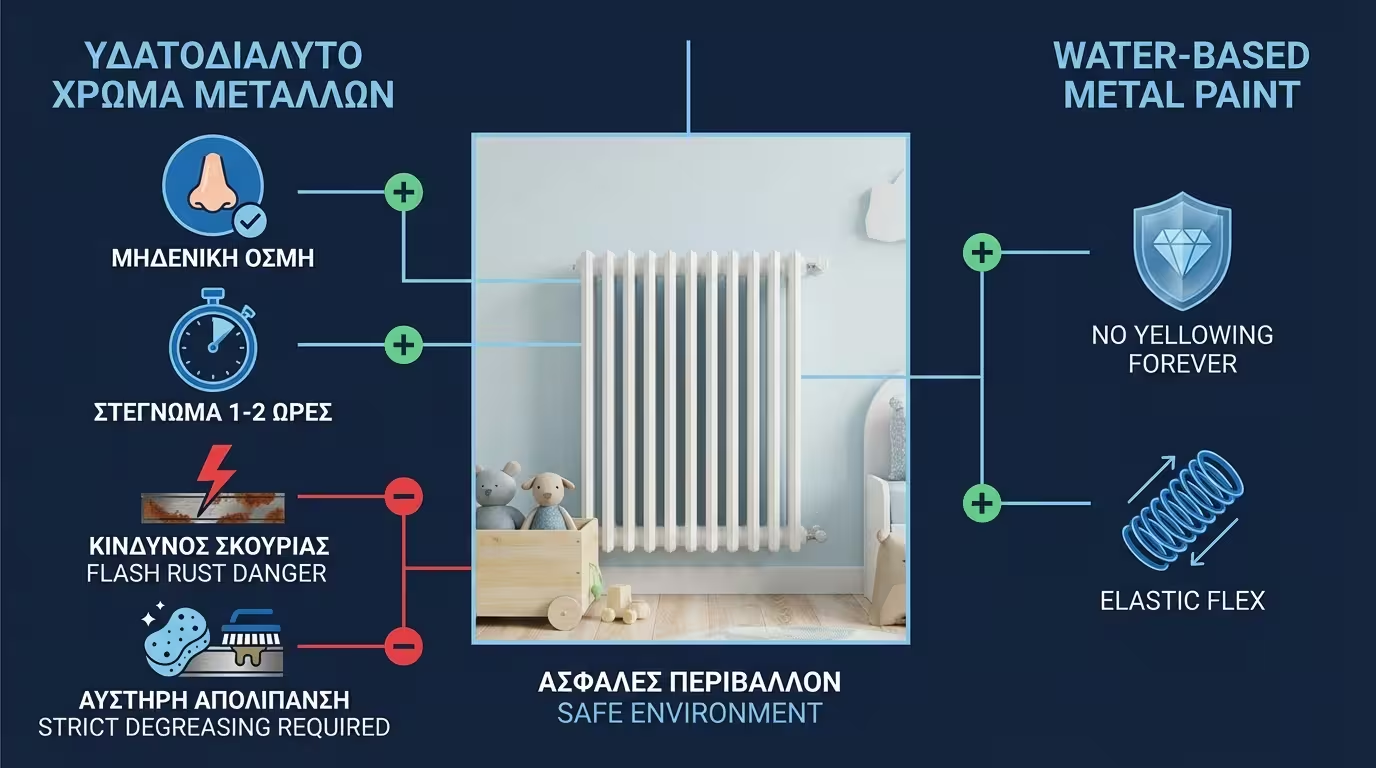
💡 Technical Summary: Solvent-based paints excel in open time (flow) and initial hardness. Water-based paints win in long-term UV durability, flexibility, and ecological footprint. For interiors and white surfaces, aqueous systems are now the technical standard.
Return to category.
Go to categoryReturn to the central guide.
Go to guide