
Paints & Varnishes for Wood
Return to category.
Go to categoryWood imparts a unique warmth to any interior space. However, because it is a "living" organism, it requires robust protection from daily wear, moisture, and impact. This is where polyurethane varnishes (PU varnishes) provide the ultimate solution.
Whether you are a homeowner looking to polish your parquet, a DIY enthusiast restoring a piece of furniture, or an engineer specifying materials for a commercial project, this guide will help you decode polyurethane technology.
Polyurethane is an extremely durable and versatile polymer. When applied to wood, it creates a hard, plastic (yet elastic) film. Unlike simple varnishes or waxes that offer only surface protection, polyurethane varnish "shields" the wood against scratches, liquids, alkalis, and mild chemical cleaners.
This makes it ideal for floors (parquet), stairs, doors, and tables - essentially, anything that undergoes heavy daily stress.
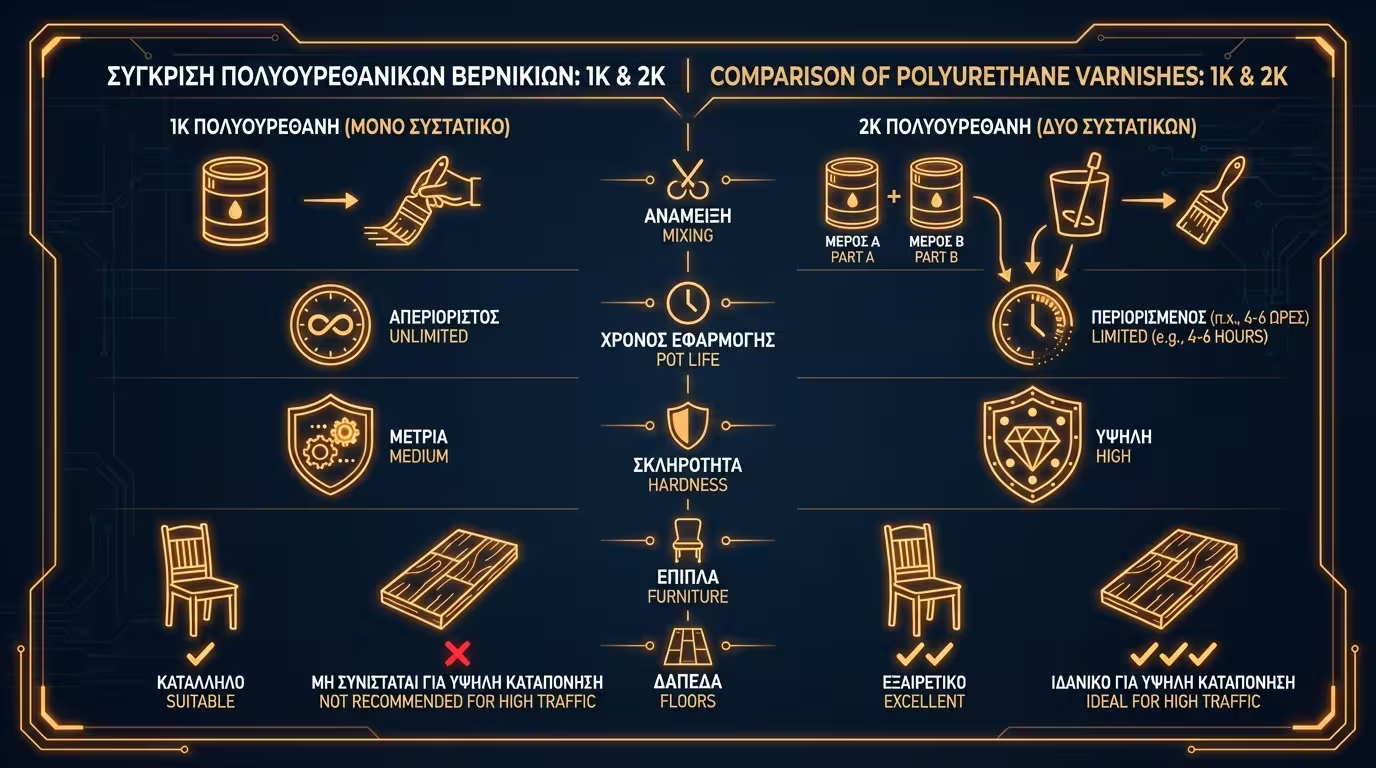
1K Varnishes (Single-Component): These are ready to use, straight from the can. They dry (polymerize) as the solvent or water evaporates, or through air moisture. Ideal for furniture, doors, cabinets, and low-traffic areas. They are the safest and easiest choice for hobbyists and DIYers.
2K Varnishes (Two-Component): This is where chemistry takes over. They consist of the main varnish (A) and a catalyst/hardener (B), which must be mixed in a precise ratio before use. The chemical reaction creates an extremely dense mesh (cross-linking) that offers world-class hardness. Ideal for wooden floors (parquet), stairs, kitchen counters, high-traffic commercial spaces (e.g., restaurants), and industrial furniture making.
| Feature | 1K | 2K |
|---|---|---|
| Readiness | From the can | Mixing A+B |
| Hardness | Medium–High | Very High |
| Chemical resistance | Moderate | Excellent |
| DIY-friendly | Yes | Requires experience |
| Pot life | Unlimited | 2–8 hours |
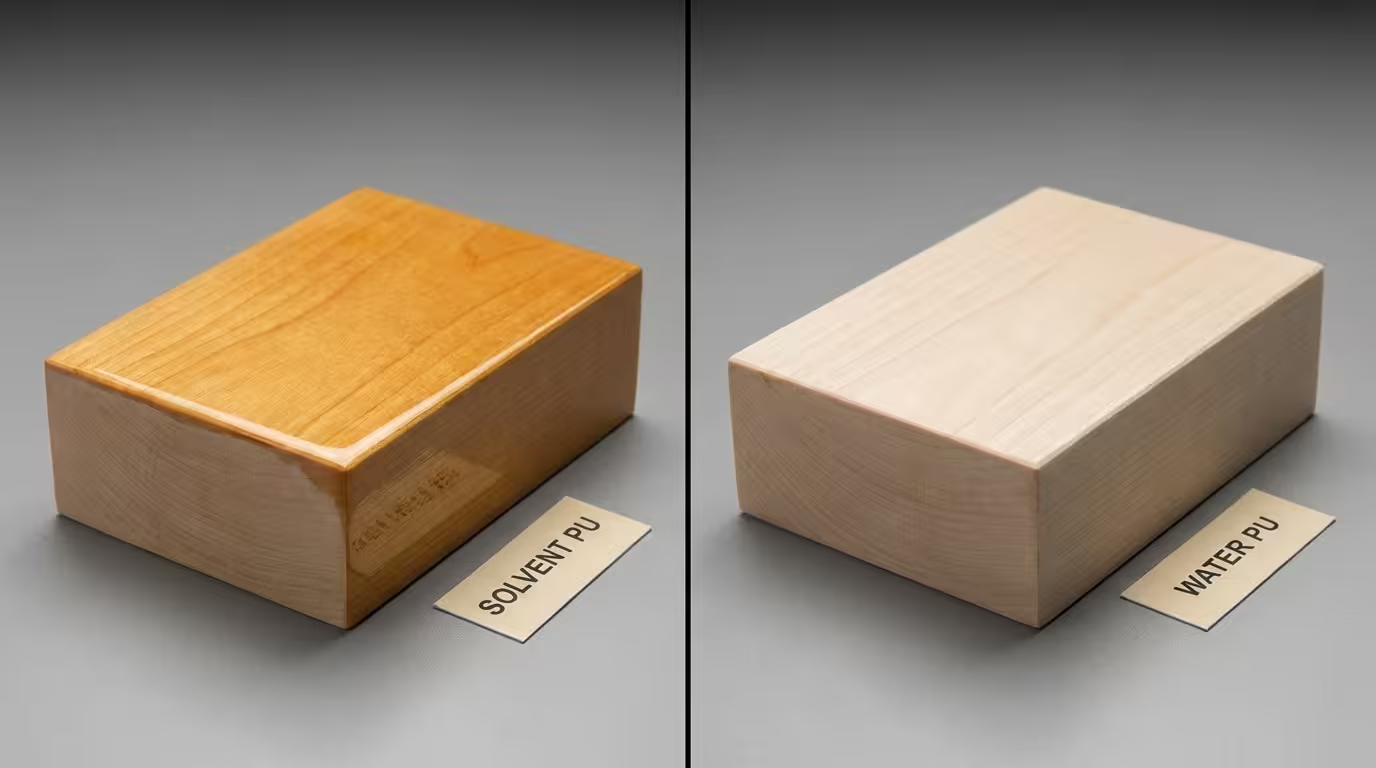
Solvent-based Polyurethane: It imparts a warm, golden, or "amber" hue (ambering effect) to the wood. Ideal for classic, rustic furniture. It possesses excellent resistance to heavy abrasion. However, it has a very strong odour (VOCs) that takes days to leave the house, it is slow to dry, and tools must be cleaned only with solvent.
Water-based Polyurethane: It looks milky in the can but dries 100% transparent (crystal clear). It does not yellow the wood, maintaining its absolutely natural, "pale" look - a top trend in modern design. It is practically odourless (ecological), allowing immediate use of the room. It dries very fast (in 1-2 hours). Tools wash with water.
1. Do not shake the container (The Bubble Rule): Unlike emulsion paint, polyurethane should never be shaken vigorously because micro-bubbles are created that will transfer to the wood. Simply stir gently with a stick.
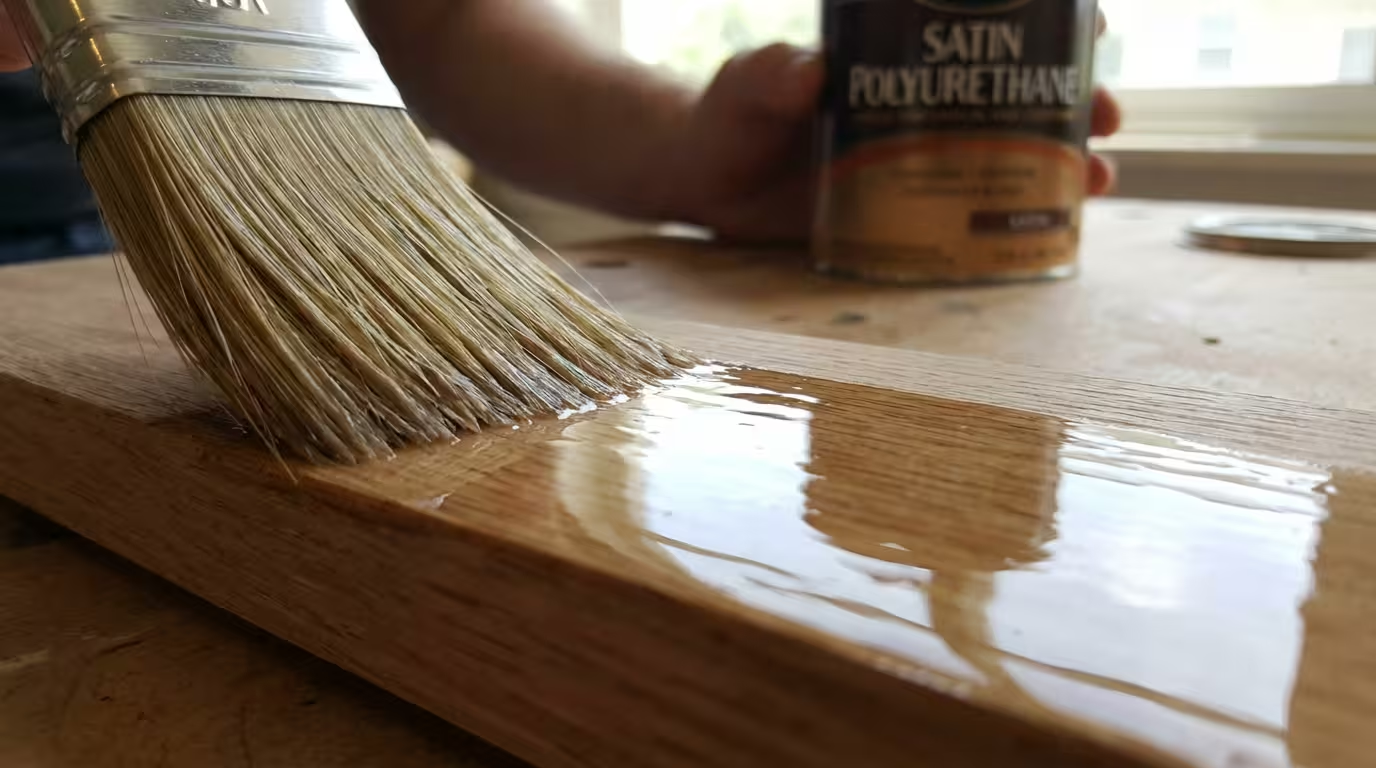
2. Do not "work" the brush too much - Feathering: Apply the varnish with slow strokes, then make one final gentle pass (feathering) in one direction and leave it. The more you work it with the brush, the more bubbles and brush marks you will create.
3. The trick for Water-based Varnishes (Grain Raising): Water naturally raises the pores of bare wood, making it rough (like sandpaper). To avoid this, wipe the bare wood with a damp sponge. Once dry (the next day) and after the "fuzz" has raised, sand lightly with fine sandpaper (e.g., 300+ grit). Then apply the varnish.
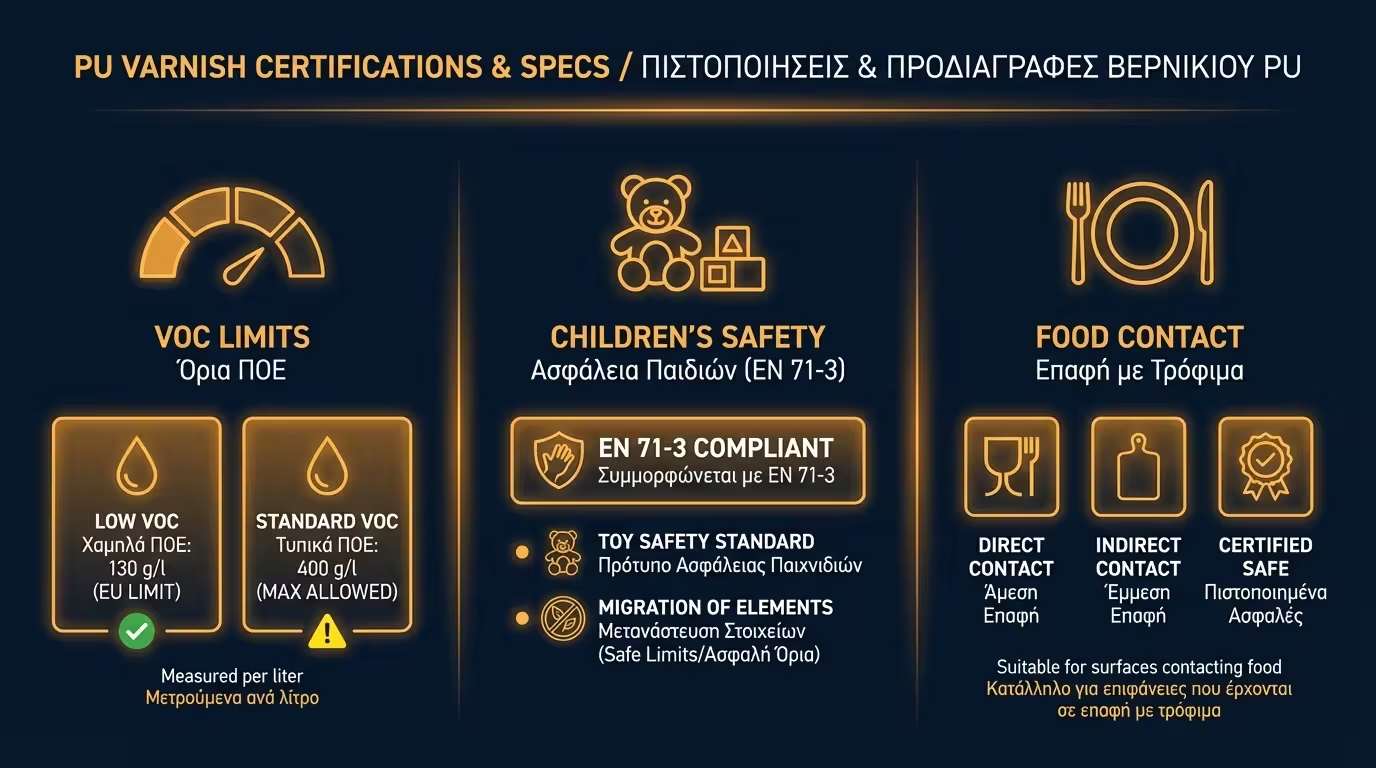
Volatile Organic Compound limits (VOCs - Directive 2004/42/EC): Interior/exterior varnishes for trim and cladding (Sub-category e) are subject to strict limits. For water-borne varnishes, the limit is 130 g/l, while for solvent-borne, it is 400 g/l. In LEED or BREEAM certification projects, choosing water-borne PUs (WB PU) with Indoor Air Comfort Gold or A+ labelling is often mandatory.
EN 71-3 Certification: If the varnish is intended for children's rooms, wooden toys, or baby furniture, ensure the Technical Data Sheet (TDS) specifies certification according to EN 71-3 (absence of heavy metal migration).
Food Safety (Food Contact): For kitchen counters or commercial dining tables, look for polyurethane varnishes (usually 1K or 2K water-based) that carry specific suitability certification for indirect or direct food contact.
The key to a perfect result is to match the system (1K or 2K, Water or Solvent) with the stress the wood will endure and the time you have available to finish the project. For furniture and doors, a 1K water-based PU is sufficient. For restaurant floors or high-traffic stairs, only a 2K PU will give you the industrial-level durability you need.
Return to category.
Go to categoryReturn to the central guide.
Go to guide