🫗 Deep Penetration
They don't create a crust (film) on the surface, but penetrate deep into the wood's pores, replenishing the natural oils lost from exposure to sun and rain.
If you've invested in Teak garden furniture, an Iroko pool deck or Merbau and Wenge accents, learn why common varnishes fail - and what the right solution is.
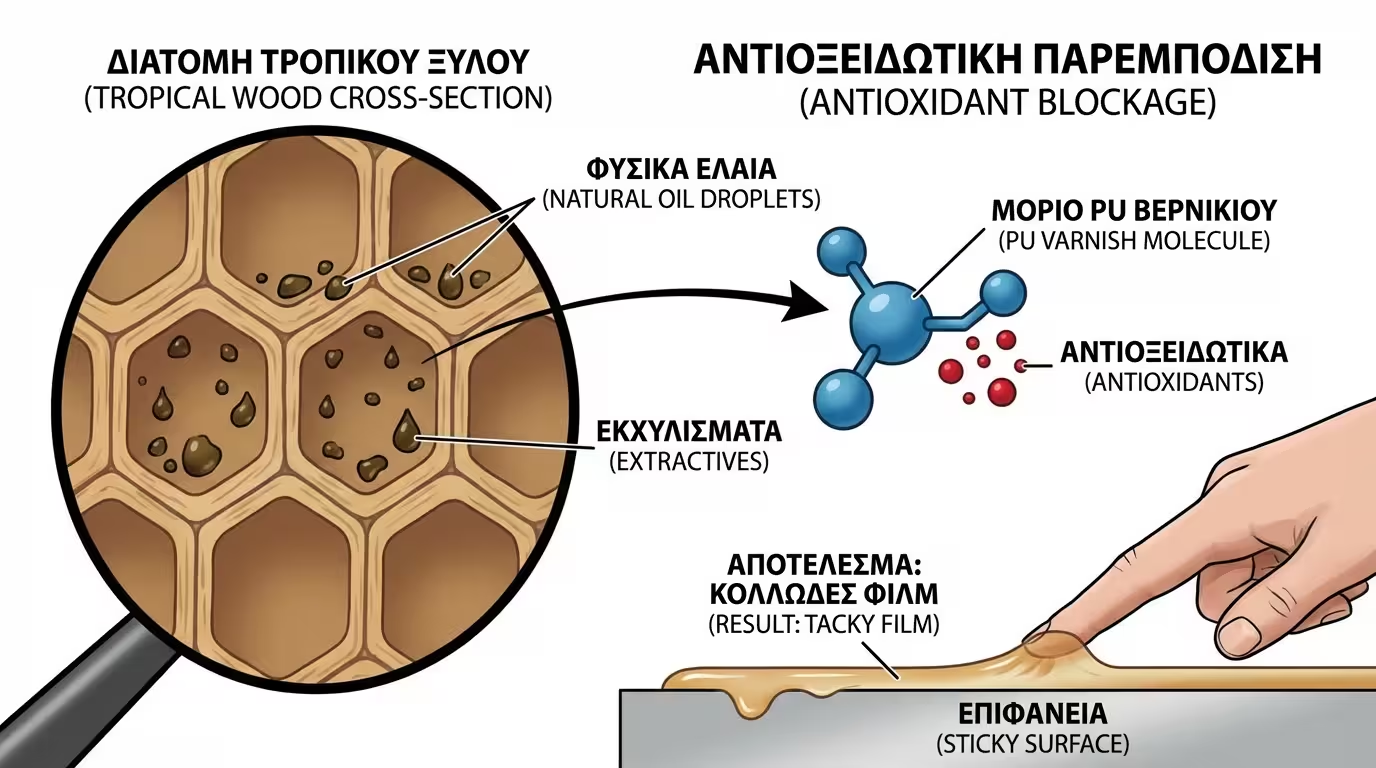
Trees that grow in tropical climates (South America, Africa, Southeast Asia) have developed a unique defence mechanism: they are filled with natural oils, resins and antioxidant extractives. These very oils are what make them naturally waterproof and resistant to rot and insects.
However, this advantage becomes a nightmare during finishing. If you try to apply a standard polyurethane varnish or oil-based paint (systems that dry through oxidation) directly onto an exotic wood like Teak, Iroko or Cocobolo, the wood's natural antioxidants (mainly phenols and terpenes) will "poison" the varnish catalysts, effectively blocking the chemical polymerisation reaction.
⚠️ Result: The varnish will never dry, remaining a sticky mass (tacky) for weeks. Even if it does dry, due to the oily surface, it will soon peel off.
The rule for tropical woods is simple: "Oil feeds oil". Specialist outdoor oils (Saturators / Teak Oils) are blends of natural oils (like linseed and tung oil), reinforced with protective waxes and resins. They function as non-film-forming systems that do not rely on full surface oxidation to provide protection.
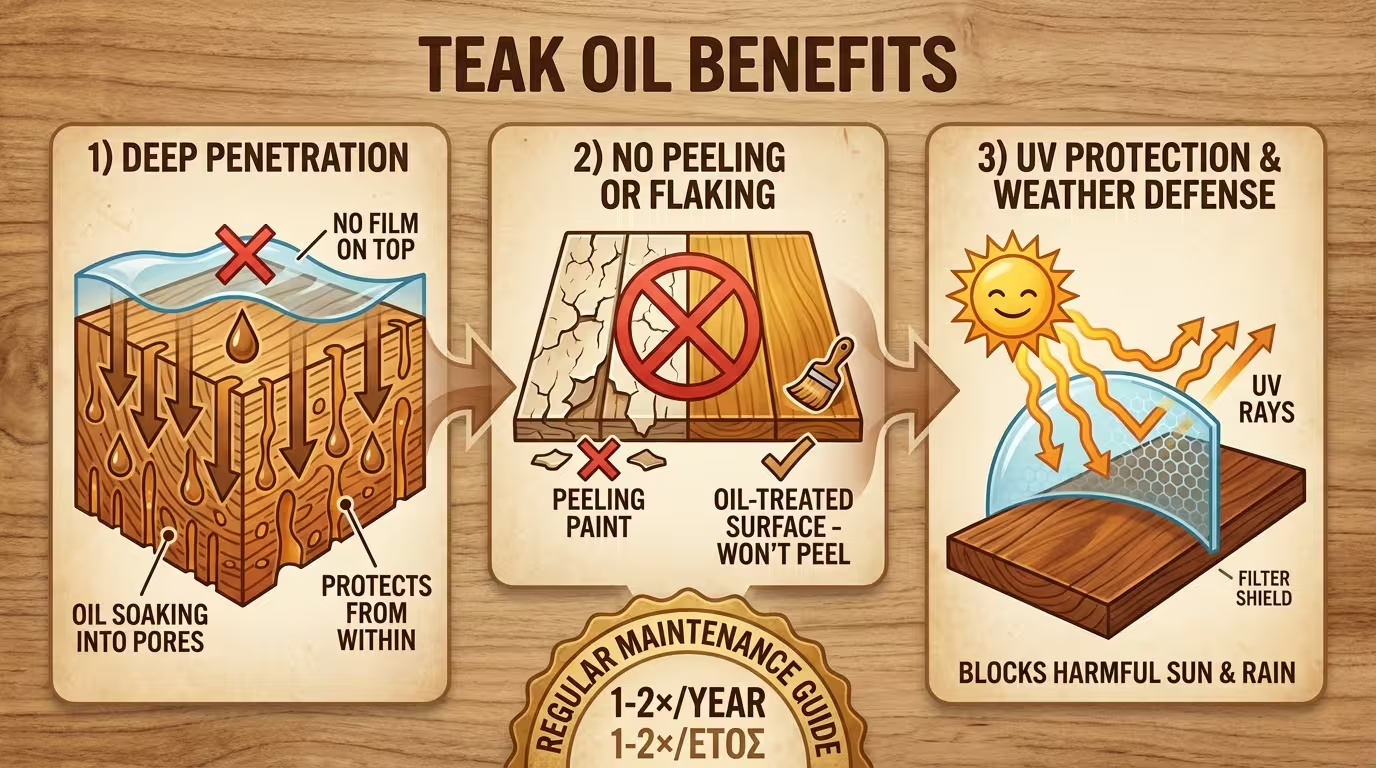
They don't create a crust (film) on the surface, but penetrate deep into the wood's pores, replenishing the natural oils lost from exposure to sun and rain.
Since there is no plastic crust, the material will never crack or flake.
Exotic woods tend to grey quickly in the sun. Quality oils contain UV filters and light pigments that enhance and revive the original colour, delaying greying.
If you want to maintain your garden furniture or deck yourself, the secret lies in the preparation:
Step 1: Cleaning and De-greying
If the wood has
turned silver/grey, use a specialist exotic wood cleaner (Teak Cleaner
/ Wood Reviver). This will remove dirt and restore the wood's natural,
warm colour without laborious sanding.
Step 2: Degreasing (The Critical Step)
Before
applying new oil, the wood must be absolutely dry. Wipe the surface
thoroughly with a cloth soaked in cellulose thinner or acetone. This will temporarily remove the surface natural oils, allowing the
new Teak Oil to penetrate properly.
Step 3: Application
Apply the oil with a brush
or cotton cloth. Let the wood absorb as much as it needs (usually
15-30 minutes).
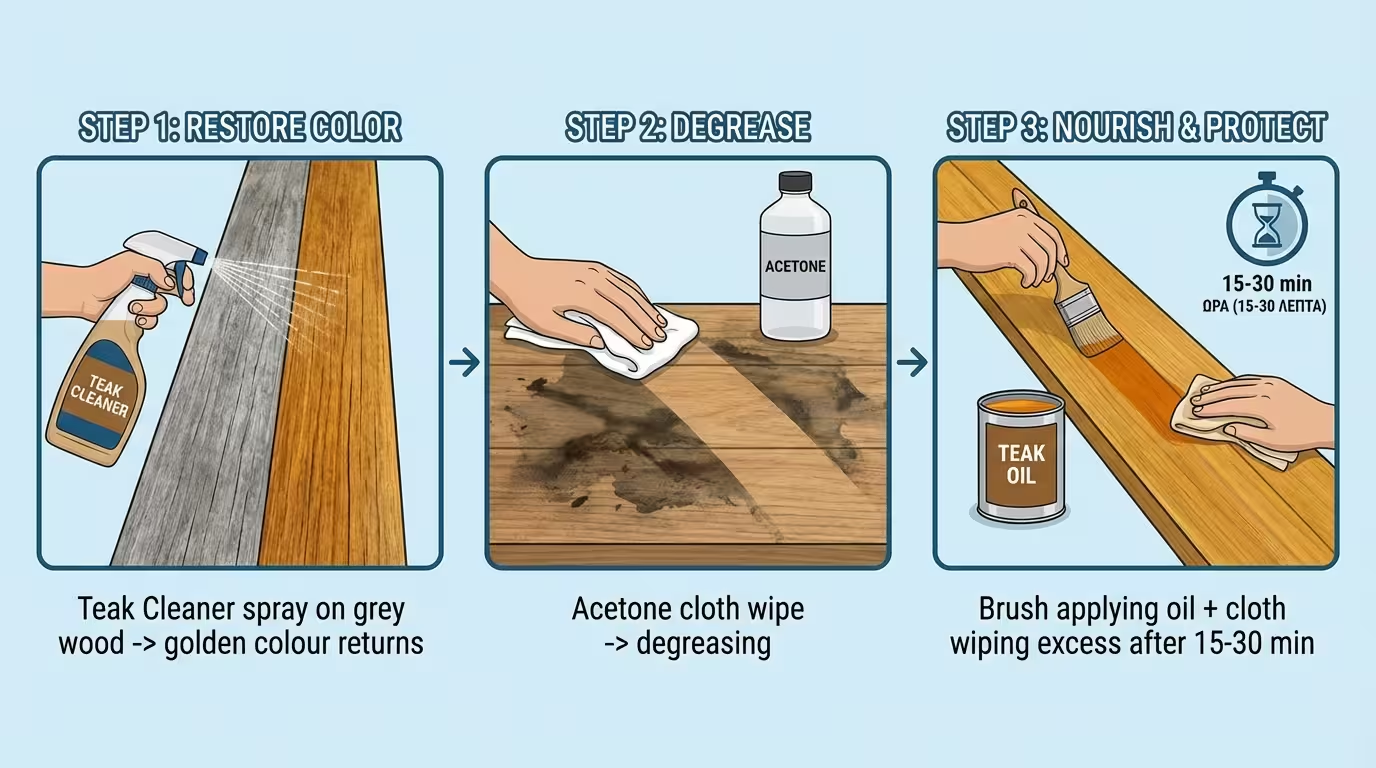
💡 The Big Secret: Always wipe off the excess! If the oil dries on the surface without being absorbed, it will create a glossy, sticky layer that collects dust. Maintenance should ideally be done 1-2 times per year.
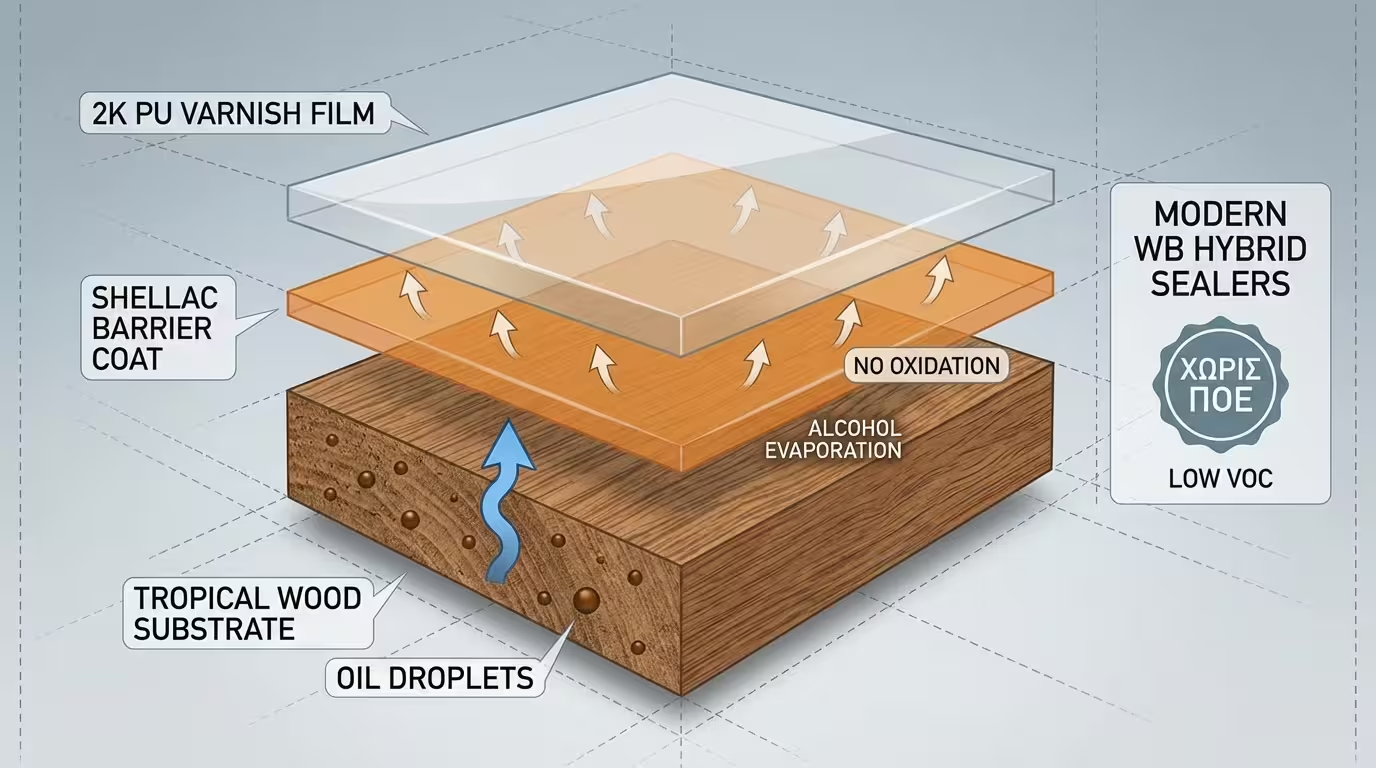
For architectural projects, boat-building or commercial spaces where the owner strictly demands a "closed" varnish finish (e.g. gloss lacquer on an Iroko or Wenge table) rather than oil, the engineer and craftsman must bypass the polymerisation problem.
After thorough degreasing with acetone, the bare exotic wood must be sealed. The classic and safest solution is applying a dewaxed shellac primer. Shellac dries through simple solvent evaporation (alcohol) and not through oxidation, so it is unaffected by the wood's antioxidants. Once dry, it traps the oils and creates an inert interface that allows adhesion for polyurethane (2K) varnishes or enamels.
In modern industry, specialised water-based hybrid primer-isolators (Sealer Isolators) are used, which manage to bond to oily woods while avoiding the toxicity and flammability of strong solvents, simultaneously complying with low VOC specifications for green buildings.
Return to category.
Go to categoryReturn to the central guide.
Go to guide